How to rally your community for grassroots action

How to rally your community for grassroots action
What grassroots action is, why it's one of the most effective ways for citizens to hold decision makers accountable — from a single city council meeting to a nationwide movement.In this article you will learn:
Siddhu Pachipala created his first petition as a high school senior in response to a bill changing social studies and civics curriculum in K-12 public schools. In an interview with Change.org, Siddhu said that his nearly 180,000 supporters made up a "coalition that's wanting to change something fundamental about the education system."
His friends said they've never seen someone their age address a legislative issue, and realized they do have power to make a difference. And it wasn't just young students supporting the cause — administrators, teachers, and parents who shared concerns also joined the effort.
Siddhu's petition created an accessible opportunity for anyone, regardless of background or experience, to get involved and push for change. He emphasized the importance of having that alliance fighting for a common cause and "getting those people together because you can't do it without that group.”
Education debates like this one look different depending on your stance on the policy. What’s important to pay attention to here is the coalition-building.
In this guide, learn how to use your supporters as a resource to help grow your campaign by tapping into their skills and passion. Find out the most effective direct actions to take based on insights from over 50 petition starters and dozens of decision makers we surveyed.
What is grassroots action and why is it important?
Grassroots action is the process of bringing everyday citizens together at the community level to advocate for policy and accountability. Rather than depending on top-down leadership, grassroots efforts run on shared responsibility and energy, where every citizen plays a part.
If your fight is with a local institution like a school board, zoning board, or city council — see our local civic action guide for a scenario-specific playbook and a real local win for each.
Related resources:
Local mobilization
The same principles that apply to powerful national movements also win fights at school board meetings, zoning hearings, and the city council meetings. With a clear ask, an organized group, and pressure sustained over time, residents can put grassroots action to work in their own communities.
School board decisions
A school board issue usually starts with a decision that lands without warning, like a leader removed, a program cut, or a policy changed with little explanation. Because school boards are elected, meet on a public calendar, and are directly accountable to the families they serve, this is one of the most winnable fights in local advocacy. A petition addressed to the board by name that’s backed by supporters who show up to the next meeting creates documented public pressure that's hard for a board to ignore.
Take action: Address your petition to each board member individually — not just "the district" — and deliver it in person during public comment at a specific, upcoming board meeting.
It's worked before: When Santa Rosa City Schools Superintendent Daisy Morales removed several well-regarded principals without explanation, parent Andrea Leffew started a petition calling for her removal. Backed by a no-confidence vote from the Santa Rosa Teachers Association and delivered in person at the board's March 26 meeting, the petition reached 4,789 supporters — and days later, the board voted 5–1 to remove Morales.
Neighborhood safety
Hyper-local safety issues like a missing crosswalk signal, a speeding problem, or a stretch of road with a history of accidents tend to move fast because the ask is narrow and hard to dispute. The real obstacle usually isn't opposition, it's getting the fix onto a city's priority list and finding the budget line to pay for it.
Take action: Narrowly target your request to one fixable problem, not something broad like "make our streets safer." Identify the specific intersection or area and address it directly to your city council district representative and the department that owns the fix, usually Public Works or Transportation.
It's worked before: After witnessing an accident at an unsignaled crosswalk in Huntsville, Alabama, Lex Troupe started a petition asking the city council and Department of Public Works to install a crosswalk signal. It reached 483 supporters. A city councilman responded directly on the petition page, naming the Traffic Projects Manager and confirming a timeline. The protected crosswalk was installed within weeks.
Local development and zoning
A zoning fight comes with a built-in deadline: a developer files an application for a specific parcel, and a commission votes on it at a scheduled hearing. A petition that argues the application fails the zoning ordinance's own approval standards — not just "we don't want this" — is far harder for commissioners to dismiss. A packed room during the hearing reinforces the community’s opposition.
Take action: Pull the actual application and read the zoning ordinance's approval criteria, then build your case around those specific standards. Find the hearing date and treat it as your deadline. Galvanize your supporters to represent the cause in-person at the hearing.
It's worked before: When a developer filed to rezone 29 acres next to the Yellow River Wildlife Sanctuary in Gwinnett County, Georgia for 280 housing units, the sanctuary started a petition. It showed the application failed the county's own zoning standards. It reached 9,907 supporters, and a petition update asked supporters to wear red to stand out at the hearing. The developer withdrew its application before a vote was needed.
For the full playbook on each of these fights — including exactly who to contact and when — see our local civic action guide.
Examples of successful engagement from grassroots wins
Rallying supporters to act together is essential to achieving your goals, and it has been the driving force behind successful movements throughout American history — at every scale, from a single school district to an entire industry.
Local school board decision opposition in Washington
Brady Minneman, a senior at Bothell High School, started a petition to save his school's School Resource Officer (SRO) after the school board voted to remove the position despite overwhelming community support.
On May 18, 2026, hundreds of Bothell High School students walked out of class and marched from campus to city hall, protesting the Northshore School Board's 4-1 vote to eliminate the school's longstanding SRO program. Students and parents argued the decision ignored community surveys showing strong support for the officer and for student safety. The action made local news and drew the attention of several national outlets.
To date, no decision has been made on whether the officer will be reinstated. But, the momentum from Brady and his classmates' action demonstrates the power of young people when they speak out and hold their elected officials accountable.
A parent petition that changed a school uniform policy in New Jersey
Students at Union City High School were being placed in in-school suspension for wearing uniform sweatpants that bore the school's own emblem — sold at the school's own uniform store. Parent Natasha Vives started a petition calling on the district to amend the policy. She pointed out that suspending students over a technicality took time away from learning and disproportionately affected students without access to a girls' locker room to change.
The petition reached 948 supporters. In a victory update, the petition starter announced: "With the assistance of all the students and parent signatures, Union City High School has amended the policy and will no longer suspend students for wearing uniform emblem logo sweatpants."
A neighborhood petition that stopped a development in Georgia
When RST Construction filed to rezone a parcel on Lake Laurie Drive in Valdosta, Georgia from single-family (R-15) to multi-family (R-M), resident Frank Herrera started a petition opposing the project. The petition was timed ahead of the March 2026 planning commission hearing.
The petition reached 247 supporters. Valdosta City Councilman-at-Large Nick Harden responded directly on the petition page: "At this time, the rezoning request has been withdrawn" — confirming the developer pulled the application before it ever reached a vote.
2023 SAG-AFTRA strike
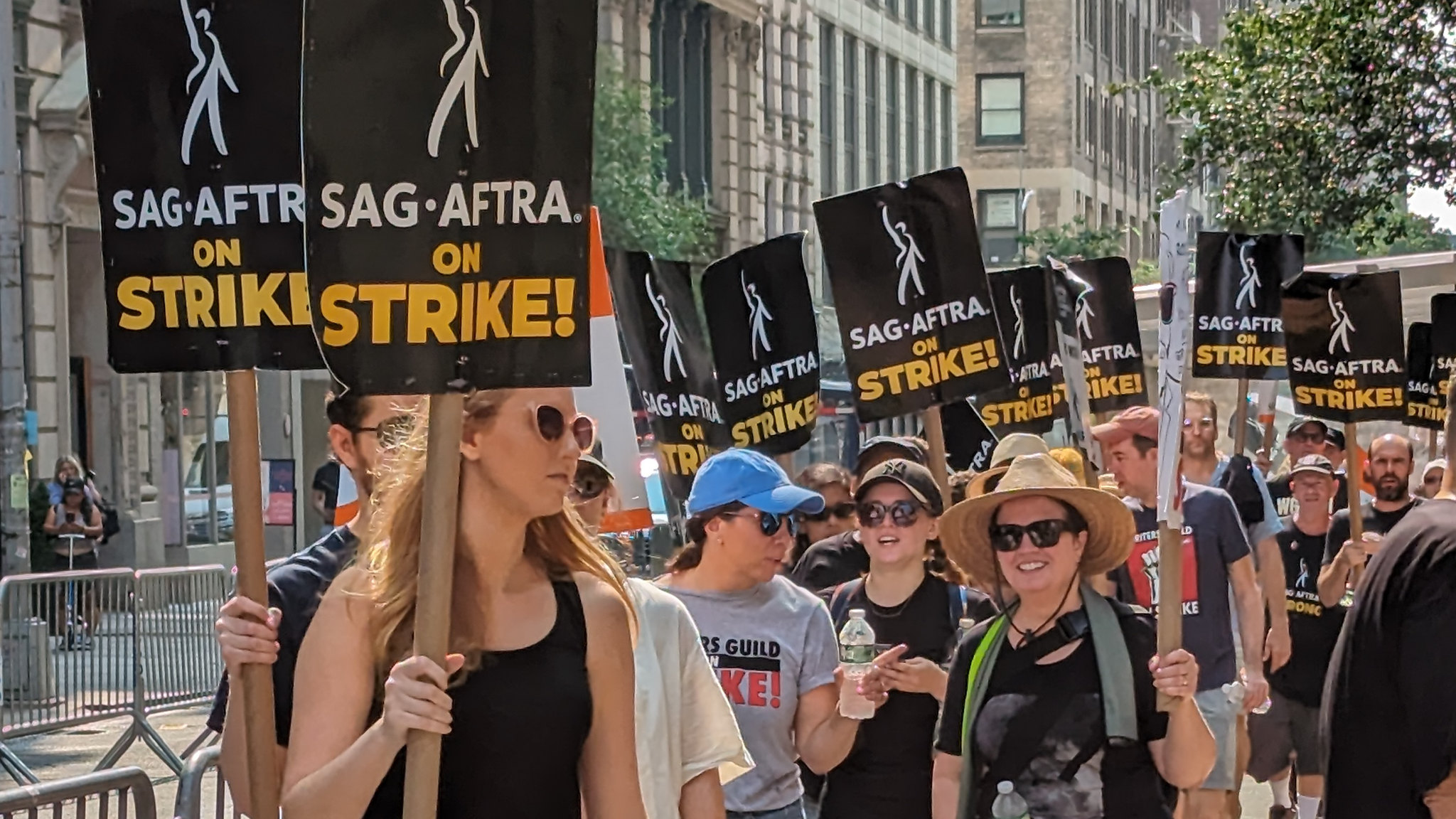
The 2023 SAG-AFTRA strike over contract negotiation conflicts with the Alliance of Motion Picture and Television Producers (AMPTP) is a grassroots triumph at national scale, within the entertainment industry.
SAG-AFTRA's leadership galvanized approximately 160,000 members to participate in the strike, demanding fair compensation, residuals from streaming platforms, and protections against the unauthorized use of artificial intelligence (AI) in reproducing actors' likenesses.
Members organized and engaged in widespread picketing at major studios and production sites across key locations like Los Angeles and New York City. The union and its members used traditional and social media channels to communicate their goals, report developments, and rally support.
Their efforts led to securing wage increases, streaming residuals, and AI protections for SAG-AFTRA members.
Steps for successfully engaging supporters
Once you've built a strong foundation for your campaign, then you can start taking action. The initial groundwork you need to do before getting to work on specific actions include:
Defining your issue
Setting your goals
Identifying your decision maker
Creating your petition or other campaign materials
Follow these steps to plan and inspire collective action from your supporters to win the change you're seeking.
Communicate a strong, inspiring message
Convey the urgency or importance of your issue in your petition and in any other outreach to your audience. Include examples and personal stories of how the issue is directly impacting your community. To resonate with potential supporters, you need to explain how the issue concerns their lives, because if people don't feel affected by the issue, they may not sign onto it.
Your message to your supporters should highlight how their participation can help get the result everyone wants. Explain that working together to raise awareness about the issue and putting pressure on the decision makers to address it will make progress. There's power in numbers. This will inspire and motivate them to take action.
Use petition updates to organize and encourage actions
The petition updates tool on Change.org is a free resource you can use to post messages on your petition that will automatically email to everyone who's signed it. This is an effective and convenient way to share how supporters can participate and provide them with instructions and resources.
By using the petition updates tool, one successful petition starter prompted his supporters to contact their state representatives and donate to making campaign videos, resulting in getting an important law passed.
Facilitate direct actions for supporters to take
Ready, set, action. Here are some proven actions you and your fellow advocates can take to reach your goals, plus tips to set your supporters up for success.
→ Contact the decision maker directly
Direct outreach to the leaders or officials with the authority to respond to your petition is crucial for getting results.
Change.org petitions allow the creators to identify the decision makers, or the platform will assign the appropriate ones once it's launched. Petition starters can reach out to decision makers directly from their dashboard, and Change.org's Civic Engagement team will do its own outreach for qualifying campaigns. Coordinating your supporters to join the outreach efforts will strengthen the impact.
In a Change.org survey, petition starters said that in addition to signing, when supporters personally contacted the decision maker, it made a noticeable difference in getting a response.
In a different survey, decision makers said the best ways constituents can contact them are by:
Emailing (32.69%)
Setting up an in-person meeting (23.08%)
Calling their office (19.23%)
Speaking at a town hall style meeting (13.46%)
Tagging them on social media (11.54%)
Both petition starters and decision makers point to the number of signatures a petition has and the amount of local community support it has as the top drivers of getting decision makers' attention. So when asking your supporters to contact decision makers, be sure to provide this information and instruct them to share it.
💡Tip: You can find out how many of your supporters are local in your Change.org petition dashboard.
To help your supporters contact decision makers, provide them with the key points and call to action they should include in their message including:
A link to find the representative of their district
How to email their representative
An email template to their representative
How to call their representative
A script they could use when calling their representative
Sample Instagram and Tiktok posts, including a custom image they could share
→ Target your local decision-maker for community battles
The type of community issue you address dictates who and how to present your request. Three of the decision makers you're most likely to encounter in local disputes include:
School superintendent: The right target for administrative decisions affecting an entire district, like curriculum, staffing, or a district-wide policy. Frame your ask around student outcomes and back it with a specific timeline of what changed and when.
City council member: The right target when the fix is local infrastructure, a safety concern, or a budget line. It should ideally be the member whose district includes the exact block or issue in question. A constituent count naming their own district, which appears on your petition page, carries real weight here.
Zoning board chair: The right target when a development or rezoning application is headed to a vote. Frame your ask around the zoning ordinance's own approval standards, not just opposition to the project, and time your outreach to the hearing date.
For contact strategy, constituent-proof tools, escalation tactics, and outreach templates for each of these decision makers, see our complete guide to engaging decision makers.
→ Take local-specific action
Not every local fight calls for the same tactic. Depending on where you are in the process, consider:
Attending a city council meeting: Use this when a vote is happening at a specific meeting and the decision maker needs to see, not just hear about, the size of the community behind your ask. A packed room during public comment is consistently cited by officials as what changes their vote. Use a petition update to organize supporters to show up together.
Organizing a parent meeting: Use this when the fight will outlast a single school board meeting like a recurring policy dispute that requires multiple discussions. A standing group of parents means you're not rebuilding momentum from zero every time the issue comes back up.
Filing a public comment on a zoning proposal: Use this when a body is legally required to accept input on the record before a vote, and especially for supporters who can't attend the hearing in person. It still puts a specific, documented objection on the official record even if they can't be there.
→ Share the petition on social media
Asking supporters to share the petition across social media platforms expands its reach and keeps the pressure on decision makers. This was another top tactic identified by petition starters surveyed to gain momentum and get the attention of decision makers.
Be sure to provide your supporters with all the resources they need to successfully promote the campaign on social media, including:
A custom petition link, which you can create on Change.org
Custom images or videos you can create using tools like Canva
Hashtags specific to your campaign
Sample captions or key points to include
→ Leave helpful comments on the petition
Another valuable Change.org feature is the ability for signers to leave public comments. These are also one of the best ways both petition starters and decision makers cited to encourage a response. Supporters who leave written or video comments add depth and relevance to the campaign, making it harder for decision makers to ignore.
Decision makers reported that the most influential types of supporter testimonials are ones that include:
Real, personal impact: Authentic stories from people directly affected by the issue — especially if the person lives in their district or community.
Supporting facts and information: Many decision makers emphasized they want testimonials backed by solid facts, relevant laws, or credible data.
Respectful and thoughtful messages: Decision makers value testimonials that are respectful, well-reasoned, and avoid partisanship, exaggeration, or conspiracy theories. Testimonials that feel genuine (not templated or AI-generated) also stand out.
Fresh perspectives: Some decision makers noted that stories revealing aspects of the issue they hadn't previously considered can help shift their thinking — even more than general statements of concern.
Putting it into practice: direct actions working together
The tactics above rarely win a campaign in isolation. The strongest petitions stack several of them at once. Here's what that looks like on one active campaign.
This petition calling for urgent wildfire debris cleanup combines direct decision-maker outreach, in-person and virtual events, and ongoing petition updates into a single coordinated push. The fight is ongoing, but the petition has over 11,000 signatures and has encouraged many supporters to take action.
This petition demands that Governor Gavin Newsom and Los Angeles County officials take immediate action to address toxic wildfire debris polluting the coastline following the Palisades Fire. The organizer supported their case and provided signers with helpful information by sharing:
Scientific details about the types of pollutants (heavy metals, dioxins, asbestos) and their health/ecological risks.
Explanations of environmental processes, like how storm drains and tides carry debris back into the ocean.
Specific, actionable demands for containment, cleanup, and transparent testing.
Framing of the issue's urgency with references to upcoming storms and ongoing contamination risks.
The campaigner used petition updates to organize the following collective actions:
Calling elected officials to demand immediate action
A Zoom meeting for supporters to attend to hear campaign progress, developments, and next steps
An in-person and virtual "March to the Sea" to raise visibility for their demands. Supporters were also encouraged to spread the word on social media, volunteer to help with the event, and, for those unable to attend in person, take remote actions like contacting local representatives, writing letters to Congress, and sharing the petition online.
Mobilize your supporters, move decision makers
Petitions work best when they're a tool for action, not just a collection of signatures. Use your petition to organize your supporters, keep them informed, and give them clear steps to influence decision makers directly — whether that's a zoning board three miles away or a decision maker on the national stage.
When you combine a strong petition with collective action — like contacting officials, sharing your campaign, and showing up for events — you increase your chances of winning real change. Ordinary citizens can make a difference.
Create your petition today and start turning support into action.