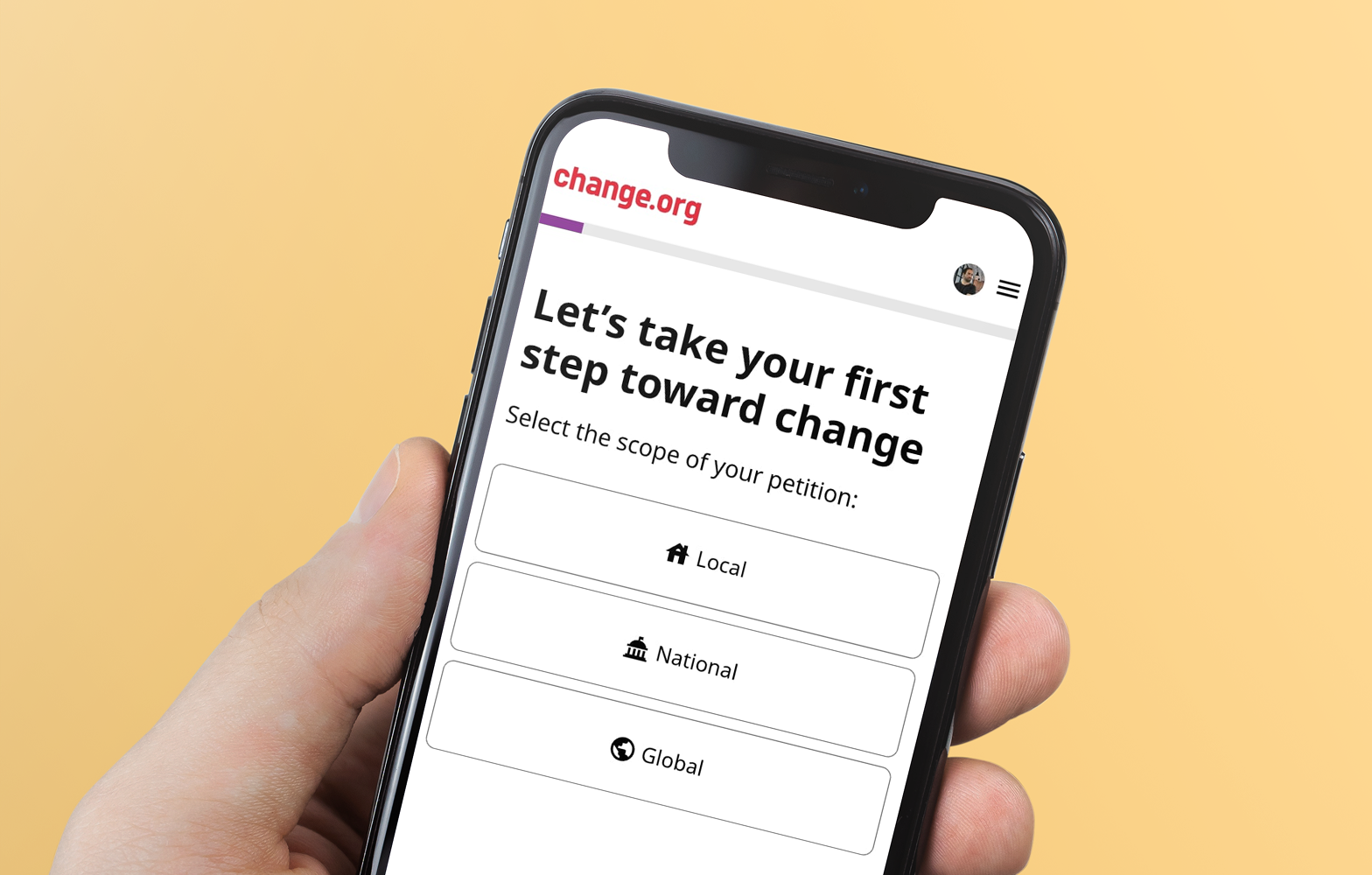
Change.org in a campaign stack: How to maximize public-pressure

Change.org in a campaign stack: How to maximize public-pressure
Change.org functions as the public-pressure layer in a campaign stack for serious organizers — generating reach, constituent proof, and decision-maker notification that that other platforms can't replicate from a cold start. This guide explains how Change.org fits alongside other campaign tools, when to use each, and how to build a stack that uses the public-pressure layer for what it does best.If you’re wondering whether online petitions are a legitimate tool for serious organizers — all the many Change.org campaigns that have led to policy changes and other major outcomes answer that question.
Just one of those victories is a petition started by an advocate and parent to protect children’s privacy and safety by stopping a national database of autistic individuals. The petition earned 50,000 signatures, a flood of impassioned comments and videos from supporters, and was featured in an article by The Guardian. As a result, the U.S. Department of Health and Human Services canceled its plans for the registry containing sensitive personal data.
Wins like this are because of the public pressure that Change.org petitions create. This happens through the tool’s ability to recruit new advocates to a cause, build visible proof of public demand, and show decision makers how many supporters are the community members they represent.
Campaigners can use this documented public record to present at meetings and hearings, to send to the media, and deliver directly to the people in charge who can make the change.
Change.org gives petition starters details on their supporters and a way to communicate with them through petition updates. Some campaigners also use organizing platforms like Action Network, NationBuilder, or EveryAction — tools built specifically for managing supporter relationships across email, SMS, events, and donations in a system the organization controls independently. See our civic technology toolkit guide for a full comparison of these and other organizing platforms.
This guide covers the differences between these tools and how they can fit together.
What the public layer does that organizing platforms can't
Action Network, NationBuilder, and EveryAction are powerful for mobilizing supporters who are already on a list. Every new supporter has to be acquired through paid ads, events, canvassing, or organic search.
Change.org's public layer covers four jobs that don't have a clean equivalent in an owned organizing platform:
Top-of-funnel reach. More than 577 million people are active on the platform, with over 500,000 signatures collected daily. A petition surfaces to people who care about the issue but don't know the campaign exists — without requiring a paid acquisition budget.
On-platform discovery. Search visibility opens at 5 signatures. Petitions will be shown in all relevant searches within the platform, making organic discovery a real acquisition channel — not just a nice-to-have. Promoted petitions are shown in more locations throughout the website and targeted to people who are likely to support the cause based on their engagement with other similar issues.
Decision-maker notification. At 10 signatures, Change.org automatically notifies the decision-maker you assign to the petition or one that the Civic Engagement Team identifies for you. For local petitions that reach 100 signatures within 30 days, the Civic Engagement Team contacts local elected officials directly about the petition’s momentum. That outreach happens without the campaigner having to manage it.
Constituent proof. When a petition crosses 100 signatures with at least 60% of signers concentrated in the same area, a constituent count appears publicly under the decision-maker's name on the petition page. ZIP-code maps, comments in the Supporter Voices section, and exportable signer location data turn a signature count into evidence that officials take seriously. These are the kind of hard facts that hold up in a city council chamber or a meeting with a legislative staffer.
Change.org is where a campaign reaches people both within and outside its existing network and builds the public proof that officials act on. Organizing platforms are where campaigns manage supporter relationships across multiple channels in a system they control independently of any single platform.
How a campaign progresses on Change.org
Here's how the platform works at each stage of a campaign — and where organizing platforms can plug in for campaigns that are running both.
1. Launch with a specific ask and a named decision-maker. The petition page becomes the public face of the campaign — the URL you share, the page reporters link to, the destination that shows up in online search.
2. Reach the threshold sequence. 5 signatures unlocks search visibility. 10 signatures triggers decision-maker notification. 100 signatures in 30 days activates Civic Engagement Team outreach to local officials.
3. Build constituent proof. ZIP-bucketed signature data, supporter comments, and the public constituent count accumulate as the campaign runs. This is part of the delivery packet.
4. Post petition updates. Updates appear on the petition page and send to supporters via email, keeping the public audience informed with fresh content and supporters engaged.
5. Direct engaged supporters to owned channels. You can update the main text on the petition page or post an update where you can include calls to action pointing to a campaign website, email signup, or volunteer coordination. This is the manual handoff point: supporters who've demonstrated engagement through signing can be invited into a campaign's owned infrastructure.
For example, the petition to stop copper mining in the Porcupine Mountains State Park has accumulated over 460,000 supporters to date. The petition directs its audience to its own comprehensive campaign site that includes options to donate to the campaign directly, purchase merchandise, and read further research materials.
6. Export petition data for delivery. Signature counts, supporter names and locations, and supporter comments are exportable and serve as the formal delivery packet when engaging decision-makers directly, attending public hearings, or pitching press.
The architecture in practice
Local civic pressure: Phoenix food distribution ordinance
In April 2026, St. Herman's Table — a volunteer feeding ministry — learned that Phoenix was considering an ordinance that would require permits to distribute food in public parks. This would derail their mission of weekly outreach to people experiencing homelessness. The City Council vote was weeks away.
They launched a Change.org petition targeting Mayor Kate Gallego and eight council members. The petition crossed 1,000 signatures quickly, generating a constituent proof record and triggering Civic Engagement Team outreach to local officials. Change.org's team reached out directly to council offices and received a formal response from the Office of Councilwoman Anna Hernandez documenting her public position on record through the petition.
The petition starter submitted the signatures formally to the City Council ahead of the May 6 vote. The petition served as the public-facing surface for the campaign: the evidence of public sentiment, the vehicle for an official response, and the delivery mechanism for the formal submission.
What the architecture provided: a named target list, automatic official notification, a documented constituent record, and a Civic Engagement Team that handled official outreach without the campaign having to manage it.
Policy and regulatory pressure: Red wolf highway crossings
In 2023, wildlife advocates launched a petition targeting the North Carolina Department of Transportation, the NC Wildlife Resources Commission, and the U.S. Fish and Wildlife Service. The petition was prompted after a critically endangered red wolf was killed by a vehicle on Highway 64 cutting through Alligator River National Wildlife Refuge. With only 19 known red wolves remaining in the wild, car crashes had become the leading cause of death.
The petition named a specific infrastructure ask: wildlife crossings and guide fencing along the 12-mile section of Highway 64 through the refuge. It ran alongside a coordinated coalition effort that included Wildlands Network and the Center for Biological Diversity, who ran a parallel private fundraising campaign.
The outcome: NCDOT applied for and received $25 million in federal grant funding specifically to construct wildlife crossings in Eastern North Carolina for red wolf protection. Wildlands Network raised an additional $4 million in private matching funds. The victory update directed engaged supporters to Wildlands Network's newsletter and donation page — the explicit handoff from the public-pressure layer to the coalition's owned channels.
What the architecture provided: a public-facing surface that documented broad public demand, named the specific agencies with decision-making authority, and contributed to a documented federal outcome. The handoff to private organizing infrastructure happened through the petition update itself.
Constituent proof and district relevance
For campaigns targeting elected officials, constituent proof is the most important function of a petition — and it's what most organizing platforms can't produce on their own.
When a local petition crosses 100 signatures with 60%+ geographic concentration, the constituent count appears publicly under the decision-maker's name on the petition page. This means an official or their staff can see, without any additional work from the campaign, how many of their own constituents are on record.
For delivery: the exportable signer data (name, country, postal code, date, comment) is the packet. Combined with supporter comments from the Supporter Voices section — which can include text and video — the petition generates both quantitative constituent proof and qualitative evidence of community impact. That combination holds up in a council chamber in a way that a raw signature count doesn't.
For district-level campaigns, the framing that works: don't lead with the total signature count. Lead with the constituent count — how many signers are from the district, the ward, the school zone, the zip code the official represents. That number is the argument.
Where public petitions fit alongside formal process
Change.org petitions are not legal filings and don't substitute for formal public comment in regulatory or legislative proceedings. What they do is generate the public record and visible momentum that supports and amplifies formal process.
The pattern that works:
Public comment periods: When a government agency is accepting public input on a proposed rule or decision, a petition running at the same time shows officials that the concern extends beyond organized advocacy groups. It reflects genuine public sentiment.
Hearings and council meetings: A petition packet — signature count, constituent map, supporter comments — can be submitted formally or presented as supplementary evidence. The Phoenix petition was submitted to the City Council ahead of the vote. The red wolf petition contributed to documented agency action.
Regulatory proceedings: For multi-agency campaigns, the petition creates a public record of demand that local, state, and national government agencies can reference. The red wolf campaign named three specific agencies and contributed to a $25M federal grant decision.
Legislative outreach: For state and federal campaigns, the petition signals public salience to legislative staff — the people who track whether an issue has visible public support before it reaches a member's desk.
When to pair Change.org with other tools
Action Network is the right CRM layer when the campaign needs owned email sequences, integrated fundraising, event RSVPs, and a long-term supporter database. The handoff process: use Change.org for public acquisition and official notification, export signer data, and build the ongoing supporter relationship in Action Network. Action Network's strength is the integrated workflow once a supporter is in the system; Change.org's strength is getting them there from outside any existing list.
NationBuilder fits campaigns that need deep CRM functionality, chapter management, or a long-term political database. The handoff is the same: Change.org generates the public proof and the initial supporter signal, NationBuilder manages the relationship and the field operations over time.
Mobilize is the right tool when the campaign needs to convert online support into in-person turnout, like volunteer shifts, canvassing, events. The handoff from Change.org to Mobilize typically happens through a petition update directing engaged supporters to sign up for an event or volunteer slot.
EveryAction fits larger organizations running integrated multi-channel campaigns — petitions, fundraising, advocacy, and field in a unified system. Change.org runs the public acquisition layer; EveryAction manages the full supporter lifecycle inside the organization's infrastructure.
In each case, the architecture is the same: Change.org generates reach and public proof that owned tools can't replicate from a cold start, and the owned tool sustains the relationship that Change.org surfaces.
Safety-sensitive campaigns
For campaigns where public exposure might come with some risk for participants — whistleblower situations, survivor-led advocacy, politically sensitive local issues — it’s important to plan your steps carefully before going public
The general pattern: keep the public petition as a later-phase tool, after private organizing has established a coalition and assessed the exposure risk. Use Change.org's privacy controls (anonymous signing, display-name opt-out, pseudonyms) to give supporters meaningful control over their visibility.
Learn more about signer visibility, anonymous signing, and safe launch practices in our guides on privacy and supporter data.
The formula for winning campaigns
Over 100,000 petitions on Change.org have achieved their goals — across local government, state and federal policy, and corporate accountability campaigns.
These data points show where the platform's public-pressure layer is most effective: roughly 75% of petitions target politicians, and local petitions with at least 100 signatures highly concentrated in the designated location are the most successful.
For organizers building a stack, that means the constituent proof mechanics — the geographic map, the district count, the supporter comments — aren't just features. They're the core of what makes a Change.org petition work as a pressure tool.
What this means for how you build your campaign stack
Organizers that get the most out of Change.org treat it as its own campaign layer with a distinct job and pair it deliberately with the tools that handle other campaign functions outside of that scope.
Start with a specific ask, a named decision-maker, and a clear geographic target. Use petition updates and the petition page to direct supporters into owned channels. Export your signers’ names and zip codes when you're ready to move to the CRM layer. And present the constituent details when you engage decision-makers directly.
Whether your campaign targets a school board or a federal entity like the Environmental Protection Agency, your petition is a critical tool for powerful change on its own or as part of a larger system.