How to prove local support and win with Decision Makers: A complete guide
How to prove local support and win with Decision Makers: A complete guide
Change.org does more than collect signatures — it's a full campaign system with built-in tools to identify decision makers, prove constituent support, and apply coordinated pressure until you win. Here's how to use it.In this article you will learn:
After a tragic crash killed five teens on a dangerous road in Fort Myers, Florida, a local resident started a Change.org petition calling for new safety measures. The petition was specific, locally focused, had a powerful personal example at the center, and directed at the right decision makers. It gained over 41,000 signatures — and public outcry reached beyond the petition page to media coverage and local meetings where residents spoke directly to officials.
Within weeks, city and state officials responded, agreeing to install new signage and safety features. This outcome shows what's possible when you combine clear demands, local relevance, and strategic outreach. This guide walks you through how to do just that.
How Change.org surfaces your petition to decision makers
Most platforms leave users to find and contact decision makers on their own. Change.org builds that work into the platform. For a deep dive on this feature, see our guide to how Change.org connects you with your elected officials.
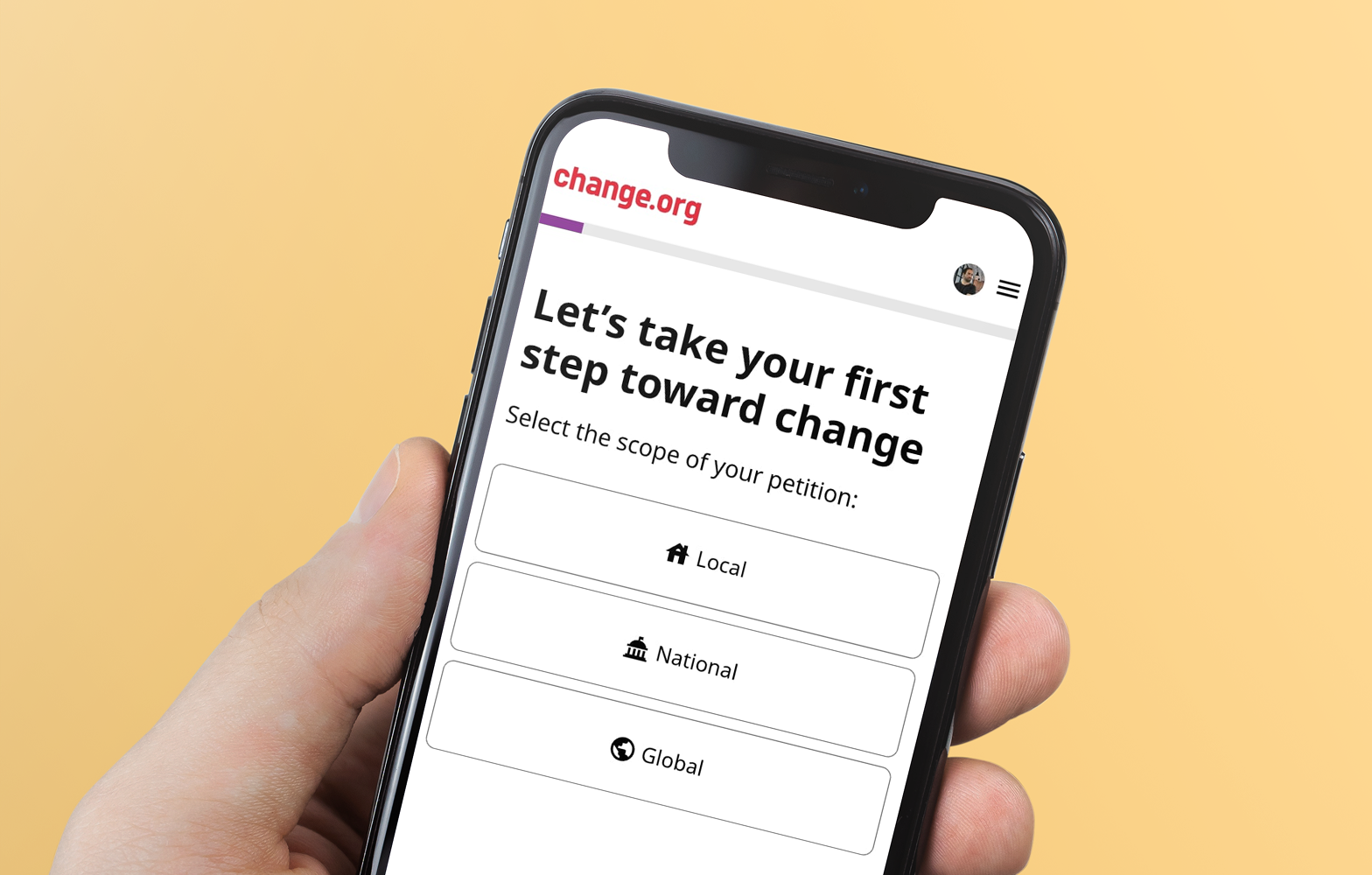
Decision maker identification. When you start a petition, Change.org uses a combination of AI technology and human review to identify and assign the right decision makers based on your petition's target and location. If you don't already know the right decision maker to manually add — they're surfaced for you, with profile pages that include names, photos, and descriptions for officials already in the system.
Automatic notifications. Once your petition gains initial momentum, the assigned decision maker receives an email notification. For local petitions targeting elected officials that reach 100 signatures within 30 days of launch and qualify as a quality petition, Change.org sends a series of three outreach emails to the official. Those messages include an AI-generated summary of the petition and a direct link, along with an invitation to share a public statement in response.
Direct staff outreach. Change.org's Civic Engagement team contacts local officials directly — by phone and email — when petitions targeting elected officials at the city, county, or state level gain meaningful momentum. We believe democracy starts at home, and when local petitions start to gain traction, our team makes sure officials know about the issues that matter most to their communities.
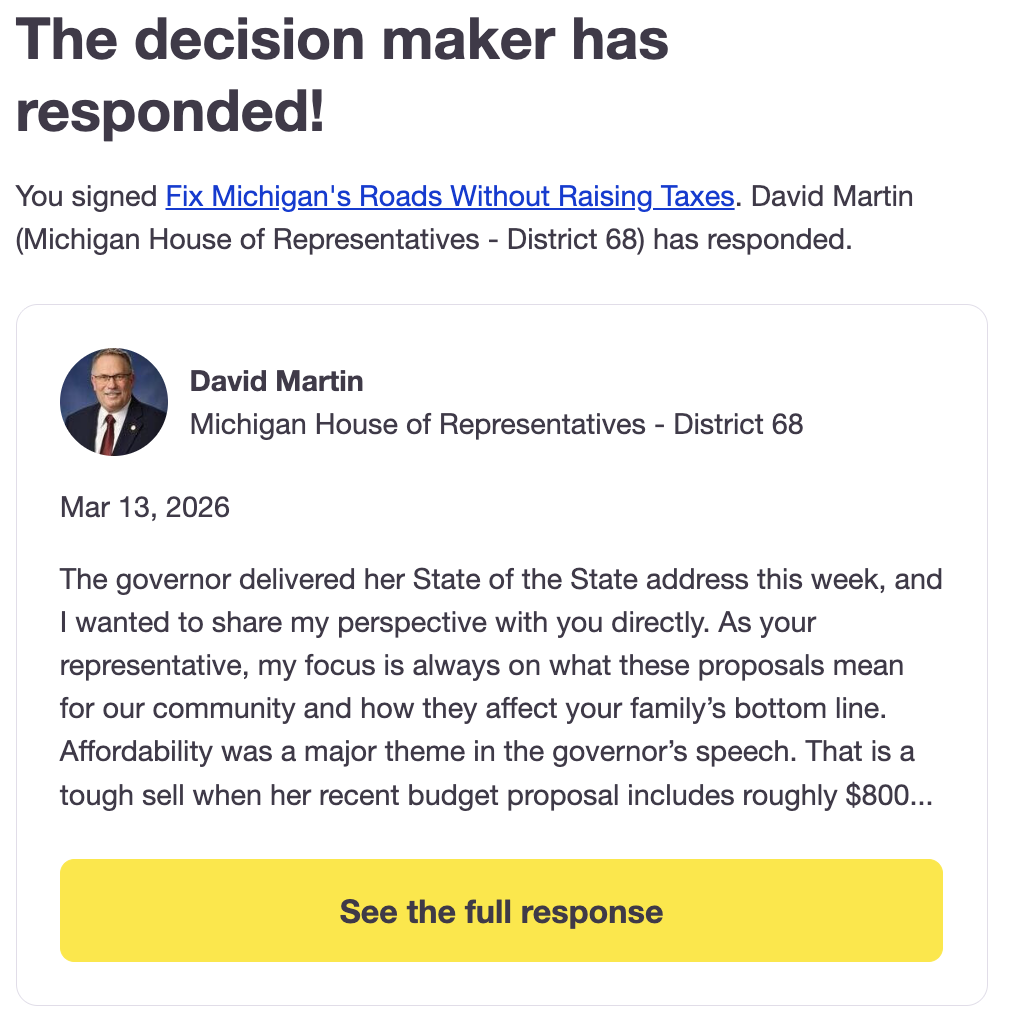
Decision maker responses. Officials can respond publicly on the petition page. Change.org's team facilitates this process — helping officials understand what would be useful to share, following up to ensure a response is posted, and making that response visible to every supporter. A public response from a decision maker creates an on-the-record accountability signal that's hard to ignore.
Your dashboard shows you where things stand. The petition dashboard includes a notification status that shows when your decision maker was contacted about your petition, so you always know where outreach stands without having to guess.
Step 1: Identify the right decision maker
Change.org will suggest decision makers for your petition, but understanding who holds power over your issue helps you confirm the right target and build a stronger case.
Identify the decision maker. Is it a local official, a department head, or someone in a private organization? Sometimes it's one person, other times it's several. Make a list of people who could take action.
Understand the structure. Research how the relevant organization operates. If your target is a city council, find out which member oversees the issue. If you're aiming for a state representative, look up their legislative staff.
Build relationships with key contacts. Assistants, associates, and staffers manage access to decision makers. Reaching out to them first can help get your message through — and they may become champions of your cause.
Focus on the most immediate person who can act. Local officials are often more responsive than high-level executives or state leaders. If your issue is about school policies, start with the principal of one school or an individual school board member, not the state education department. Once you have a local win, you can pursue change at a larger scale.
Ask for suggestions. If you're not sure where to start, ask people connected to the issue for help. One concerned mother fighting Medicaid restrictions for autism therapy asked her son's therapy center and other parents for contacts — and won expanded coverage by finding the right people through her community.
Step 2: Prove constituent support
One of the most common reasons local officials dismiss petitions is the belief that signers aren't real constituents. Change.org gives you the tools to counter that directly.
Show who signed and where they live. Your petition page includes a map displaying the ZIP codes of your signers. When your petition has more than 100 signatures and at least 60% of signers are concentrated in the same area, a constituent count appears directly under the decision maker's name on the petition page — showing exactly how many people from their district signed. When you're making your case to an official, that number is your strongest argument.
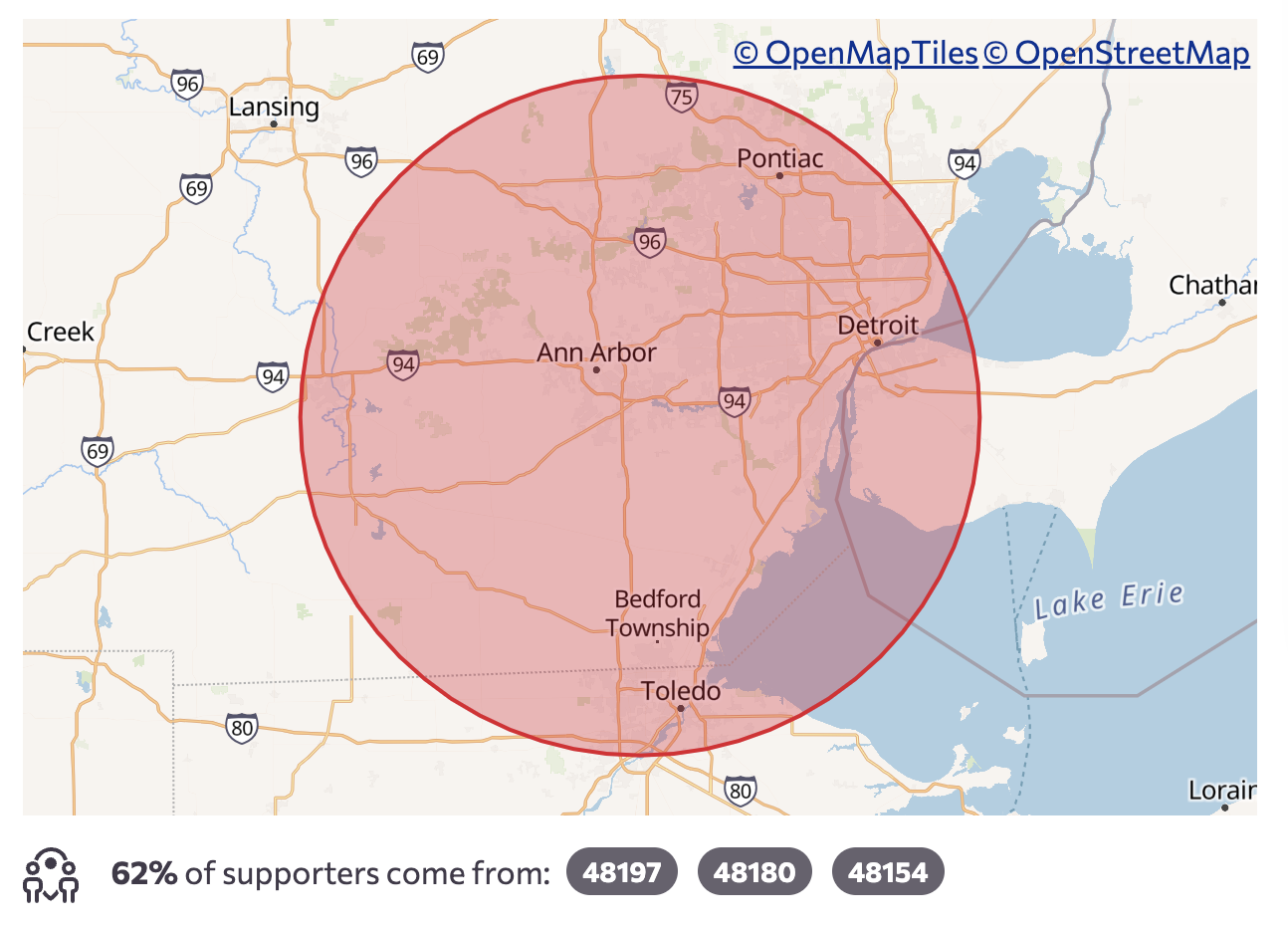
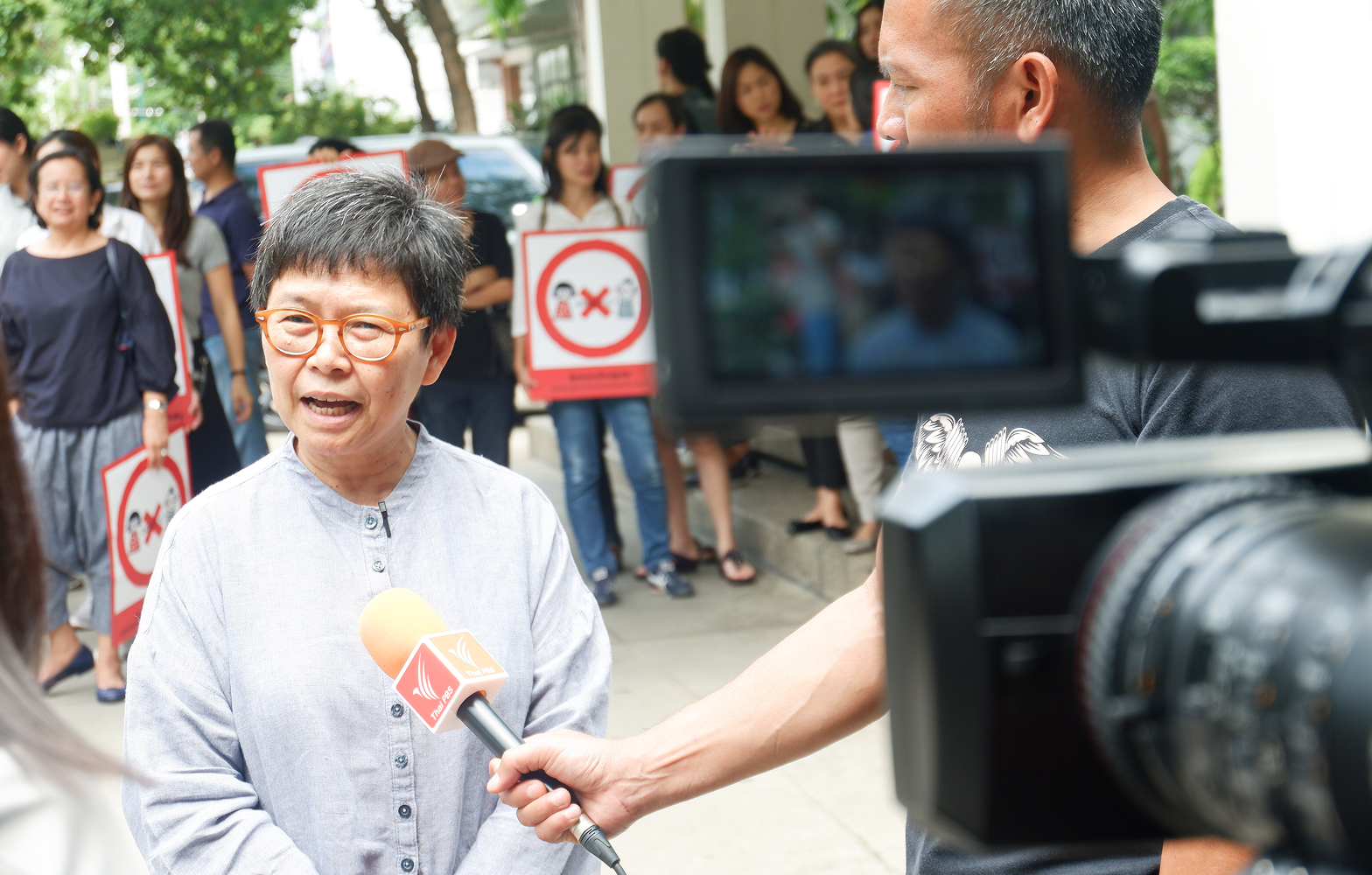
Export your supporter list. You can export the names and ZIP codes of signers who have shared that information. Bring that list to a meeting, include it in an email to an official, or use it to brief a journalist. A clean, localized supporter list answers the "are these real constituents?" question before it's even asked.
Surface personal stories. In the Supporter Voices section at the bottom of your petition page, signers can leave text or video comments explaining why they support your petition. Those comments are visible to anyone who visits the page and can be shared directly with decision makers as evidence of community concern — not just a headcount. Use a petition update to encourage supporters to add their stories, and then bring the most compelling ones into your outreach.

Email decision makers directly. You can email assigned decision makers directly from the petition dashboard, with a suggested subject line and message already generated. The platform makes it easy for you to connect with officials quickly without having to find the correct contact information.
Package it for delivery. A well-organized petition packet — including signature count, constituent breakdown, ZIP data, and selected supporter quotes — gives officials something concrete to take into a meeting or share with colleagues. Make a copy of our Petition Delivery Packet template to build yours before any in-person delivery or formal submission.
In a Change.org survey of elected officials, petitions signed by registered voters and petitions signed by voters from within their district were among the top reasons officials cited for responding. Targeting your outreach to local constituents makes your petition significantly more persuasive.
Step 3: Know what motivates your decision maker
To move a decision maker, you need to understand what drives their behavior. Most respond to some combination of four pressure points: reputation, economics, moral authority, and accountability to those above them.
A petition that took on Walmart and won shows how these work in practice. A petitioner called out the retailer for selling service dog vests and ID cards that could be misused by people with untrained pets — putting disabled people and their legitimate service animals at risk.
👁️ Reputational pressure: Challenge how they want to be seen. What kind of image are they trying to uphold? What would embarrass them in front of customers, voters, or the media? The Walmart petition challenged the company's public image as an inclusive, family-friendly retailer. By exposing how the company profited from a policy that undermined accessibility and safety, the campaign gave customers and journalists reason to question its ethics.
💸 Economic pressure: Target their financial interests. Who gives them money? Could bad press affect their bottom line? Campaigns can escalate by connecting an issue to potential customer loss, advertiser concern, or shareholder pressure — especially when media or influencer coverage amplifies it.
🧭 Moral pressure: Question their values. What ethical standards do they claim to follow? Who are the moral voices they'd feel accountable to? The Walmart campaign gained strength by framing the issue as one of human dignity and legal rights — challenging the company to live up to the values it claimed to represent.
🔍 Positional pressure: Who holds them accountable? Who appointed them, manages them, or oversees their decisions? If local management doesn't act, pressure can escalate to corporate leadership, board members, regulators, or government agencies. External oversight — even the threat of it — can create the accountability needed to force change.
Step 4: Plan and escalate your tactics
Once you know what motivates your decision maker, plan your tactics in stages — starting with easy actions that build momentum and escalating to higher-effort actions as your campaign grows. Time your outreach around key moments: votes, budget sessions, public hearings, or relevant dates on the cultural calendar.
Use the petition update tool in your dashboard to communicate with supporters and coordinate action at each stage.
Low-effort actions to build early momentum
Share the petition via email, text, and social media
Ask supporters to leave comments on the petition sharing their personal experiences
Tag or tweet at the decision maker on social media
Comment on the decision maker's posts on Facebook, Instagram, TikTok, or LinkedIn
Ask an influencer, journalist, or aligned public figure to share the petition
Submit feedback through a company's or agency's official feedback form
Start or join a campaign-specific Facebook or Reddit group
Example: The petition starter of the fake service dog merchandise petition asked supporters to comment on the Facebook and Instagram posts of the Walmart CEO, educating him on why he should prohibit those products.
Medium-effort actions that deepen pressure
Email or call the decision maker directly to advocate for the issue
Ask supporters to record short videos explaining their support to share on social media or as petition comments
Pitch journalists to cover the campaign — learn how in our guide to pitching the media
Write a letter to the editor of a local or national outlet about the campaign
Distribute petition flyers or stickers in your community
Example: In a petition to stop the proposed Florida black bear hunt, activists asked supporters to contact multiple officials — calling and emailing the Governor, emailing state commissioners using a provided list, and submitting formal comments to a designated channel. They supplied suggested subject lines, message templates, and direct contact info to make participation easy.
High-impact actions that maximize visibility
Organize supporters to speak at open government meetings, board sessions, or council hearings
Ask the decision maker a direct question at a public event and record it to share online — learn how in our guide to birddogging
Host a public virtual meeting on Zoom or a livestream to brief supporters and press on campaign developments
Plan a public demonstration — a rally, vigil, march, or protest
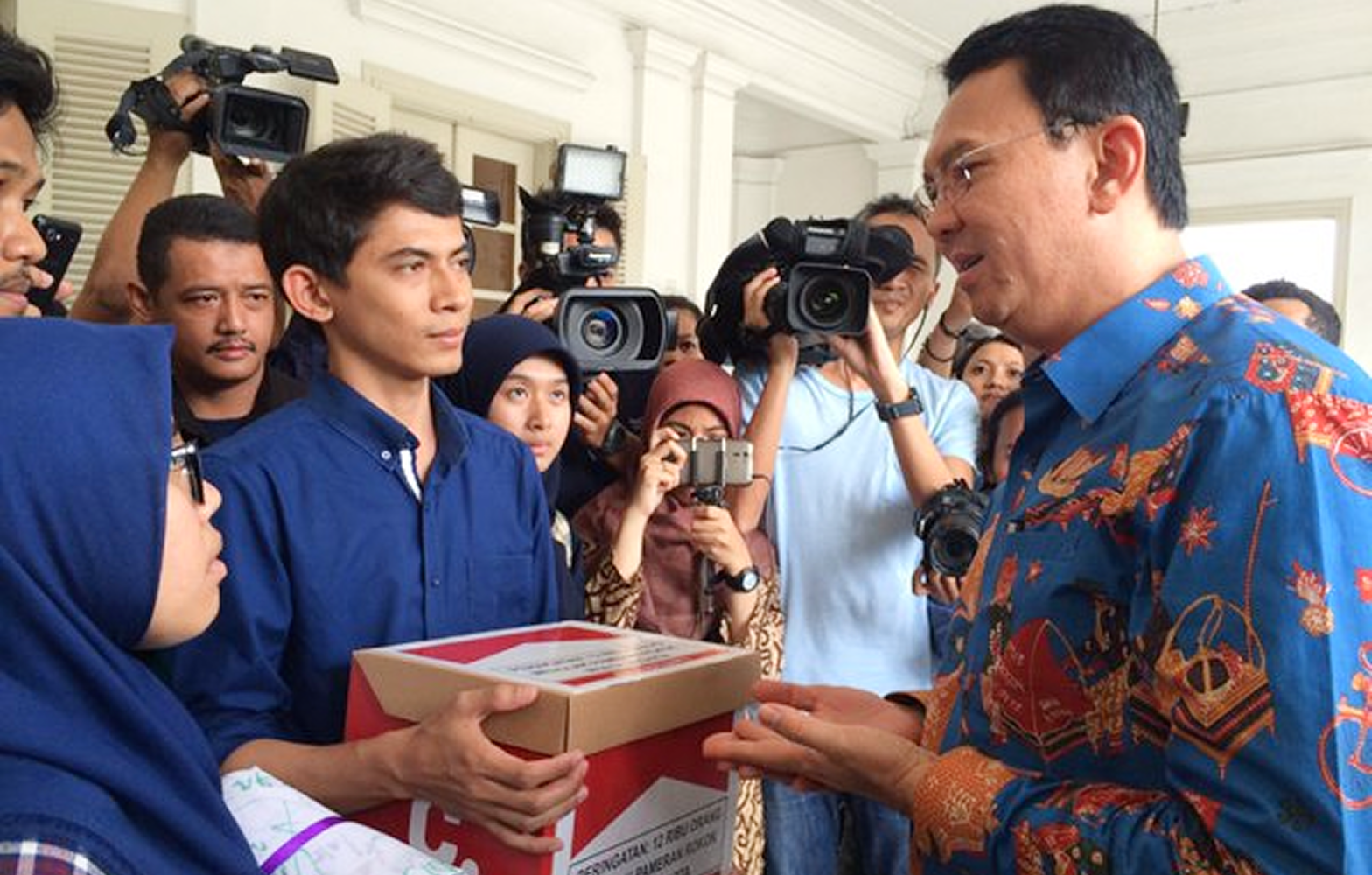
Deliver your petition in person to the decision maker's office with a printed list of signers, exported from your dashboard use our Petition Delivery Packet template to prepare
Start related petitions targeting allies or enablers of the decision maker
Example: A petition opposing a controversial logging plan in the Notch Forest escalated when the city moved forward despite public opposition. Petitioners urged supporters to attend a city-run forum, show up visibly, and challenge misleading messaging in front of officials. That public presence changed the dynamic and the petition won.
Campaigns that show what's possible
These campaigns show the full arc — from petition to real-world outcome — across different types of local decision makers.
School budget, Isle of Wight County, Virginia
A local teacher started a petition urging the Board of Supervisors to approve the full proposed school budget for the 2026-2027 school year. The petition made the case for competitive teacher pay, classroom supplies, modern technology, and facility upgrades — all backed by research on how school investment affects student outcomes.
The campaign reached over 1,000 signatures and the petition starter used every tool available. Supporters sent emails, signed the petition, and packed a public board meeting to show visible community support. Change.org's Civic Engagement team reached out to Board of Supervisors member Robert Eley III, who posted a public response on the petition page acknowledging the community's feedback and confirming it would be taken into consideration in the budget review.
The petitioner's update said it plainly: "We PACKED THE ROOM and visibly demonstrated the seriousness of our needs."
Zoning decision, Franklin Township, Indiana
When residents learned that Google planned to build a large data center on 465 acres in Franklin Township, a neighborhood association started a petition raising concerns about environmental impact, noise, minimal job creation, and a 50-year tax exemption that would leave the community with little benefit.
The petition drew widespread local support. Residents rallied before the City-County Council meeting and filled the room — organizers needed to open two overflow rooms to hold the crowd. City-County Councilor Michael-Paul Hart posted a response on the petition page indicating he was actively gathering community feedback before taking a formal position.
Google ultimately withdrew its zoning petitions. Councilor Hart attributed the outcome directly to the turnout. As petition supporter Julie Goldsberry put it: "You did this."
Chemical plant accountability, Bristol, Pennsylvania
After a massive chemical spill in Bristol, Pennsylvania, a community-led petition demanded accountability and stricter oversight of the facility. The campaign emphasized immediate health threats and the plant's documented history of safety violations.
As the petition gained traction, 10 elected officials sent an urgent letter to the Pennsylvania Department of Environmental Protection calling for a thorough investigation, penalties, and stricter monitoring. The petition gave those officials both the public mandate and the community evidence they needed to act.
Child development center, Napa, California
Families in Napa mobilized to support a new Child Development Center facing opposition from neighboring residents. Supporters signed and shared the petition, sent emails to city officials, and showed up in person at a Napa City Council meeting.
The Council voted unanimously to deny the appeal and uphold the center's permit. The petition gave supporters a clear rallying point and a documented record of community support that officials could point to in their decision.
➡️ For a scenario-by-scenario playbook — school boards, zoning, neighborhood safety, and city hall — see our local civic action guide.
➡️ For more inspiration, read these stories about individual advocates who started movements on Change.org.
Petition delivery outreach templates
Use these templates when you're ready to move from signatures to direct contact. Customize each one with your petition details before sending.
Template 1: Meeting request email
Use this to request an in-person or virtual meeting with your decision maker or their staff. Keep it short — the goal is to get on the calendar, not to make your full case in the email.
Subject: Meeting Request: [Petition Title] — [Your Name/Organization]
Dear [Decision Maker's Name or Staff Contact],
My name is [Your Name], and I am the starter of a Change.org petition calling on [decision maker or body] to [specific ask]. The petition has gathered [number] signatures, including [number] from constituents in [district/city/area].
I'm writing to request a brief meeting — [15 or 30] minutes — to share the community's perspective directly and answer any questions you may have. I'm available [days/times] and am happy to meet in person at your office or virtually at your convenience.
I've attached a summary of the petition and supporter data for your reference, and the full petition is available at: [change.org/p/your-petition-url]
Thank you for your time and for your service to our community.
Sincerely, [Your Full Name] [Organization, if applicable] [Email] | [Phone]
Template 2: Press release
Use this when you're ready to formally announce your petition to local media. Send it to reporters whose beats align with your issue — local government, education, environment, community affairs. See our guide to pitching the media for tips on personalizing your outreach beyond the release itself.
FOR IMMEDIATE RELEASE [Date]
Contact: [Your Name] [Email] | [Phone]
[HEADLINE: Petition in X Communtiy Calls on [Decision Maker/Body] to [Specific Ask]]
[SUBHEAD: [Number] signatures and growing as residents push for [outcome]]
[CITY, STATE] — A Change.org petition calling on [decision maker or governing body] to [specific ask] has gathered [number] signatures from residents across [city/county/district]. The petition was started by [your name or organization] on [date] in response to [brief description of the issue].
[2-3 sentences describing the issue and why it matters to the community. Include any relevant data, a brief personal story, or a description of what is at stake.]
"[Direct quote from the petition starter— state the problem and what you're asking for in plain language.]" said [Your Name], petition starter.
The petition has drawn support from [geographic area], with signers citing [common themes from supporter comments — teacher pay, health concerns, housing access, etc.]. [Optional: include a brief quote from a supporter.]
Change.org's built-in tools show that [number] of the petition's signers are constituents from within [district/area]. The petition is available at: [change.org/p/your-petition-url]
[Your Name/Organization] is calling on [decision maker] to [restate the specific ask] by [date or upcoming decision deadline, if applicable]. [Optional: note any upcoming vote, hearing, or meeting where the issue will be decided.]
For more information or to arrange an interview, contact [Your Name] at [email] or [phone].
Engaging decision makers: Dos and don'ts
Based on what we've seen succeed at Change.org and direct feedback from decision makers in a national survey, there are clear strategies that work — and common pitfalls that don't.
✅ Do: Target specific, narrow demands
Broad asks like "fix education" or "protect the environment" are important, but they're hard to act on. Petition starter Siddhu Pachipala put it this way:
"When we have big issues like 'we need to fix education here in Texas' — if we slice big issues into little ones — like focusing on a specific book being banned at one school at one time — it's much easier for people to act."
Instead of asking a school district to "improve school safety," focus your petition on installing crossing guards at a dangerous intersection outside your local school. Smaller, targeted demands are more winnable — and open the door to broader change later.
✅ Do: Research your decision maker
The more you know about your decision maker, the more effectively you can persuade them. Look into their voting record, public statements, and personal background. According to our survey, 40% of decision makers said they were more likely to respond when a petition aligned with their personal or political values.
If your city councilmember has previously introduced climate legislation, show how your ask builds on their prior commitments. If a school board member frequently talks about student wellbeing, frame your proposal around student outcomes.
✅ Do: Plan your method of contact
Surveyed decision makers said the most effective outreach methods are, in descending order: personal emails, in-person meetings or office visits, phone calls, speaking at town halls, and tagging on social media. Don't stop at the "contact us" form on a website — find the name and contact info for the specific person with the power to act, or their assistant.
✅ Do: Emphasize local impact and community relevance
Decision makers are most responsive when they know an issue affects their constituents. Survey respondents said they were more likely to act when signers are registered voters, the issue supports the goals of the city or serves the common good, and the decision would improve conditions for the majority.
Use your petition dashboard to show how many people from your area have signed — and bring that data into every conversation with officials.
✅ Do: Prepare thoroughly for in-person meetings
If you have a chance to sit down with a decision maker face to face in their office or virtually, make the most of that opportunity.
Practice your pitch and rehearse the key points: what the issue is, why it matters, what you're asking for, and what it will achieve
Bring your petition materials: printed signatures, community comments, and supporting data
Agree on next steps at the end of the meeting and confirm them in writing
Know your non-negotiables — and be honest about where you can compromise
✅ Do: Follow up consistently
After any meeting or contact, send a thank-you message with a recap of what was discussed and any agreed-upon next steps. Update your supporters on what happened and what they can do next. Schedule regular check-ins to keep your decision maker accountable.
✅ Do: Learn from successful Change.org petitions
Petition to shut down a harmful chemical plant in Pennsylvania. After a massive chemical spill in Bristol, Pennsylvania, a community-led petition demanding accountability gained traction by emphasizing immediate health threats and the facility's history of safety violations. The Pennsylvania Department of Environmental Protection received an urgent letter from 10 elected officials calling for a thorough investigation, penalties, and stricter monitoring.
Petition to open a child development center in California. Napa families mobilized to support a new Child Development Center facing opposition from neighbors. Supporters signed and shared a petition, sent emails to city officials, and showed up in person at a Napa City Council meeting. The Council unanimously denied the appeal and upheld the permit.
❌ Don't: Use an aggressive or threatening tone
Anger, threats, or personal attacks make it hard for decision makers to take your request seriously. One official said: "The least persuasive message is one that's rude and full of copied-and-pasted slogans."
Avoid insults, threats, hostile language, and entitlement. Stay focused on the issue, not the person.
❌ Don't: Make irrelevant or legally impossible demands
Make sure your petition is within the decision maker's power to act on. Asking a city council member to stop a federal policy, misstating what a bill does, or making accusations without evidence undermines your credibility. "Asking me to act on something I have no authority over is frustrating," shared one elected official.
❌ Don't: Send generic, mass messages
Personalized outreach consistently outperforms form letters. "The absolute least persuasive communication I receive is a form mailing," said one official. Include your name, address, and contact information. Show that you've done your homework.
❌ Don't: Choose poor timing
Even a compelling message can be ignored if it arrives at the wrong moment. Align your outreach with key decision-making moments — a vote, a budget session, a public hearing. Avoid reaching out during evenings, weekends, or personal crises. Check public schedules and send during business hours.
→ See it in action. Every tactic in this guide — the constituent count, the Supporter Voices section, the pressure points framework — has a track record. From a Minneapolis DA charging all four officers involved in George Floyd's murder to Brazil creating a congressional commission on Amazon fires, see 12 real petitions that changed the world and exactly how each one won.
Keep the momentum going
Engaging decision makers is about building relationships, shaping public conversations, and demonstrating the collective power behind your cause. Whether your petition results in a win, a delay, or a refusal, there's always a next move.
If your ask was met: declare victory, thank your decision maker, and recognize your supporters. If you're still waiting or hit a roadblock: send an update, ask for input, and escalate with tactics you haven't tried yet.
Change rarely happens overnight. What matters most is persistence, clarity, and community. Start your petition today and use your voice to make change happen.