Protect equality: How to start an LGBTQ+ rights petition

Protect equality: How to start an LGBTQ+ rights petition
A step-by-step guide to creating an impactful petition for LGBTQ+ rights issues like marriage and family rights, gender affirming healthcare, and workplace and school policies.The recent wave of anti-LGBTQ+ policies in the U.S. since President Trump's inauguration has led to an unexpected outcome in some states: bipartisan unity. Republicans and Democrats joined voices in Montana at the end of February to, in the words of Republican representative Sherry Esseman, “Stop these crazy bills.”
One bill aimed to ban drag performances and Pride parades, while a second sought to remove trans children from their parents. Neither passed.
New bills threatening LGBTQ+ rights keep emerging. In early March, as many as 511 anti-LGBTQ+ bills across the U.S. were being tracked by the American Civil Liberties Union (ACLU).
A recent Pew Research study showed that 78% of lesbian, gay, bisexual, transgender and queer adults in the U.S. expect the Trump administration’s policies will negatively impact transgender people. Additionally, 71% expect a negative impact on the gay, lesbian, and bisexual community.
Using your voice to protect equality is a concrete way to fight for LGBTQ+ rights at a time when they’re at constant risk. Use this straightforward step-by-step guide to launch an impactful LGBTQ+ rights petition.
Why should you start an LGBTQ+ petition?
Petitions are an effective advocacy method that can make a world of difference. They show decision makers what matters to the public, compelling them to act, while also uniting communities around a common cause such as advancing LGBTQ+ rights.
There are many ways launching a petition can result in better treatment and equal rights for the LGBTQ+ community, including in the following areas:
Anti-discrimination laws
Many states in the U.S. still lack comprehensive anti-discrimination protections for the LGBTQ+ community.
Discrimination can touch on all aspects of life. For example, In April 2014, a petition on Change.org successfully asked for Boy Scouts of America to get rid of its anti-gay policy. They achieved their goal with over 127,000 signatures.
Gender-affirming healthcare access
Transgender and nonbinary individuals often face barriers to obtaining gender-affirming healthcare. As of August 2024, 39.4% or 118,300 trans youth aged 13-17 are living in the 26 states that have passed bans on gender-affirming care.
This includes 2,300 youth living in the two states — Arkansas and Montana — where bans are currently on hold or blocked from enforcement through court orders.
School policies
The 2021 National School Climate Survey by the Gay, Lesbian, & Straight Education Network (GLSEN) showed that nearly all LGBTQ+ students (97.0%) heard “gay” used in a negative way at school. Additionally, 83.4% of LGBTQ+ students heard negative remarks specifically about transgender people.
Among LGBTQ+ students in in-person or hybrid learning environments during the 2021-2022 academic year, over 76% experienced verbal harassment specifically based on sexual orientation, gender expression, and gender identity.
Workplace protections
While the 2020 Supreme Court ruling in Bostock v Clayton County affirmed that Title VII of the Civil Rights Act protects LGBTQ+ employees from workplace discrimination, enforcement remains inconsistent.
Petitions can pressure corporations and governments to adopt stronger workplace protections.
Marriage and family rights
Although same-sex marriage was legalized nationwide in 2015, challenges remain in areas such as adoption, parental rights, and spousal benefits.
Advocacy efforts, including petitions, have led to policy changes ensuring LGBTQ+ couples have equal rights in these areas.
Protections for trans and nonbinary individuals
In the Human Rights Campaign Foundation 2024 State Equality Index the Executive Director of the Equality Federation Institute stated that over 60% of harmful bills introduced in 2024 attacked trans youth and education.
Petitions make important progress
Many LGBTQ+ rights petitions on Change.org have contributed to and directly resulted in significant victories. Some of those include:
Google dropped a conversion therapy app off its app store, following strong advocacy efforts and over 142,800 signatures.
Another anti-conversion therapy petition campaigned for Amazon to stop selling so-called “gay cure” books, and won. It gained over 149,300 signatures.
A petition calling to make PrEP – a medication that significantly reduces the chances of HIV infection – free and accessible won with over 30,400 signatures.
After the Roanoke Athletic Club denied pool access to a family with two same-sex partners, a petition with over 200,000 signatures pressured the owner to update their policies for inclusivity.
How to start an LGBTQ+ petition
Following a few simple steps can help you maximize the chances of your petition’s success, while streamlining and easing the process.
1. Identify the issue you want to address
LGBTQ+ rights cover many important issues, so start by choosing one specific cause to focus on. A clear, concise petition is more likely to get a response from decision-makers and achieve its goal.
For example, banning books with LGBTQ+ characters and themes is a major issue.
This petition launched in January 2025 with over 18,000 signatures seeks to halt book bans in Florida. The petition starter focused on an issue in their home state, highlighting the role an open and LGBTQ+-friendly education — and representation in books — played in the life they are “lucky to lead today.”
2. Research and build your case
Gather data, legal precedents and expert opinions to support your cause. Engage with affected individuals and LGBTQ+ advocacy organizations to incorporate firsthand perspectives, enhancing the credibility of your petition.
The following are a few valuable resources:
Advocates for Trans Equality, which provides comprehensive information on legal and policy issues affecting transgender individuals.
GLAAD offers resources on media representation and public perception of LGBTQ+ issues.
UCLA WIlliams Institute conducts research on LGBTQ+ demographics and policy impacts.
The Human Rights Campaign provides extensive research and is the largest LGBTQ+ political lobbying organization within the United States.
Looking into successful past petitions and advocacy campaigns is another useful tool. The petition that resulted in Google removing conversion therapy apps pointed to the examples of Apple, Microsoft and Amazon. These companies and Google competitors removed harmful “pray away the gay” content based on a petition.
The petition also used reputable sources such as The American Psychiatric Association to back its claims against this kind of content.
3. Choose the right decision maker
Identify the right individual or authority to enact the change you want to see. This could be state legislators, school boards, corporate leaders, or healthcare policymakers.
Understanding the decision-making process and the stakeholders involved is crucial for launching a petition that gets results.
For example, if you’re advocating for stronger anti-discrimination protections for the LGBTQ+ community, your target decision maker might be a state legislature or the Equal Employment Opportunity Commission. Whereas if you are pushing for more inclusive policies at your workplace, addressing the company’s CEO or HR director will be key.
For example, a petition targeted the New Hampshire State House to not repeal the state’s equal marriage law. With over 126,200 signatures, the petition was successful and the
New Hampshire House of Representatives voted 211 to 116 to preserve gay marriage.
Once you’ve identified the right decision-maker, find their official contact details through sources like:
Government websites (e.g., state legislature websites, city council directories, regulatory agency websites)
Company websites (executive leadership, HR or media contact pages)
Public records and LinkedIn for corporate and policy leaders
Social media
4. Write and publish your petition
Making sure your petition contains certain key elements will ensure it’s equipped with everything you need to gain supporters and attention from decision makers. Here is the basic criteria:
Structure your petition with a clear problem statement: Define the issue in straightforward terms, explaining its impact on the LGBTQ+ community.
Outline the specific action you’re advocating for and how it can create meaningful change.
Include a compelling call to action: Encourage supporters to sign, share, and engage with decision-makers.
Utilize fact-based storytelling to convey the urgency of the issue, as the petitioner on the PrEP petition did, explaining his personal story with HIV. A well-crafted narrative helps build empathy and support. Refer to our guide on how to write a petition for the comprehensive details of what to include.
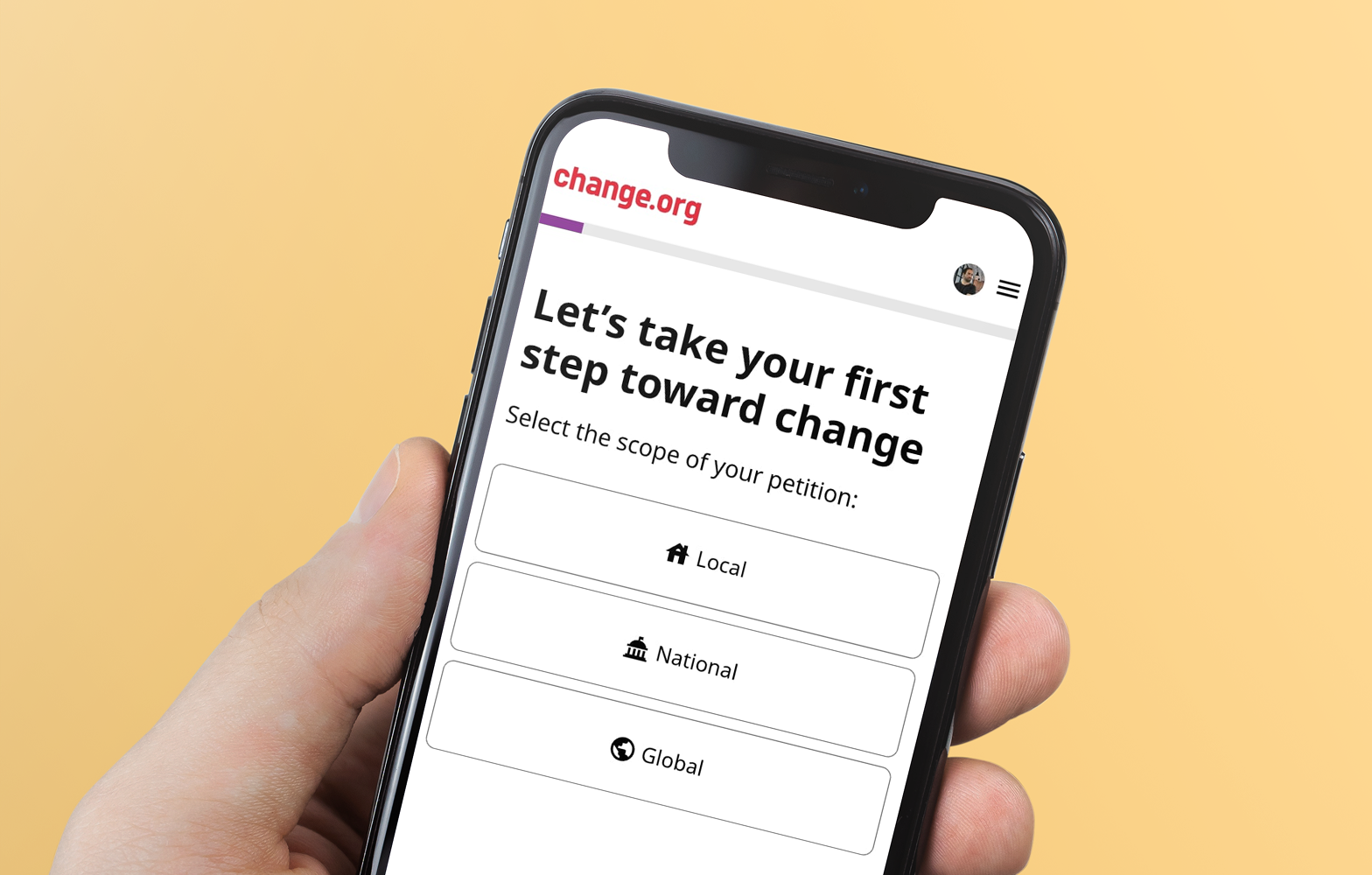
Starting a petition on the Change.org platform is free, easy, and promoting it is straightforward to help mobilize communities around your cause.
5. Attract supporters and raise awareness
Leverage social media platforms, online communities, and partnerships with LGBTQ+ organizations to amplify your cause. To build momentum, promote your petitions strategically. Here are some ideas to maximize its outreach:
Engage with online communities: Share it in relevant Reddit forums, Discord servers, and Facebook groups focused on activism.
Connect directly: Reach out to local advocates, influencers, and organizations that support your cause via email or social media.
Utilize media and podcasts: Pitch your petition to blogs, news outlets, and podcasts that discuss and cover LGBTQ+ rights to expand your audience.
The more exposure your petition receives, the greater its chances of gaining signatures and driving real change.
6. Engage decision makers and mobilize to apply pressure
Now that you have a strong petitions and proven support, it’s time to make some noise!
Communicate directly with decision-makers through emails, phone calls, and social media. Organize public demonstrations and utilize media coverage.
Encouraging your supporters to participate in advocacy efforts, like attending meetings or writing letters shows a powerful united front, and maintains pressure and visibility. You can also use petition updates as an organizing tool and to report on your progress.
Sometimes, public figures go a step forward and start their own petitions on Change.org. For example, in May 2019 Taylor Swift started a petition urging the U.S. Senate to support the Equality Act. It got over 852,400 signatures.
Start your petition to protect LGBTQ+ rights now on Change.org
Starting an LGBTQ+ rights petition is a powerful way to advocate for meaningful change. Follow these steps and draw inspiration from successful campaigns to mobilize support and influence policies that promote equality and protect the rights of LGBTQ+ communities.
Petitions have already made a significant impact in shaping laws, changing policies, and increasing awareness. Start your petition today — it could be the next to drive progress.