

Military Families Forced to New PCS Contract Amid Diminishing Self Move Rates
The Issue
Dear Members of Congress,
Military Families Forced to New PCS Contract Amid Diminishing Self Move Rates
The question is simple – How will families afford moving themselves with a PPM if the rates paid are more than 40% lower than previous PPM rates?
Everyone knows when it comes to moving that it is already stressful enough. For a military family the act of packing up our lives, moving to unknown locations, trying to make the best of it and repeating the process can happen every 2-3 years.
When it comes time to move, many families will elect to move themselves. Their reasoning often involves having more control, being involved in the process, the desire to pack themselves and to potentially recoup money through their sweat and time equity of monies lost on other out of pocket expenses that other entitlements do not cover, depending on how they choose to do the PPM.
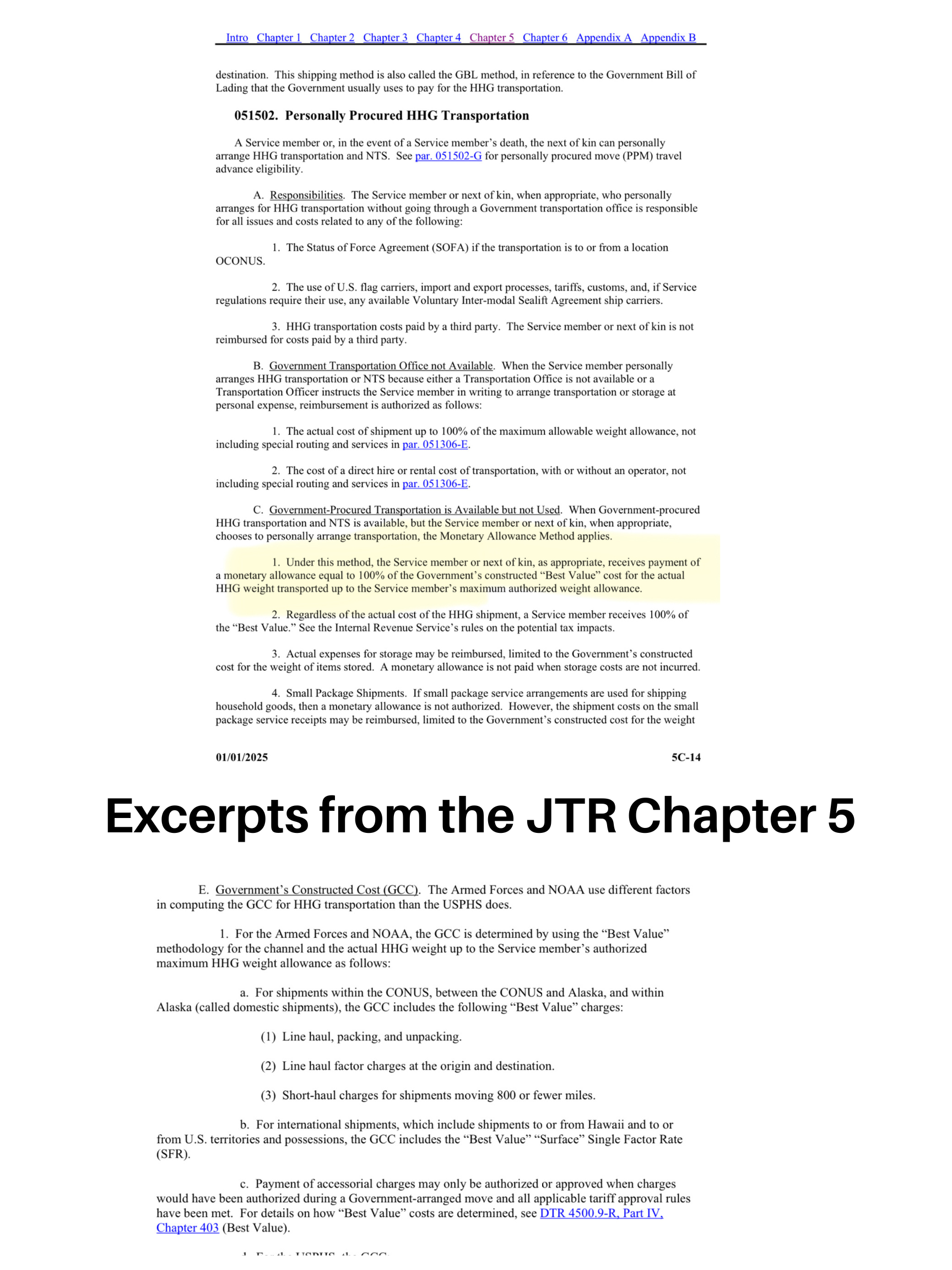
Congress mandated that the military offer a financial incentive for service members to move themselves based on the government’s constructive cost. The JTR Chapter 5 outlines that the service member currently receives the amount average to the best value of the government’s constructive cost, and in 2021 the services made this amount 100% of the constructive cost.
Generally meaning, what the government paid to a moving company, service members received that amount.
Now, instead of families having an option to choose how they move, they are now beginning to be financially forced into the new Global Household Goods Contract (GHC) with HomeSafe Alliance (HSA).
In short- HSA’s rates to the moving industry are 30-50% less than what companies are currently being paid under what is known as the legacy program (utilizing DPS). Now, locations activated with the new contract are issuing PPM incentive payment estimates in the same amount that HSA is offering to agents, rather than being the amount that the government is paying HSA.
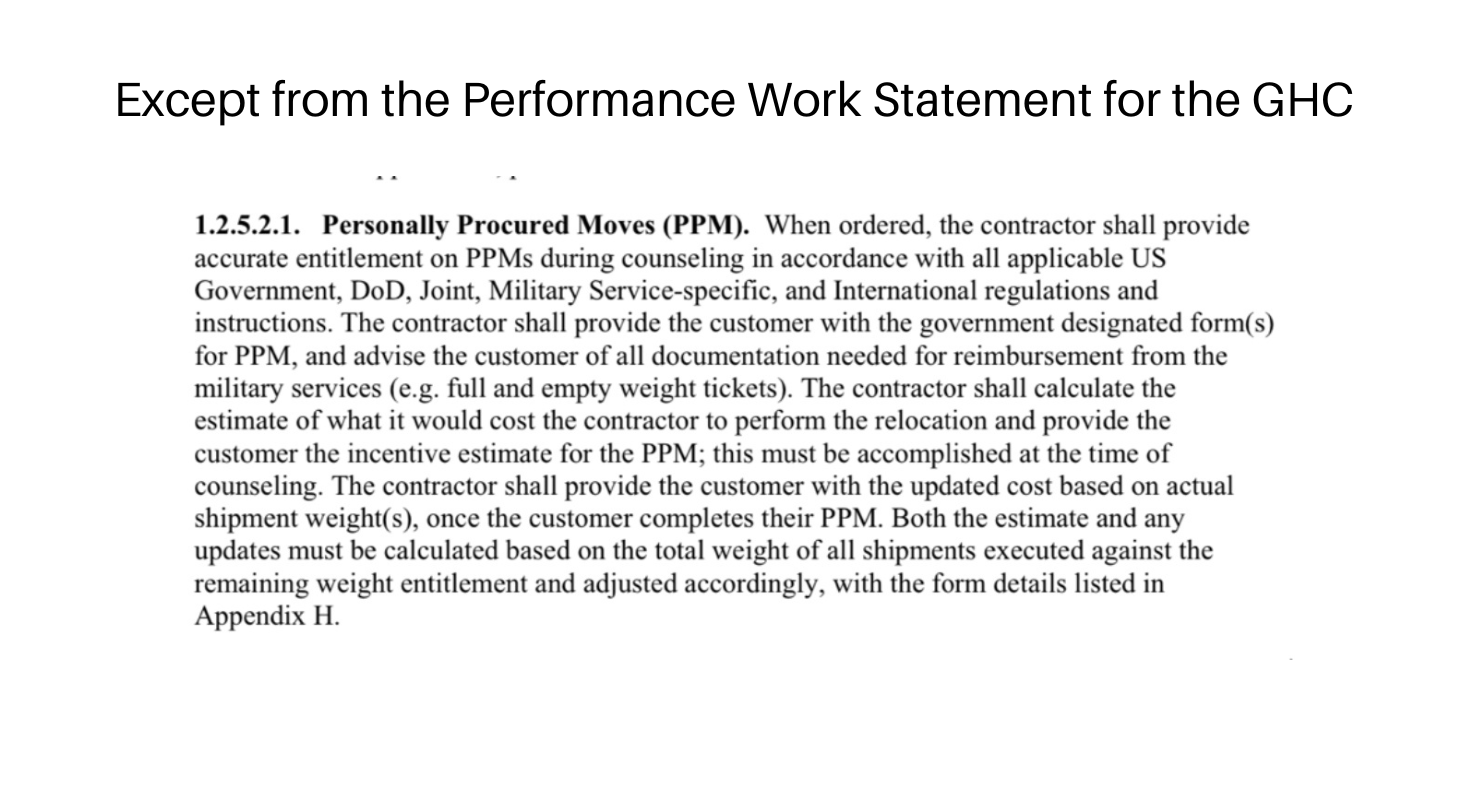
Per the contract‘s performance work statement “The contractor shall calculate the estimate of what it would cost the contractor to perform the relocation and provide the customer the incentive estimate for the PPM; this must be accomplished at the time of counseling. The contractor shall provide the customer with the updated cost based on actual shipment weights), once the customer completes their PPM. Both the estimate and any updates must be calculated based on the total weight of all shipments executed against the remaining weight entitlement and adjusted accordingly.”
This means the contractor can say they can do it for a really cheap cost as a way to de-incentivize the PPM and force the customer into the GHC program.
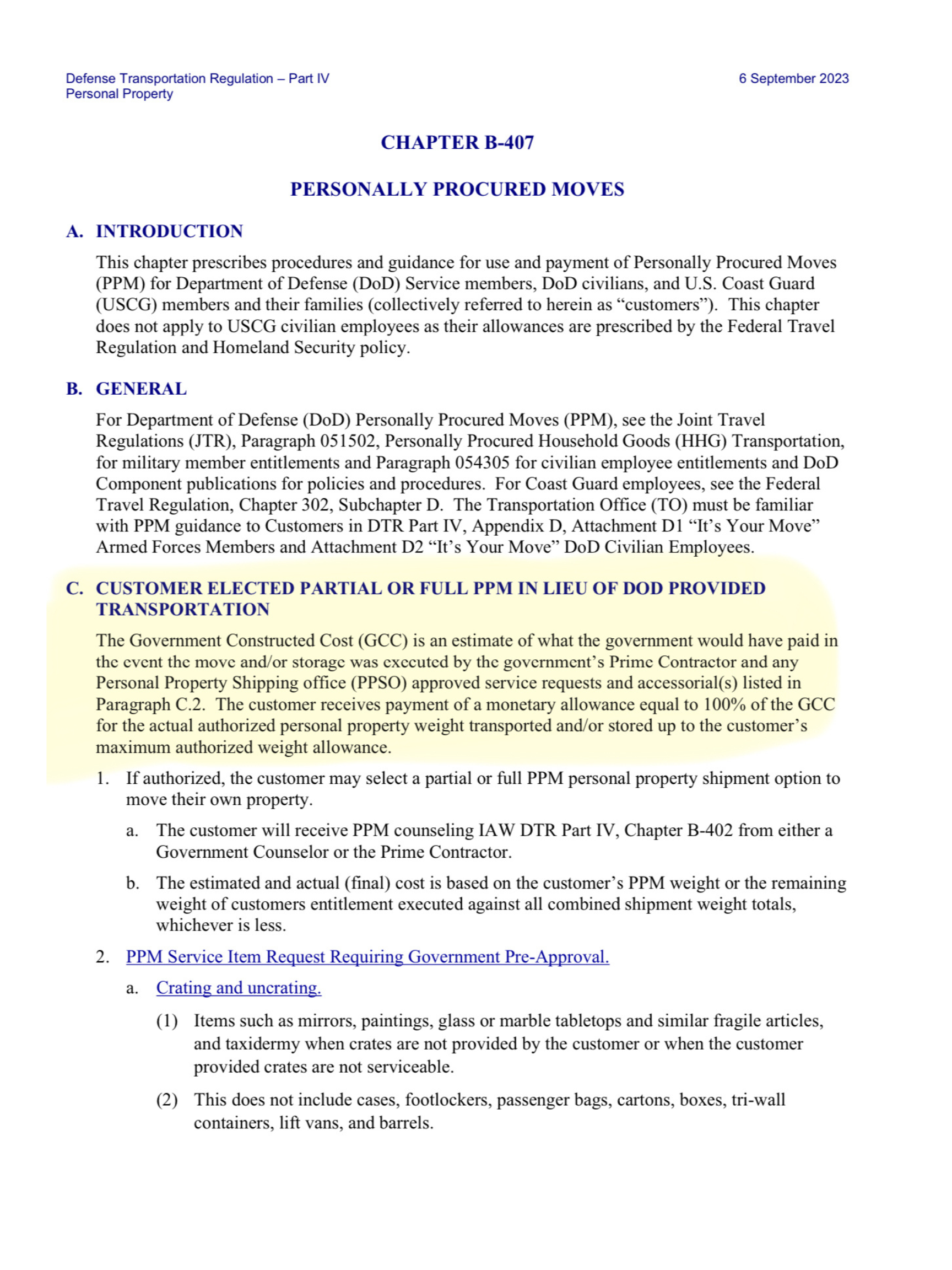
Furthermore, the DTR Part 4, Chapter B-407 states “C. CUSTOMER ELECTED PARTIAL OR FULL PPM IN LIEU OF DOD PROVIDED TRANSPORTATION: The Government Constructed Cost (GCC) is an estimate of what the government would have paid in the event the move and/or storage was executed by the government’s Prime Contractor”
This means that the amount the government is paying the contract holder for each shipment is the amount that the service families should be getting paid for their PPM.
There is no provision in the JTR that provides the methodology for PPM reimbursement rates to be determined by the GHC contractor. Currently, members are being counseled by JPPSO’s as to their PPM reimbursement and are being told the drastically reduced rates are a result of GHC rates being used rather than the current legacy program rates.
In one example, a family moving from California to Arizona first set up their PPM in DPS and was given an estimate of $15,000 for 11,000 pounds. When their transportation office called and said they needed to use the new system, MilMove, the same move provided an estimate of $7,500.
Another family moved last year from Virginia to Leavenworth with 12,000 pounds was paid $19,800. Doing the same move in reverse now having 16,500 pounds is being offered an incentive payment amount of $12,000 under the GHC program.
In another instance, a family is only being offered $
9,000 for their PPM of 13,000 pounds going 1,197 miles. When doing a cost comparison, this amount didn’t even make using an ABF trailer affordable.
Instead of incentivizing the ability for families to move themselves, the military is trying to financially force families into using a program they have spent $20 billion on that has already seen numerous issues (no origin agents to pick up, delays, lack of program participation, asking families to pack themselves for what should be a full service move) since they began moving shipments in April 2024.
To date, HomeSafe Alliance has moved less than 1,000 shipments but is still expected to take over the 150,000 domestic shipments starting in May 2025. In the shipments they have moved we have seen numerous times where they did not have agents available to service a shipment and, in a few cases, have had the service member do a PPM because of this.
This push by the military to force the families into taking the HSA rate is their way to ensure shipments go through the new untested and issue filled program, and that families are left without the financial choice to move themselves if they wanted.
The PPM program needs to be managed by the military services (counseling, rate estimate, packet submission and processing, and payment), and not by HomeSafe Alliance. The Global Household Goods Contract was created to manage the service providers and should have no bearing or influence on the PPM program.
We are asking Congress to hold the military/USTC accountable for these actions and protect the PPM rate by keeping it on par with current rates, account for inflation each year, and be adequate for families to afford moving themselves, while mandating that the military services manage the program and not let HSA impact the rates.
We ask so much of our service families already that we shouldn’t ask them to give up the freedom of choice on how to move, nor should they have to come out of pocket for wanting to move themselves.

51,394
The Issue
Dear Members of Congress,
Military Families Forced to New PCS Contract Amid Diminishing Self Move Rates
The question is simple – How will families afford moving themselves with a PPM if the rates paid are more than 40% lower than previous PPM rates?
Everyone knows when it comes to moving that it is already stressful enough. For a military family the act of packing up our lives, moving to unknown locations, trying to make the best of it and repeating the process can happen every 2-3 years.
When it comes time to move, many families will elect to move themselves. Their reasoning often involves having more control, being involved in the process, the desire to pack themselves and to potentially recoup money through their sweat and time equity of monies lost on other out of pocket expenses that other entitlements do not cover, depending on how they choose to do the PPM.
Congress mandated that the military offer a financial incentive for service members to move themselves based on the government’s constructive cost. The JTR Chapter 5 outlines that the service member currently receives the amount average to the best value of the government’s constructive cost, and in 2021 the services made this amount 100% of the constructive cost.
Generally meaning, what the government paid to a moving company, service members received that amount.
Now, instead of families having an option to choose how they move, they are now beginning to be financially forced into the new Global Household Goods Contract (GHC) with HomeSafe Alliance (HSA).
In short- HSA’s rates to the moving industry are 30-50% less than what companies are currently being paid under what is known as the legacy program (utilizing DPS). Now, locations activated with the new contract are issuing PPM incentive payment estimates in the same amount that HSA is offering to agents, rather than being the amount that the government is paying HSA.
Per the contract‘s performance work statement “The contractor shall calculate the estimate of what it would cost the contractor to perform the relocation and provide the customer the incentive estimate for the PPM; this must be accomplished at the time of counseling. The contractor shall provide the customer with the updated cost based on actual shipment weights), once the customer completes their PPM. Both the estimate and any updates must be calculated based on the total weight of all shipments executed against the remaining weight entitlement and adjusted accordingly.”
This means the contractor can say they can do it for a really cheap cost as a way to de-incentivize the PPM and force the customer into the GHC program.
Furthermore, the DTR Part 4, Chapter B-407 states “C. CUSTOMER ELECTED PARTIAL OR FULL PPM IN LIEU OF DOD PROVIDED TRANSPORTATION: The Government Constructed Cost (GCC) is an estimate of what the government would have paid in the event the move and/or storage was executed by the government’s Prime Contractor”
This means that the amount the government is paying the contract holder for each shipment is the amount that the service families should be getting paid for their PPM.
There is no provision in the JTR that provides the methodology for PPM reimbursement rates to be determined by the GHC contractor. Currently, members are being counseled by JPPSO’s as to their PPM reimbursement and are being told the drastically reduced rates are a result of GHC rates being used rather than the current legacy program rates.
In one example, a family moving from California to Arizona first set up their PPM in DPS and was given an estimate of $15,000 for 11,000 pounds. When their transportation office called and said they needed to use the new system, MilMove, the same move provided an estimate of $7,500.
Another family moved last year from Virginia to Leavenworth with 12,000 pounds was paid $19,800. Doing the same move in reverse now having 16,500 pounds is being offered an incentive payment amount of $12,000 under the GHC program.
In another instance, a family is only being offered $
9,000 for their PPM of 13,000 pounds going 1,197 miles. When doing a cost comparison, this amount didn’t even make using an ABF trailer affordable.
Instead of incentivizing the ability for families to move themselves, the military is trying to financially force families into using a program they have spent $20 billion on that has already seen numerous issues (no origin agents to pick up, delays, lack of program participation, asking families to pack themselves for what should be a full service move) since they began moving shipments in April 2024.
To date, HomeSafe Alliance has moved less than 1,000 shipments but is still expected to take over the 150,000 domestic shipments starting in May 2025. In the shipments they have moved we have seen numerous times where they did not have agents available to service a shipment and, in a few cases, have had the service member do a PPM because of this.
This push by the military to force the families into taking the HSA rate is their way to ensure shipments go through the new untested and issue filled program, and that families are left without the financial choice to move themselves if they wanted.
The PPM program needs to be managed by the military services (counseling, rate estimate, packet submission and processing, and payment), and not by HomeSafe Alliance. The Global Household Goods Contract was created to manage the service providers and should have no bearing or influence on the PPM program.
We are asking Congress to hold the military/USTC accountable for these actions and protect the PPM rate by keeping it on par with current rates, account for inflation each year, and be adequate for families to afford moving themselves, while mandating that the military services manage the program and not let HSA impact the rates.
We ask so much of our service families already that we shouldn’t ask them to give up the freedom of choice on how to move, nor should they have to come out of pocket for wanting to move themselves.
The Decision Makers




Supporter Voices
Petition Updates
Share this petition
Petition created on January 6, 2025