

Make “The Right to Full Mental/Thought Privacy” One of our New Human Rights
The Issue
Is "a system based on externalized physical conduct and its associated intent, while categorically excluding purely mental phenomena from accountability" better than "a system that includes thoughtcrime and doesn't exclude mental/internal phenomena"?
I think a system based on externalized physical conduct and its associated intent, while categorically excluding purely mental phenomena from accountability, is better.
By “excluding purely mental phenomena,” I mean that private thoughts, imaginings, fantasies, desires, feelings, beliefs, and similar internal mental states should not themselves be grounds for punishment or accountability. Accountability should arise from what a person actually does in the world and the effects their conduct has on other people.
This does not mean intent is irrelevant. Intent, motive, knowledge, recklessness, fear, and similar mental states can still matter when evaluating conduct. However, they should be considered only insofar as they are "evidenced by or inferred from" observable conduct and circumstances, rather than treated as independently punishable things.
I think the world is a safer and more pleasant place when justice systems focus on what people actually externalize into the shared world rather than what exists solely within their minds. A system that punishes thoughts creates incentives for surveillance, mind-reading, fear of one’s own thoughts, self-censorship, and punishment of people who have not actually harmed anyone. In contrast, a system focused on externalized conduct provides clearer boundaries and better protects individual freedom of thought.
I also think such a system results in less overall suffering when applied equally and without exception. People remain accountable for intentional mistreatment, callous conduct, recklessness, coercion, fraud, violence, and other actions that affect others, while remaining free to think, imagine, question, doubt, fantasize, or internally struggle without fear of punishment merely for having certain thoughts.
In short, I believe accountability should be tied to what a person brings into the shared world through their conduct and its effects on others, not to the mere existence of unexternalized mental phenomena.
For example, whether a killing was murder, self-defense, accidental, reckless, or intentional may depend on evidence that allows us to infer the actor’s state of mind from what they said, did, knew, or reasonably perceived at the time. Likewise, evidence that an assault was motivated by hatred can be relevant because it helps explain an observable act that actually occurred.
The distinction I am drawing is between judging someone for what they did and judging someone merely for what existed in their mind. This is about a system that holds people accountable for externalized conduct, with intent helping to interpret that conduct, vs a system that includes holding people accountable for thoughts, desires, fantasies, beliefs, or other purely internal mental states even when they were never acted upon or externalized.
Intent, motive, knowledge, recklessness, fear, or similar mental states can be inferred from observable conduct, statements, circumstances, preparations, patterns of behavior, known information, and other external evidence.
For example, intent can be inferred when someone purchases poison, researches lethal doses, secretly administers the poison to a victim, and then attempts to conceal the act. We do not observe the intent directly; we infer it from the conduct.
Motive can be inferred when someone stands to gain a large inheritance from a death, repeatedly expresses hostility toward the deceased, and then engages in conduct leading to that death. The motive is not directly visible, but external evidence may support the inference.
Knowledge can be inferred when someone receives repeated warnings that a bridge is unsafe, acknowledges those warnings, and then continues sending people across it. Their knowledge is evidenced by what they were told and how they responded.
Fear can be inferred when someone is cornered by an armed attacker, attempts to retreat, calls for help, visibly panics, and then uses force against the attacker. We cannot directly observe fear itself, but the surrounding conduct may provide evidence that fear was present.
Recklessness can be inferred when someone knowingly drives at extreme speeds through a crowded area, fires a weapon into an occupied building, or ignores obvious and substantial risks that a reasonable person would recognize. The recklessness is inferred from the choice to proceed despite the apparent danger.
Suppose a person privately fantasizes about harming someone for twenty years but never threatens, attempts, plans, encourages, or commits any harmful act. Under the system I am describing, the fantasy alone would not create accountability.
Suppose another person secretly poisons someone and is never caught. The poisoning itself remains an observable-type event because it is a physical action occurring in the world, even if no one actually discovers who did it. Accountability would attach to the poisoning, not to whether observers happened to identify the culprit.
Suppose a person accidentally causes harm while exercising reasonable care. The harmful outcome alone would not automatically establish malicious intent, recklessness, or callousness.
Suppose a person claims an action was an accident, but evidence shows extensive preparation, prior threats, concealment efforts, and attempts to benefit from the outcome. Those observable facts may justify inferring intent despite the claim.
Suppose a person genuinely fears for their life and acts in self-defense. Their fear is not directly observed, but it may be inferred from the circumstances and their conduct. Conversely, if someone merely claims fear while the evidence strongly indicates aggression or retaliation, the claim may not be supported.
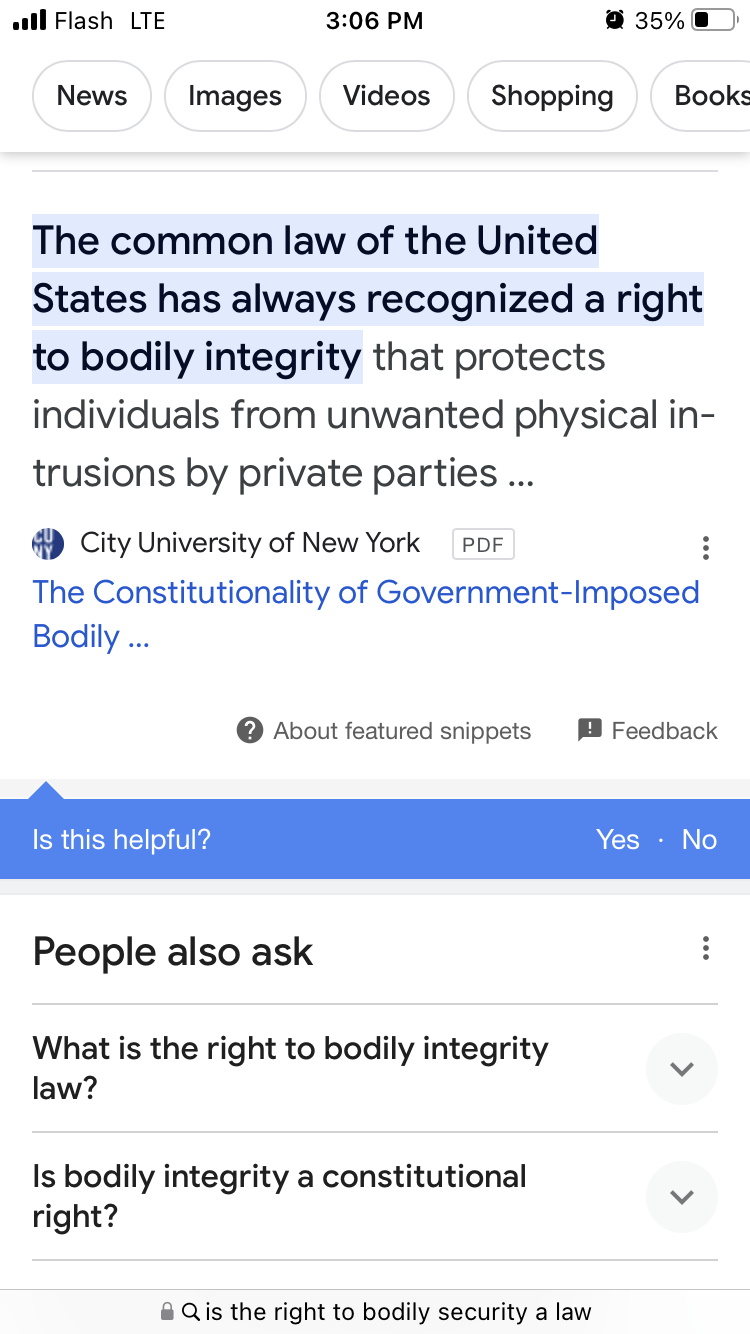
Is ""the right to bodily security" or "the right to bodily integrity"" a United States law?
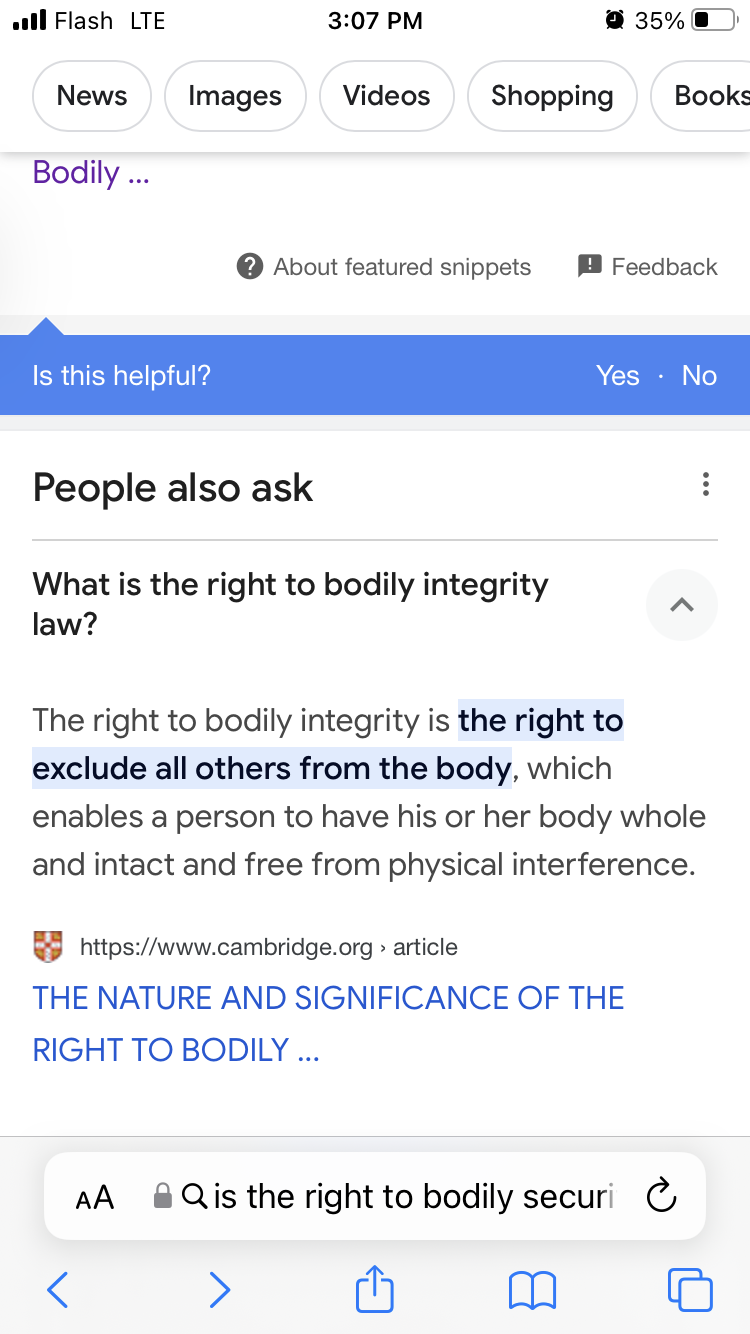
The right to bodily integrity is the right to exclude all others from the body, which enables a person to have his or her body whole and intact and free from physical interference.

224
The Issue
Is "a system based on externalized physical conduct and its associated intent, while categorically excluding purely mental phenomena from accountability" better than "a system that includes thoughtcrime and doesn't exclude mental/internal phenomena"?
I think a system based on externalized physical conduct and its associated intent, while categorically excluding purely mental phenomena from accountability, is better.
By “excluding purely mental phenomena,” I mean that private thoughts, imaginings, fantasies, desires, feelings, beliefs, and similar internal mental states should not themselves be grounds for punishment or accountability. Accountability should arise from what a person actually does in the world and the effects their conduct has on other people.
This does not mean intent is irrelevant. Intent, motive, knowledge, recklessness, fear, and similar mental states can still matter when evaluating conduct. However, they should be considered only insofar as they are "evidenced by or inferred from" observable conduct and circumstances, rather than treated as independently punishable things.
I think the world is a safer and more pleasant place when justice systems focus on what people actually externalize into the shared world rather than what exists solely within their minds. A system that punishes thoughts creates incentives for surveillance, mind-reading, fear of one’s own thoughts, self-censorship, and punishment of people who have not actually harmed anyone. In contrast, a system focused on externalized conduct provides clearer boundaries and better protects individual freedom of thought.
I also think such a system results in less overall suffering when applied equally and without exception. People remain accountable for intentional mistreatment, callous conduct, recklessness, coercion, fraud, violence, and other actions that affect others, while remaining free to think, imagine, question, doubt, fantasize, or internally struggle without fear of punishment merely for having certain thoughts.
In short, I believe accountability should be tied to what a person brings into the shared world through their conduct and its effects on others, not to the mere existence of unexternalized mental phenomena.
For example, whether a killing was murder, self-defense, accidental, reckless, or intentional may depend on evidence that allows us to infer the actor’s state of mind from what they said, did, knew, or reasonably perceived at the time. Likewise, evidence that an assault was motivated by hatred can be relevant because it helps explain an observable act that actually occurred.
The distinction I am drawing is between judging someone for what they did and judging someone merely for what existed in their mind. This is about a system that holds people accountable for externalized conduct, with intent helping to interpret that conduct, vs a system that includes holding people accountable for thoughts, desires, fantasies, beliefs, or other purely internal mental states even when they were never acted upon or externalized.
Intent, motive, knowledge, recklessness, fear, or similar mental states can be inferred from observable conduct, statements, circumstances, preparations, patterns of behavior, known information, and other external evidence.
For example, intent can be inferred when someone purchases poison, researches lethal doses, secretly administers the poison to a victim, and then attempts to conceal the act. We do not observe the intent directly; we infer it from the conduct.
Motive can be inferred when someone stands to gain a large inheritance from a death, repeatedly expresses hostility toward the deceased, and then engages in conduct leading to that death. The motive is not directly visible, but external evidence may support the inference.
Knowledge can be inferred when someone receives repeated warnings that a bridge is unsafe, acknowledges those warnings, and then continues sending people across it. Their knowledge is evidenced by what they were told and how they responded.
Fear can be inferred when someone is cornered by an armed attacker, attempts to retreat, calls for help, visibly panics, and then uses force against the attacker. We cannot directly observe fear itself, but the surrounding conduct may provide evidence that fear was present.
Recklessness can be inferred when someone knowingly drives at extreme speeds through a crowded area, fires a weapon into an occupied building, or ignores obvious and substantial risks that a reasonable person would recognize. The recklessness is inferred from the choice to proceed despite the apparent danger.
Suppose a person privately fantasizes about harming someone for twenty years but never threatens, attempts, plans, encourages, or commits any harmful act. Under the system I am describing, the fantasy alone would not create accountability.
Suppose another person secretly poisons someone and is never caught. The poisoning itself remains an observable-type event because it is a physical action occurring in the world, even if no one actually discovers who did it. Accountability would attach to the poisoning, not to whether observers happened to identify the culprit.
Suppose a person accidentally causes harm while exercising reasonable care. The harmful outcome alone would not automatically establish malicious intent, recklessness, or callousness.
Suppose a person claims an action was an accident, but evidence shows extensive preparation, prior threats, concealment efforts, and attempts to benefit from the outcome. Those observable facts may justify inferring intent despite the claim.
Suppose a person genuinely fears for their life and acts in self-defense. Their fear is not directly observed, but it may be inferred from the circumstances and their conduct. Conversely, if someone merely claims fear while the evidence strongly indicates aggression or retaliation, the claim may not be supported.
Is ""the right to bodily security" or "the right to bodily integrity"" a United States law?
The right to bodily integrity is the right to exclude all others from the body, which enables a person to have his or her body whole and intact and free from physical interference.


Supporter Voices
Petition Updates
Share this petition
Petition created on October 8, 2020