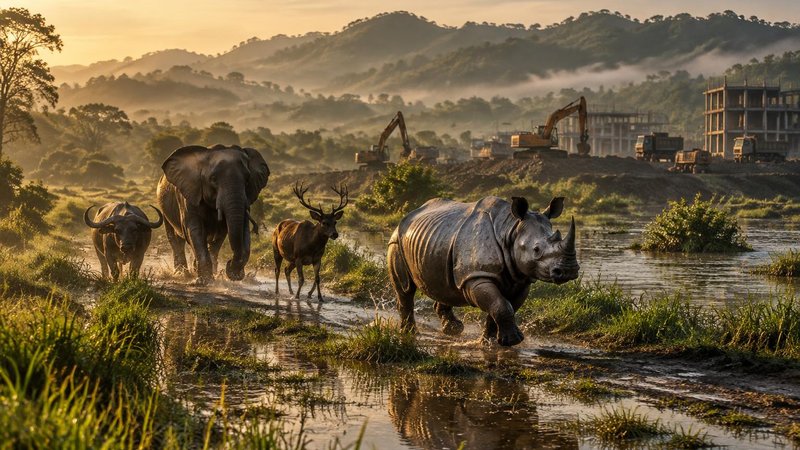
Wildlife biodiversity in India refers to the variety and variability of animal and plant species found across the country's diverse ecosystems. It encompasses unique forests, protected national parks, and ecologically important regions that host numerous native species and contribute to ecological balance.
AI-generated content
The debate around forest conservation laws in India centers on balancing environmental protection with local community rights and development needs. Some argue that strict laws are essential to preserve habitats and wildlife, while others raise concerns about the impact of these laws on local livelihoods and land use.
AI-generated content
Threats to wildlife biodiversity in India impact various stakeholders including native flora and fauna, local communities depending on natural resources, and the broader ecosystem services that support agriculture, climate regulation, and cultural sites linked to nature.
AI-generated content
Main concerns about developments in India's natural habitats include habitat fragmentation, loss of native trees, disturbance to spiritual and ecological sites, and threats to urban green spaces. Such developments can undermine the survival of wildlife and degrade the environmental quality vital for human and ecological health.
Protect Kaziranga National Park from harmful development
Save Kaziranga: Protect Wildlife, Land and People
Victories in Wildlife Biodiversity
Victory
Victory
Victory
Victory
10 supporters are talking about petitions related to Wildlife Biodiversity!
Please don’t destroy India’s wildlife sanctuaries - let’s respect Mother Earth and not lay claim on every single piece of land available. We aren’t the only species alive, and it’s selfish to disregard the impact we make on other animals.
Kaziranga is one of the last holdouts of the Indian rhinoceros and one of the two most biodiverse regions in the country alongside the Western Ghats. Cutting the eco-sensitive zone to 1 km would be permanently amputating one arm of the Indian biosphere and is tantamount to a crime against nature and humanity. Nobody wants a hotel at the cost of India's most treasured natural heritage.
The Aravalli Range is not just India’s oldest mountain system; it is a silent guardian of the Indo-Gangetic Plains, holding back the desert for thousands of years. If the Aravallis fall, the desert will not wait, risking the loss of clean air, water, and all the other interlinked processes. Standing together before this irreplaceable legacy is lost.
Aravallis are not just hills on paper, they protect our air, water, and future. Redefining them to allow mining, puts an entire ecosystem at risk. I strongly urge the government to protect the Aravallis in their entirety.
Great Nicobar S.O.S.
🌿 THEY'RE ABOUT TO COMMIT ECOLOGICAL MURDER — AND CALL IT "NATIONAL SECURITY."
The Indian government is bulldozing Great Nicobar Island — a UNESCO Biosphere Reserve older than civilization itself — for hotels, ports, and a township. Nearly 1 million trees will be felled. The only major nesting ground of the endangered Leatherback Turtle in the Indian Ocean? Gone. Ancient coral reefs that took millions of years to form? Dredged. The Shompen tribe — who have quietly called this island home for 10,000+ years — displaced without consent, in direct violation of the Forest Rights Act.
Over 70 scientists, ecologists, and genocide experts from 13 countries have warned this is irreversible. They've even used the word genocide.
The government's "national security" justification? Only 5% of the project is military. The remaining 95% is a commercial mega-hub worth ₹81,000 crore.
Science was pressured. Reports were suppressed. Public hearings were rigged.
I, Neel Patel, as an Indian citizen, refuse to stay silent.
The turtles can't speak. The Shompen are being ignored. The coral reefs can't vote.
The proposed project threatens the survival of the indigenous Shompen and Nicobarese communities. I stand against the displacement of people for a destructive mega-project. #SaveNicobar
Nature is more than profit-the numerous species that reside there-wether flora or fauna, big or small matter ecologically. The sheer biodiversity present there cannot be stripped away as seen in other parts of India.