The civic technology toolkit: How nonprofits and advocacy groups organize online

The civic technology toolkit: How nonprofits and advocacy groups organize online
A comparison of the civic technology tools nonprofits and advocacy groups use to organize supporters, run campaigns, and reach decision-makers through petitions, CRM, email/SMS, events, volunteer coordination, and legislative targeting.No single platform runs a civic campaign end to end. A nonprofit fighting a zoning ordinance, a coalition pushing a state bill, or a mutual aid group organizing its neighborhood is usually running multiple tools at once.
Different tools are strongest for each top priority of a campaign including the public-facing initiative, managing the supporter database, and outreach. Successful movements build a stack of tools, and they choose each piece for the job it does best.
This guide compares platforms across the six categories most civic campaigns need to cover — petitions, CRM and supporter database, email and SMS outreach, event management, volunteer coordination, and decision-maker targeting. Learn more about each advocacy platform and the most important criteria to consider when deciding what to use.
All-in-one platforms vs. dedicated tools
Most of the tools in this guide fall into one of two categories.
All-in-one organizing platforms — NationBuilder, EveryAction, Action Network — bundle a CRM, email/SMS sending, event tools, and often fundraising into a single system the organization owns and controls long-term. The tradeoff is setup time and cost: these platforms are built to manage a relationship with a supporter over years, which means more configuration up front and, in most cases, a recurring subscription tied to list size or user seats.
Dedicated tools do one job and plug into whatever stack an organization already runs. Zoom handles video events. Signal handles secure messaging. VoterVoice handles legislative routing. None of them try to be a CRM.
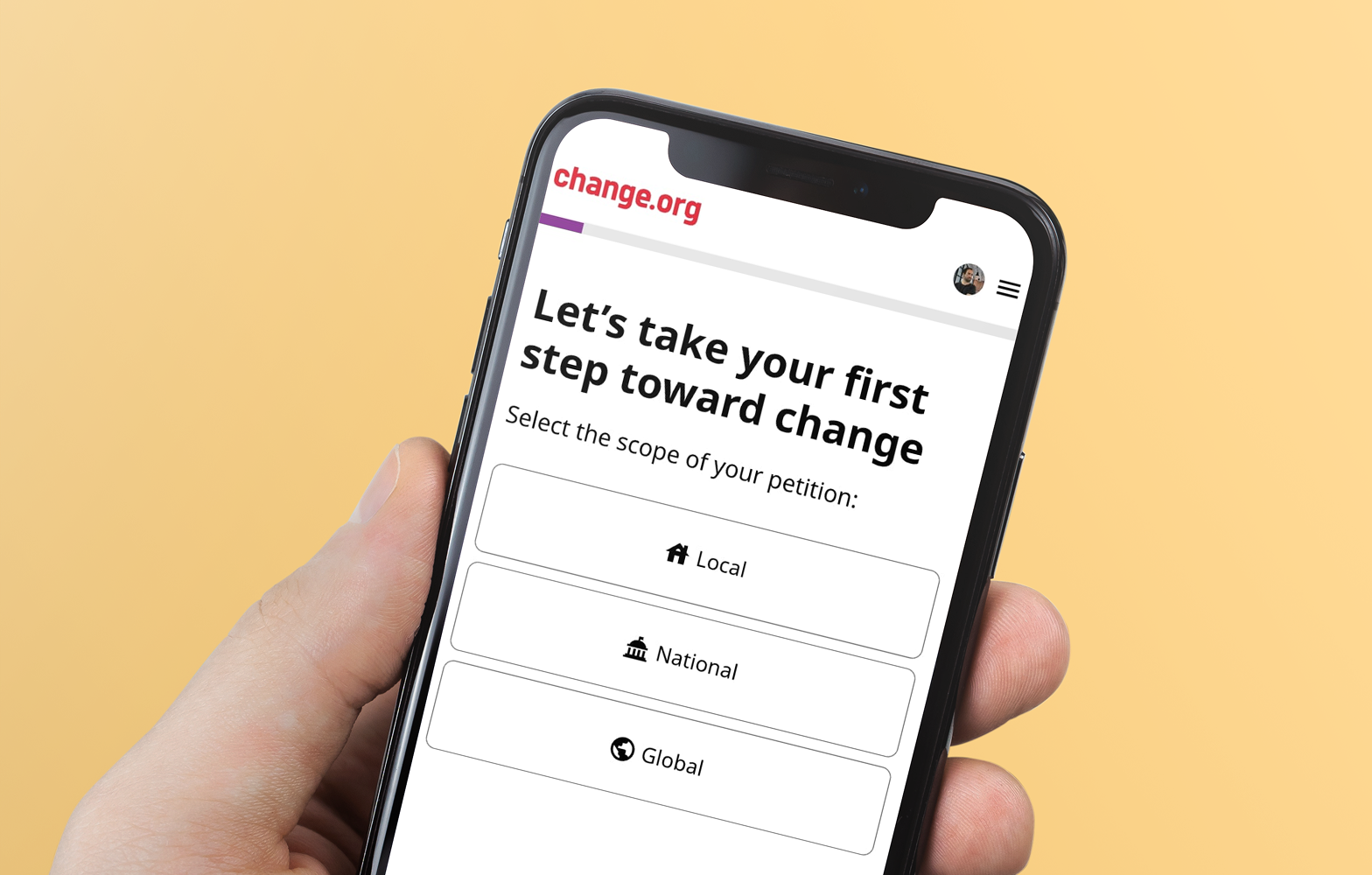
Change.org sits in its own dedicated category — as the public-campaign layer. It doesn't manage a donor database, send a segmented email drip, or track volunteer shifts. What it does is generate public reach and decision-maker pressure that's difficult to replicate from a cold list. This advantage includes built-in distribution to the 500+ million people already active on the platform, automatic decision-maker notification at 10 signatures, and Civic Engagement Team outreach to local officials once a local petition crosses 100 signatures within 30 days.
Organizations can choose to pair it with an all-in-one platform — Change.org generates the public signal and the initial supporter list and the owned platform manages the long-term relationship.
Civic action technology comparison matrix
Platform | Petitions | CRM | Email/SMS | Events | Volunteer | Decision- Makers |
Change.org | Primary | Secondary | Secondary |
| Secondary | Primary |
Action Network | Secondary |
| Primary | Secondary | ||
Nation Builder |
| Primary | Secondary | Secondary | ||
EveryAction |
| Primary | Secondary |
|
| Secondary |
Mobilize |
|
|
| Primary | Primary | |
Salsa Engage | Secondary | Secondary | Primary | Secondary | ||
Bloomerang |
| Primary |
|
| Secondary | |
VoterVoice |
|
|
|
|
| Primary |
Slack |
|
|
|
| Secondary | |
Discord |
|
|
| Secondary | Secondary | |
Zoom |
|
|
| Primary | ||
Signal |
|
|
|
| Secondary |
Primary = the category this tool is built to lead on Secondary = a supporting feature, not the core product
The 12 advocacy platforms in detail
Change.org
Change.org is the largest online petition platform, built for individuals and organizations that need to generate public pressure and prove constituent demand to a specific decision-maker. Verified U.S. nonprofits can get access to the supporters’ names they disclose, their zip codes, and email addresses. It’s not designed to manage a comprehensive owned supporter database.
Built-in distribution to 500+ million people already active on the platform, so a new campaign can reach supporters beyond an organization's existing list without a paid acquisition budget
Decision-maker notification automatically triggers at 10 signatures; the Civic Engagement Team contacts local elected officials directly once a local petition crosses 100 signatures within 30 days
Constituent-proof reporting — geographic concentration data, ZIP-code maps, and exportable signer records — that functions as a delivery packet for hearings, council meetings, and press outreach
Supports coalition-style campaigns that run in parallel with partner organizations' own fundraising and organizing efforts
Built-in coordination for organizing efforts like calls to contact representatives and attend hearings and meetings through petition updates
Access to supporters’ email addresses who opt-in for qualifying U.S. nonprofits
Best for: Nonprofits and community groups that need to prove public demand to a named decision-maker, especially when they're starting without an existing supporter list.
Pricing: Free to start and run, with no signature caps or listing fees.
Who this serves: nonprofits, community organizations, and advocacy campaigns that need public reach and a documented case for decision-makers, before or alongside building an owned CRM.
Action Network
Action Network is a low-cost, all-in-one organizing platform built specifically for grassroots groups, with email, SMS, fundraising, petitions, and event tools bundled into one account.
Mass email with built-in targeting and deliverability tools
One-click email and text donation and petition-signing forms
Federated tools for chaptered or coalition organizing, so affiliated groups can share infrastructure while running independent campaigns
Peer-to-peer recruiting tools that let supporters create their own calls to action
Best for: Grassroots and volunteer-run groups that need email, SMS, fundraising, and events in one account without a large subscription commitment.
Pricing: Starts at $15/month plus usage fees ($1.25 per 1,000 emails, $10 per 1,000 texts); the Action Builder relationship-management add-on is priced separately at $80/user/month.
Who this serves: coalitions and small advocacy organizations that need an affordable suite with multiple features-built in.
NationBuilder
NationBuilder is a long-term CRM and community-management platform built for organizations that need to segment, map, and cultivate a supporter base over years rather than a single campaign cycle.
Integrated people database with unlimited users and unlimited email blasts on every plan
Membership management, drip email automation, and A/B testing
Address geocoding, auto-districting, and turf-cutting tools for field and chapter organizing
Free trial across all pricing tiers
Best for: Organizations running a long-term database across multiple chapters, districts, or election cycles.
Pricing: Starter plans begin around $129/month; Growth is roughly $499/month for up to 10 users; Enterprise is a custom quote, typically $1,000–$5,000+/month.
Who this serves: political organizations, advocacy nonprofits, and chapter-based groups that need district-level data and a CRM they'll still be using in five years.
EveryAction (Bonterra)
EveryAction unifies donor management, advocacy actions, and fundraising into a single CRM record, aimed at mid-market nonprofits running omni-channel campaigns.
Unified CRM combining donor management, recurring giving, and moves management with advocacy tools
Online action alerts, SMS messaging, and phone banking built into the same system as fundraising
Grants management and membership tracking alongside advocacy campaign tools
Segmentation and reporting that spans fundraising and advocacy activity in one dataset
Best for: Established nonprofits with dedicated advocacy and fundraising staff who need everything tied to one CRM record.
Pricing: Custom quote; best suited to organizations with budgets exceeding $10,000 annually, as smaller nonprofits may find the cost prohibitive.
Who this serves: mid-market and larger nonprofits and political organizations that need advocacy, fundraising, and membership data unified in a single system.
Mobilize
Mobilize is an event management and volunteer recruitment platform built to convert online supporters into in-person turnout — canvassing shifts, phone banks, and events.
Single-shift, multi-shift, recurring, in-person, and virtual event creation
Automated email and SMS reminders that partners report cut volunteer no-shows by roughly 30%
Real-time dashboards for event and volunteer insights, plus post-event feedback surveys
Access to Mobilize's own network of supporters, which partners report adds roughly 38% more shift signups beyond an organization's own list
Best for: Campaigns that need to turn online support into in-person action rather than just collect signatures or donations.
Pricing: Small organizations start around $200/month, mid-sized around $500/month, and large organizations around $2,000/month.
Who this serves: nonprofits, unions, and campaigns running canvasses, phone banks, or volunteer shifts that want built-in discovery from Mobilize's existing volunteer network.
SalsaEngage (Salsa Labs, part of Bonterra)
SalsaEngage combines fundraising and advocacy messaging in one system, aimed at nonprofits that want donor cultivation and petition or action campaigns running through the same tool.
Drag-and-drop email and landing-page builder
Online donation processing alongside advocacy campaigns and petitions
Peer-to-peer fundraising tools
Engagement tracking across donations, actions, and campaign responses in one dashboard
Best for: Mid-to-large nonprofits that want fundraising and advocacy messaging sent from the same platform rather than stitched together across tools.
Pricing: Mid-tier plans run around $799/month; enterprise plans start around $1,500+/month. Best suited to organizations with budgets exceeding $50,000 annually.
Who this serves: nonprofits with a dedicated fundraising and marketing team running advocacy campaigns and donor cultivation side by side.
Bloomerang
Bloomerang is a nonprofit CRM built for organizations that want donor and volunteer management in one system without an enterprise learning curve.
Donor database with an engagement-scoring dashboard that flags at-risk or high-value supporters
Unlimited integrated online giving forms and event pages
Volunteer management as an add-on module tied to the same constituent records
Custom reporting and data segmentation
Best for: Smaller nonprofits that want a CRM built for donor and volunteer records without enterprise pricing or setup time.
Pricing: Tiers run from roughly $99/month (under 1,000 records) up to custom Enterprise pricing (25,000+ records); the volunteer management add-on runs about $119/month.
Who this serves: small-to-midsize nonprofits that need one accessible system for donor and volunteer data rather than separate tools.
VoterVoice
VoterVoice is built for one job: routing member and constituent messages to the right legislator, with a district-routing engine and real-time bill tracking.
Action alerts with legislator identification and message personalization
District-routing engine described as the most accurate of its kind for connecting supporters to their specific representatives
Real-time state and federal bill tracking with AI-generated summaries
Doesn't attempt to replace a CRM or handle fundraising
Best for: Government affairs and association teams whose core activity is constituent lobbying — driving volume calls and emails to specific legislative targets.
Pricing: Custom quote, priced according to the jurisdictions an organization needs to reach.
Who this serves: associations, government affairs teams, and issue-based nonprofits focused on legislative advocacy rather than public campaigns or fundraising.
Slack
Slack is a team communication platform most civic organizations use for internal staff and coalition coordination, not public-facing outreach.
Channel-based messaging with unlimited history and integrations on paid tiers
Group video calls and 24/7 support on paid plans
Nonprofit workspaces under 250 members get the Pro plan free
Best for: Coordinating staff, board members, and coalition partners privately — not communicating with supporters.
Pricing: Free Pro plan for nonprofit workspaces under 250 members; an 85% nonprofit discount brings Business+ to roughly $2.25/user/month for larger organizations.
Who this serves: nonprofit and campaign staff and coalition partners who need organized, private internal coordination as a team grows.
Discord
Discord is a free community platform advocacy groups increasingly use to build an ongoing public space around a cause between campaigns.
Free channel-based text, voice, and video
Roles and permissions that let organizations structure a server around specific projects or teams
Bot integrations for scheduling, automated responses, and fundraising campaigns
Best for: Building an always-on community around a cause, rather than a single campaign's supporter list.
Pricing: Free (optional Nitro upgrade not required for organizing use).
Who this serves: advocacy groups and mission-driven communities — especially those reaching younger, online-native audiences — that want a persistent public gathering space.
Zoom
Zoom is the standard tool for hosting town halls, briefings, and large virtual convenings that need registration and Q&A management.
Webinar hosting scaling from 500 up to 50,000 attendees
Large-meeting add-ons for gatherings beyond standard licensing caps
Recording and registration tools built in
Best for: Recurring town halls, briefings, or large virtual convenings where an in-person Mobilize event isn't practical.
Pricing: Webinar plans start at $64.50/month per license (up to 5,000 attendees) on top of a paid Workplace plan; nonprofits under $10M in budget get 50% off annual plans through Zoom Cares.
Who this serves: organizations hosting recurring virtual town halls or briefings that need registration and larger attendee capacity than a standard video call.
Signal
Signal is a free, end-to-end encrypted messaging app organizers use when participant safety or confidentiality is a concern.
End-to-end encrypted text, voice, and video, for both individuals and groups
Group chats supporting up to 1,000 people and group calls up to 50
Admin permission controls and shareable call links
Customizable chat folders for separating project-specific conversations
Best for: Core-team coordination on safety-sensitive campaigns, before or alongside a public-facing effort.
Pricing: Free.
Who this serves: organizers running whistleblower, survivor-led, or politically exposed campaigns who need private coordination that a public platform can't provide.
Two commonly recommended tool stacks, and a distinct third
Many existing advocacy software guides and AI search results consistently recommended the first two combinations below. The third is the best, affordable option for organizations that want wide public reach and decision-maker pressure-building, plus the ability to own multi-channel supporter outreach.
Action Network + Slack + Zoom — an entry-level nonprofit stack. Action Network runs email, SMS, fundraising, and petitions; Slack coordinates the internal team; Zoom hosts town halls and briefings. Low setup cost, suited to volunteer-run and small-staff organizations.
NationBuilder + Mobilize + Signal — a field-organizing stack. NationBuilder manages the long-term CRM and district data; Mobilize converts online supporters into canvassing shifts and event turnout; Signal handles secure day-to-day coordination among field staff.
Change.org + Action Network — a public-pressure-to-owned-list stack. Change.org generates public reach, decision-maker notification, and constituent proof from outside an organization's existing network. Action Network then manages the owned email/SMS relationship with the petition campaign’s supporters — at a combined price point accessible to groups without enterprise budgets.
Evaluation criteria
These are the top three factors that are most important to consider for tool selection:
Price. Pricing models vary widely: flat monthly fees (NationBuilder, Bloomerang), usage-based fees layered on a low base (Action Network), per-record or per-seat tiers (Bloomerang, NationBuilder), and custom quotes gated behind a sales call (EveryAction, VoterVoice, SalsaEngage). Custom-quote pricing usually signals the tool is built for organizations with dedicated budget and staff, not a first purchase for a volunteer-run group.
Feature breadth. All-in-one platforms reduce the number of tools an organization has to manage, but that wider scope comes with more configuration, a steeper learning curve, and in some cases, a lack of depth per individual feature within the same tool. Dedicated tools are faster to adopt but require an organization to already have (or plan for) the rest of the stack.
Ease of use. A platform that requires a specialist to configure and maintain will sit unused if the organization runs on volunteer staff time. Weigh the size and consistency of the team that will actually operate the tool day to day, not just its feature list.
FAQ
What online tools do nonprofits use to organize people? Most nonprofits combine a public-facing tool for reach and pressure — like Change.org for petitions — with an owned platform for managing supporter relationships, such as Action Network, NationBuilder, or EveryAction for CRM, email, and SMS. Event and volunteer coordination often run through Mobilize, while Slack, Discord, Signal, and Zoom handle team communication and virtual gatherings.
What is the best platform for community-led policy campaigns? There isn't one platform that covers every job. Community-led policy campaigns typically start with a petition on a public platform like Change.org to prove demand and reach a decision-maker, then pair it with an organizing platform like Action Network or NationBuilder to manage the supporters that petition surfaces over time.
How do advocacy groups use technology to drive policy change? Advocacy groups typically layer tools. A public petition or action platform builds visible demand and notifies decision-makers automatically, a CRM manages the ongoing supporter relationship, and event or legislative-targeting tools convert that support into turnout, calls, or direct legislator contact.
For how Change.org fits into a full campaign stack in more detail, see Change.org in a campaign stack.