
Support for Renu Arora's Access to Work Campaign
Support for Renu Arora's Access to Work Campaign
The Issue
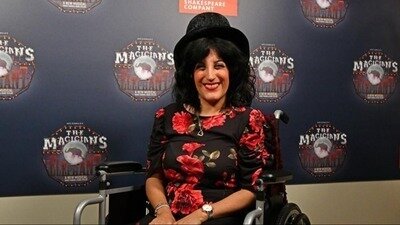
Over a 20-year career, I have established myself as a formidable industry lead, and in 2017 was hit by a bus and dragged under it's wheel, becoming disabled. From starring to critical acclaim as Madame LaVaughn in the RSC's post-pandemic musical The Magician’s Elephant, to my expansive body of work with organisations including the BBC, the Southbank Centre, Bristol Old Vic and the Royal Literary Fund.
This is a letter I've written to my local MP, Ms Sackman:
"I am writing to you as an award-winning disabled actor, singer, writer, and composer in your constituency whose Access to Work support has just been cut by 80% at the very moment my career and project The Burgundy Book has secured major Arts Council England investment.
This is something experienced by others that have disabilities working within the arts with Graeae CEO Jenny Sealey experiencing 50% cut of her access to work. It is on her advice that I am sending this letter today. She later had her access to work reinstated and I’m messaging you hoping that this can happen for me too.
As a disabled person I live in a permanent state of stress when the renewal deadlines loom and we are asked to fit into a dual reality by others:
1. The expectation that people should work
2. The assumption that access to work is a “luxury”
This is, when one thinks about it, fundamentally contradictory - how “disabled” do we need to be? I am a wheelchair user and live the effects of being hit by a bus. Exactly how much work can we take on without fear of having the support taken away?
The process is then humiliating. We are having to justify and prove our disabilities to people. What we say, how we present ourselves, how “disabled” we should show ourselves to be is subjected to a non-disabled person’s judgment. For me, it's like asking a fish how much water it should have. Just enough - that would be lovely. We’d like to be a part of the workforce and to do what we love and Access to Work allows us to do this. In real terms the cut in my support has been reduced by 80%.
The reality is that with this new level of access support, I am effectively locked out of employment and not able to do the very work that we have secured investment for. The Peggy Ramsay Award will fall by the wayside and our first phase of research and development funded by The Arts Council England with some of the most esteemed arts professionals in the UK will not happen. My team has helped me get this funding, but also develop the project, complete applications, manage communications and bring this and many other ideas to life. And we are ambitious. In this first R+D period we are redesigning the very experience of being in the theatre with some of the most cutting edge technology in the world.
Furthermore, the work as a result of my idea will be made to an incredibly high standard, displayed publicly and add significant weight to the cultural ecosystem which, in turn, will pay for jobs in the creation of the work itself, the display of the work and touring internationally. That is the ambition of the work and it is an investment that I take very seriously.
I have had to repeat the stories of my disability a lot this past month, but nonetheless I will share it again. In 2017 I was hit by a bus and watched my leg disappear under the wheel. In that second my life changed forever. I am now disabled.
The fact that I’m able to write this letter is because of my Access to Work team. There are so many others that will not have this support, able to vocalise themselves or have the visibility that I have as a public figure now. I, myself, was not aware of Access to Work as an option until Disability Arts Online heard my story in the pandemic in 2020 who then helped me, free of charge, to get access to the support. Since then, results have spoken for themselves. For example I played a leading role in the world premier of the Royal Shakespeare Company’s production The Magician’s Elephant.
All of this was because of excellent access and levelling the playing field between disabled and non-disabled workers.
As a seventeen-year-old South Asian girl in Wales, I dreamed of entering an industry I had no access to. The door was small and the dream was big. I wanted my voice to matter. Note by note, year after year, I have built a career that is just... lush. That seventeen-year-old who used to read The Stage was recently in it. My name, my photo, my work - lighting up the digital sky. ‘Renu Arora to pen show about near-death experience thanks to Peggy Ramsay Award.’But what a difference a season makes. The 'beige' bureaucracies of Access to Work are the essential heavy lifting required to carry the administrative and physical weight of existing in a society not built for disabled people. Despite the glory of winning the Peggy Ramsay Award and receiving Arts Council England investment to create The Burgundy Book - a groundbreaking digitally immersive musical of my near-death experience - Access to Work, which exists to enable disabled people to work, has killed the work and actively dis-abled me.
After years of work, the project is moving forward with enormous momentum and to cut this funding now is just cruel.
Access to Work is the vital infrastructure designed to level the playing field for disabled professionals. For me, who navigates the industry as a disabled artist, this support is a lifeline - an “essential human right” [Jenny Sealey MBE] that allows me to create and lead at an elite level. Slashing this funding actively dis-ables my voice as I embark on my most ambitious project yet. I just can’t do it now - with 80% of my Access to Work funding cut - it's just not possible.
I have received extensive support from my team and Jenny Sealey MBE who have been advocating for me this past week. They have seen the turmoil I have faced this past week since receiving this news and I wanted to share their words in full:
Erica Whyman OBE, former Acting Artistic Director of the Royal Shakespeare Company, said: “These monstrous cuts to Renu's Access To Work provision will mean that she cannot work - and that itself is outrageous. The fact that she is a skilled, expert and experienced creative who was poised to fulfill on the enormous promise of her piece The Burgundy Book compounds that outrage. The Arts Council had recently recognised that we are at a crunch point in the project and had supported us to deliver a unique and groundbreaking piece of storytelling. I have known Renu since she starred in The Magician's Elephant at the RSC, and The Burgundy Book is a profoundly moving and transformative story which has been a privilege to work on. This decision directly jeopardises that work, deprives the world of an invaluable voice and has a devastating impact on Renu herself.’’
Sita Brahmachari, Malorie Blackman Impact Prize Winner 2025 and Waterstones Children's Book Prize Winner, said: "The impact of this loss for Renu's excellent work as an award-winning disabled performer, writer and composer with a prestigious and celebrated career, will be catastrophic at a time when her star is shining. It will also be catastrophic for the industry if we lose the vital voices that give us unique insight into today's world. This heartless cut in access support symbolises the slamming of the door on some of our most talented artists. We can't let this happen."
Marc Teitler, music and lyrics, The Magician’s Elephant the Royal Shakespeare Company, said: “I first had the pleasure of working with Renu when she played a leading role in the world premiere of my musical The Magician’s Elephant at the Royal Shakespeare Company. I would often hear audience members remark that Madame LaVaughn was their favourite character, a testament to the humanity, humour and depth that Renu brought to the role. Renu is one of the most courageous artists I know. Despite the immense challenges she has faced, Renu has remained determined to change perceptions of disability and to articulate what it means to have your life turned completely upside down.
Access support is not a luxury. It allows exceptional disabled artists to contribute fully to cultural life. To jeopardise Renu’s work by removing the support that enables her to create is not only devastating for Renu personally, it is an enormous loss for our entire cultural sector and for the many many people who need to hear the story that Renu is telling.”
Piers Leigh, Director of Photography (Netflix, BBC) said: “These devastating cuts are causing active harm to an established artist who is shaping a unique voice and viewpoint. The Arts Council investment would allow Renu to create a genuinely new immersive theatrical experience, working with emerging technologies in bold and original ways. The cut to Renu's Access to Work funding will halt her work and leave her, unacceptably, unable to realise the full potential of this groundbreaking project.’’
Jenny Sealey MBE, Artistic Director of Graeae, said: "The brutal cuts to Renu Arora’s Access to Work are an infringement of her human rights. The creative industry is being severely impacted by the loss of disabled artists' voices and presence because people are no longer able to work due to these cuts. Renu has an incredible track record and is a hugely significant part of the industry. Her access must be reinstated in full with proper rates of pay for support workers. This travesty must end.’’
Jenny Sealey MBE has already asked her MP for a one to one meeting with Sir Stephen Timms secretary of state for Work and Pensions and she will be talking about Access To Work at Theatre UK conference on 30th June.
I would be grateful if you could:
Ask for an urgent review of the decision to reinstate my full access support, at least matching the support obtained from my 2025/2026 grant received with proper rates of pay for support workers.
Write to the Secretary of State for Work and Pensions, Sir Stephen Timms, about my case and the wider impact of Access to Work cuts on disabled workers from all industries
Raise concerns about the damage these decisions cause to disabled-led cultural work, particularly when that work has already secured public investment from Arts Council England
I have survived so much to get here. The Burgundy Book came from the moment I nearly died. Now I am trying to rebuild my future, but I cannot build it alone.
I am asking for your help to ensure that disabled artists are not simply recognised, funded and encouraged with one hand, only to have the support that makes our work possible taken away with the other.
Warmly,
Renu Arora
Award-winning disabled actor, singer, writer and composer

127
The Issue
Over a 20-year career, I have established myself as a formidable industry lead, and in 2017 was hit by a bus and dragged under it's wheel, becoming disabled. From starring to critical acclaim as Madame LaVaughn in the RSC's post-pandemic musical The Magician’s Elephant, to my expansive body of work with organisations including the BBC, the Southbank Centre, Bristol Old Vic and the Royal Literary Fund.
This is a letter I've written to my local MP, Ms Sackman:
"I am writing to you as an award-winning disabled actor, singer, writer, and composer in your constituency whose Access to Work support has just been cut by 80% at the very moment my career and project The Burgundy Book has secured major Arts Council England investment.
This is something experienced by others that have disabilities working within the arts with Graeae CEO Jenny Sealey experiencing 50% cut of her access to work. It is on her advice that I am sending this letter today. She later had her access to work reinstated and I’m messaging you hoping that this can happen for me too.
As a disabled person I live in a permanent state of stress when the renewal deadlines loom and we are asked to fit into a dual reality by others:
1. The expectation that people should work
2. The assumption that access to work is a “luxury”
This is, when one thinks about it, fundamentally contradictory - how “disabled” do we need to be? I am a wheelchair user and live the effects of being hit by a bus. Exactly how much work can we take on without fear of having the support taken away?
The process is then humiliating. We are having to justify and prove our disabilities to people. What we say, how we present ourselves, how “disabled” we should show ourselves to be is subjected to a non-disabled person’s judgment. For me, it's like asking a fish how much water it should have. Just enough - that would be lovely. We’d like to be a part of the workforce and to do what we love and Access to Work allows us to do this. In real terms the cut in my support has been reduced by 80%.
The reality is that with this new level of access support, I am effectively locked out of employment and not able to do the very work that we have secured investment for. The Peggy Ramsay Award will fall by the wayside and our first phase of research and development funded by The Arts Council England with some of the most esteemed arts professionals in the UK will not happen. My team has helped me get this funding, but also develop the project, complete applications, manage communications and bring this and many other ideas to life. And we are ambitious. In this first R+D period we are redesigning the very experience of being in the theatre with some of the most cutting edge technology in the world.
Furthermore, the work as a result of my idea will be made to an incredibly high standard, displayed publicly and add significant weight to the cultural ecosystem which, in turn, will pay for jobs in the creation of the work itself, the display of the work and touring internationally. That is the ambition of the work and it is an investment that I take very seriously.
I have had to repeat the stories of my disability a lot this past month, but nonetheless I will share it again. In 2017 I was hit by a bus and watched my leg disappear under the wheel. In that second my life changed forever. I am now disabled.
The fact that I’m able to write this letter is because of my Access to Work team. There are so many others that will not have this support, able to vocalise themselves or have the visibility that I have as a public figure now. I, myself, was not aware of Access to Work as an option until Disability Arts Online heard my story in the pandemic in 2020 who then helped me, free of charge, to get access to the support. Since then, results have spoken for themselves. For example I played a leading role in the world premier of the Royal Shakespeare Company’s production The Magician’s Elephant.
All of this was because of excellent access and levelling the playing field between disabled and non-disabled workers.
As a seventeen-year-old South Asian girl in Wales, I dreamed of entering an industry I had no access to. The door was small and the dream was big. I wanted my voice to matter. Note by note, year after year, I have built a career that is just... lush. That seventeen-year-old who used to read The Stage was recently in it. My name, my photo, my work - lighting up the digital sky. ‘Renu Arora to pen show about near-death experience thanks to Peggy Ramsay Award.’But what a difference a season makes. The 'beige' bureaucracies of Access to Work are the essential heavy lifting required to carry the administrative and physical weight of existing in a society not built for disabled people. Despite the glory of winning the Peggy Ramsay Award and receiving Arts Council England investment to create The Burgundy Book - a groundbreaking digitally immersive musical of my near-death experience - Access to Work, which exists to enable disabled people to work, has killed the work and actively dis-abled me.
After years of work, the project is moving forward with enormous momentum and to cut this funding now is just cruel.
Access to Work is the vital infrastructure designed to level the playing field for disabled professionals. For me, who navigates the industry as a disabled artist, this support is a lifeline - an “essential human right” [Jenny Sealey MBE] that allows me to create and lead at an elite level. Slashing this funding actively dis-ables my voice as I embark on my most ambitious project yet. I just can’t do it now - with 80% of my Access to Work funding cut - it's just not possible.
I have received extensive support from my team and Jenny Sealey MBE who have been advocating for me this past week. They have seen the turmoil I have faced this past week since receiving this news and I wanted to share their words in full:
Erica Whyman OBE, former Acting Artistic Director of the Royal Shakespeare Company, said: “These monstrous cuts to Renu's Access To Work provision will mean that she cannot work - and that itself is outrageous. The fact that she is a skilled, expert and experienced creative who was poised to fulfill on the enormous promise of her piece The Burgundy Book compounds that outrage. The Arts Council had recently recognised that we are at a crunch point in the project and had supported us to deliver a unique and groundbreaking piece of storytelling. I have known Renu since she starred in The Magician's Elephant at the RSC, and The Burgundy Book is a profoundly moving and transformative story which has been a privilege to work on. This decision directly jeopardises that work, deprives the world of an invaluable voice and has a devastating impact on Renu herself.’’
Sita Brahmachari, Malorie Blackman Impact Prize Winner 2025 and Waterstones Children's Book Prize Winner, said: "The impact of this loss for Renu's excellent work as an award-winning disabled performer, writer and composer with a prestigious and celebrated career, will be catastrophic at a time when her star is shining. It will also be catastrophic for the industry if we lose the vital voices that give us unique insight into today's world. This heartless cut in access support symbolises the slamming of the door on some of our most talented artists. We can't let this happen."
Marc Teitler, music and lyrics, The Magician’s Elephant the Royal Shakespeare Company, said: “I first had the pleasure of working with Renu when she played a leading role in the world premiere of my musical The Magician’s Elephant at the Royal Shakespeare Company. I would often hear audience members remark that Madame LaVaughn was their favourite character, a testament to the humanity, humour and depth that Renu brought to the role. Renu is one of the most courageous artists I know. Despite the immense challenges she has faced, Renu has remained determined to change perceptions of disability and to articulate what it means to have your life turned completely upside down.
Access support is not a luxury. It allows exceptional disabled artists to contribute fully to cultural life. To jeopardise Renu’s work by removing the support that enables her to create is not only devastating for Renu personally, it is an enormous loss for our entire cultural sector and for the many many people who need to hear the story that Renu is telling.”
Piers Leigh, Director of Photography (Netflix, BBC) said: “These devastating cuts are causing active harm to an established artist who is shaping a unique voice and viewpoint. The Arts Council investment would allow Renu to create a genuinely new immersive theatrical experience, working with emerging technologies in bold and original ways. The cut to Renu's Access to Work funding will halt her work and leave her, unacceptably, unable to realise the full potential of this groundbreaking project.’’
Jenny Sealey MBE, Artistic Director of Graeae, said: "The brutal cuts to Renu Arora’s Access to Work are an infringement of her human rights. The creative industry is being severely impacted by the loss of disabled artists' voices and presence because people are no longer able to work due to these cuts. Renu has an incredible track record and is a hugely significant part of the industry. Her access must be reinstated in full with proper rates of pay for support workers. This travesty must end.’’
Jenny Sealey MBE has already asked her MP for a one to one meeting with Sir Stephen Timms secretary of state for Work and Pensions and she will be talking about Access To Work at Theatre UK conference on 30th June.
I would be grateful if you could:
Ask for an urgent review of the decision to reinstate my full access support, at least matching the support obtained from my 2025/2026 grant received with proper rates of pay for support workers.
Write to the Secretary of State for Work and Pensions, Sir Stephen Timms, about my case and the wider impact of Access to Work cuts on disabled workers from all industries
Raise concerns about the damage these decisions cause to disabled-led cultural work, particularly when that work has already secured public investment from Arts Council England
I have survived so much to get here. The Burgundy Book came from the moment I nearly died. Now I am trying to rebuild my future, but I cannot build it alone.
I am asking for your help to ensure that disabled artists are not simply recognised, funded and encouraged with one hand, only to have the support that makes our work possible taken away with the other.
Warmly,
Renu Arora
Award-winning disabled actor, singer, writer and composer
127
Petition Updates
Share this petition
Petition created on 12 June 2026