

Stop the Development of Green Meadow Estates and Reclaim Natural Land as Open Space
The Issue
We, the undersigned residents and concerned citizens, respectfully urge the Town of Huntington and Suffolk County to deny the proposed development of Green Meadow Estates. This project threatens the ecological integrity, community character, and legal protections that define our neighborhood.
A summary of what's at risk:
- Loss of Community Character: Development would destroy scenic green space, lower property values, and increase noise pollution.
- Groundwater Impact: Removal of mature trees would reduce natural water filtration, leading to runoff and aquifer degradation.
- Inadequate Environmental Review: The study was conducted in winter when wildlife and plants were dormant, making the findings unreliable.
- Harm to Protected Wildlife: The project threatens endangered Northern Long-Eared Bats and protected Ospreys, violating conservation laws.
- Destruction of Ecosystems: Loss of habitat would cause death, not relocation, for many species, disrupting local biodiversity.
- Increased Human-Wildlife Conflict: Displaced animals like deer would move into neighboring areas, causing hazards and nuisances.
- Legal and Ethical Violations: Removal of protected bird nests may have already broken state environmental laws.
Main Requests:
- Stop the Development: Oppose building homes on this last tract of open land.
- Reject the Current Environmental Review by R&M Engineering and Sawmill Construction Corp: Due to its timing, omissions, and inaccuracies.
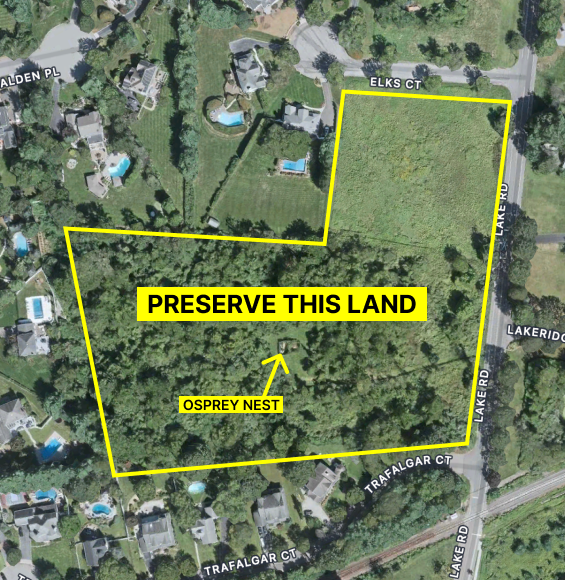
- Preserve the Property: Urge the Town of Huntington and Suffolk County to protect the full eight-acre parcel as undeveloped open space.
More details
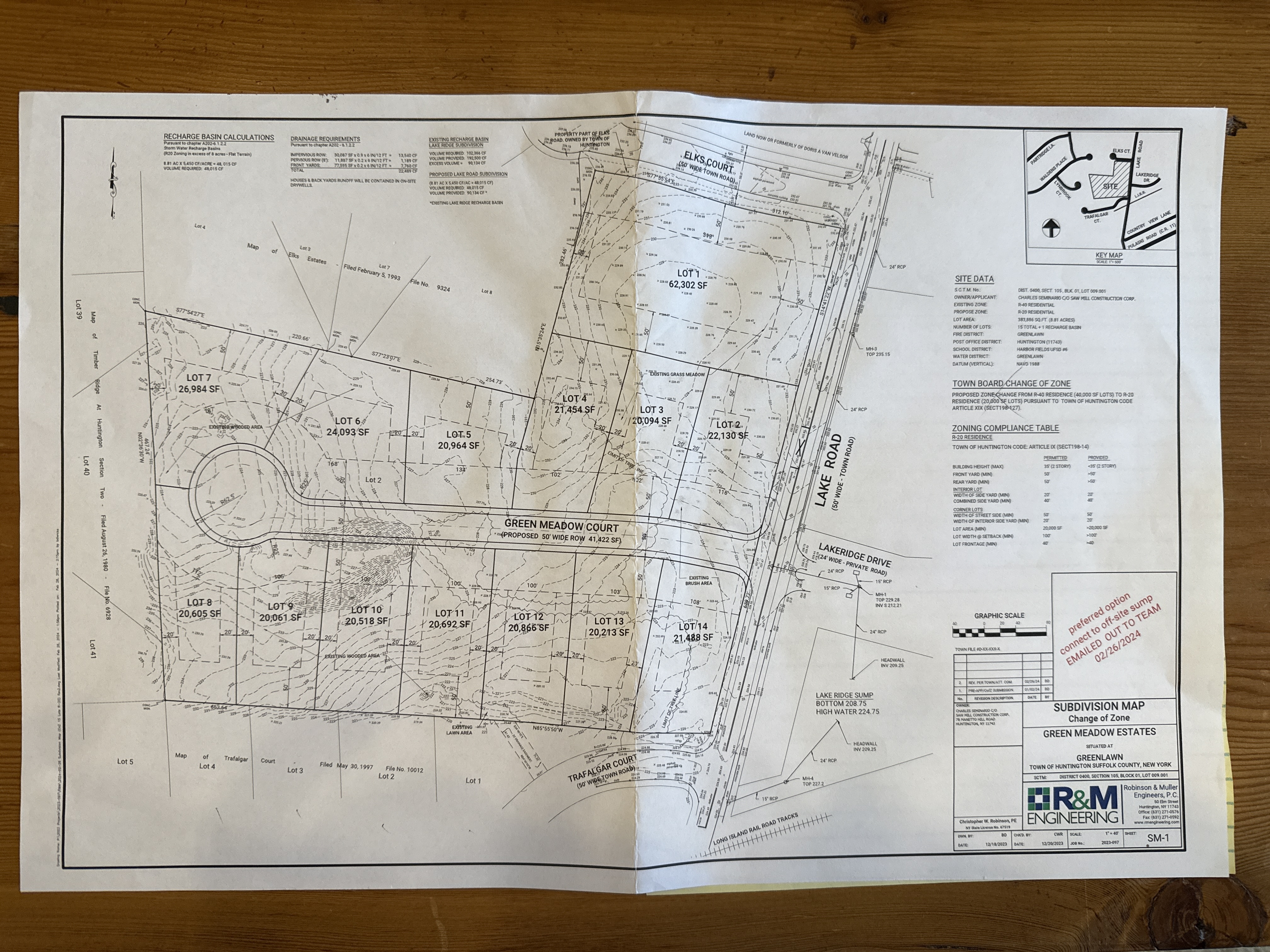
Green Meadow Estates is a proposed development of 14 new homes to be built on top of eight acres of scenic, undeveloped land in the town of Huntington, New York. Situated just north of Trafalgar Court and West of Lake Road, the property of concern consists of some of the last remaining acres of open mature woodland and meadow in the neighborhood.
Brick by literal brick, open spaces across Long Island are being decimated in order to make way for housing; yet, blighted buildings and empty homes throughout the island remain uninhabited and unused. We need to take action and, instead of building on top of the last remaining natural spaces, reinvigorate properties that already serve this purpose but currently remain vacant. Stopping this project, and reclaiming the land to remain untouched, could be a huge win for other neighboring communities (for people and wildlife) facing the same dire situation.
Concerns
Loss of Bucolic Character
- Approximately 20 residences share a property line with the eight-acre land or are within close proximity. Loss of green space will result in a devaluation of homes due to the loss of the inherent bucolic character that prompted many of these residents to move here in the first place
- The 8 acres currently serves as a buffer against noise pollution; razing the trees means an increase in noise pollution
- Since the roots of mature trees help to filter rainwater into our aquifer, fewer trees will lead to a degradation of the water supply and an increase in runoff.
Impact to Wildlife, particularly species that are endangered, threatened, or of concern
- The only environmental assessment completed for this project was performed during the deepest winter months of January and February, at a time when most plant and wildlife species are dormant and/or hibernating. As a result, the review itself is inherently flawed and cannot be trusted. On page 5 of Part II of the assessment, when asked if the “proposed action may substantially interfere with nesting/breeding, foraging, or over-wintering habitat for the predominant species that occupy or use the project site,” the developers answered, “No (or small impact may occur.)” Yet, most plants die back to the ground during the winter months, only to spring back up once temperatures begin to warm. Endangered Northern Long Eared Bats would have been hibernating from late fall through spring. Ospreys and Monarch butterflies would not have returned to their nesting grounds at that point. Thus, there is no way for those who conducted the study to know what species, plant or wildlife, would be impacted by the development of this property. As stated, the only study that was conducted so far is utterly untrustworthy.
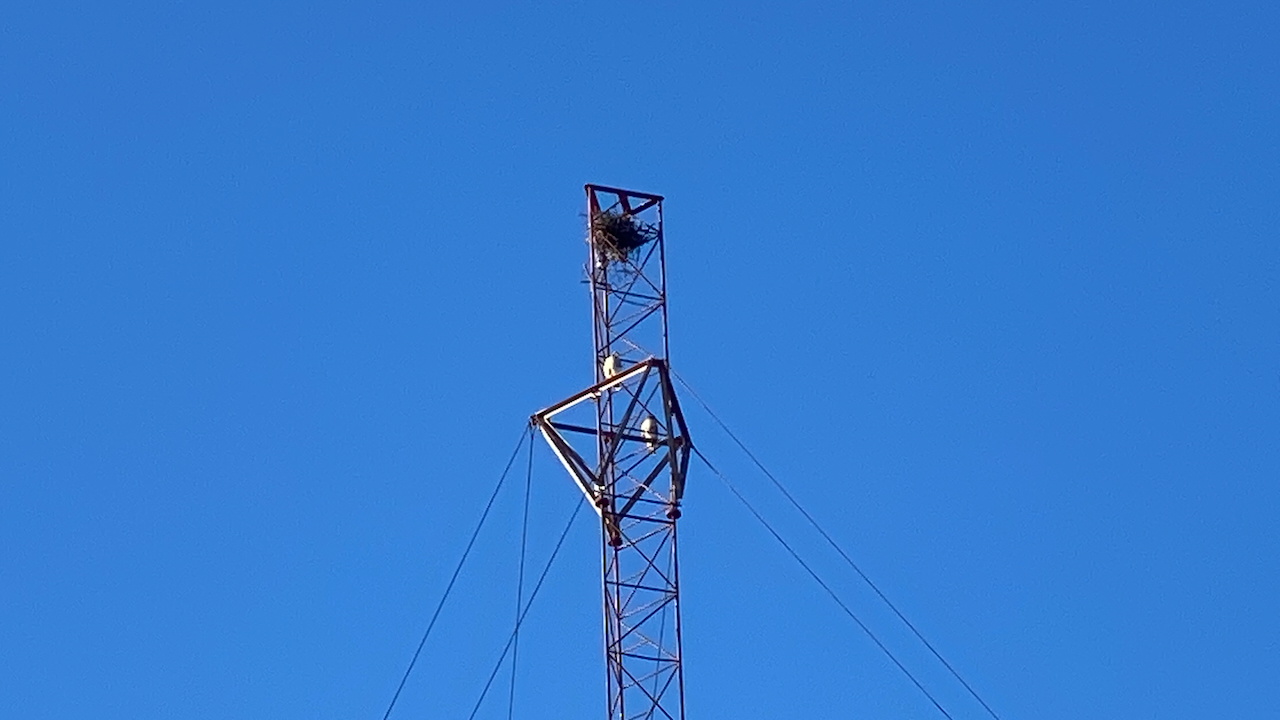
- The study ignores the unequivocal presence of Ospreys, which have annually built their nest on this property. It is a fact that Ospreys return to the SAME NEST every year, so even if the environmental assessment did not show any signs that Osprey were living there when they conducted their review during the winter months, it is a proven fact that the ospreys will indeed return, hoping to rebuild their nest and raise another generation. Just after the environmental review was brought to the Huntington Town Board, residents noticed that the osprey nest they have grown accustomed to seeing was suddenly gone from sight. It is essential to note that the removal of a protected bird’s nest is illegal according to the Environmental Conservation Law, 11-0505(5). Any person(s) tampering with the nesting site are essentially violating state law.
- The study ignores the presence of Northern Long-eared bats (NLEB), which overwinter from late fall through early spring, and which are considered endangered in the state of New York. Habitat loss is a general threat to all bats that use trees to roost. The Connecticut Department of Energy and Environmental Protection states, “Intact forest habitat is particularly important to the Northern long-eared bat for roosting, and the loss of that habitat means loss of good roost spots for maternity colonies and nonreproductive individuals. The loss of habitat can happen through clearing for development and agriculture.” According to the NYDEC, “Projects that convert forest to other land uses have a greater impact on NLEB than projects that allow for the regeneration and retention of forests on the landscape, such as sustainable forestry projects.” The DEC’s website also indicates that deforestation in Suffolk County poses the greatest concern to these species, not only for habitat but also because “the species uses forests of all types for feeding” and “When forest is converted to another use, these areas no longer provide any benefit to NLEB.”
- Finally, Part III of the assessment states that affected animals “will relocate to other open spaces in the neighborhood.” This, too, is a reckless and faulty assumption. Death, not relocation, would be the unfortunate fate of many of these creatures, and this impacts the ecosystem as a whole. For instance, the 8 acre property consists of a mix of meadow and forest, and, as such, hosts a variety of pollinators who feed on native flowers and lay eggs along vegetative stems, rearing a new generation each year. It is a scientific fact that destruction of habitat is a leading cause of population decline when it comes to pollinators such as butterflies. In many cases, when butterfly habitat is destroyed, so are the butterflies themselves. The declining population of such pollinators has a direct, negative impact on the entire ecosystem. Many plants require pollination in order to reproduce. Birds and bats feed on certain pollinators. The list goes on…
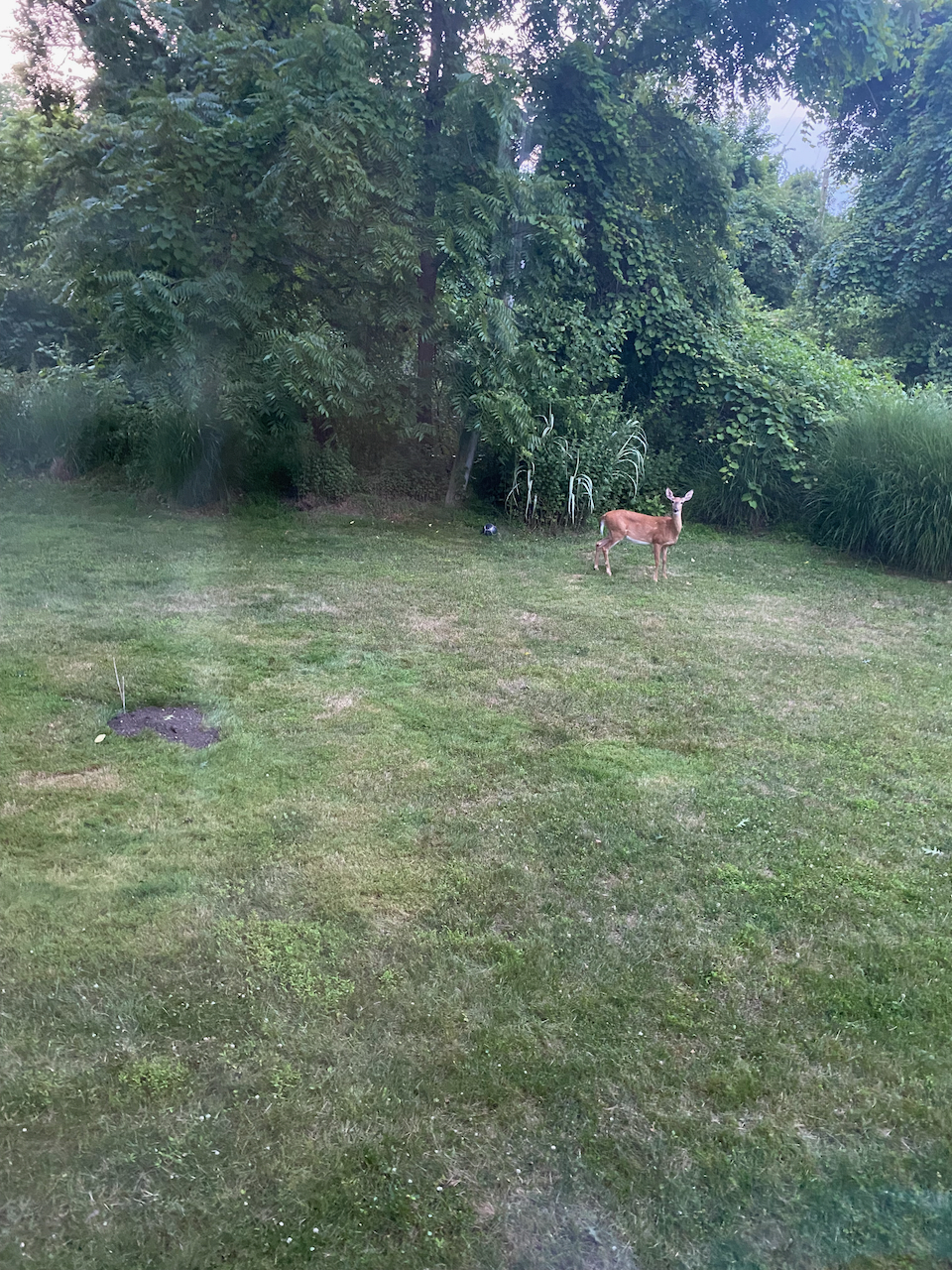
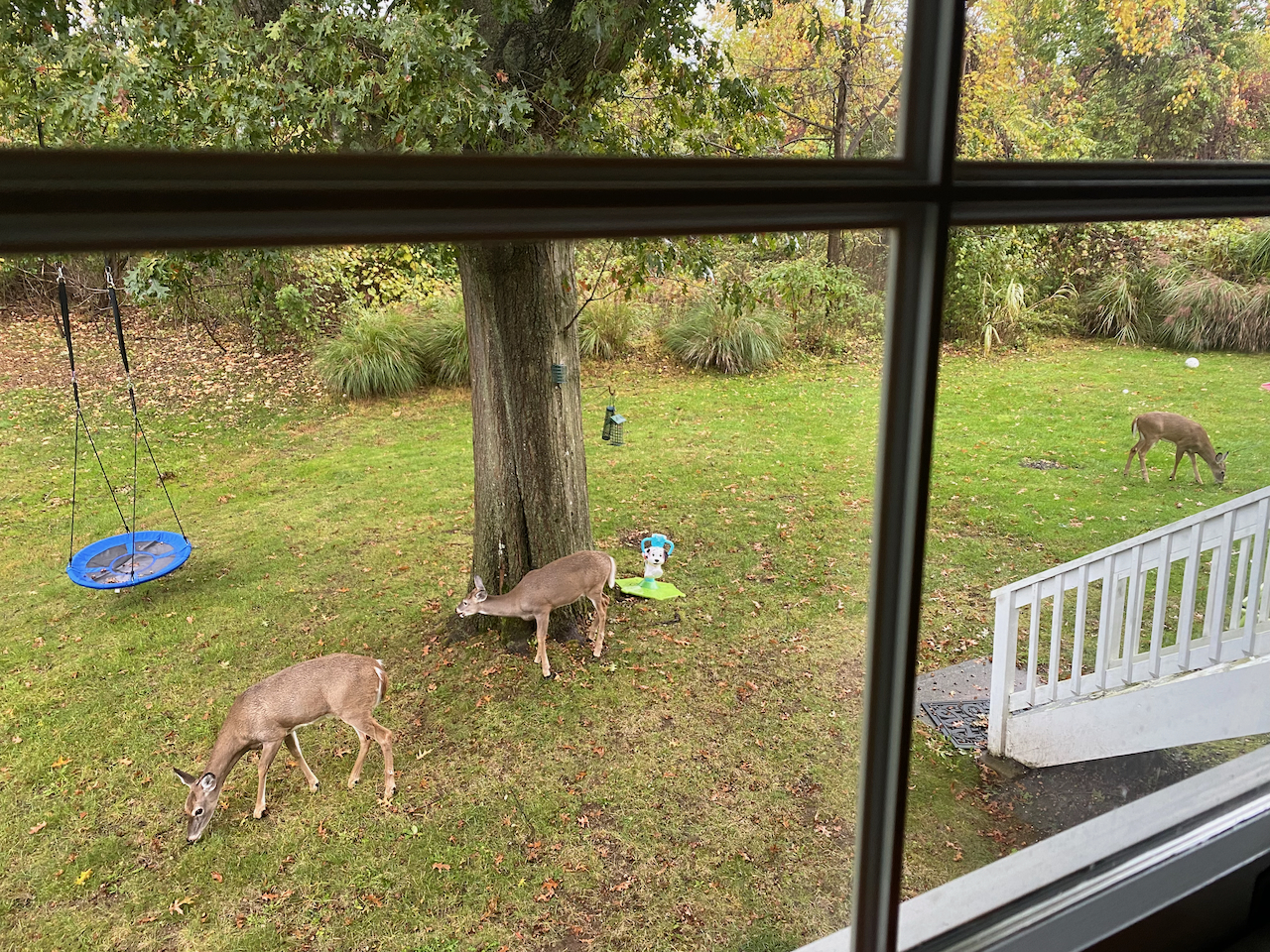
- For animals that are capable of relocating, such as deer, we pose the question, to where will they go? A removal of deer habitat will only lead to an increase in deer being pushed more frequently into the streets (becoming hazardous), and it would lead to an increase in the amount of deer that forage in neighboring yards, thereby becoming a greater nuisance due to limited local natural feeding areas.
Requests
For these reasons, we are against the development of this undeveloped tract of land. Developing these 8 acres would negatively impact the surrounding community, for humans and non-humans alike. Ultimately, we wish to preserve the natural beauty and bucolic character of our neighborhood, to protect our groundwater, and to continue to foster wildlife habitat.
At the very least, the Town Board should reject the flawed environmental review conducted by Christopher W. Robinson, PE (R&M Engineering), and Sawmill Construction Corp. (c/o Brian Kelly). However, since the builder does not yet have the permits necessary to subdivide this property, we also request that the Town of Huntington and Suffolk County act now to preserve the entire 8-acre parcel.
Osprey nest situated in center of parcel
Deer visits from the undeveloped land behind residents' properties
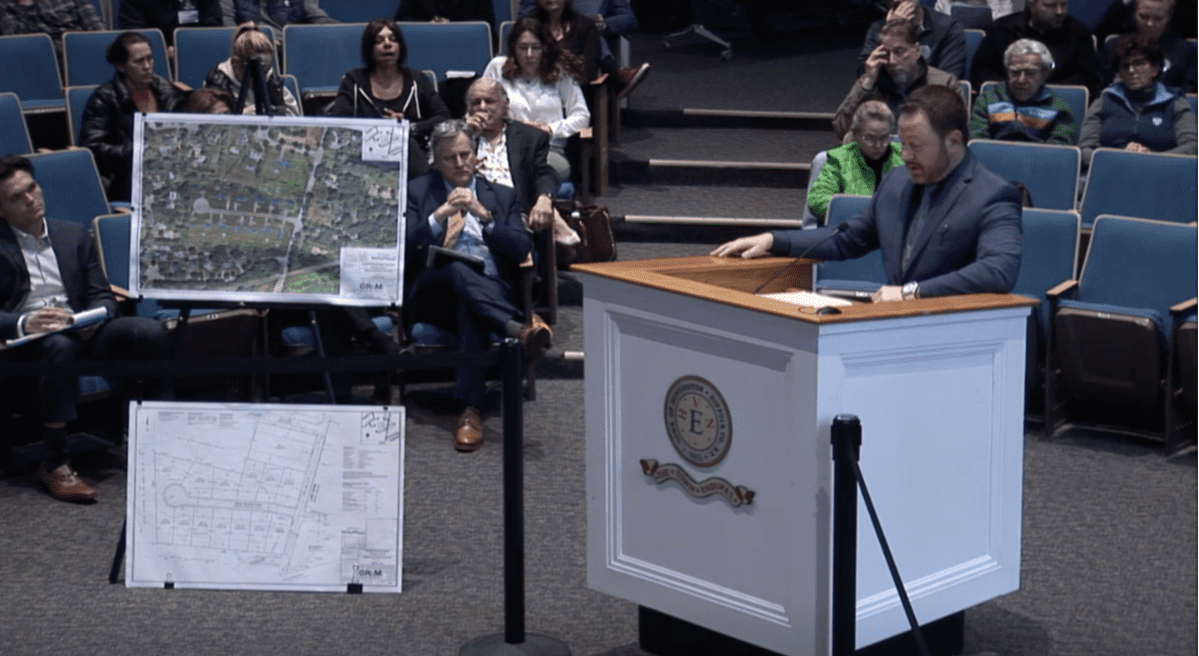
Breslin & Brown (representing the developers) presenting the plan for the 14-home development
References
- https://longislandadvocate.com/huntington-residents-push-back-on-rezoning-over-development-wildlife-concerns/
- https://dec.ny.gov/nature/animals-fish-plants/northern-long-eared-bat
- https://www.brandywine.org/conservancy/landowner-resources/why-saving-bats-matters#:~:text=Habitat%20destruction%20and%20fragmentation%20has,primary%20threat%20to%20most%20species
- https://dec.ny.gov/nature/animals-fish-plants/osprey
- https://www.nysenate.gov/legislation/laws/ENV/11-0505
- https://dec.ny.gov/regulatory/permits-licenses/seqr
- https://dec.ny.gov/nature/animals-fish-plants/biodiversity-species-conservation/endangered-species/northern-long-eared-bats-protection
- https://portal.ct.gov/-/media/deep/wildlife/pdf_files/outreach/fact_sheets/northernlong-earedbat.pdf?rev=052335b209594a13ab4a4d1b18eb1c05&hash=9334080ECA5AD0F13043389251B48B47
- https://portal.ct.gov/DEEP/Wildlife/Fact-Sheets/Osprey#:~:text=Osprey%20pairs%20usually%20return%20to,heavily%20blotched%20with%20dark%20brown
- https://arb.umn.edu/blog/2025/04/07/waiting-ospreys

Petition Closed
The Issue
We, the undersigned residents and concerned citizens, respectfully urge the Town of Huntington and Suffolk County to deny the proposed development of Green Meadow Estates. This project threatens the ecological integrity, community character, and legal protections that define our neighborhood.
A summary of what's at risk:
- Loss of Community Character: Development would destroy scenic green space, lower property values, and increase noise pollution.
- Groundwater Impact: Removal of mature trees would reduce natural water filtration, leading to runoff and aquifer degradation.
- Inadequate Environmental Review: The study was conducted in winter when wildlife and plants were dormant, making the findings unreliable.
- Harm to Protected Wildlife: The project threatens endangered Northern Long-Eared Bats and protected Ospreys, violating conservation laws.
- Destruction of Ecosystems: Loss of habitat would cause death, not relocation, for many species, disrupting local biodiversity.
- Increased Human-Wildlife Conflict: Displaced animals like deer would move into neighboring areas, causing hazards and nuisances.
- Legal and Ethical Violations: Removal of protected bird nests may have already broken state environmental laws.
Main Requests:
- Stop the Development: Oppose building homes on this last tract of open land.
- Reject the Current Environmental Review by R&M Engineering and Sawmill Construction Corp: Due to its timing, omissions, and inaccuracies.
- Preserve the Property: Urge the Town of Huntington and Suffolk County to protect the full eight-acre parcel as undeveloped open space.
More details
Green Meadow Estates is a proposed development of 14 new homes to be built on top of eight acres of scenic, undeveloped land in the town of Huntington, New York. Situated just north of Trafalgar Court and West of Lake Road, the property of concern consists of some of the last remaining acres of open mature woodland and meadow in the neighborhood.
Brick by literal brick, open spaces across Long Island are being decimated in order to make way for housing; yet, blighted buildings and empty homes throughout the island remain uninhabited and unused. We need to take action and, instead of building on top of the last remaining natural spaces, reinvigorate properties that already serve this purpose but currently remain vacant. Stopping this project, and reclaiming the land to remain untouched, could be a huge win for other neighboring communities (for people and wildlife) facing the same dire situation.
Concerns
Loss of Bucolic Character
- Approximately 20 residences share a property line with the eight-acre land or are within close proximity. Loss of green space will result in a devaluation of homes due to the loss of the inherent bucolic character that prompted many of these residents to move here in the first place
- The 8 acres currently serves as a buffer against noise pollution; razing the trees means an increase in noise pollution
- Since the roots of mature trees help to filter rainwater into our aquifer, fewer trees will lead to a degradation of the water supply and an increase in runoff.
Impact to Wildlife, particularly species that are endangered, threatened, or of concern
- The only environmental assessment completed for this project was performed during the deepest winter months of January and February, at a time when most plant and wildlife species are dormant and/or hibernating. As a result, the review itself is inherently flawed and cannot be trusted. On page 5 of Part II of the assessment, when asked if the “proposed action may substantially interfere with nesting/breeding, foraging, or over-wintering habitat for the predominant species that occupy or use the project site,” the developers answered, “No (or small impact may occur.)” Yet, most plants die back to the ground during the winter months, only to spring back up once temperatures begin to warm. Endangered Northern Long Eared Bats would have been hibernating from late fall through spring. Ospreys and Monarch butterflies would not have returned to their nesting grounds at that point. Thus, there is no way for those who conducted the study to know what species, plant or wildlife, would be impacted by the development of this property. As stated, the only study that was conducted so far is utterly untrustworthy.
- The study ignores the unequivocal presence of Ospreys, which have annually built their nest on this property. It is a fact that Ospreys return to the SAME NEST every year, so even if the environmental assessment did not show any signs that Osprey were living there when they conducted their review during the winter months, it is a proven fact that the ospreys will indeed return, hoping to rebuild their nest and raise another generation. Just after the environmental review was brought to the Huntington Town Board, residents noticed that the osprey nest they have grown accustomed to seeing was suddenly gone from sight. It is essential to note that the removal of a protected bird’s nest is illegal according to the Environmental Conservation Law, 11-0505(5). Any person(s) tampering with the nesting site are essentially violating state law.
- The study ignores the presence of Northern Long-eared bats (NLEB), which overwinter from late fall through early spring, and which are considered endangered in the state of New York. Habitat loss is a general threat to all bats that use trees to roost. The Connecticut Department of Energy and Environmental Protection states, “Intact forest habitat is particularly important to the Northern long-eared bat for roosting, and the loss of that habitat means loss of good roost spots for maternity colonies and nonreproductive individuals. The loss of habitat can happen through clearing for development and agriculture.” According to the NYDEC, “Projects that convert forest to other land uses have a greater impact on NLEB than projects that allow for the regeneration and retention of forests on the landscape, such as sustainable forestry projects.” The DEC’s website also indicates that deforestation in Suffolk County poses the greatest concern to these species, not only for habitat but also because “the species uses forests of all types for feeding” and “When forest is converted to another use, these areas no longer provide any benefit to NLEB.”
- Finally, Part III of the assessment states that affected animals “will relocate to other open spaces in the neighborhood.” This, too, is a reckless and faulty assumption. Death, not relocation, would be the unfortunate fate of many of these creatures, and this impacts the ecosystem as a whole. For instance, the 8 acre property consists of a mix of meadow and forest, and, as such, hosts a variety of pollinators who feed on native flowers and lay eggs along vegetative stems, rearing a new generation each year. It is a scientific fact that destruction of habitat is a leading cause of population decline when it comes to pollinators such as butterflies. In many cases, when butterfly habitat is destroyed, so are the butterflies themselves. The declining population of such pollinators has a direct, negative impact on the entire ecosystem. Many plants require pollination in order to reproduce. Birds and bats feed on certain pollinators. The list goes on…
- For animals that are capable of relocating, such as deer, we pose the question, to where will they go? A removal of deer habitat will only lead to an increase in deer being pushed more frequently into the streets (becoming hazardous), and it would lead to an increase in the amount of deer that forage in neighboring yards, thereby becoming a greater nuisance due to limited local natural feeding areas.
Requests
For these reasons, we are against the development of this undeveloped tract of land. Developing these 8 acres would negatively impact the surrounding community, for humans and non-humans alike. Ultimately, we wish to preserve the natural beauty and bucolic character of our neighborhood, to protect our groundwater, and to continue to foster wildlife habitat.
At the very least, the Town Board should reject the flawed environmental review conducted by Christopher W. Robinson, PE (R&M Engineering), and Sawmill Construction Corp. (c/o Brian Kelly). However, since the builder does not yet have the permits necessary to subdivide this property, we also request that the Town of Huntington and Suffolk County act now to preserve the entire 8-acre parcel.
Osprey nest situated in center of parcel
Deer visits from the undeveloped land behind residents' properties
Breslin & Brown (representing the developers) presenting the plan for the 14-home development
References
- https://longislandadvocate.com/huntington-residents-push-back-on-rezoning-over-development-wildlife-concerns/
- https://dec.ny.gov/nature/animals-fish-plants/northern-long-eared-bat
- https://www.brandywine.org/conservancy/landowner-resources/why-saving-bats-matters#:~:text=Habitat%20destruction%20and%20fragmentation%20has,primary%20threat%20to%20most%20species
- https://dec.ny.gov/nature/animals-fish-plants/osprey
- https://www.nysenate.gov/legislation/laws/ENV/11-0505
- https://dec.ny.gov/regulatory/permits-licenses/seqr
- https://dec.ny.gov/nature/animals-fish-plants/biodiversity-species-conservation/endangered-species/northern-long-eared-bats-protection
- https://portal.ct.gov/-/media/deep/wildlife/pdf_files/outreach/fact_sheets/northernlong-earedbat.pdf?rev=052335b209594a13ab4a4d1b18eb1c05&hash=9334080ECA5AD0F13043389251B48B47
- https://portal.ct.gov/DEEP/Wildlife/Fact-Sheets/Osprey#:~:text=Osprey%20pairs%20usually%20return%20to,heavily%20blotched%20with%20dark%20brown
- https://arb.umn.edu/blog/2025/04/07/waiting-ospreys
The Decision Makers


Supporter Voices
Petition Updates
Share this petition
Petition created on April 26, 2025