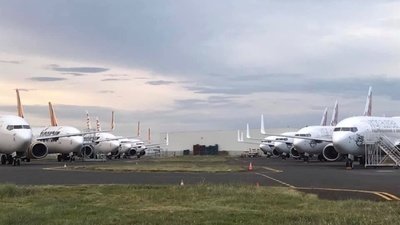

Keep Virgin Australia In The Skies
The issue
Dear Prime Minister Scott Morrison,
In Australia, we are lucky to live within a diverse culture with beautiful and vast plains. These spread out across our great country. Unlike other nations, we rely a lot on airlines to provide us with transportation to get around. These trips offer us valuable connections with family, friends, and the opportunity to see and experience unique landmarks, while also providing links to keep our economy moving forward.
Since government-imposed restrictions have encouraged people not to fly, we have seen a dramatic fall in demand for air transport. Many will stay home to flatten the curve of COVID-19. We understand that this is important not only for our nations health but the economy in the future. We also know that these are challenging times for people.
One of the things we take for granted in this great nation is the viability and competitive nature of our airlines. We are lucky to have two full-service carriers that provide competition and value to Australian travellers and contribute to tourism. One of those is Virgin Australia.
Virgin Australia began as Virgin Blue. It took ten years for this airline to compete with its competitor in the full-service category. During this time of development, we saw many innovations introduced to the benefit of the consumer and economy. We have not seen this before, even with the former Australian carrier that folded in March 2002.
Virgin Australia has helped:
- Over 25 million people travel a year.
- Contribute over $11 billion dollars a year in tourism, which supports over 600,000 people in jobs.
- Operate to 39 destinations under its domestic and regional airline brand.
- Provide access to over 450 worldwide destinations through its virtual network
- Offer travel choice and value for the Pacific Islands, New Zealand, North America and Asia routes.
- Employ over 10,000 Australians.
- Hold a ~37% share in the domestic market and put pressure on the competition to introduce two low-cost carriers.
- Deliver efficiency as recognised with most-on time departure airline for 2018-2019.
- By getting people to their destination, with least likely airline to cancel your flight in 2019.
- Community partners including the Starlight Children's Foundation, Greening Australia, Salvation Army, Oz Harvest and many more.
- Support thousands of more jobs and sectors indirectly.
This company has also helped to provide innovation and value in this nation, including:
- A 37% reduction in airfares since operating.
- The first successful trial of sustainable fuels at Airports in Australia.
- The world's first government-certified carbon offset program.
- The first Australian airline to provide Wi-Fi for guests via LA.
- The first Australian airline to allow comfort devices on board.
- The first Australian airline to offer online web check-in for guests.
- A leading business product for government and corporate Australia in domestic travel.
- A unique and diverse brand culture that focuses on value for leisure and corporate travelers.
- Voted as one of the world's top 20 safest carriers around the globe to travel with (AirlineRatings.com) among other awards for Best Cabin Crew for three years in a row and Best Business Class for 2017 and 2018.
We know from history that without a competitive aviation industry, many people in our country will not be able to enjoy these valuable connections, particularly in regional communities such as Albury, Mackay, Townsville, Port Macquarie, Mildura, Alice Springs and Darwin.
We also know that from history a monopoly benefits no one. It gives too much power to one carrier. This monopoly leads to less innovation and higher airfares for many Australians.
Moreover, the idea that another airline will be able to compete and offer the same level of service at this challenging economic time presents an argument that many aviation experts agree is flawed. We know that the Civil Aviation Safety Authority (CASA) takes 12 months, sometimes years to approve new airline operators to serve a country. We know too that would require a substantial capital investment, which at this time is unlikely to be provided from the private sector—also, the incredible cost and logistics of employee and asset displacement and reallocation.
For this reason, we sign this petition to urge you to:
- Support Virgin Australia by offering the industry assistance it needs, such as a loan which it will pay back in 2-3 years to keep running as Australia's second-largest airline.
- Or to provide Virgin Australia with a guarantor statement that will allow it to seek financial assistance elsewhere, but give the confidence it needs to achieve financial support.
If the airline is unable to pay for the loan (unlikely given post-COVID-19 travel forecasts), then the government would acquire an equity stake that it could sell, similar to when it owned the national carrier for 70 of its 100 years in operation.
Other foreign airlines are unlikely to support an Australian airline when they have to protect their own in this uncertainty. CAPA - Centre for Aviation forecasts that without government support, many airlines around the world will go bankrupt. Australia has the chance to invest in a bright future inspired by innovation, collaboration and imagination. The Virgin Group that owns ~10% and has over 60 brands are also less likely to be able to provide more assistance, given many of these businesses have borne the brunt of this storm and have lost more than $400 million in the first few weeks alone.
We sign this on behalf of the thousands of people who work for this airline and share a unique family bond that is Virgin Australia. We also do this to support a competitive and robust aviation industry. So that people have the choice and chance to travel, and support tourism for many years to come.
Thank you.

85,211
The issue
Dear Prime Minister Scott Morrison,
In Australia, we are lucky to live within a diverse culture with beautiful and vast plains. These spread out across our great country. Unlike other nations, we rely a lot on airlines to provide us with transportation to get around. These trips offer us valuable connections with family, friends, and the opportunity to see and experience unique landmarks, while also providing links to keep our economy moving forward.
Since government-imposed restrictions have encouraged people not to fly, we have seen a dramatic fall in demand for air transport. Many will stay home to flatten the curve of COVID-19. We understand that this is important not only for our nations health but the economy in the future. We also know that these are challenging times for people.
One of the things we take for granted in this great nation is the viability and competitive nature of our airlines. We are lucky to have two full-service carriers that provide competition and value to Australian travellers and contribute to tourism. One of those is Virgin Australia.
Virgin Australia began as Virgin Blue. It took ten years for this airline to compete with its competitor in the full-service category. During this time of development, we saw many innovations introduced to the benefit of the consumer and economy. We have not seen this before, even with the former Australian carrier that folded in March 2002.
Virgin Australia has helped:
- Over 25 million people travel a year.
- Contribute over $11 billion dollars a year in tourism, which supports over 600,000 people in jobs.
- Operate to 39 destinations under its domestic and regional airline brand.
- Provide access to over 450 worldwide destinations through its virtual network
- Offer travel choice and value for the Pacific Islands, New Zealand, North America and Asia routes.
- Employ over 10,000 Australians.
- Hold a ~37% share in the domestic market and put pressure on the competition to introduce two low-cost carriers.
- Deliver efficiency as recognised with most-on time departure airline for 2018-2019.
- By getting people to their destination, with least likely airline to cancel your flight in 2019.
- Community partners including the Starlight Children's Foundation, Greening Australia, Salvation Army, Oz Harvest and many more.
- Support thousands of more jobs and sectors indirectly.
This company has also helped to provide innovation and value in this nation, including:
- A 37% reduction in airfares since operating.
- The first successful trial of sustainable fuels at Airports in Australia.
- The world's first government-certified carbon offset program.
- The first Australian airline to provide Wi-Fi for guests via LA.
- The first Australian airline to allow comfort devices on board.
- The first Australian airline to offer online web check-in for guests.
- A leading business product for government and corporate Australia in domestic travel.
- A unique and diverse brand culture that focuses on value for leisure and corporate travelers.
- Voted as one of the world's top 20 safest carriers around the globe to travel with (AirlineRatings.com) among other awards for Best Cabin Crew for three years in a row and Best Business Class for 2017 and 2018.
We know from history that without a competitive aviation industry, many people in our country will not be able to enjoy these valuable connections, particularly in regional communities such as Albury, Mackay, Townsville, Port Macquarie, Mildura, Alice Springs and Darwin.
We also know that from history a monopoly benefits no one. It gives too much power to one carrier. This monopoly leads to less innovation and higher airfares for many Australians.
Moreover, the idea that another airline will be able to compete and offer the same level of service at this challenging economic time presents an argument that many aviation experts agree is flawed. We know that the Civil Aviation Safety Authority (CASA) takes 12 months, sometimes years to approve new airline operators to serve a country. We know too that would require a substantial capital investment, which at this time is unlikely to be provided from the private sector—also, the incredible cost and logistics of employee and asset displacement and reallocation.
For this reason, we sign this petition to urge you to:
- Support Virgin Australia by offering the industry assistance it needs, such as a loan which it will pay back in 2-3 years to keep running as Australia's second-largest airline.
- Or to provide Virgin Australia with a guarantor statement that will allow it to seek financial assistance elsewhere, but give the confidence it needs to achieve financial support.
If the airline is unable to pay for the loan (unlikely given post-COVID-19 travel forecasts), then the government would acquire an equity stake that it could sell, similar to when it owned the national carrier for 70 of its 100 years in operation.
Other foreign airlines are unlikely to support an Australian airline when they have to protect their own in this uncertainty. CAPA - Centre for Aviation forecasts that without government support, many airlines around the world will go bankrupt. Australia has the chance to invest in a bright future inspired by innovation, collaboration and imagination. The Virgin Group that owns ~10% and has over 60 brands are also less likely to be able to provide more assistance, given many of these businesses have borne the brunt of this storm and have lost more than $400 million in the first few weeks alone.
We sign this on behalf of the thousands of people who work for this airline and share a unique family bond that is Virgin Australia. We also do this to support a competitive and robust aviation industry. So that people have the choice and chance to travel, and support tourism for many years to come.
Thank you.
The Decision Makers


Petition Updates
Share this petition
Petition created on 4 April 2020