Save Castlecrag: protect the birthplace of Australian modernism from bad development

Save Castlecrag: protect the birthplace of Australian modernism from bad development
The issue
Just 8 kilometres from the Sydney CBD, the birthplace of Australian modernism and a haven for biodiversity is under threat.
A major property developer has lodged a Development Application for two 12 storey luxury towers – 14 storeys at the back – on Castlecrag’s former shopping centre site at 100 Edinburgh Road, in the middle of a precinct where the tallest existing buildings are just three storeys and the surrounding landscape is defined by dense native tree canopy and a unique streetscape shaped by Walter Burley Griffin’s original masterplan – intended to be subservient to the landscape.
Our community had already community fought for, and won, an appropriate, carefully scaled development made up of apartments and shops that respected the character of the area and was ready to proceed. The agreed scheme allowed for 3 storeys with 5 at the back, a balanced outcome shaped by community input and careful planning. This new proposal would supersize this – effectively quadrupling the previously approved height and density.
For months, our questions have been met with silence. Requests for information have gone unanswered. This is not genuine community consultation. But we know enough to understand what 12-14 storeys on a narrow ridge will mean: a building that dominates the skyline, overshadows homes, increases traffic in a suburb almost a three kilometre walk from the nearest train line, and permanently alters the character of this unique place.
We call on the NSW Minister for Planning the Hon. Paul Scully to reject Conquest’s application.
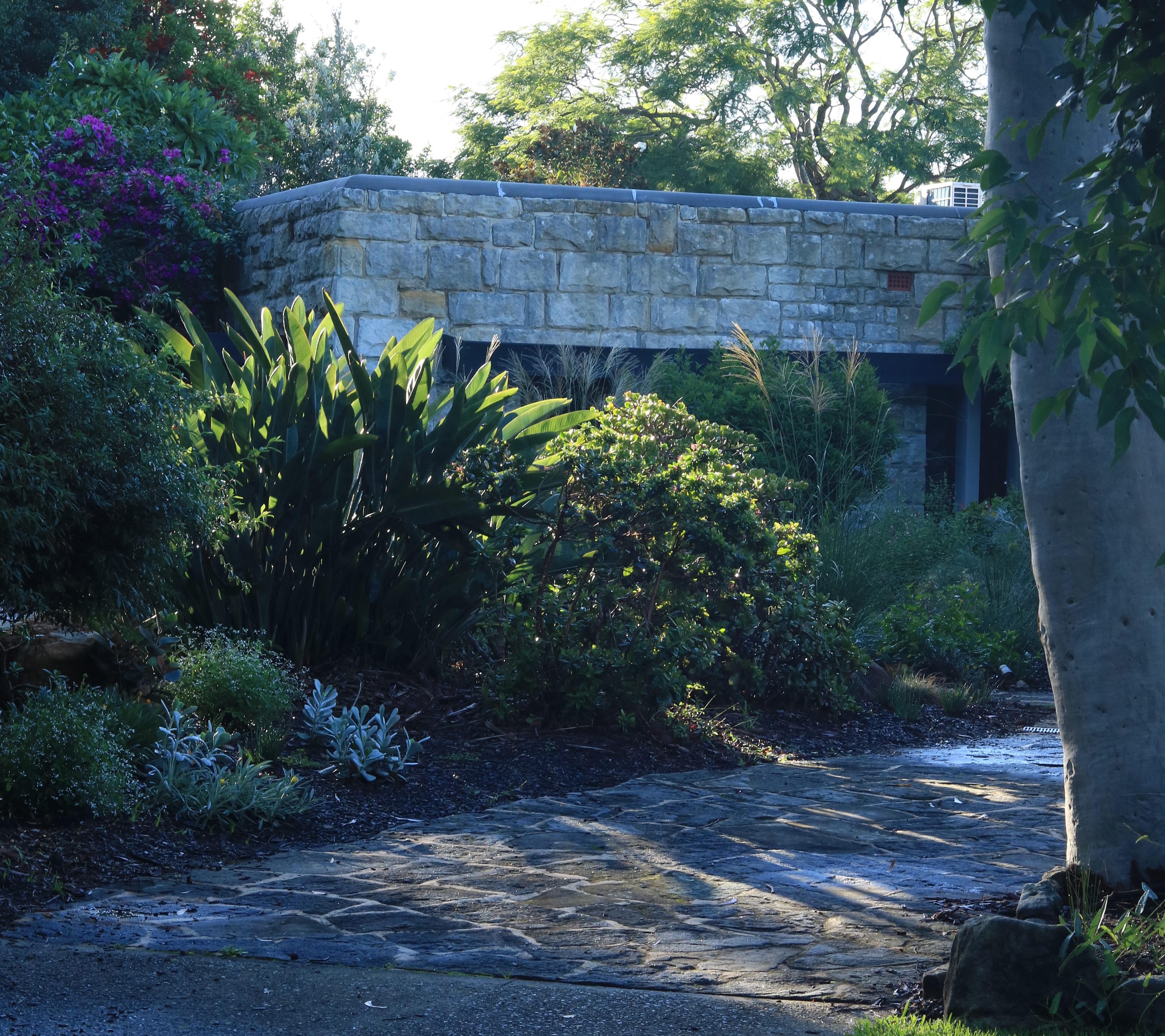
The Griffins designed and built modest homes, designed to be subservient to the landscape, a legacy which still defines Castlecrag today
Castlecrag is not just another postcode. It is widely recognised as the blueprint for modernism in Australia.
In the 1920s, Walter Burley Griffin and Marion Mahoney Griffin, collaborators and protégés of Frank Lloyd Wright, envisioned a suburb where architecture was subservient to the landscape; where bushland, green space and natural topography came first; and where homes were carefully integrated into their setting.
In the 1920s, they purchased 650 acres on Middle Harbour, designing streets, reserves and homes to respect and preserve the natural bushland. That vision still defines Castlecrag today.
Heavily canopied and richly treed, it is interwoven with reserves and bushland corridors by deliberate design. These corridors support bandicoots, echidnas and native bush rats; powerful owls, tawny frogmouths, willy wagtails, king parrots, bell miners, butcherbirds, wattlebirds and many other species. Microbats shelter in its trees. This biodiversity exists because the suburb was planned around the landscape, not imposed upon it.
Castlecrag is internationally renowned as a pioneering Griffin-designed garden suburb, widely recognised as one of the earliest and most significant examples of integrated landscape and residential planning in the world.
It is a living landscape unlike anywhere else in the world. It’s a suburb where architecture, nature and community were designed to coexist in harmony.
Our community is not opposed to thoughtful development. We had already demonstrated our willingness to support appropriate density. What we reject is a dangerous precedent: a dramatic and disproportionate escalation that ignores context, overrides heritage and sidelines the very community that has worked constructively toward balanced outcomes.
This is not just about Castlecrag. It is about how planning decisions are made across Sydney. If two 12-14 storey luxury towers can be approved on a constrained, low-rise, heritage-sensitive site with limited transport access and one road in and out, it sets a precedent for every suburb in the city.
We know that as development intensifies, green space diminishes. Every increase in height and footprint reduces canopy, fragments habitat, increases urban heat and erodes the qualities that make this place special. Once lost, this landscape cannot be recreated. This development is a dangerous encroachment on important and increasingly rare natural habitat.
It is deeply concerning that this proposal is being treated as a State Significant Development. Castlecrag is not a designated growth centre. It is not a transport-oriented development. It is a low-rise, heritage-sensitive suburb located kilometres from heavy rail infrastructure. Applying an SSD pathway to a project of this scale risks sidelining proper community scrutiny and sets a troubling precedent for similar overreach elsewhere.
12-14 storeys on this site is not sensitive infill. It is a gross overdevelopment that’s out of scale, out of character, and out of step with the principles that underpin Castlecrag’s national architectural and environmental significance.
Development here must work with the landscape and community, not against us, and deliver outcomes that respect heritage, protect environment and meet genuine local need.
If it goes ahead, this proposal will ultimately serves one purpose: maximising returns for a wealthy few overseas investors represented by an international private equity firm. Private profit cannot justify the permanent destruction of a place of cultural, architectural and ecological importance.
Castlecrag deserves development that respects its globally significant legacy, not a high-rise experiment that risks erasing it.
At a time of accelerating environmental loss and cultural erasure, this is a vision worth defending.
We hope you can stand with us to reject this proposal.

64
The issue
Just 8 kilometres from the Sydney CBD, the birthplace of Australian modernism and a haven for biodiversity is under threat.
A major property developer has lodged a Development Application for two 12 storey luxury towers – 14 storeys at the back – on Castlecrag’s former shopping centre site at 100 Edinburgh Road, in the middle of a precinct where the tallest existing buildings are just three storeys and the surrounding landscape is defined by dense native tree canopy and a unique streetscape shaped by Walter Burley Griffin’s original masterplan – intended to be subservient to the landscape.
Our community had already community fought for, and won, an appropriate, carefully scaled development made up of apartments and shops that respected the character of the area and was ready to proceed. The agreed scheme allowed for 3 storeys with 5 at the back, a balanced outcome shaped by community input and careful planning. This new proposal would supersize this – effectively quadrupling the previously approved height and density.
For months, our questions have been met with silence. Requests for information have gone unanswered. This is not genuine community consultation. But we know enough to understand what 12-14 storeys on a narrow ridge will mean: a building that dominates the skyline, overshadows homes, increases traffic in a suburb almost a three kilometre walk from the nearest train line, and permanently alters the character of this unique place.
We call on the NSW Minister for Planning the Hon. Paul Scully to reject Conquest’s application.
The Griffins designed and built modest homes, designed to be subservient to the landscape, a legacy which still defines Castlecrag today
Castlecrag is not just another postcode. It is widely recognised as the blueprint for modernism in Australia.
In the 1920s, Walter Burley Griffin and Marion Mahoney Griffin, collaborators and protégés of Frank Lloyd Wright, envisioned a suburb where architecture was subservient to the landscape; where bushland, green space and natural topography came first; and where homes were carefully integrated into their setting.
In the 1920s, they purchased 650 acres on Middle Harbour, designing streets, reserves and homes to respect and preserve the natural bushland. That vision still defines Castlecrag today.
Heavily canopied and richly treed, it is interwoven with reserves and bushland corridors by deliberate design. These corridors support bandicoots, echidnas and native bush rats; powerful owls, tawny frogmouths, willy wagtails, king parrots, bell miners, butcherbirds, wattlebirds and many other species. Microbats shelter in its trees. This biodiversity exists because the suburb was planned around the landscape, not imposed upon it.
Castlecrag is internationally renowned as a pioneering Griffin-designed garden suburb, widely recognised as one of the earliest and most significant examples of integrated landscape and residential planning in the world.
It is a living landscape unlike anywhere else in the world. It’s a suburb where architecture, nature and community were designed to coexist in harmony.
Our community is not opposed to thoughtful development. We had already demonstrated our willingness to support appropriate density. What we reject is a dangerous precedent: a dramatic and disproportionate escalation that ignores context, overrides heritage and sidelines the very community that has worked constructively toward balanced outcomes.
This is not just about Castlecrag. It is about how planning decisions are made across Sydney. If two 12-14 storey luxury towers can be approved on a constrained, low-rise, heritage-sensitive site with limited transport access and one road in and out, it sets a precedent for every suburb in the city.
We know that as development intensifies, green space diminishes. Every increase in height and footprint reduces canopy, fragments habitat, increases urban heat and erodes the qualities that make this place special. Once lost, this landscape cannot be recreated. This development is a dangerous encroachment on important and increasingly rare natural habitat.
It is deeply concerning that this proposal is being treated as a State Significant Development. Castlecrag is not a designated growth centre. It is not a transport-oriented development. It is a low-rise, heritage-sensitive suburb located kilometres from heavy rail infrastructure. Applying an SSD pathway to a project of this scale risks sidelining proper community scrutiny and sets a troubling precedent for similar overreach elsewhere.
12-14 storeys on this site is not sensitive infill. It is a gross overdevelopment that’s out of scale, out of character, and out of step with the principles that underpin Castlecrag’s national architectural and environmental significance.
Development here must work with the landscape and community, not against us, and deliver outcomes that respect heritage, protect environment and meet genuine local need.
If it goes ahead, this proposal will ultimately serves one purpose: maximising returns for a wealthy few overseas investors represented by an international private equity firm. Private profit cannot justify the permanent destruction of a place of cultural, architectural and ecological importance.
Castlecrag deserves development that respects its globally significant legacy, not a high-rise experiment that risks erasing it.
At a time of accelerating environmental loss and cultural erasure, this is a vision worth defending.
We hope you can stand with us to reject this proposal.
64
Petition Updates
Share this petition
Petition created on 29 April 2026