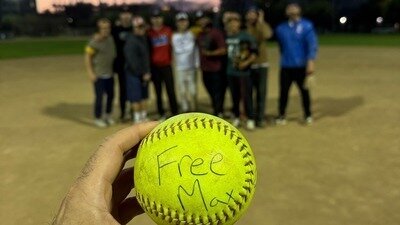

Remove My Unjust One-Year SF Softball Suspension
The Issue
I have played in SF Softball, Burlingame, San Bruno, South San Francisco, and Presidio leagues for many years without ever being reported for inappropriate behavior or misconduct. I am also an avid member of a vintage baseball league, occasionally play in the Pacific Coast Baseball League, and participate in a work and VOLO basketball league. Across years of recreational sports, I have never had another behavioral complaint or disciplinary report against me.
That changed after one incident involving Scott T., manager of the Olympic Club Red softball team, and what followed has now resulted in an unjust one-year suspension from SF Softball.
What Happened
I was a fan in the stands supporting my friends' team, not a player in the game. I was playfully heckling Olympic Club Red when Scott told me to “go home to your boyfriend.” I admittedly became more aggressive with my heckling after that, but I never used vulgar or obscene language.
Scott proceeded to call me a “f*ggot” on four separate occasions throughout the game.
On one play, Scott hit a ball into the outfield and was so busy turning directly to me and yelling homophobic slurs at my face that he was thrown out at first base from the outfield. Afterwards, he was clearly bothered.
After the game, I was invited to join the handshake line by the team I was supporting. As I approached Scott, he put his hand down rather than shake mine. I gave him a high-five on the back and said, “oh come on man, good game.”
As I was high fiving the next person in line, Scott yelled, “Don't ever fucking touch me,” went to shove me in the back with both hands, and fell on his ass while doing so.
Scott then reported me to SF Softball.
I believe he was embarrassed by what happened and retaliated by accusing me of using vulgar and obscene language and causing a physical altercation.
The SF Softball Board required me to fight tooth and nail, but eventually both of those allegations were dismissed.
The Board ultimately found me responsible for one thing: being on the field when I shouldn't have been. I took accountability for that finding and accepted the resulting punishment and probation, although I questioned the severity of the punishment given my many years-long clean record and believed a warning would have been more appropriate.
Then I Tried to Report What Had Actually Happened
What continued to bother me was that while I had been put through a disciplinary process, Scott's repeated homophobic slurs and conduct appeared to receive no meaningful attention. He continued participating in games without suspension.
I raised those concerns with SF Softball.
The league eventually conducted what it described as an investigation. They spoke with the umpire, whom I know, and she gave a neutral account of what she had personally observed. After my suspension, I spoke with her myself. When she realized which person I was, she asked me, “Wait, were you the one saying the homophobic slurs?” When I told her no, she expressed that the person using those slurs was the person who should have been suspended.
I also saw the response provided by the manager of the team I had been supporting. His account was similarly neutral, which made sense because he had been playing deep in the outfield and was out of earshot of the exchanges between Scott and me.
In other words, the people SF Softball eventually contacted did not provide evidence disproving what I had reported. Yet nothing meaningful was done about Scott's conduct.
When my concerns continued to go unaddressed, I eventually brought them directly to the Olympic Club. After many missed calls and email inquiries, I finally got a response after having to be more aggressive regarding the allegations I wanted to present.
The Olympic Club referred the matter back to SF Softball after I finally got them on the phone.
SF Softball then informed me that my decision to contact the Olympic Club constituted a violation of my probation and ultimately suspended me for an entire year.
There is one major problem with that explanation:
My written probation never prohibited me from contacting the Olympic Club.
My probation required a four-game suspension, prohibited me from participating in the Spring 2026 playoffs, required an apology to Scott, prohibited me from playing Tuesday nights—something I had offered as a way to distance myself from the situation—prohibited me from heckling Olympic Club teams or players as either a participant or spectator, and placed me on probation for the Summer and Fall 2026 seasons.
Nowhere does it say that I cannot contact the Olympic Club, report misconduct, raise concerns about an Olympic Club member, or communicate with the organization.
Yet after I contacted the Olympic Club about conduct that I believed SF Softball had failed to adequately address, the Board declared that I had violated probation and imposed a one-year suspension.
Despite my repeated requests, SF Softball has not identified which written probation condition I violated or provided evidence showing how I violated it.
The Olympic Club's Influence Cannot Be Ignored
This situation does not exist in isolation.
During my years playing SF Softball, I and numerous other players have developed serious concerns about conflicts of interest, preferential treatment, and selective enforcement involving Olympic Club teams and their relationship with SF Softball.
Those concerns include Olympic Club representation connected to the SF Softball Board, expanded roster practices that benefit Olympic Club teams, playoff scheduling that has repeatedly kept Olympic Club teams from facing one another, usage of underaged players in 40-and-over leagues, and a broader perception that Olympic Club receives support and deference that is not extended equally to other teams.
Whether everyone agrees with those broader concerns or not, Olympic Club representation connected to the Board is particularly troubling in a disciplinary dispute directly involving an Olympic Club manager.
The original complaint against me came from an Olympic Club manager. My subsequent concerns involved that same manager and organization. When I felt those concerns were being ignored, I contacted the Olympic Club directly. That contact was then used against me as an alleged probation violation.
Meanwhile, Olympic Club has representation connected to the body determining my punishment.
At minimum, that creates a serious conflict of interest and an appearance of bias that should concern every player in this league.
Adam Grasso's Handling of This Matter Raises Separate Concerns
The way SF Softball Commissioner Adam Grasso has handled this situation has further undermined my confidence in the fairness of this process.
Throughout this process, my understanding has been that the Board's disciplinary decisions serve as recommendations and that Adam, as the person running SF Softball, has the ability and responsibility to independently evaluate those recommendations rather than simply rubber-stamp them.
Given how unusually severe this punishment was, the concerns surrounding conflicts of interest, and the fact that SF Softball still had not identified what specific probation condition I supposedly violated, I expected Adam to take a serious look at what had happened.
Instead, after I was informed of the one-year suspension, I reached out to Adam asking a very simple question:
What specific condition of my probation did I violate?
I received no response.
Numerous managers also reached out to Adam questioning the decision. His response to them, as it was relayed to me, was simply that I had violated the league's “Code of Conduct.”
That still did not answer the question.
What did I actually do? What specific rule did I violate? What specific probationary condition did I break? And what conduct justified escalating my punishment to a full one-year suspension?
After several days, Adam finally agreed to speak with me following a Presidio League game.
I laid out the facts and explained again that I had been following every written condition of my probation.
Adam's response was essentially:
“Well, in your probation I didn't think you were allowed to talk to the Olympic Club.”
I told him immediately that this was not true.
That exchange was astonishing to me.
The person overseeing SF Softball and allowing a one-year suspension to stand apparently did not even know the terms of the probation that I was supposedly being punished for violating.
My probation did not prohibit me from contacting the Olympic Club. It prohibited very specific conduct, and I had been following those restrictions.
That distinction is not minor.
It is the entire basis of this dispute.
If my decision to contact the Olympic Club was being used to justify a one-year suspension, then the person ultimately responsible for administering that punishment should have known whether contacting the Olympic Club was actually prohibited before allowing that suspension to stand.
During that same conversation, I told Adam that if SF Softball continued handling the situation this way, I intended to bring the matter to the public and to more teams throughout the league. I also told him that a number of teams, including teams I have played with, were considering not returning to SF Softball because of how this process had been handled.
Adam responded:
“I don't care. Teams come, teams go.”
If that is the attitude of the person running this organization toward the teams and players who make the league possible, I believe people deserve to know that.
Players spend their money to participate in this league. Managers spend countless hours recruiting players, organizing rosters, communicating with the league, and keeping teams together. Many of these teams return season after season and form a substantial part of San Francisco's recreational softball community.
When managers are raising serious concerns about fairness and the response from the person running the organization is effectively that he does not care if teams leave because “teams come, teams go,” that raises a larger question about the leadership of SF Softball.
At this point, my concern is no longer limited to the Board's original decision.
If Adam allowed a one-year suspension to remain in place without knowing the actual terms of my probation, failed to answer my repeated request to identify what condition I supposedly violated, and then dismissed concerns that teams could leave the league by saying, “I don't care. Teams come, teams go,” then I believe his handling of this situation deserves scrutiny as well.
SF Softball needs leadership that understands its own disciplinary decisions, independently reviews questionable Board recommendations, responds when players ask what rule they supposedly violated, and takes concerns from its teams seriously.
Based on everything that has happened, I no longer believe simply removing my suspension is enough.
Remove the One-Year Suspension and Address the Leadership Problems That Allowed This to Happen
I am not asking for another investigation or another drawn-out appeals process. This is adult league softball for God's sake.
I accepted responsibility for being on the field when I shouldn't have been. The allegations that I used vulgar or obscene language and caused a physical altercation were dismissed.
I then attempted to raise concerns about the repeated homophobic language directed at me. When SF Softball failed to meaningfully address those concerns, I took them directly to the Olympic Club.
For doing so, I am now serving an additional one-year suspension based on a supposed probation violation that SF Softball has never clearly identified or supported with evidence.
My request is simple.
Remove the one-year suspension and restore my eligibility to play SF Softball.
If SF Softball believes I violated my probation, it should be able to point to one of the written conditions I agreed to and explain exactly what I did that violated it.
It has not done so.
But this process has also exposed broader problems that should not simply be ignored once my individual suspension is resolved.
I am therefore asking for three things:
- Remove my one-year suspension and immediately restore my eligibility to play SF Softball.
- Remove Olympic Club representation from disciplinary decisions involving Olympic Club teams, players, or managers, and establish meaningful conflict-of-interest and recusal procedures going forward.
- Review Adam Grasso's continued leadership of SF Softball and whether his handling of this matter reflects the accountability, fairness, and respect for participating teams that the league deserves.
This is a recreational softball league. Players should not have to fear that raising concerns about another participant's conduct—particularly repeated homophobic slurs—will ultimately result in another year of punishment against the person raising the complaint.
They also should not have to wonder whether the people deciding their punishment know the rules they are supposedly enforcing or care whether the teams that sustain the league remain part of it.
If you believe this suspension is excessive and unfair, that SF Softball should apply its rules equally regardless of what team or organization is involved, and that the league's leadership should be accountable to its players and managers, please sign this petition and call on SF Softball to reverse my one-year suspension and address the conflicts of interest and leadership failures that allowed this situation to occur.

189
The Issue
I have played in SF Softball, Burlingame, San Bruno, South San Francisco, and Presidio leagues for many years without ever being reported for inappropriate behavior or misconduct. I am also an avid member of a vintage baseball league, occasionally play in the Pacific Coast Baseball League, and participate in a work and VOLO basketball league. Across years of recreational sports, I have never had another behavioral complaint or disciplinary report against me.
That changed after one incident involving Scott T., manager of the Olympic Club Red softball team, and what followed has now resulted in an unjust one-year suspension from SF Softball.
What Happened
I was a fan in the stands supporting my friends' team, not a player in the game. I was playfully heckling Olympic Club Red when Scott told me to “go home to your boyfriend.” I admittedly became more aggressive with my heckling after that, but I never used vulgar or obscene language.
Scott proceeded to call me a “f*ggot” on four separate occasions throughout the game.
On one play, Scott hit a ball into the outfield and was so busy turning directly to me and yelling homophobic slurs at my face that he was thrown out at first base from the outfield. Afterwards, he was clearly bothered.
After the game, I was invited to join the handshake line by the team I was supporting. As I approached Scott, he put his hand down rather than shake mine. I gave him a high-five on the back and said, “oh come on man, good game.”
As I was high fiving the next person in line, Scott yelled, “Don't ever fucking touch me,” went to shove me in the back with both hands, and fell on his ass while doing so.
Scott then reported me to SF Softball.
I believe he was embarrassed by what happened and retaliated by accusing me of using vulgar and obscene language and causing a physical altercation.
The SF Softball Board required me to fight tooth and nail, but eventually both of those allegations were dismissed.
The Board ultimately found me responsible for one thing: being on the field when I shouldn't have been. I took accountability for that finding and accepted the resulting punishment and probation, although I questioned the severity of the punishment given my many years-long clean record and believed a warning would have been more appropriate.
Then I Tried to Report What Had Actually Happened
What continued to bother me was that while I had been put through a disciplinary process, Scott's repeated homophobic slurs and conduct appeared to receive no meaningful attention. He continued participating in games without suspension.
I raised those concerns with SF Softball.
The league eventually conducted what it described as an investigation. They spoke with the umpire, whom I know, and she gave a neutral account of what she had personally observed. After my suspension, I spoke with her myself. When she realized which person I was, she asked me, “Wait, were you the one saying the homophobic slurs?” When I told her no, she expressed that the person using those slurs was the person who should have been suspended.
I also saw the response provided by the manager of the team I had been supporting. His account was similarly neutral, which made sense because he had been playing deep in the outfield and was out of earshot of the exchanges between Scott and me.
In other words, the people SF Softball eventually contacted did not provide evidence disproving what I had reported. Yet nothing meaningful was done about Scott's conduct.
When my concerns continued to go unaddressed, I eventually brought them directly to the Olympic Club. After many missed calls and email inquiries, I finally got a response after having to be more aggressive regarding the allegations I wanted to present.
The Olympic Club referred the matter back to SF Softball after I finally got them on the phone.
SF Softball then informed me that my decision to contact the Olympic Club constituted a violation of my probation and ultimately suspended me for an entire year.
There is one major problem with that explanation:
My written probation never prohibited me from contacting the Olympic Club.
My probation required a four-game suspension, prohibited me from participating in the Spring 2026 playoffs, required an apology to Scott, prohibited me from playing Tuesday nights—something I had offered as a way to distance myself from the situation—prohibited me from heckling Olympic Club teams or players as either a participant or spectator, and placed me on probation for the Summer and Fall 2026 seasons.
Nowhere does it say that I cannot contact the Olympic Club, report misconduct, raise concerns about an Olympic Club member, or communicate with the organization.
Yet after I contacted the Olympic Club about conduct that I believed SF Softball had failed to adequately address, the Board declared that I had violated probation and imposed a one-year suspension.
Despite my repeated requests, SF Softball has not identified which written probation condition I violated or provided evidence showing how I violated it.
The Olympic Club's Influence Cannot Be Ignored
This situation does not exist in isolation.
During my years playing SF Softball, I and numerous other players have developed serious concerns about conflicts of interest, preferential treatment, and selective enforcement involving Olympic Club teams and their relationship with SF Softball.
Those concerns include Olympic Club representation connected to the SF Softball Board, expanded roster practices that benefit Olympic Club teams, playoff scheduling that has repeatedly kept Olympic Club teams from facing one another, usage of underaged players in 40-and-over leagues, and a broader perception that Olympic Club receives support and deference that is not extended equally to other teams.
Whether everyone agrees with those broader concerns or not, Olympic Club representation connected to the Board is particularly troubling in a disciplinary dispute directly involving an Olympic Club manager.
The original complaint against me came from an Olympic Club manager. My subsequent concerns involved that same manager and organization. When I felt those concerns were being ignored, I contacted the Olympic Club directly. That contact was then used against me as an alleged probation violation.
Meanwhile, Olympic Club has representation connected to the body determining my punishment.
At minimum, that creates a serious conflict of interest and an appearance of bias that should concern every player in this league.
Adam Grasso's Handling of This Matter Raises Separate Concerns
The way SF Softball Commissioner Adam Grasso has handled this situation has further undermined my confidence in the fairness of this process.
Throughout this process, my understanding has been that the Board's disciplinary decisions serve as recommendations and that Adam, as the person running SF Softball, has the ability and responsibility to independently evaluate those recommendations rather than simply rubber-stamp them.
Given how unusually severe this punishment was, the concerns surrounding conflicts of interest, and the fact that SF Softball still had not identified what specific probation condition I supposedly violated, I expected Adam to take a serious look at what had happened.
Instead, after I was informed of the one-year suspension, I reached out to Adam asking a very simple question:
What specific condition of my probation did I violate?
I received no response.
Numerous managers also reached out to Adam questioning the decision. His response to them, as it was relayed to me, was simply that I had violated the league's “Code of Conduct.”
That still did not answer the question.
What did I actually do? What specific rule did I violate? What specific probationary condition did I break? And what conduct justified escalating my punishment to a full one-year suspension?
After several days, Adam finally agreed to speak with me following a Presidio League game.
I laid out the facts and explained again that I had been following every written condition of my probation.
Adam's response was essentially:
“Well, in your probation I didn't think you were allowed to talk to the Olympic Club.”
I told him immediately that this was not true.
That exchange was astonishing to me.
The person overseeing SF Softball and allowing a one-year suspension to stand apparently did not even know the terms of the probation that I was supposedly being punished for violating.
My probation did not prohibit me from contacting the Olympic Club. It prohibited very specific conduct, and I had been following those restrictions.
That distinction is not minor.
It is the entire basis of this dispute.
If my decision to contact the Olympic Club was being used to justify a one-year suspension, then the person ultimately responsible for administering that punishment should have known whether contacting the Olympic Club was actually prohibited before allowing that suspension to stand.
During that same conversation, I told Adam that if SF Softball continued handling the situation this way, I intended to bring the matter to the public and to more teams throughout the league. I also told him that a number of teams, including teams I have played with, were considering not returning to SF Softball because of how this process had been handled.
Adam responded:
“I don't care. Teams come, teams go.”
If that is the attitude of the person running this organization toward the teams and players who make the league possible, I believe people deserve to know that.
Players spend their money to participate in this league. Managers spend countless hours recruiting players, organizing rosters, communicating with the league, and keeping teams together. Many of these teams return season after season and form a substantial part of San Francisco's recreational softball community.
When managers are raising serious concerns about fairness and the response from the person running the organization is effectively that he does not care if teams leave because “teams come, teams go,” that raises a larger question about the leadership of SF Softball.
At this point, my concern is no longer limited to the Board's original decision.
If Adam allowed a one-year suspension to remain in place without knowing the actual terms of my probation, failed to answer my repeated request to identify what condition I supposedly violated, and then dismissed concerns that teams could leave the league by saying, “I don't care. Teams come, teams go,” then I believe his handling of this situation deserves scrutiny as well.
SF Softball needs leadership that understands its own disciplinary decisions, independently reviews questionable Board recommendations, responds when players ask what rule they supposedly violated, and takes concerns from its teams seriously.
Based on everything that has happened, I no longer believe simply removing my suspension is enough.
Remove the One-Year Suspension and Address the Leadership Problems That Allowed This to Happen
I am not asking for another investigation or another drawn-out appeals process. This is adult league softball for God's sake.
I accepted responsibility for being on the field when I shouldn't have been. The allegations that I used vulgar or obscene language and caused a physical altercation were dismissed.
I then attempted to raise concerns about the repeated homophobic language directed at me. When SF Softball failed to meaningfully address those concerns, I took them directly to the Olympic Club.
For doing so, I am now serving an additional one-year suspension based on a supposed probation violation that SF Softball has never clearly identified or supported with evidence.
My request is simple.
Remove the one-year suspension and restore my eligibility to play SF Softball.
If SF Softball believes I violated my probation, it should be able to point to one of the written conditions I agreed to and explain exactly what I did that violated it.
It has not done so.
But this process has also exposed broader problems that should not simply be ignored once my individual suspension is resolved.
I am therefore asking for three things:
- Remove my one-year suspension and immediately restore my eligibility to play SF Softball.
- Remove Olympic Club representation from disciplinary decisions involving Olympic Club teams, players, or managers, and establish meaningful conflict-of-interest and recusal procedures going forward.
- Review Adam Grasso's continued leadership of SF Softball and whether his handling of this matter reflects the accountability, fairness, and respect for participating teams that the league deserves.
This is a recreational softball league. Players should not have to fear that raising concerns about another participant's conduct—particularly repeated homophobic slurs—will ultimately result in another year of punishment against the person raising the complaint.
They also should not have to wonder whether the people deciding their punishment know the rules they are supposedly enforcing or care whether the teams that sustain the league remain part of it.
If you believe this suspension is excessive and unfair, that SF Softball should apply its rules equally regardless of what team or organization is involved, and that the league's leadership should be accountable to its players and managers, please sign this petition and call on SF Softball to reverse my one-year suspension and address the conflicts of interest and leadership failures that allowed this situation to occur.
Supporter Voices
Petition Updates
Share this petition
Petition created on August 24, 2026