

Reinstate and Modernize the Federal Renewable Energy Investment Tax Credit (ITC)
The Issue
Policy Proposal: Reinstate and Modernize the Federal Renewable Energy Investment Tax Credit (ITC)

1. Introduction: America Needs Reliable, Affordable Energy for a High‑Demand Future
US energy demand is surging due to AI data centers, industrial manufacturing, and electric vehicle adoption (Yang, 2026). Meeting this demand will require massive new generation and storage capacity—over 900 GW of new renewables and battery storage by 2040, representing 60% of total capacity additions (American Clean Power Association, 2025). Solar and wind alone will supply more than 75% of new additions. America needs cost‑effective, scalable, and secure energy sources, and renewable energy meets all three criteria.
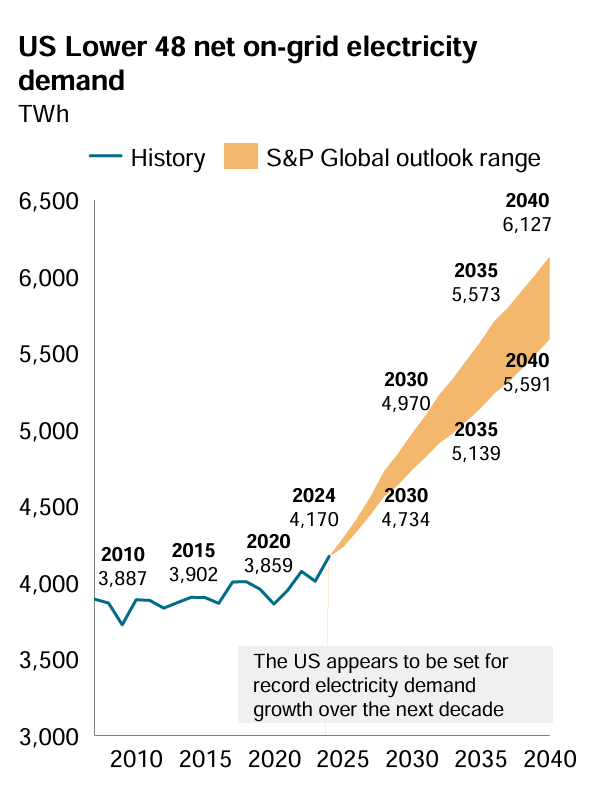
Figure 1: Projected Energy Demand to 2040 (American Clean Power Association, 2025)
2. Problem: The Phaseout of the ITC Has Slowed Renewable Investment and Deployment
Since the late 1970’s, the US government has offered a renewable energy Investment Tax Credit (ITC) to encourage homeowners, small businesses, and commercial developers to invest in renewable energy projects. The ITC was expanded over the years and was a key factor in helping bring manufacturing and installation costs down and increasing the US portfolio of renewable and alternative energy sources. The tax credit was phased out at the end of 2025, and new consumer investment in renewables has slowed. (Fischer, 2026)
At a time when the need for improved energy infrastructure is increasing, renewable clean energy could be a major force in supplying our future demand and the key to energy independence.
To understand why reinstating the ITC matters, it is important to examine the economic and strategic advantages of renewables.
Why Renewables Are the Most Cost‑Effective and Secure Option:
LCOE - Renewable energy is cheaper to produce than nuclear, coal, and natural gas.
The Levelized Cost of Energy (LCOE) is a metric used to assess the average cost of electricity generation over the lifetime of an energy asset. It is calculated by dividing the total lifetime costs of a project by its total expected energy output, providing a single, comparable metric for the cost-effectiveness of different energy generation technologies. LCOE helps determine the viability and competitiveness of electricity generation projects and is crucial for investment planning. (Gomstyn & Jonker, n.d.) A University of Michigan report showed that the LCOE, “remains lower for utility-scale solar and onshore wind than fossil fuels through 2025, despite slight increases in renewable LCOE during 2023 and 2024.” (Center for Sustainable Systems, University of Michigan, 2024)
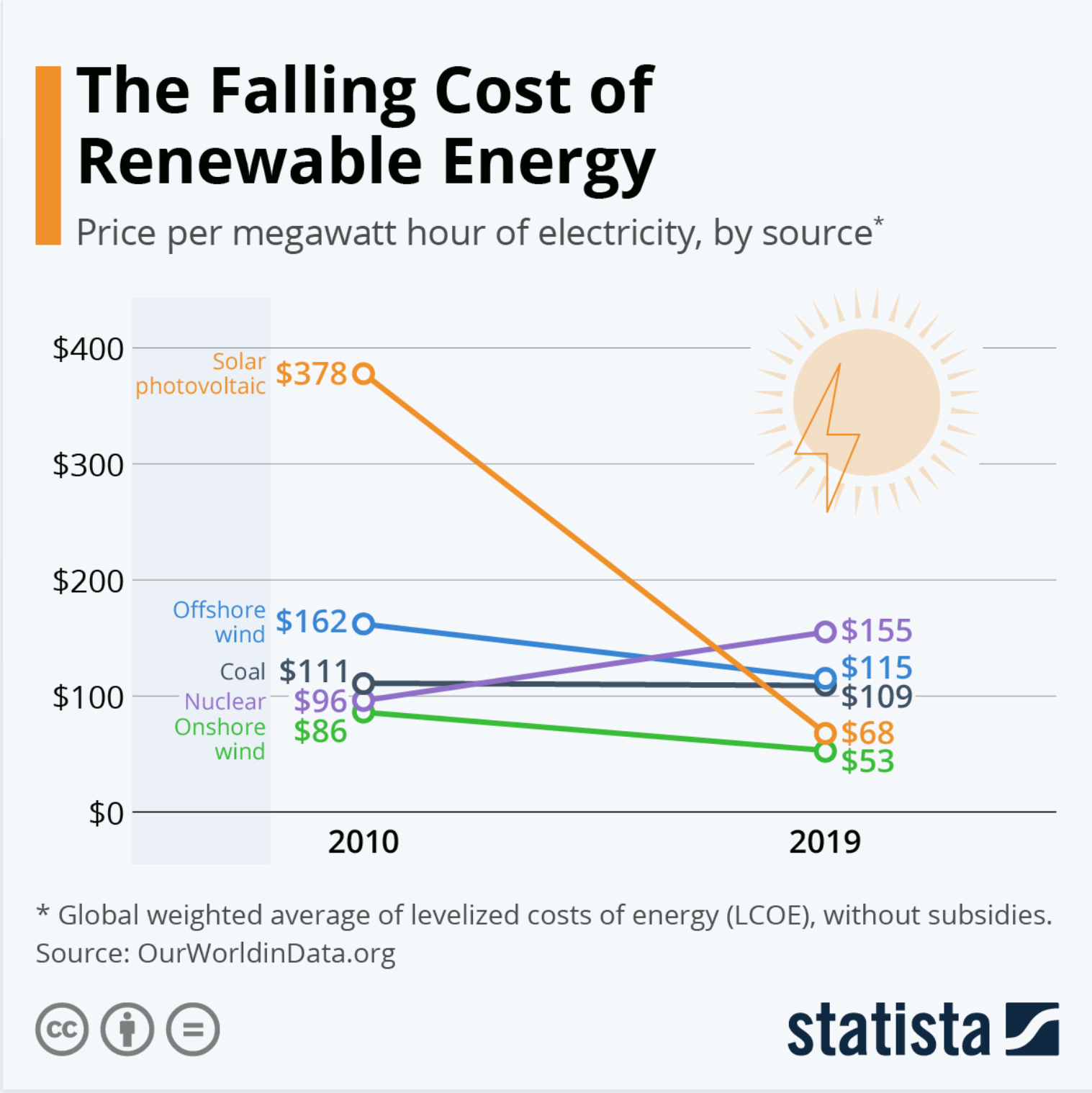
Figure 2: Statistica data shows global relative levelized costs of energy (LCOE) for several sources, highlighting the dramatic 82% drop in cost per megawatt-hour for solar and a respectable 38% drop for wind power. (Armstrong, 2021)
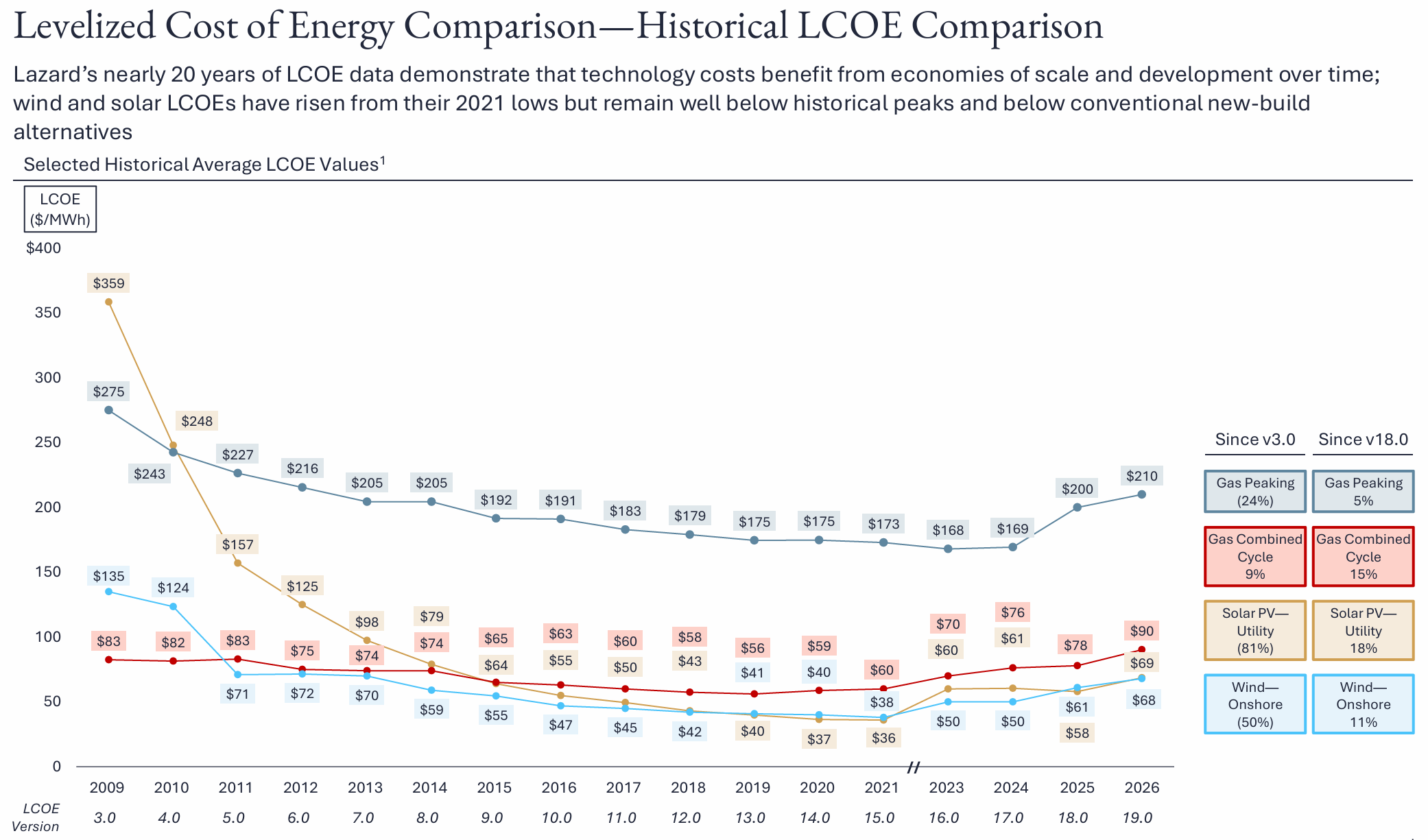
Figure 3: Lazard’s 2026 LCOE+ report confirms the global trend holds in the United States. The cost to produce electricity from solar and wind continues to be lower than nuclear, coal, and natural gas. (Lazard, 2026)
Diversification – Just like any investment strategy, a robust energy portfolio needs to be diversified. This prevents reliance on a single source of energy and supports the development of new and alternative fuels and energy sources. Indeed, the authors of a recent research article found “that energy diversity plays a significant role in reducing energy risk.” (Cooray, Shahbaz, Kuziboev, & Çatık, 2025)
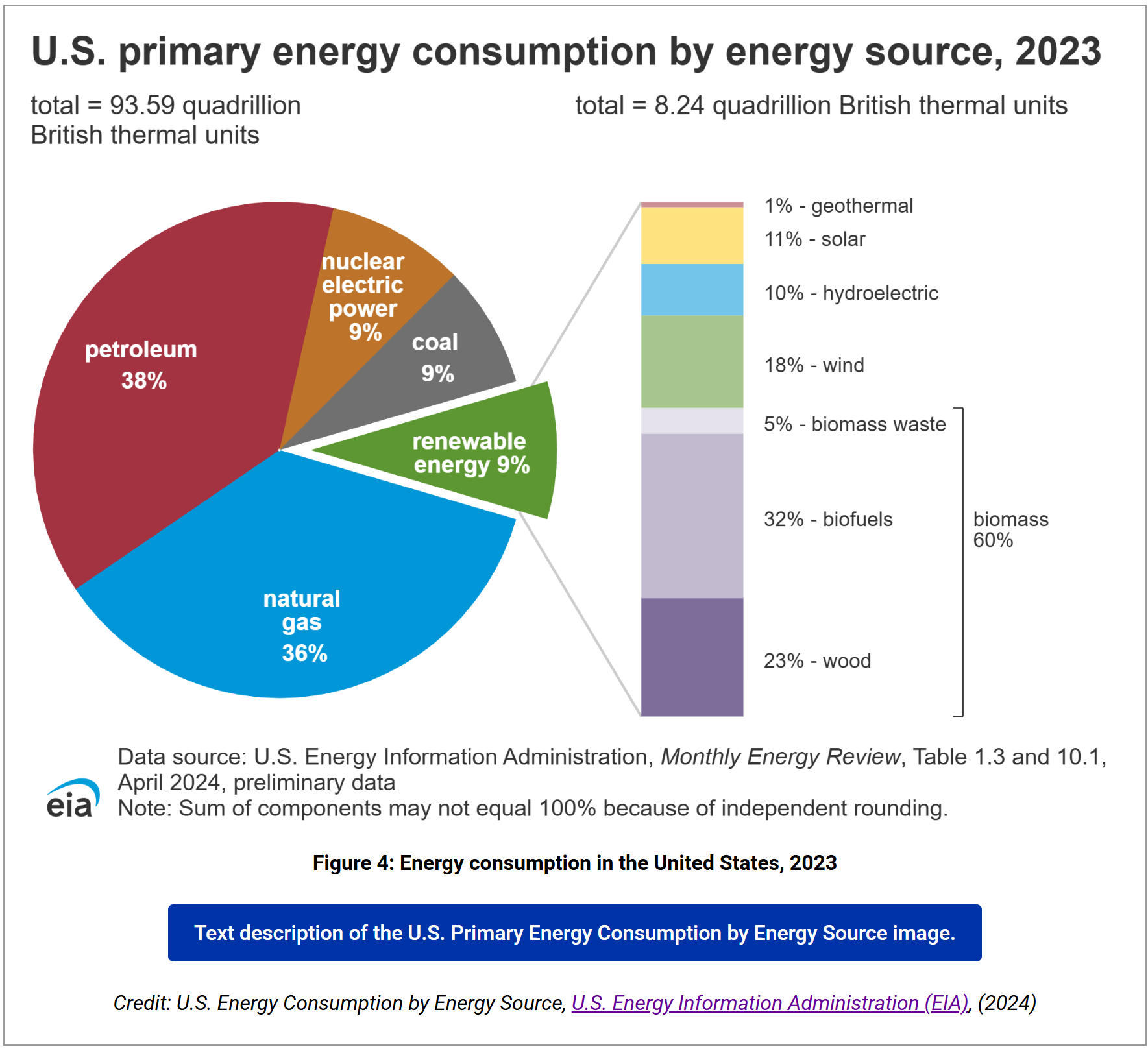
Figure 4: The EIA shows the diversification of renewable energy sources in the US (US Energy Information Administration, 2023)
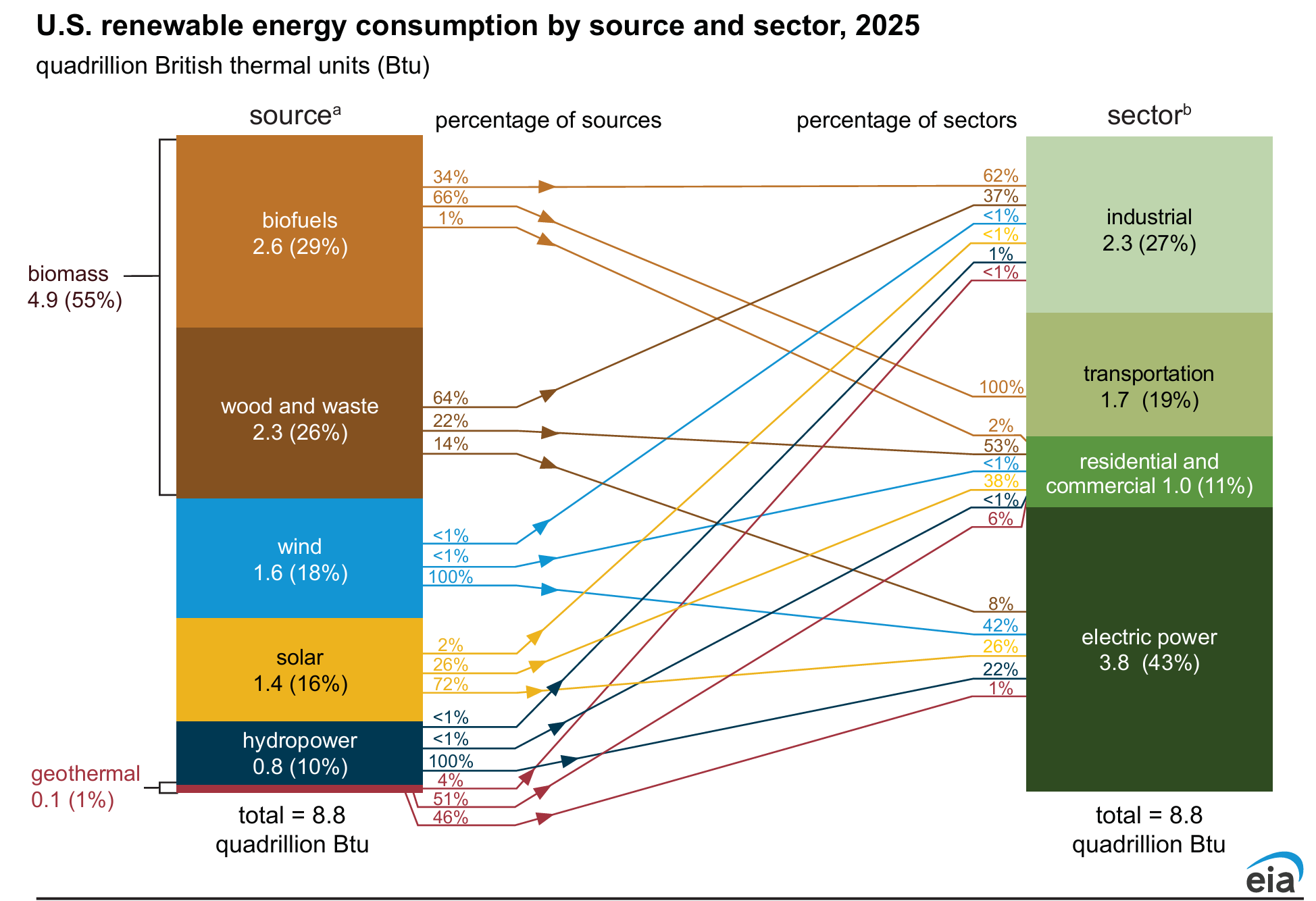
Figure 5: The EIA shows how renewable energy was consumed in 2025. (US Energy Information Administration, 2026)
Price Stability – Renewables do not rely on ongoing fuel purchases, which makes them innately immune to price fluctuations and uncertainties due to geopolitical events that affect oil and natural gas. For example, according to Fatih Birol, the Executive Director for the International Energy Agency, the war in Iran is "expected to reinforce a strong prioritisation of energy security amongst decision-makers", as well as a "renewed focus on resilience and diversification." (Argus Media, 2025)

Figure 6: Steamax India examined the increasing impact of geopolitical conflicts on industrial energy strategy and emphasized the importance of renewables as a hedge against instability. (Steamax India, 2024)
So, we see how renewables are the most cost-effective solution to our energy needs, plus they offer better price stability, and they help diversify our energy portfolio. These economic and strategic benefits are why solar and wind power are set to achieve the largest jumps in generation growth over the next couple of years.
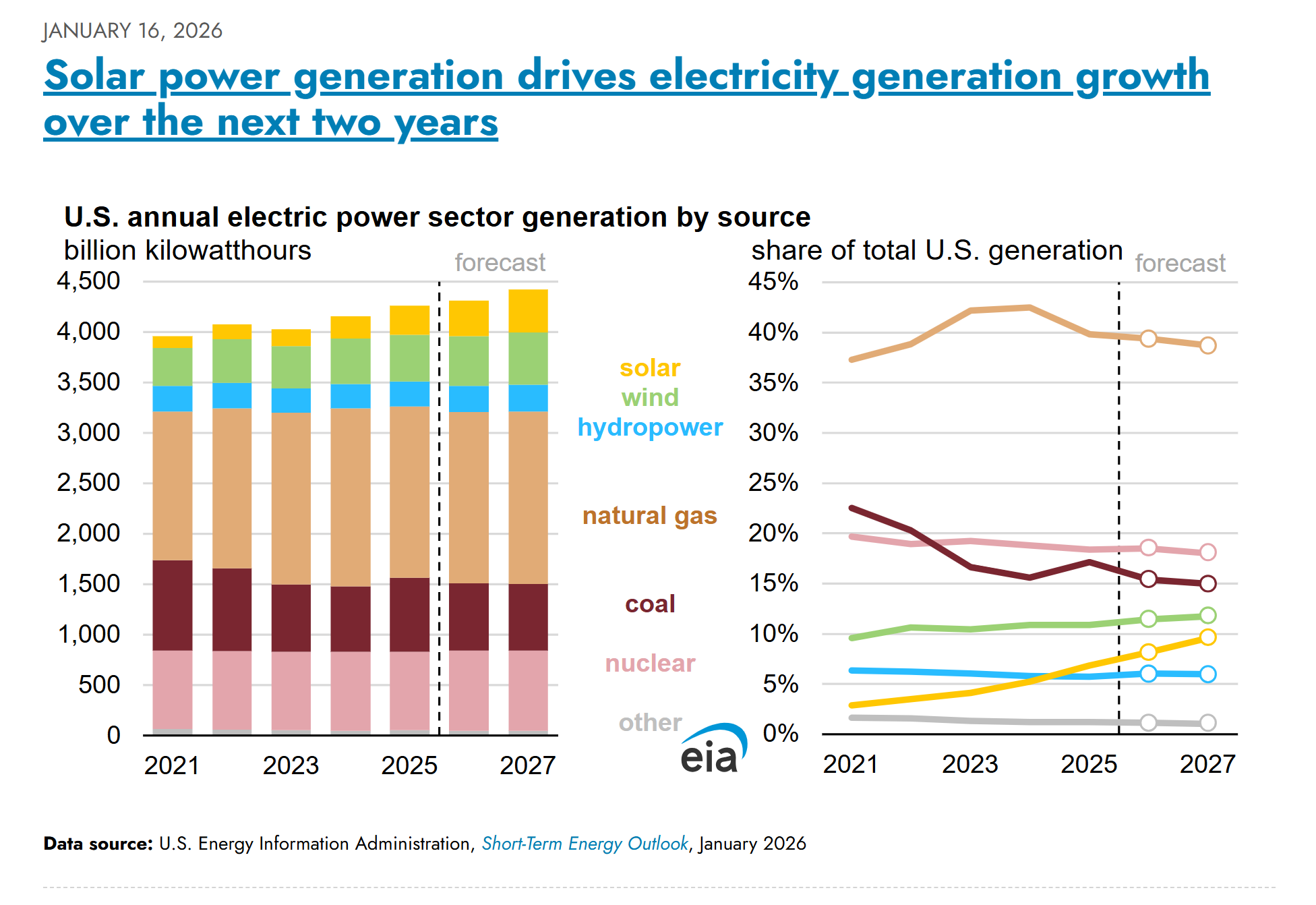
Figure 7: The EIA’s Short Term Energy Outlook (STEO) from January of this year, shows increasing growth for solar and wind power over the next two years while natural gas and coal are expected to decline.
Policy Proposal: Reinstate and Modernize the Federal Renewable Energy ITC
The Investment Tax Credit has been one of the most successful energy policies in modern US history. It has stimulated private investment, created jobs, reduced energy costs, accelerated technological innovation, and supported cleaner sources of electricity. The accelerated phaseout enacted in 2025 threatens to undermine these gains at a time when the nation faces rising electricity demand and increasing global competition.
Congress should reinstate the federal ITC at pre‑phaseout levels and modernize it to support solar, wind, battery storage, and grid‑enhancing technologies. A stable, long‑term ITC will reduce costs, accelerate deployment, strengthen domestic manufacturing, and improve national energy security.
The ITC, which was expanded by the Inflation Reduction Act (IRA) in 2022, encourages investment and drives down the cost of renewable energy technologies. Jason Grumet, CEO of the American Clean Power Association, says that “The clean energy tax credits have significantly increased domestic energy production, revitalizing communities across the country and lowering consumer energy bills. By supporting our nation’s diverse array of energy resources, the IRA is strengthening our national security and enhancing economic competitiveness.” (American Clean Power Association, 2024)
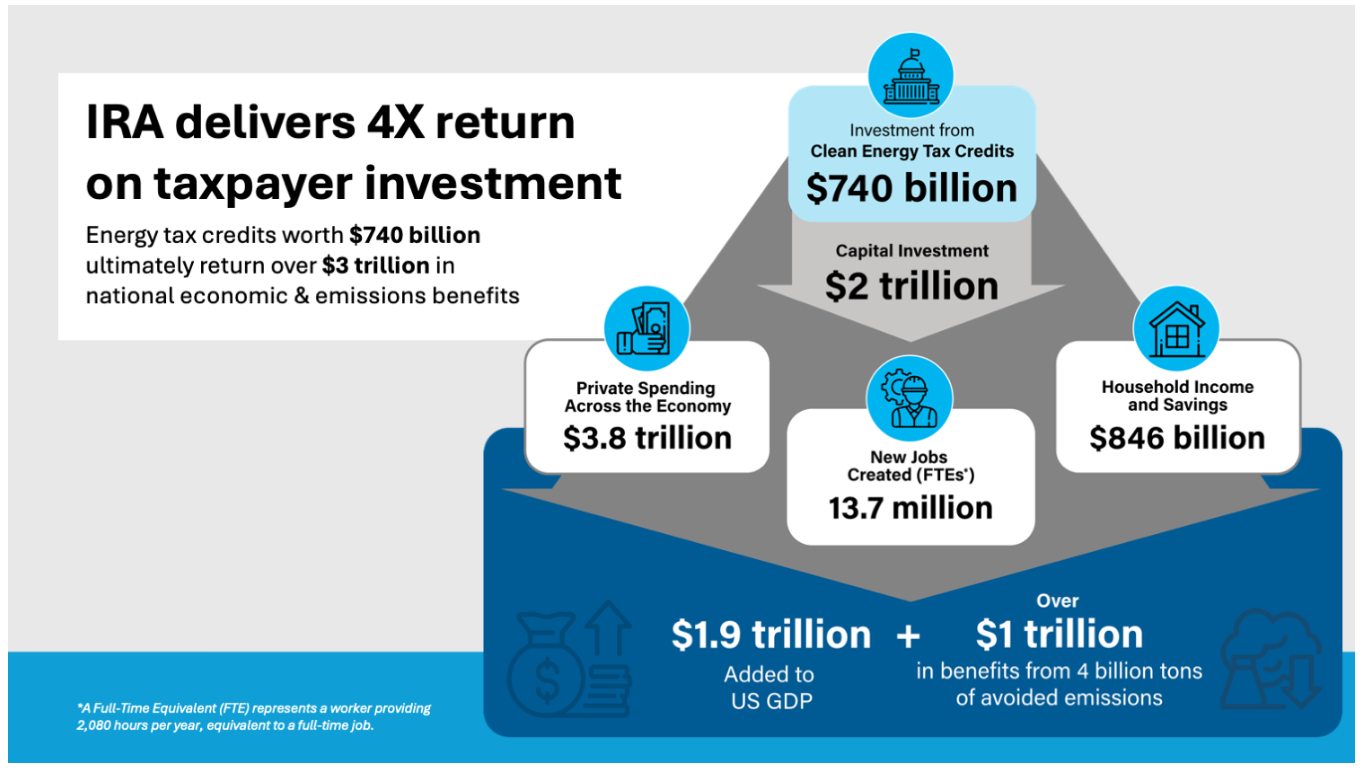
Figure 8: A 2024 report from the ACP describes how IRA tax credits return 4X on investment. (American Clean Power Association. 2025)
Without the ITC, investment in solar and wind slows as indicated by the counter-trending bars in the chart below.
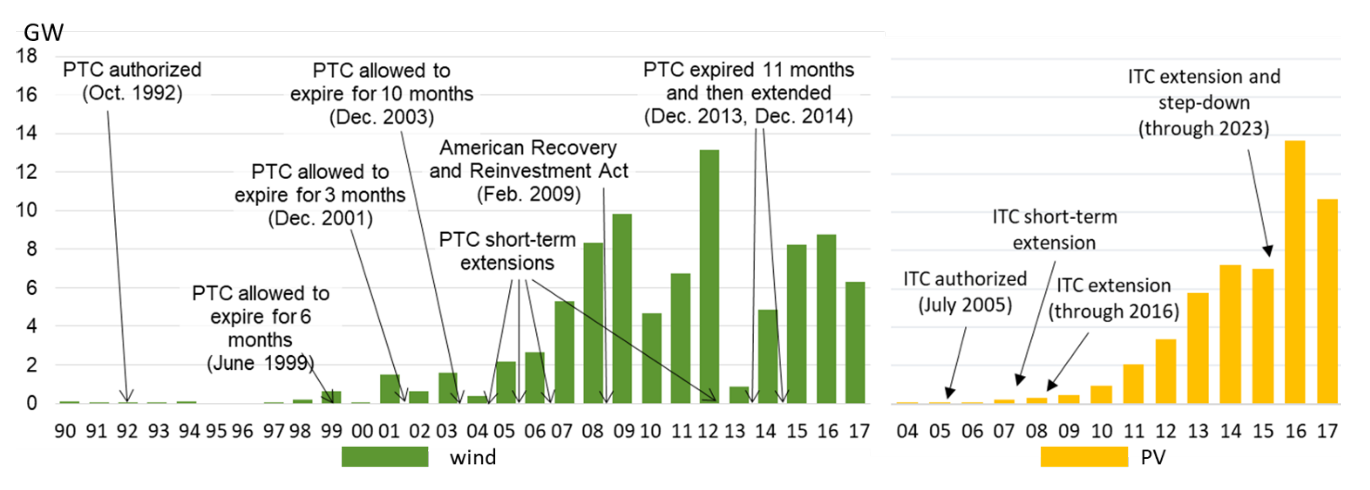
Figure 9: History of the PTC with annual wind capacity additions and history of the ITC with annual PV capacity additions in the United States. (Miller, 2019)
Personal Connection
As someone who has worked in the renewable energy sector, I understand the benefits of a clean energy transition, and as an American who wants to be a good steward of our natural resources and economy, I see the importance of advocating for that by reinstituting the ITC.
Many papers and reports focus on the environmental and health-related benefits of renewable energy technologies, but I believe that with its clear economic and strategic advantages, renewable energy no longer needs to be a partisan issue. Renewables can help us focus on improving our energy infrastructure while preparing for the next wave of technological revolution and improving our national security, all at the same time.
Counter Arguments:
Criticism 1: “Costs are coming down without the ITC.”
Renewable energy costs have fallen dramatically, but the evidence shows that federal incentives were a major driver of those declines. PV system costs dropped 83% between 2010 and 2024 (Ramasamy et al., 2025), overlapping with long-standing federal tax credits. Armstrong’s chart above, on falling renewable costs (Armstrong, 2021), further illustrates how policy support and market scaling moved together.
More importantly, recent cost declines have begun to flatten, and LCOE for solar and wind increased slightly in 2023 and 2024 (Center for Sustainable Systems, University of Michigan, 2024). This signals a more mature market where incremental cost reductions are harder to achieve — precisely when stable incentives matter most.
Criticism 2: “Solar and wind are mature technologies.”
Solar and wind are commercially mature, but maturity does not eliminate the need for stable policy signals. Large-scale energy projects require multi-year capital cycles, predictable financing conditions, and long-term certainty.
Historical evidence shows that when federal credits lapse, deployment drops sharply. Wind installations “dramatically dried up” each time the PTC expired (Miller, 2019). Solar is now showing the same pattern: growth slowed after the One Big Beautiful Bill Act (OBBBA) (Fischer, 2026), installations fell 14% (Bellini, 2026), and banks are hesitant to lend without clarity (Marshall, 2026).
Additionally, a new ITC would serve to bring down the costs of energy storage, such as utility-scale battery systems and other related technologies, which are needed now more than ever to support new grid infrastructure and aid alternative energy integration.
Criticism 3: “Tax incentives distort electricity markets and land development economics.”
Critics argue that incentives distort markets, contribute to negative pricing, or favor certain technologies (Farmer Mac, 2025). These concerns overlook the broader strategic context:
1. All energy markets are shaped by federal policy, including fossil fuels, which receive substantial tax advantages and subsidies. The ITC does not distort a neutral market — it counterbalances structural advantages enjoyed by incumbent fuels.
2. The IEA warns that geopolitical instability is reinforcing a “strong prioritisation of energy security” and a “renewed focus on resilience and diversification” (Argus Media, 2025). Incentives that accelerate diversification are strategic corrections, not distortions.
3. MIT’s analysis shows that three-quarters of IRA-driven clean electricity capacity will still come online despite OBBBA (DiGangi, 2026). This demonstrates that incentives accelerate real, durable investment trends.
Conclusion:
Reinstating the renewable energy ITC is not merely an environmental policy; it is an economic and strategic investment in America's future. By restoring the credit, Congress can strengthen energy security, promote domestic manufacturing, encourage innovation, and ensure that the United States remains a leader in the rapidly growing global clean energy economy.
The evidence is clear: the ITC is a cornerstone of U.S. renewable energy growth, cost competitiveness, and energy security. Its phaseout under OBBBA has already produced measurable harm through slowed deployment, reduced installations, delayed projects, and weakened investor confidence. Reinstating the ITC is economically prudent, strategically necessary, and empirically supported.
It’s time for us to act by contacting our elected officials and making our voices heard. Collectively, we have the power to push our leaders in the right direction
You can start by signing my petition on change.org: https://c.org/Fdj65fHGV9
AI Disclosure: Generative AI tools, including Microsoft Word Editor, Grammarly, Google Gemini, and Microsoft CoPilot, were used in the development and editing of the content in this document.
Works Cited:
1) Armstrong, M. (2021, October 29). The falling cost of renewable energy [Chart]. Statista. https://www.statista.com/chart/26085/price-per-megawatt-hour-of-electricity-by-source/
2) Center for Sustainable Systems, University of Michigan. (2024, October). US renewable energy factsheet (Publication No. CSS03-12). https://css.umich.edu/publications/factsheets/energy/us-renewable-energy-factsheet
3) US Energy Information Administration. (2026). Renewable energy flow chart [PDF]. https://www.eia.gov/totalenergy/data/monthly/pdf/flow/renewable_spaghettichart.pdf
4) Argus Media. (2025, June 12). Energy security fears drive diversification spend: IEA. https://www.argusmedia.com/en/news-and-insights/latest-market-news/2832315-energy-security-fears-drive-diversification-spend-iea
5) Cooray, A., Shahbaz, M., Kuziboev, B., & Çatık, A. N. (2025). Mitigating energy risk through energy sources diversification. Journal of Environmental Management, 380, 124955. https://doi.org/10.1016/j.jenvman.2025.124955
6) Fischer, A. (2026, July 8). Qualifying for solar tax credits beyond the July 4th deadline. PV Magazine USA. https://pv-magazine-usa.com/2026/07/08/qualifying-for-solar-tax-credits-beyond-the-july-4th-deadline/
7) American Clean Power Association. (2024, December 19). New report: Inflation Reduction Act delivers massive economic boost and 4X return on investment. https://cleanpower.org/news/economy-wide-benefits-of-energy-tax-credits/
8) Gomstyn, A., & Jonker, A. (n.d.). What is the levelized cost of energy (LCOE)? IBM Think. https://www.ibm.com/think/topics/levelized-cost-of-energy
9) Lazard. (2026, July). Lazard’s levelized cost of energy+ (LCOE+) 2026: Version 19.0. https://www.lazard.com/media/kcfconhf/lazards-lcoeplus_vf.pdf
10) Yang, D. (2026, March 10). Risks in a changing US power grid. Kleinman Center for Energy Policy. https://kleinmanenergy.upenn.edu/commentary/blog/risks-in-a-changing-u-s-power-grid/
11) American Clean Power Association. (2025, March). US national power demand study: 2025 final report. Clean Power. https://cleanpower.org/wp-content/uploads/gateway/2025/03/US_National_Power_Demand_Study_2025_FINAL-REPORT.pdf
12) Steamax India. (2024, October 18). How geopolitical conflicts are reshaping industrial energy strategy. Steamax India. https://steamaxindia.com/how-geopolitical-conflicts-are-reshaping-industrial-energy-strategy/
13) Miller, C., & Cole, W. (2019). Cost projections for utility‑scale battery storage (NREL/TP‑6A20‑73222). US Department of Energy, Office of Scientific and Technical Information. https://www.osti.gov/servlets/purl/1548263
14) Center for Sustainable Systems, University of Michigan. (2025, February). Solar PV energy factsheet (Publication No. CSS05-12). https://css.umich.edu/publications/factsheets/energy/solar-pv-energy-factsheet
15) Bellini, E. (2026, March 11). US solar industry adds 43 GW in 2025, leading capacity additions for fifth consecutive year. PV Magazine USA. https://pv-magazine-usa.com/2026/03/11/u-s-solar-industry-adds-43-gw-in-2025-leading-capacity-additions-for-fifth-consecutive-year/
16) DiGangi, D. (2026, July 8). IRA clean energy gains mostly on track despite OBBBA, says MIT study. Utility Dive. https://www.utilitydive.com/news/ira-clean-energy-gains-mostly-on-track-despite-obbba-says-mit-study/824689/
17) US Energy Information Administration. (2026, April 8). Annual Energy Outlook 2026: Release presentation [PowerPoint slides]. https://www.eia.gov/outlooks/aeo/pdf/AEO2026_Release_Presentation.pdf
18) Ramasamy, V., Zuboy, J., Feldman, D., Narayanaswami, M., Woodhouse, M., & Margolis, R. (2025). Documenting 15 years of reductions in US solar photovoltaic system costs (NREL/TP-7A40-92536). National Renewable Energy Laboratory. https://www.nrel.gov/docs/fy25osti/92536.pdf
19) Lips, B. (2024, November 19). The past, present, and future of federal tax credits for renewable energy. NC Clean Energy Technology Center. https://nccleantech.ncsu.edu/2024/11/19/the-past-present-and-future-of-federal-tax-credits-for-renewable-energy/
20) Perrin, D. (2026, June 26). Trump cuts to clean energy credits upend PA projects. Spotlight PA. https://www.spotlightpa.org/news/2026/06/clean-energy-inflation-reduction-act-big-beautiful-bill-trump-renewables-environment/
21) US Department of Energy, Integrated Energy Systems Office. (2022, September 8). Solar Investment Tax Credit: What changed? https://www.energy.gov/cmei/systems/articles/solar-investment-tax-credit-what-changed-0
22) Pierce Atwood LLP. (2025, July 7). Congress phases out energy tax credits. https://www.pierceatwood.com/alerts/congress-phases-out-energy-tax-credits
23) Farmer Mac. (2025, August 27). A brief history of (ITC and PTC) time. The Feed. https://www.farmermac.com/thefeed/a-brief-history-of-itc-and-ptc-time/
24) Marshall, C. (2026, July 1). 5 questions answered as solar tax credits phase out. E&E News by POLITICO. https://www.eenews.net/articles/5-questions-answered-as-solar-tax-credits-phase-out/
25) Ernst & Young. (2025, July 14). Final reconciliation legislation modifies some IRA energy credits, repeals others. EY Tax News. https://taxnews.ey.com/news/2025-1434-final-reconciliation-legislation-modifies-some-ira-energy-credits-repeals-others
26) E2. (2024, October 15). Clean economy works: An economic impact analysis of major clean energy projects announced through two years of the Inflation Reduction Act. https://e2.org/reports/clean-economy-works-economic-impact-report-2024/

24
The Issue
Policy Proposal: Reinstate and Modernize the Federal Renewable Energy Investment Tax Credit (ITC)
1. Introduction: America Needs Reliable, Affordable Energy for a High‑Demand Future
US energy demand is surging due to AI data centers, industrial manufacturing, and electric vehicle adoption (Yang, 2026). Meeting this demand will require massive new generation and storage capacity—over 900 GW of new renewables and battery storage by 2040, representing 60% of total capacity additions (American Clean Power Association, 2025). Solar and wind alone will supply more than 75% of new additions. America needs cost‑effective, scalable, and secure energy sources, and renewable energy meets all three criteria.
Figure 1: Projected Energy Demand to 2040 (American Clean Power Association, 2025)
2. Problem: The Phaseout of the ITC Has Slowed Renewable Investment and Deployment
Since the late 1970’s, the US government has offered a renewable energy Investment Tax Credit (ITC) to encourage homeowners, small businesses, and commercial developers to invest in renewable energy projects. The ITC was expanded over the years and was a key factor in helping bring manufacturing and installation costs down and increasing the US portfolio of renewable and alternative energy sources. The tax credit was phased out at the end of 2025, and new consumer investment in renewables has slowed. (Fischer, 2026)
At a time when the need for improved energy infrastructure is increasing, renewable clean energy could be a major force in supplying our future demand and the key to energy independence.
To understand why reinstating the ITC matters, it is important to examine the economic and strategic advantages of renewables.
Why Renewables Are the Most Cost‑Effective and Secure Option:
LCOE - Renewable energy is cheaper to produce than nuclear, coal, and natural gas.
The Levelized Cost of Energy (LCOE) is a metric used to assess the average cost of electricity generation over the lifetime of an energy asset. It is calculated by dividing the total lifetime costs of a project by its total expected energy output, providing a single, comparable metric for the cost-effectiveness of different energy generation technologies. LCOE helps determine the viability and competitiveness of electricity generation projects and is crucial for investment planning. (Gomstyn & Jonker, n.d.) A University of Michigan report showed that the LCOE, “remains lower for utility-scale solar and onshore wind than fossil fuels through 2025, despite slight increases in renewable LCOE during 2023 and 2024.” (Center for Sustainable Systems, University of Michigan, 2024)
Figure 2: Statistica data shows global relative levelized costs of energy (LCOE) for several sources, highlighting the dramatic 82% drop in cost per megawatt-hour for solar and a respectable 38% drop for wind power. (Armstrong, 2021)
Figure 3: Lazard’s 2026 LCOE+ report confirms the global trend holds in the United States. The cost to produce electricity from solar and wind continues to be lower than nuclear, coal, and natural gas. (Lazard, 2026)
Diversification – Just like any investment strategy, a robust energy portfolio needs to be diversified. This prevents reliance on a single source of energy and supports the development of new and alternative fuels and energy sources. Indeed, the authors of a recent research article found “that energy diversity plays a significant role in reducing energy risk.” (Cooray, Shahbaz, Kuziboev, & Çatık, 2025)
Figure 4: The EIA shows the diversification of renewable energy sources in the US (US Energy Information Administration, 2023)
Figure 5: The EIA shows how renewable energy was consumed in 2025. (US Energy Information Administration, 2026)
Price Stability – Renewables do not rely on ongoing fuel purchases, which makes them innately immune to price fluctuations and uncertainties due to geopolitical events that affect oil and natural gas. For example, according to Fatih Birol, the Executive Director for the International Energy Agency, the war in Iran is "expected to reinforce a strong prioritisation of energy security amongst decision-makers", as well as a "renewed focus on resilience and diversification." (Argus Media, 2025)
Figure 6: Steamax India examined the increasing impact of geopolitical conflicts on industrial energy strategy and emphasized the importance of renewables as a hedge against instability. (Steamax India, 2024)
So, we see how renewables are the most cost-effective solution to our energy needs, plus they offer better price stability, and they help diversify our energy portfolio. These economic and strategic benefits are why solar and wind power are set to achieve the largest jumps in generation growth over the next couple of years.
Figure 7: The EIA’s Short Term Energy Outlook (STEO) from January of this year, shows increasing growth for solar and wind power over the next two years while natural gas and coal are expected to decline.
Policy Proposal: Reinstate and Modernize the Federal Renewable Energy ITC
The Investment Tax Credit has been one of the most successful energy policies in modern US history. It has stimulated private investment, created jobs, reduced energy costs, accelerated technological innovation, and supported cleaner sources of electricity. The accelerated phaseout enacted in 2025 threatens to undermine these gains at a time when the nation faces rising electricity demand and increasing global competition.
Congress should reinstate the federal ITC at pre‑phaseout levels and modernize it to support solar, wind, battery storage, and grid‑enhancing technologies. A stable, long‑term ITC will reduce costs, accelerate deployment, strengthen domestic manufacturing, and improve national energy security.
The ITC, which was expanded by the Inflation Reduction Act (IRA) in 2022, encourages investment and drives down the cost of renewable energy technologies. Jason Grumet, CEO of the American Clean Power Association, says that “The clean energy tax credits have significantly increased domestic energy production, revitalizing communities across the country and lowering consumer energy bills. By supporting our nation’s diverse array of energy resources, the IRA is strengthening our national security and enhancing economic competitiveness.” (American Clean Power Association, 2024)
Figure 8: A 2024 report from the ACP describes how IRA tax credits return 4X on investment. (American Clean Power Association. 2025)
Without the ITC, investment in solar and wind slows as indicated by the counter-trending bars in the chart below.
Figure 9: History of the PTC with annual wind capacity additions and history of the ITC with annual PV capacity additions in the United States. (Miller, 2019)
Personal Connection
As someone who has worked in the renewable energy sector, I understand the benefits of a clean energy transition, and as an American who wants to be a good steward of our natural resources and economy, I see the importance of advocating for that by reinstituting the ITC.
Many papers and reports focus on the environmental and health-related benefits of renewable energy technologies, but I believe that with its clear economic and strategic advantages, renewable energy no longer needs to be a partisan issue. Renewables can help us focus on improving our energy infrastructure while preparing for the next wave of technological revolution and improving our national security, all at the same time.
Counter Arguments:
Criticism 1: “Costs are coming down without the ITC.”
Renewable energy costs have fallen dramatically, but the evidence shows that federal incentives were a major driver of those declines. PV system costs dropped 83% between 2010 and 2024 (Ramasamy et al., 2025), overlapping with long-standing federal tax credits. Armstrong’s chart above, on falling renewable costs (Armstrong, 2021), further illustrates how policy support and market scaling moved together.
More importantly, recent cost declines have begun to flatten, and LCOE for solar and wind increased slightly in 2023 and 2024 (Center for Sustainable Systems, University of Michigan, 2024). This signals a more mature market where incremental cost reductions are harder to achieve — precisely when stable incentives matter most.
Criticism 2: “Solar and wind are mature technologies.”
Solar and wind are commercially mature, but maturity does not eliminate the need for stable policy signals. Large-scale energy projects require multi-year capital cycles, predictable financing conditions, and long-term certainty.
Historical evidence shows that when federal credits lapse, deployment drops sharply. Wind installations “dramatically dried up” each time the PTC expired (Miller, 2019). Solar is now showing the same pattern: growth slowed after the One Big Beautiful Bill Act (OBBBA) (Fischer, 2026), installations fell 14% (Bellini, 2026), and banks are hesitant to lend without clarity (Marshall, 2026).
Additionally, a new ITC would serve to bring down the costs of energy storage, such as utility-scale battery systems and other related technologies, which are needed now more than ever to support new grid infrastructure and aid alternative energy integration.
Criticism 3: “Tax incentives distort electricity markets and land development economics.”
Critics argue that incentives distort markets, contribute to negative pricing, or favor certain technologies (Farmer Mac, 2025). These concerns overlook the broader strategic context:
1. All energy markets are shaped by federal policy, including fossil fuels, which receive substantial tax advantages and subsidies. The ITC does not distort a neutral market — it counterbalances structural advantages enjoyed by incumbent fuels.
2. The IEA warns that geopolitical instability is reinforcing a “strong prioritisation of energy security” and a “renewed focus on resilience and diversification” (Argus Media, 2025). Incentives that accelerate diversification are strategic corrections, not distortions.
3. MIT’s analysis shows that three-quarters of IRA-driven clean electricity capacity will still come online despite OBBBA (DiGangi, 2026). This demonstrates that incentives accelerate real, durable investment trends.
Conclusion:
Reinstating the renewable energy ITC is not merely an environmental policy; it is an economic and strategic investment in America's future. By restoring the credit, Congress can strengthen energy security, promote domestic manufacturing, encourage innovation, and ensure that the United States remains a leader in the rapidly growing global clean energy economy.
The evidence is clear: the ITC is a cornerstone of U.S. renewable energy growth, cost competitiveness, and energy security. Its phaseout under OBBBA has already produced measurable harm through slowed deployment, reduced installations, delayed projects, and weakened investor confidence. Reinstating the ITC is economically prudent, strategically necessary, and empirically supported.
It’s time for us to act by contacting our elected officials and making our voices heard. Collectively, we have the power to push our leaders in the right direction
You can start by signing my petition on change.org: https://c.org/Fdj65fHGV9
AI Disclosure: Generative AI tools, including Microsoft Word Editor, Grammarly, Google Gemini, and Microsoft CoPilot, were used in the development and editing of the content in this document.
Works Cited:
1) Armstrong, M. (2021, October 29). The falling cost of renewable energy [Chart]. Statista. https://www.statista.com/chart/26085/price-per-megawatt-hour-of-electricity-by-source/
2) Center for Sustainable Systems, University of Michigan. (2024, October). US renewable energy factsheet (Publication No. CSS03-12). https://css.umich.edu/publications/factsheets/energy/us-renewable-energy-factsheet
3) US Energy Information Administration. (2026). Renewable energy flow chart [PDF]. https://www.eia.gov/totalenergy/data/monthly/pdf/flow/renewable_spaghettichart.pdf
4) Argus Media. (2025, June 12). Energy security fears drive diversification spend: IEA. https://www.argusmedia.com/en/news-and-insights/latest-market-news/2832315-energy-security-fears-drive-diversification-spend-iea
5) Cooray, A., Shahbaz, M., Kuziboev, B., & Çatık, A. N. (2025). Mitigating energy risk through energy sources diversification. Journal of Environmental Management, 380, 124955. https://doi.org/10.1016/j.jenvman.2025.124955
6) Fischer, A. (2026, July 8). Qualifying for solar tax credits beyond the July 4th deadline. PV Magazine USA. https://pv-magazine-usa.com/2026/07/08/qualifying-for-solar-tax-credits-beyond-the-july-4th-deadline/
7) American Clean Power Association. (2024, December 19). New report: Inflation Reduction Act delivers massive economic boost and 4X return on investment. https://cleanpower.org/news/economy-wide-benefits-of-energy-tax-credits/
8) Gomstyn, A., & Jonker, A. (n.d.). What is the levelized cost of energy (LCOE)? IBM Think. https://www.ibm.com/think/topics/levelized-cost-of-energy
9) Lazard. (2026, July). Lazard’s levelized cost of energy+ (LCOE+) 2026: Version 19.0. https://www.lazard.com/media/kcfconhf/lazards-lcoeplus_vf.pdf
10) Yang, D. (2026, March 10). Risks in a changing US power grid. Kleinman Center for Energy Policy. https://kleinmanenergy.upenn.edu/commentary/blog/risks-in-a-changing-u-s-power-grid/
11) American Clean Power Association. (2025, March). US national power demand study: 2025 final report. Clean Power. https://cleanpower.org/wp-content/uploads/gateway/2025/03/US_National_Power_Demand_Study_2025_FINAL-REPORT.pdf
12) Steamax India. (2024, October 18). How geopolitical conflicts are reshaping industrial energy strategy. Steamax India. https://steamaxindia.com/how-geopolitical-conflicts-are-reshaping-industrial-energy-strategy/
13) Miller, C., & Cole, W. (2019). Cost projections for utility‑scale battery storage (NREL/TP‑6A20‑73222). US Department of Energy, Office of Scientific and Technical Information. https://www.osti.gov/servlets/purl/1548263
14) Center for Sustainable Systems, University of Michigan. (2025, February). Solar PV energy factsheet (Publication No. CSS05-12). https://css.umich.edu/publications/factsheets/energy/solar-pv-energy-factsheet
15) Bellini, E. (2026, March 11). US solar industry adds 43 GW in 2025, leading capacity additions for fifth consecutive year. PV Magazine USA. https://pv-magazine-usa.com/2026/03/11/u-s-solar-industry-adds-43-gw-in-2025-leading-capacity-additions-for-fifth-consecutive-year/
16) DiGangi, D. (2026, July 8). IRA clean energy gains mostly on track despite OBBBA, says MIT study. Utility Dive. https://www.utilitydive.com/news/ira-clean-energy-gains-mostly-on-track-despite-obbba-says-mit-study/824689/
17) US Energy Information Administration. (2026, April 8). Annual Energy Outlook 2026: Release presentation [PowerPoint slides]. https://www.eia.gov/outlooks/aeo/pdf/AEO2026_Release_Presentation.pdf
18) Ramasamy, V., Zuboy, J., Feldman, D., Narayanaswami, M., Woodhouse, M., & Margolis, R. (2025). Documenting 15 years of reductions in US solar photovoltaic system costs (NREL/TP-7A40-92536). National Renewable Energy Laboratory. https://www.nrel.gov/docs/fy25osti/92536.pdf
19) Lips, B. (2024, November 19). The past, present, and future of federal tax credits for renewable energy. NC Clean Energy Technology Center. https://nccleantech.ncsu.edu/2024/11/19/the-past-present-and-future-of-federal-tax-credits-for-renewable-energy/
20) Perrin, D. (2026, June 26). Trump cuts to clean energy credits upend PA projects. Spotlight PA. https://www.spotlightpa.org/news/2026/06/clean-energy-inflation-reduction-act-big-beautiful-bill-trump-renewables-environment/
21) US Department of Energy, Integrated Energy Systems Office. (2022, September 8). Solar Investment Tax Credit: What changed? https://www.energy.gov/cmei/systems/articles/solar-investment-tax-credit-what-changed-0
22) Pierce Atwood LLP. (2025, July 7). Congress phases out energy tax credits. https://www.pierceatwood.com/alerts/congress-phases-out-energy-tax-credits
23) Farmer Mac. (2025, August 27). A brief history of (ITC and PTC) time. The Feed. https://www.farmermac.com/thefeed/a-brief-history-of-itc-and-ptc-time/
24) Marshall, C. (2026, July 1). 5 questions answered as solar tax credits phase out. E&E News by POLITICO. https://www.eenews.net/articles/5-questions-answered-as-solar-tax-credits-phase-out/
25) Ernst & Young. (2025, July 14). Final reconciliation legislation modifies some IRA energy credits, repeals others. EY Tax News. https://taxnews.ey.com/news/2025-1434-final-reconciliation-legislation-modifies-some-ira-energy-credits-repeals-others
26) E2. (2024, October 15). Clean economy works: An economic impact analysis of major clean energy projects announced through two years of the Inflation Reduction Act. https://e2.org/reports/clean-economy-works-economic-impact-report-2024/


Petition Updates
Share this petition
Petition created on July 25, 2026