

Protect the Athrotaxis communities of Tasmania - Help list them as Critically Endangered
The issue
To be listed as a threatened vegetation community under the Environmental Protection and Biodiversity Conservation (EPBC) Act of 1999, one of the following six criteria must be displayed:
- Criterion 1 – Decline in geographic distribution
- Criterion 2 – Limited geographic distribution coupled with demonstrable threat
- Criterion 3 – Loss or decline of functionally important species
- Criterion 4 – Reduction in community integrity
- Criterion 5 – Rate of continuing detrimental change
- Criterion 6 – Quantitative analysis showing probability of extinction
Last year, despite displaying evidence that five of these six criteria have been met, the Australian Minister for the Environment, Murray Watt, ignored the science and rejected the application to list the Athrotaxis communities of Tasmania as Critically Endangered. This was based entirely on political agendas and ignored the clear evidence that these communities are under threat. This year, as the Minister reassesses the application, we call on the community to show their support and display that this is not just an environmental issue of extreme importance, it is a political issue ensuring that Tasmania and Australia do not lose yet another of their most treasured natural icons.
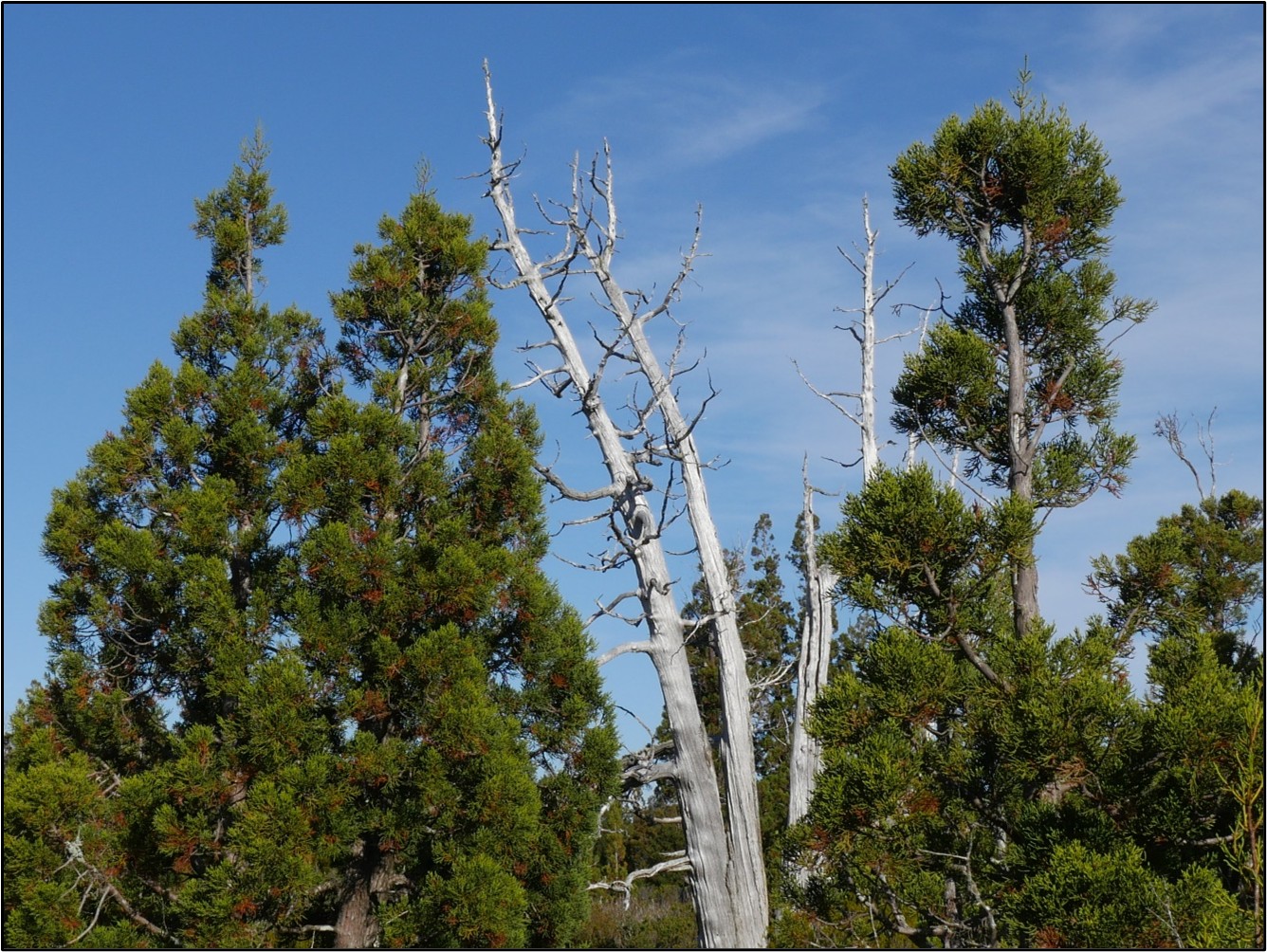
The Athrotaxis communities of Tasmania — the iconic Pencil Pine and King Billy Pine communities — are some of the oldest, slowest‑growing, and most irreplaceable ecosystems in Australia and the world. These ancient trees have survived for thousands of years, but they are now facing sudden declines from climate‑driven wildfire, habitat loss, drought, and a slow natural regeneration.
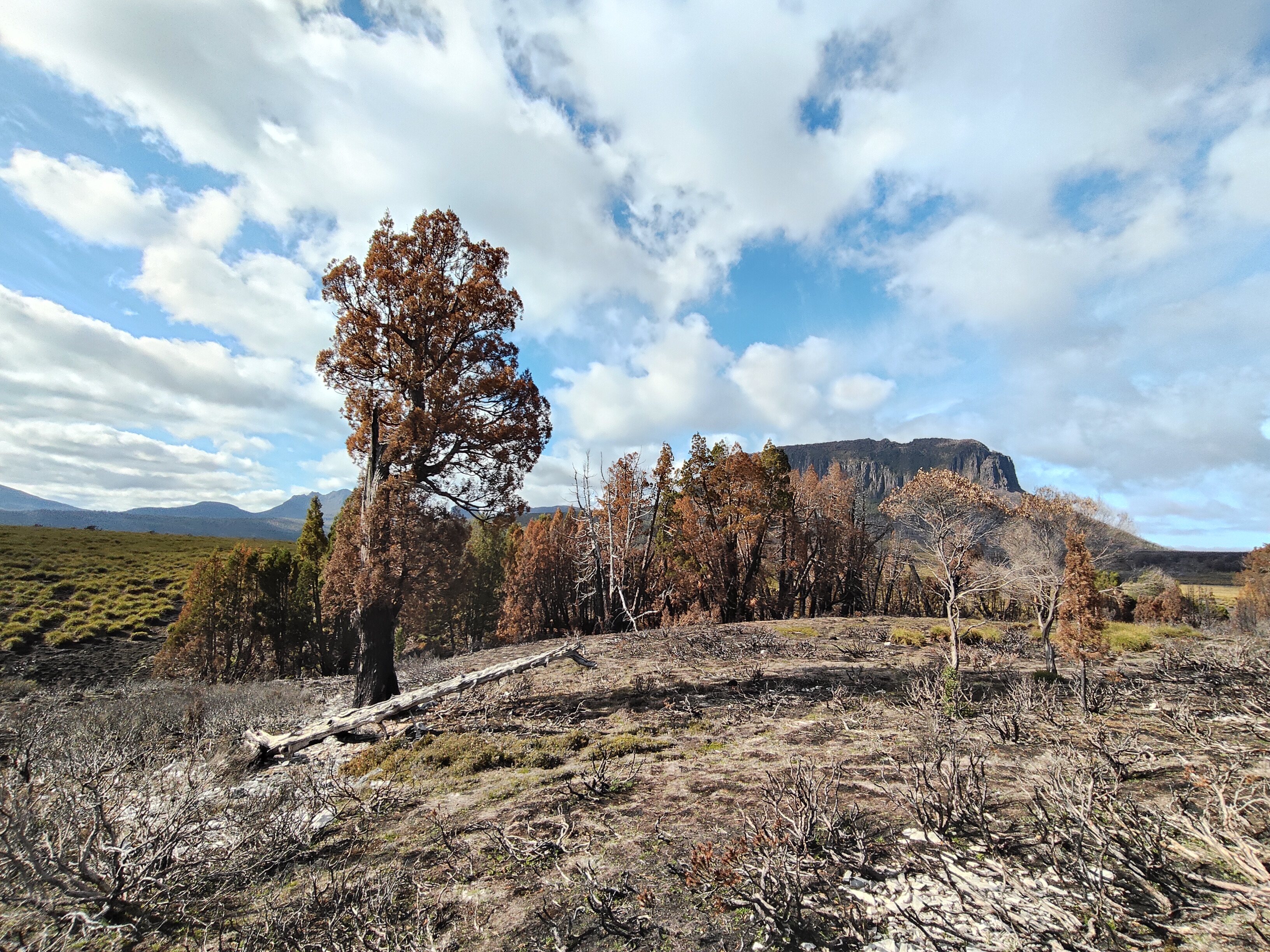
Once these communities burn, they do not return. Entire landscapes that stood for millennia are being lost in a single fire season.
The extremely slow growth rates and recruitment cycles of these keystone species means that their communities are susceptible to suddenly collapse while appearing stable for decades. There are signs, however, that these communities are under stress and that we need to act now if we are going to ensure we don’t lose these ancient icons on our watch. The evidence is clear: Athrotaxis communities meet the criteria to be listed as Critically Endangered under the EPBC Act and national recognition is key if we are to protect what remains and to support recovery efforts.
We call on the Australian Minister for the Environment and Water to:
- Accept the proposed listing of the Athrotaxis communities of Tasmania as Critically Endangered under the EPBC Act when the Threatened Species Scientific Committee provides its recommendation.
- Prioritise the assessment of the nomination to ensure timely protection.
- Support a national recovery plan that includes fire management, climate resilience, long‑term monitoring, and restoration of damaged areas.
- Provide adequate funding and resources for further research into protecting these globally unique ecosystems.
Why does this matter?
- These forests are found nowhere else on Earth.
- They are extremely slow‑growing — many individuals are over 1,000 years old.
- They are highly vulnerable to fire, and climate change is increasing the frequency and severity of fires within their range.
- Once lost, they cannot naturally regenerate on human timescales and likely never will.
- Their decline represents a permanent loss to Australia’s natural heritage.
By signing this petition, you are calling on the Australian Government to take urgent action to protect one of the nation’s most ancient and vulnerable ecosystems before it is too late.
Add your name
Together, we can ensure that these extraordinary forests are recognised, protected, and restored for future generations.
If you are an Australian Citizen or Resident, please take the time to also sign the Parliamentary Petition to the Australian House of Representatives. This is a government petition which requires a formal ministerial response - https://www.aph.gov.au/e-petitions/petition/EN9898

2,111
The issue
To be listed as a threatened vegetation community under the Environmental Protection and Biodiversity Conservation (EPBC) Act of 1999, one of the following six criteria must be displayed:
- Criterion 1 – Decline in geographic distribution
- Criterion 2 – Limited geographic distribution coupled with demonstrable threat
- Criterion 3 – Loss or decline of functionally important species
- Criterion 4 – Reduction in community integrity
- Criterion 5 – Rate of continuing detrimental change
- Criterion 6 – Quantitative analysis showing probability of extinction
Last year, despite displaying evidence that five of these six criteria have been met, the Australian Minister for the Environment, Murray Watt, ignored the science and rejected the application to list the Athrotaxis communities of Tasmania as Critically Endangered. This was based entirely on political agendas and ignored the clear evidence that these communities are under threat. This year, as the Minister reassesses the application, we call on the community to show their support and display that this is not just an environmental issue of extreme importance, it is a political issue ensuring that Tasmania and Australia do not lose yet another of their most treasured natural icons.
The Athrotaxis communities of Tasmania — the iconic Pencil Pine and King Billy Pine communities — are some of the oldest, slowest‑growing, and most irreplaceable ecosystems in Australia and the world. These ancient trees have survived for thousands of years, but they are now facing sudden declines from climate‑driven wildfire, habitat loss, drought, and a slow natural regeneration.
Once these communities burn, they do not return. Entire landscapes that stood for millennia are being lost in a single fire season.
The extremely slow growth rates and recruitment cycles of these keystone species means that their communities are susceptible to suddenly collapse while appearing stable for decades. There are signs, however, that these communities are under stress and that we need to act now if we are going to ensure we don’t lose these ancient icons on our watch. The evidence is clear: Athrotaxis communities meet the criteria to be listed as Critically Endangered under the EPBC Act and national recognition is key if we are to protect what remains and to support recovery efforts.
We call on the Australian Minister for the Environment and Water to:
- Accept the proposed listing of the Athrotaxis communities of Tasmania as Critically Endangered under the EPBC Act when the Threatened Species Scientific Committee provides its recommendation.
- Prioritise the assessment of the nomination to ensure timely protection.
- Support a national recovery plan that includes fire management, climate resilience, long‑term monitoring, and restoration of damaged areas.
- Provide adequate funding and resources for further research into protecting these globally unique ecosystems.
Why does this matter?
- These forests are found nowhere else on Earth.
- They are extremely slow‑growing — many individuals are over 1,000 years old.
- They are highly vulnerable to fire, and climate change is increasing the frequency and severity of fires within their range.
- Once lost, they cannot naturally regenerate on human timescales and likely never will.
- Their decline represents a permanent loss to Australia’s natural heritage.
By signing this petition, you are calling on the Australian Government to take urgent action to protect one of the nation’s most ancient and vulnerable ecosystems before it is too late.
Add your name
Together, we can ensure that these extraordinary forests are recognised, protected, and restored for future generations.
If you are an Australian Citizen or Resident, please take the time to also sign the Parliamentary Petition to the Australian House of Representatives. This is a government petition which requires a formal ministerial response - https://www.aph.gov.au/e-petitions/petition/EN9898
The Decision Makers
Supporter voices
Petition Updates
Share this petition
Petition created on 26 April 2026