

No more lives ruined by tinnitus: Mandate warning signs and safe volume levels
The Issue
At the age of seventeen, my life was altered drastically and irreversibly. A school party with my fellow students at my high school—something meant to be enjoyable and harmless—seemed like an exciting escape, yet it resulted in a lifetime of misery due to incessant tinnitus. The excruciating noise in my ears became my constant companion, disrupting every moment of silence I would want to enjoy. No child or young adult should endure this preventable tragedy.
Noise-induced hearing loss is a growing and largely invisible public health problem. According to the World Health Organization, over 1 billion young people worldwide are at risk of hearing loss due to exposure to loud sounds in recreational settings. School events, concerts, and nightclubs are major contributors. Without safeguards, millions face avoidable and irreversible auditory damage.
Many young people are taught—explicitly or implicitly—to ignore physical discomfort in social settings. Without clear information and external safeguards, they may unknowingly expose themselves to permanent harm.
Risk is not the same for everyone. Individual tolerance to sound varies widely, and factors such as physical exertion and heat—common at dance events—can accelerate auditory fatigue and injury. This makes reliance on personal judgment alone insufficient as a protective measure.
The Proposed Solution
We call for:
- Mandatory, clearly visible noise-hazard warning signs at all music events and entertainment venues
- Enforced, evidence-based maximum sound level limits, particularly at school-organized events
These measures are simple, low-cost, and effective. Research indicates that attendees generally support clear volume signage and protective measures when informed of the risks. Had I known about the risk of permanent tinnitus, I would not have stayed.
Why This Matters
Preventing noise-induced hearing loss reduces long-term healthcare costs, preserves quality of life, and prevents lost productivity due to disability. The public health and economic benefits far outweigh the minimal implementation costs.
Studies have found that people with tinnitus score significantly higher on depression and anxiety scales and lower on self-esteem and wellbeing. This places huge strain on the health service, with tinnitus treatment costing the NHS £750m per year (£717 per patient) and the cost to wider society estimated at £2.6 billion per year. Tinnitus therapy costs £10,600 per quality-adjusted life years gained.
Call to Action
We urge legislators, educational institutions, and venue operators to prioritize the auditory health of young people. Enact regulations that require visible warnings and enforce safe sound levels. Protecting hearing is not a restriction on enjoyment—it is a safeguard against lifelong suffering.
Sign this petition to demand meaningful change and to ensure that no more children or young adults endure the irreversible consequences of excessive noise exposure.
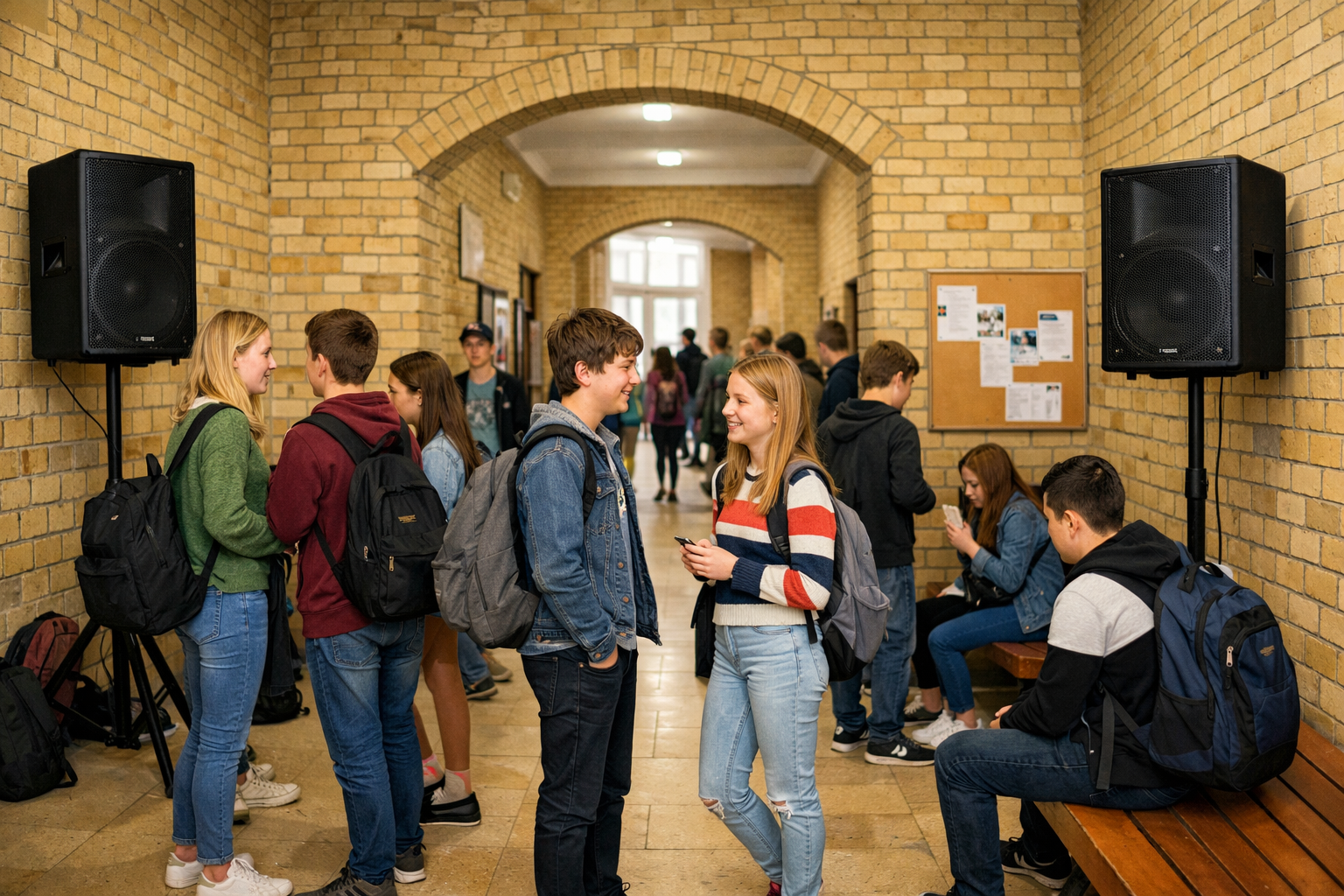
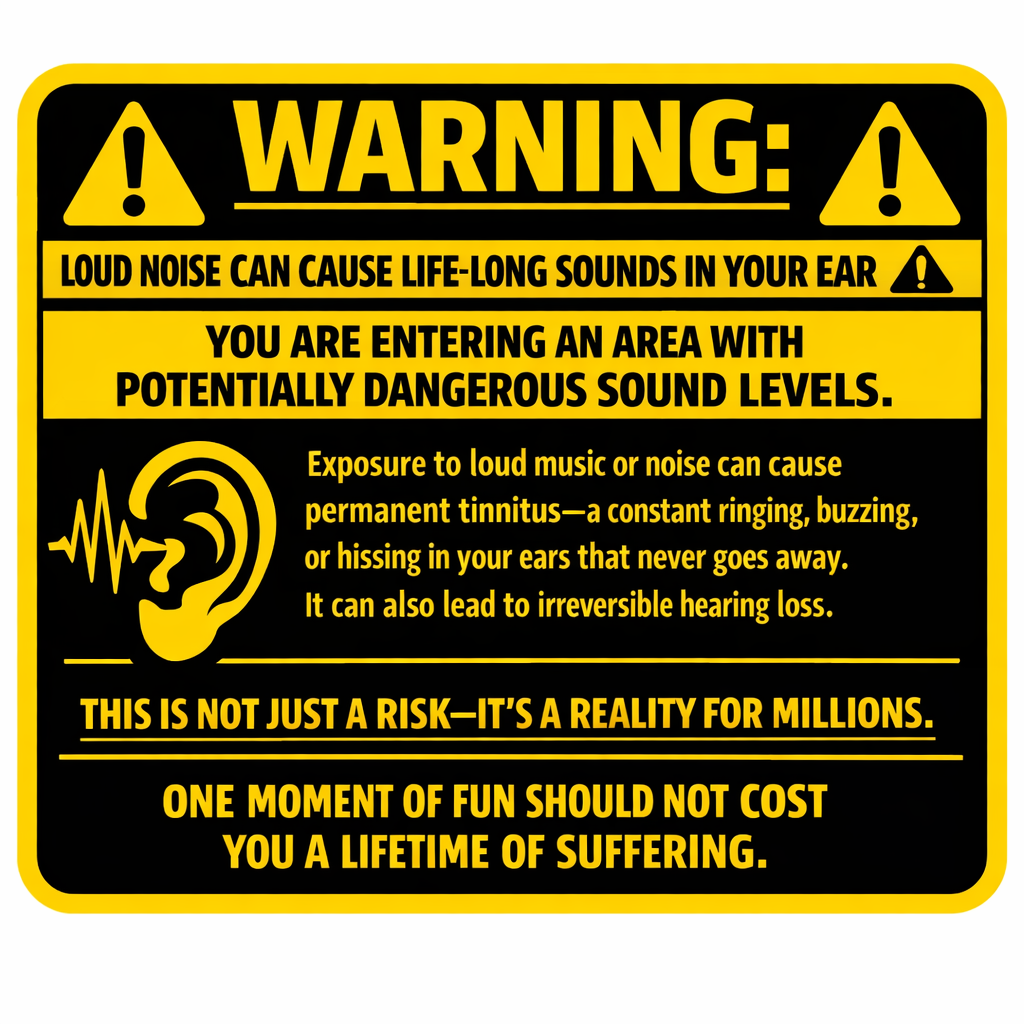
Proposed sticker design. It should say "Individual tolerance varies widely" towards the bottom but I didn't have time to add it yet.
Further information:
https://www.bbc.com/news/entertainment-arts-17952110
https://www.bbc.com/news/entertainment-arts-21181250
https://www.change.org/p/tinnitus-is-an-invisible-disability-that-needs-desperately-needs-funding
https://www.change.org/p/give-people-with-tinnitus-hope-for-a-cure
https://www.aau.dk/young-people-are-surrounded-by-sound-that-wears-down-their-hearing-n147442
https://www.reddit.com/r/tinnitus/comments/1bffzpy/tinnitus_has_no_limit/
https://www.reddit.com/r/LifeProTips/comments/ckh4gu/lpt_wear_earplugs_even_while_doing_mundane/
Citations:
https://pubmed.ncbi.nlm.nih.gov/28830503/
https://tinnitus.org.uk/wp-content/uploads/2023/01/Tinnitus_Manifesto.pdf

2
The Issue
At the age of seventeen, my life was altered drastically and irreversibly. A school party with my fellow students at my high school—something meant to be enjoyable and harmless—seemed like an exciting escape, yet it resulted in a lifetime of misery due to incessant tinnitus. The excruciating noise in my ears became my constant companion, disrupting every moment of silence I would want to enjoy. No child or young adult should endure this preventable tragedy.
Noise-induced hearing loss is a growing and largely invisible public health problem. According to the World Health Organization, over 1 billion young people worldwide are at risk of hearing loss due to exposure to loud sounds in recreational settings. School events, concerts, and nightclubs are major contributors. Without safeguards, millions face avoidable and irreversible auditory damage.
Many young people are taught—explicitly or implicitly—to ignore physical discomfort in social settings. Without clear information and external safeguards, they may unknowingly expose themselves to permanent harm.
Risk is not the same for everyone. Individual tolerance to sound varies widely, and factors such as physical exertion and heat—common at dance events—can accelerate auditory fatigue and injury. This makes reliance on personal judgment alone insufficient as a protective measure.
The Proposed Solution
We call for:
- Mandatory, clearly visible noise-hazard warning signs at all music events and entertainment venues
- Enforced, evidence-based maximum sound level limits, particularly at school-organized events
These measures are simple, low-cost, and effective. Research indicates that attendees generally support clear volume signage and protective measures when informed of the risks. Had I known about the risk of permanent tinnitus, I would not have stayed.
Why This Matters
Preventing noise-induced hearing loss reduces long-term healthcare costs, preserves quality of life, and prevents lost productivity due to disability. The public health and economic benefits far outweigh the minimal implementation costs.
Studies have found that people with tinnitus score significantly higher on depression and anxiety scales and lower on self-esteem and wellbeing. This places huge strain on the health service, with tinnitus treatment costing the NHS £750m per year (£717 per patient) and the cost to wider society estimated at £2.6 billion per year. Tinnitus therapy costs £10,600 per quality-adjusted life years gained.
Call to Action
We urge legislators, educational institutions, and venue operators to prioritize the auditory health of young people. Enact regulations that require visible warnings and enforce safe sound levels. Protecting hearing is not a restriction on enjoyment—it is a safeguard against lifelong suffering.
Sign this petition to demand meaningful change and to ensure that no more children or young adults endure the irreversible consequences of excessive noise exposure.
Proposed sticker design. It should say "Individual tolerance varies widely" towards the bottom but I didn't have time to add it yet.
Further information:
https://www.bbc.com/news/entertainment-arts-17952110
https://www.bbc.com/news/entertainment-arts-21181250
https://www.change.org/p/tinnitus-is-an-invisible-disability-that-needs-desperately-needs-funding
https://www.change.org/p/give-people-with-tinnitus-hope-for-a-cure
https://www.aau.dk/young-people-are-surrounded-by-sound-that-wears-down-their-hearing-n147442
https://www.reddit.com/r/tinnitus/comments/1bffzpy/tinnitus_has_no_limit/
https://www.reddit.com/r/LifeProTips/comments/ckh4gu/lpt_wear_earplugs_even_while_doing_mundane/
Citations:
https://pubmed.ncbi.nlm.nih.gov/28830503/
https://tinnitus.org.uk/wp-content/uploads/2023/01/Tinnitus_Manifesto.pdf


Petition Updates
Share this petition
Petition created on December 26, 2025