
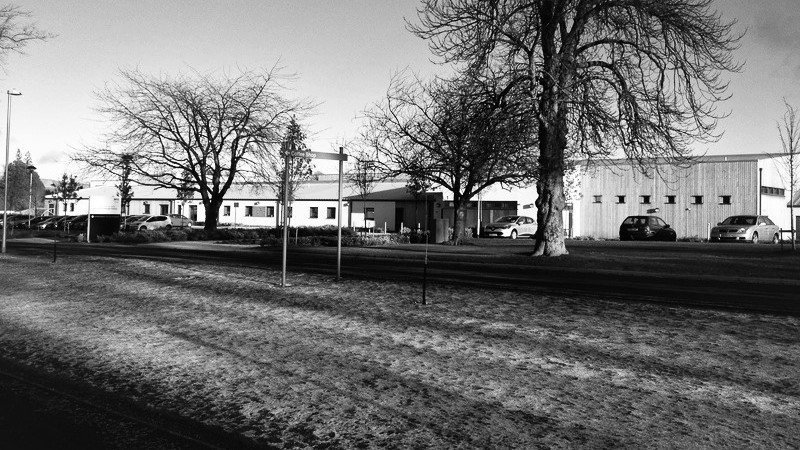
Stop the proposed closure of the Mulberry Unit; Angus Acute Mental Health Inpatient Ward
Stop the proposed closure of the Mulberry Unit; Angus Acute Mental Health Inpatient Ward
The Issue
It's recently been announced that NHS Tayside are considering plans to close the Mulberry Unit for Acute Mental Health Care at Stracathro in Angus, Scotland. The proposal was presented to the public on the 15th of February after recent reports had raised concern and prompted questioning. Although little time or means was given for people to communicate their concerns, many people gave written feedback but still await a response. It seemed evident that the plans that have been made over the past year are in favour of closing the 25 bed ward at Stracathro and creating an additional 20 bed ward at the Carseview Centre in Dundee, which currently already has 40 beds and is often used when needs be. We strongly believe this would have an adverse impact on crisis, as well as community based care in this widespread rural area which is already struggling to provide access to timely, quality care and support.
Many relevant concerns were reviewed by the Healthcare Improvement Scotland service of NHS Tayside’s mental health services in 2014 which can be read here. The reality seems to be that the many recommendations stated in this review are not being recognised, acted upon nor incorporated into the culture of NHS Tayside's planning and provision of health care, with many of the issues stated continuing to be of a thorough concern for those affected. As far as we're aware, service users, carers, people in the local community, including health professionals and support services, were only told about the proposed plans after phase one of the development. This contradicts supposed intentions to create services through co-production and a 'unified way of working' which is well proven to be more sustainable and cost-effective in the long run, helping and saving lives. We acknowledge that financial resources are restrictive, with much support for those experiencing mental health problems being cut, especially for individuals with acute and long-term issues. However, we feel money is being spent unadvisedly, making 'Best Practice', which emphasises the importance of patient-centred and human rights based care, less likely to become a reality.
There is now a strong sense of mistrust but hope that there is another presentation, or rather a consultation before plans are finalised, as we were informed there would be in March. We would also encourage you to write a comment, through this petition, explaining how you feel such a change would affect you or why you believe that the proposed plan should not go ahead. We would also encourage people to write a comment on behalf of those who may be unable to do so for themselves.
Someone who has experience of acute care locally says: "I've had experience of several different mental health facilities, mostly city based, and have found that the Mulberry ward has been the most beneficial to my recovery. I wholeheartedly believe that this is because of the surroundings and environment provided, also, the fact that it's near home. I found the grounds of the hospital a great place to escape and relax, and found it easier to focus on my recovery compared to the environment at Carseview. Although i have had good experiences while in the Mulberry ward, I have also had my bad. For example there have been times when I have presented in crisis and have had to be moved vast distances because of lack of beds. I have been transported by taxi which took approximately an hour to Carseview and over 3 hours to New Craigs Hospital in Inverness. This was while in extreme distress, with added distress of being moved to a facility i don't know. Because of the distance, I couldn't receive visitors due to length and cost of travel. I ended up feeling so isolated which had a huge impact on how I felt and my recovery. I believe that this was also such a waste of NHS money and resources; paying for taxis and staff. If the ward moves to Carseview there will be much more of a likelihood that this will be a regular occurrence."
Some other concerns which have been raised are;
- For those with family, friends, carers or support workers the need to travel further distances into Dundee, or further beyond, was of a significant concern. (Someone at the meeting mentioned that from where they stay it would be a 6 hour round journey to visit at Dundee which would mean they could seldom visit. The extra cost of travel was also seen as a barrier to visiting). Longer travelling times and extra costs would clearly be of huge concern, especially considering how, for many people, money, health, time and individual circumstances are so restrictive.
- There have been many accounts of how traumatising it is to be moved from facility to facility, while experiencing overwhelming distress. Many people have described their experience of being moved away from their community as having a harmful impact on their long term recovery. Some said that they would avoid asking for help when feeling they're in acute crisis for 'fear of the consequences' and being further distressed; having had harmful experiences of trying to access crisis support in the past. Another person expressed their sense that "if you don’t have anyone on your side, asking for the help, you feels hopeless, like no-one cares."
- If a hospital bed or 'place of safety' is necessary it should be available when required and should be as close as possible to the service user's home; hospital should be able to be a place of refuge and respite as well as a therapeutic treatment centre. There is a concern that the focus on short stay, medication, turnover and discharge seems very much to be a standard practice, far from person-centered care. The ward and staff at Stracathro create a better base for providing good care.
- The Mulberry unit was purpose built with gardens as part of the Susan Carnegie centre (opened in December of 2011 at a cost of £20 million). It provides 25 beds for a large rural area with a population of about 110,000 people and is the only acute admission, assessment and treatment unit for adults with mental health issues in Angus. The proposed ward at the Carseview Centre shall, merging with the other wards, provide 20 beds. This reduction is potentially dangerous considering the current pressures to meet people's fair needs.
- During the presentation by NHS Tayside in February we were informed that they had commissioned the external healthcare planners Capita to "assist in reviewing current service models, looking at what the drivers/ key influences for change were and reviewing what future service models should look like". This raised a number of concerns as there has been much public discussion and reports in the media about the issues with outsourcing public funding to private sector companies. Further information about the contract appears to be here and more about Capita here. Allowing key decisions to be made about how to care for individuals in distress through a business model, removed from actual practice, is surely not progress. There seems to be a disconnection between human beings, plans made by 'management', targets and resources which inevitably makes people ill.
- There seemed to be a worrying focus on turnover, discharge and estate management, with little mention about the risk to lives, distress, needs, safety, respite, or therapeutic care and environments. The very real and major concerns seemed to be excluded. Someone there found that the "pathways of care" came across as inhumane; managed as a business model where people become numbers, money before people, which is well known to result in escalating problems and awful risks; negatively impacting the well being of the community as a whole.
- It was also felt that there has been a dismissive attitude towards individuals that have co-occurring mental health and substance abuse problems even though there is very little appropriate support in the community. Problems seem to escalate when addiction or substance abuse is treated in a 'black and white' manner; there are so many people who self harm or disconnect through destructive addictions due to mental distress, trauma, underlying mental health issues or being 'lost in the system'. The proposed plans do not reflect an understanding of such issues which will not just go away.
- Co-production in mental health service redesign does not seem to be really happening in the area, though there has been some great progress in the community. However, we sincerely hope that service costs shall be better allocated to support provision that is more effective in helping people when needed. Listening, looking at what works well, and collaboration is well proven to create great 'results'.
- There are ongoing issues with staff shortages and the subsequent use of locums which can result in poorer standards of care, increased costs, which then reduces provision.
- All staff working at Mulberry would have to receive travel costs for the next four years if the ward is moved to the Carseview Centre at Dundee. So many accounts of substantial and escalating costs, while existing patients, carers, supporters, and many communities are suffering.
- Paul Farmer, of charity Mind recently made a good sense in explaining that “It is so important that people can get the help they need within their own communities. When you are at your lowest ebb, feeling scared, vulnerable and alone, your family and friends form a vital support network that is really important to recovery. Local commissioners and providers must make sure that sufficient beds are available to meet demand.”
- NHS Tayside wants to provide 'safe and effective care'; their strategic vision is to continue to ensure the largest majority of care treatment is delivered to people in their own homes and local community. Which sounds great. However, in reality, the Community Mental Health Team are already overstretched in the support that they're able to provide, although caring and trying their very best, where they can and when/ how they are able to. Many people are still unable to connect with services though, especially in the case of first-referral. Many are also not 'followed-up' and are left isolated, without basic support with an increased risk of serious harm or relapse. There needs to be a huge improvement in the quality of crisis response, less of a focus on short stay, discharge and turnover, with more acknowledgment of the importance of creating a safe, therapeutic, person-centred environment, as well as community. Ideally.
- The Mulberry unit was co-designed with service users and carers five years ago after Sunnyside Royal Hospital closed near Montrose. Although there are many concerns with the how care is delivered, the environment of the ward is a good foundation for recovery; involving peer support, days-out in the local community, easier access to home, or to arrange somewhere safe to stay after discharge, and with valuable support from the all important third sector (whose funding is also facing cuts). The Mulberry unit is also so healthfully able to provide therapeutic surroundings which allows service users to benefit from being close to nature.
- It's now often the case that Police are having to respond to individuals in acute emotional distress. There has been no crisis team in Angus since it was disbanded last year which is bound to put added pressure on Police and A&E departments. This results in more people in immediate crisis 'falling through the net' with detrimental consequences. People suffer and are denied care; essential risk assessments are not adequately carried out, individuals are inappropriately detained by the police, and in danger of further distress, trauma, harm and suicide. It is sometimes the case as well that when the Police have been alerted about someone being in crisis they have not followed this up and are not sufficiently trained in mental health issues. Great steps however have been made through suicide prevention awareness training, as far as we're aware. This article explains some issues with police officers responding to mental health crisis incidents, and what it's like to be on the receiving end.
- Not having adequate provision for acute crisis care consequently raises the threshold that potential service users have to pass to get help. For this reason together with all other concerns, we feel that it would be a false economy to go ahead with the proposed changes. We believe that it would prove to be a backwards path in the quality of health and social care in Angus as well as in the wider community.
Please support & sign for the people ... we can't do it without you!

The Issue
It's recently been announced that NHS Tayside are considering plans to close the Mulberry Unit for Acute Mental Health Care at Stracathro in Angus, Scotland. The proposal was presented to the public on the 15th of February after recent reports had raised concern and prompted questioning. Although little time or means was given for people to communicate their concerns, many people gave written feedback but still await a response. It seemed evident that the plans that have been made over the past year are in favour of closing the 25 bed ward at Stracathro and creating an additional 20 bed ward at the Carseview Centre in Dundee, which currently already has 40 beds and is often used when needs be. We strongly believe this would have an adverse impact on crisis, as well as community based care in this widespread rural area which is already struggling to provide access to timely, quality care and support.
Many relevant concerns were reviewed by the Healthcare Improvement Scotland service of NHS Tayside’s mental health services in 2014 which can be read here. The reality seems to be that the many recommendations stated in this review are not being recognised, acted upon nor incorporated into the culture of NHS Tayside's planning and provision of health care, with many of the issues stated continuing to be of a thorough concern for those affected. As far as we're aware, service users, carers, people in the local community, including health professionals and support services, were only told about the proposed plans after phase one of the development. This contradicts supposed intentions to create services through co-production and a 'unified way of working' which is well proven to be more sustainable and cost-effective in the long run, helping and saving lives. We acknowledge that financial resources are restrictive, with much support for those experiencing mental health problems being cut, especially for individuals with acute and long-term issues. However, we feel money is being spent unadvisedly, making 'Best Practice', which emphasises the importance of patient-centred and human rights based care, less likely to become a reality.
There is now a strong sense of mistrust but hope that there is another presentation, or rather a consultation before plans are finalised, as we were informed there would be in March. We would also encourage you to write a comment, through this petition, explaining how you feel such a change would affect you or why you believe that the proposed plan should not go ahead. We would also encourage people to write a comment on behalf of those who may be unable to do so for themselves.
Someone who has experience of acute care locally says: "I've had experience of several different mental health facilities, mostly city based, and have found that the Mulberry ward has been the most beneficial to my recovery. I wholeheartedly believe that this is because of the surroundings and environment provided, also, the fact that it's near home. I found the grounds of the hospital a great place to escape and relax, and found it easier to focus on my recovery compared to the environment at Carseview. Although i have had good experiences while in the Mulberry ward, I have also had my bad. For example there have been times when I have presented in crisis and have had to be moved vast distances because of lack of beds. I have been transported by taxi which took approximately an hour to Carseview and over 3 hours to New Craigs Hospital in Inverness. This was while in extreme distress, with added distress of being moved to a facility i don't know. Because of the distance, I couldn't receive visitors due to length and cost of travel. I ended up feeling so isolated which had a huge impact on how I felt and my recovery. I believe that this was also such a waste of NHS money and resources; paying for taxis and staff. If the ward moves to Carseview there will be much more of a likelihood that this will be a regular occurrence."
Some other concerns which have been raised are;
- For those with family, friends, carers or support workers the need to travel further distances into Dundee, or further beyond, was of a significant concern. (Someone at the meeting mentioned that from where they stay it would be a 6 hour round journey to visit at Dundee which would mean they could seldom visit. The extra cost of travel was also seen as a barrier to visiting). Longer travelling times and extra costs would clearly be of huge concern, especially considering how, for many people, money, health, time and individual circumstances are so restrictive.
- There have been many accounts of how traumatising it is to be moved from facility to facility, while experiencing overwhelming distress. Many people have described their experience of being moved away from their community as having a harmful impact on their long term recovery. Some said that they would avoid asking for help when feeling they're in acute crisis for 'fear of the consequences' and being further distressed; having had harmful experiences of trying to access crisis support in the past. Another person expressed their sense that "if you don’t have anyone on your side, asking for the help, you feels hopeless, like no-one cares."
- If a hospital bed or 'place of safety' is necessary it should be available when required and should be as close as possible to the service user's home; hospital should be able to be a place of refuge and respite as well as a therapeutic treatment centre. There is a concern that the focus on short stay, medication, turnover and discharge seems very much to be a standard practice, far from person-centered care. The ward and staff at Stracathro create a better base for providing good care.
- The Mulberry unit was purpose built with gardens as part of the Susan Carnegie centre (opened in December of 2011 at a cost of £20 million). It provides 25 beds for a large rural area with a population of about 110,000 people and is the only acute admission, assessment and treatment unit for adults with mental health issues in Angus. The proposed ward at the Carseview Centre shall, merging with the other wards, provide 20 beds. This reduction is potentially dangerous considering the current pressures to meet people's fair needs.
- During the presentation by NHS Tayside in February we were informed that they had commissioned the external healthcare planners Capita to "assist in reviewing current service models, looking at what the drivers/ key influences for change were and reviewing what future service models should look like". This raised a number of concerns as there has been much public discussion and reports in the media about the issues with outsourcing public funding to private sector companies. Further information about the contract appears to be here and more about Capita here. Allowing key decisions to be made about how to care for individuals in distress through a business model, removed from actual practice, is surely not progress. There seems to be a disconnection between human beings, plans made by 'management', targets and resources which inevitably makes people ill.
- There seemed to be a worrying focus on turnover, discharge and estate management, with little mention about the risk to lives, distress, needs, safety, respite, or therapeutic care and environments. The very real and major concerns seemed to be excluded. Someone there found that the "pathways of care" came across as inhumane; managed as a business model where people become numbers, money before people, which is well known to result in escalating problems and awful risks; negatively impacting the well being of the community as a whole.
- It was also felt that there has been a dismissive attitude towards individuals that have co-occurring mental health and substance abuse problems even though there is very little appropriate support in the community. Problems seem to escalate when addiction or substance abuse is treated in a 'black and white' manner; there are so many people who self harm or disconnect through destructive addictions due to mental distress, trauma, underlying mental health issues or being 'lost in the system'. The proposed plans do not reflect an understanding of such issues which will not just go away.
- Co-production in mental health service redesign does not seem to be really happening in the area, though there has been some great progress in the community. However, we sincerely hope that service costs shall be better allocated to support provision that is more effective in helping people when needed. Listening, looking at what works well, and collaboration is well proven to create great 'results'.
- There are ongoing issues with staff shortages and the subsequent use of locums which can result in poorer standards of care, increased costs, which then reduces provision.
- All staff working at Mulberry would have to receive travel costs for the next four years if the ward is moved to the Carseview Centre at Dundee. So many accounts of substantial and escalating costs, while existing patients, carers, supporters, and many communities are suffering.
- Paul Farmer, of charity Mind recently made a good sense in explaining that “It is so important that people can get the help they need within their own communities. When you are at your lowest ebb, feeling scared, vulnerable and alone, your family and friends form a vital support network that is really important to recovery. Local commissioners and providers must make sure that sufficient beds are available to meet demand.”
- NHS Tayside wants to provide 'safe and effective care'; their strategic vision is to continue to ensure the largest majority of care treatment is delivered to people in their own homes and local community. Which sounds great. However, in reality, the Community Mental Health Team are already overstretched in the support that they're able to provide, although caring and trying their very best, where they can and when/ how they are able to. Many people are still unable to connect with services though, especially in the case of first-referral. Many are also not 'followed-up' and are left isolated, without basic support with an increased risk of serious harm or relapse. There needs to be a huge improvement in the quality of crisis response, less of a focus on short stay, discharge and turnover, with more acknowledgment of the importance of creating a safe, therapeutic, person-centred environment, as well as community. Ideally.
- The Mulberry unit was co-designed with service users and carers five years ago after Sunnyside Royal Hospital closed near Montrose. Although there are many concerns with the how care is delivered, the environment of the ward is a good foundation for recovery; involving peer support, days-out in the local community, easier access to home, or to arrange somewhere safe to stay after discharge, and with valuable support from the all important third sector (whose funding is also facing cuts). The Mulberry unit is also so healthfully able to provide therapeutic surroundings which allows service users to benefit from being close to nature.
- It's now often the case that Police are having to respond to individuals in acute emotional distress. There has been no crisis team in Angus since it was disbanded last year which is bound to put added pressure on Police and A&E departments. This results in more people in immediate crisis 'falling through the net' with detrimental consequences. People suffer and are denied care; essential risk assessments are not adequately carried out, individuals are inappropriately detained by the police, and in danger of further distress, trauma, harm and suicide. It is sometimes the case as well that when the Police have been alerted about someone being in crisis they have not followed this up and are not sufficiently trained in mental health issues. Great steps however have been made through suicide prevention awareness training, as far as we're aware. This article explains some issues with police officers responding to mental health crisis incidents, and what it's like to be on the receiving end.
- Not having adequate provision for acute crisis care consequently raises the threshold that potential service users have to pass to get help. For this reason together with all other concerns, we feel that it would be a false economy to go ahead with the proposed changes. We believe that it would prove to be a backwards path in the quality of health and social care in Angus as well as in the wider community.
Please support & sign for the people ... we can't do it without you!
Petition Closed
Share this petition

Petition Updates
Share this petition
Petition created on 27 February 2016