

Let's Get English Holly On Washington's Noxious Weed List!
The Issue
What is English Holly(Ilex aquifolium)?
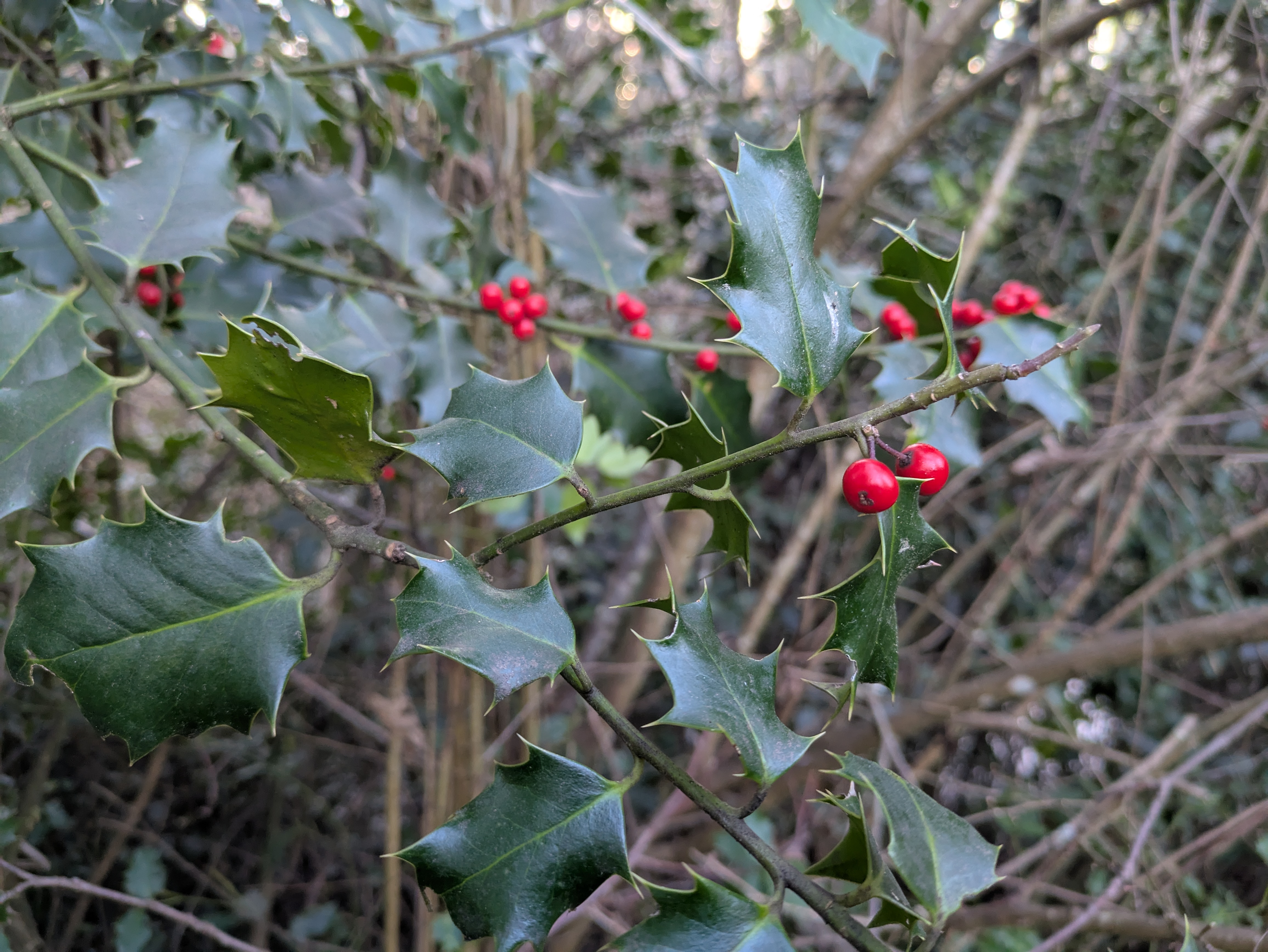
English holly is a perennial evergreen shrub in the Aquifoliaceae family. It can grow up to 50 feet tall, with seeds spread by birds that consume its berries. Often mistaken for Washington’s native Oregon grape, English holly can be distinguished by its glossy, alternate leaves and vibrant red berries. This shrub typically flowers between April and June and produces its berries around late-autumn, to mid-winter, hence its popularity as a Christmas decoration. It is considered an invasive species in Washington State.
What is an invasive species?
According to Executive Order 13112, an "invasive species" is defined as such:
- an alien species whose introduction does or is likely to cause economic or environmental harm or harm to human health.
So, what's the deal?
English holly an extremely invasive plant in Washington State that negativity affects our local forests. Here are some of the main consequences of invasive English holly in the environment:
- Aggressive competitor for nutrients and shade
- Stunts growth of surrounding plants and trees
- Extremely flammable
- Holly berries are toxic to humans
- Full grown trees are expensive to control
- Impacts nutrient cycling and creates an increase accumulation of sulfur in the soils surrounding the plant
- Is a host for a pathogen that causes sudden oak death
- Fast growing
English holly is currently listed as a monitored weed for the Washington State Noxious Weed Control Board. This is a proposal to put English holly on the Noxious Weed List for Washington State.
What is a Noxious Weed?
According to the Washington State Noxious Weed Control Board, a noxious weed is:
"--the traditional, legal term for invasive, non-native plants that are so aggressive they harm our local ecosystems or disrupt agricultural production. These plants crowd out the native species that fish and wildlife depend on. They also cost farmers, orchardists and ranchers millions of dollars in control efforts and lost production – and that can make the food we buy more expensive. So while ordinary weeds may be annoying, noxious weeds are a genuine threat to the natural resources, ecology and economy of our state.”
Specifically, a Class C Noxious Weed declared by the Washington State Noxious Weed Control Board is a weed that are either already widespread in Washington or are of special interest to the agricultural industry. Class C status allows:
- County enforcement to control if it is beneficial to that county (for example: to protect crops).
- Other counties may choose to provide education or technical support for the removal or control of these weeds.
English Holly has demonstrated all of the listed impacts that describes noxious weeds. Not only is English holly destroying specious diversity in our forests, but they are also an accelerant for fire in forest fires, which have become extremely common during our dry summer months. Being put on the monitor list is not enough, there needs to be an initiative to counties for regulation of this weed. This petition is a proposal to help raise awareness of this harmful weed and to help gather support for categorizing it to a Class C status of noxious weed.
Results of this petition will be submitted along with a formal letter request to the Washington State Noxious Weed Control Board for an addition of English Holly(Ilex aquifolium) on the official Washington State Noxious Weed List.

48
The Issue
What is English Holly(Ilex aquifolium)?
English holly is a perennial evergreen shrub in the Aquifoliaceae family. It can grow up to 50 feet tall, with seeds spread by birds that consume its berries. Often mistaken for Washington’s native Oregon grape, English holly can be distinguished by its glossy, alternate leaves and vibrant red berries. This shrub typically flowers between April and June and produces its berries around late-autumn, to mid-winter, hence its popularity as a Christmas decoration. It is considered an invasive species in Washington State.
What is an invasive species?
According to Executive Order 13112, an "invasive species" is defined as such:
- an alien species whose introduction does or is likely to cause economic or environmental harm or harm to human health.
So, what's the deal?
English holly an extremely invasive plant in Washington State that negativity affects our local forests. Here are some of the main consequences of invasive English holly in the environment:
- Aggressive competitor for nutrients and shade
- Stunts growth of surrounding plants and trees
- Extremely flammable
- Holly berries are toxic to humans
- Full grown trees are expensive to control
- Impacts nutrient cycling and creates an increase accumulation of sulfur in the soils surrounding the plant
- Is a host for a pathogen that causes sudden oak death
- Fast growing
English holly is currently listed as a monitored weed for the Washington State Noxious Weed Control Board. This is a proposal to put English holly on the Noxious Weed List for Washington State.
What is a Noxious Weed?
According to the Washington State Noxious Weed Control Board, a noxious weed is:
"--the traditional, legal term for invasive, non-native plants that are so aggressive they harm our local ecosystems or disrupt agricultural production. These plants crowd out the native species that fish and wildlife depend on. They also cost farmers, orchardists and ranchers millions of dollars in control efforts and lost production – and that can make the food we buy more expensive. So while ordinary weeds may be annoying, noxious weeds are a genuine threat to the natural resources, ecology and economy of our state.”
Specifically, a Class C Noxious Weed declared by the Washington State Noxious Weed Control Board is a weed that are either already widespread in Washington or are of special interest to the agricultural industry. Class C status allows:
- County enforcement to control if it is beneficial to that county (for example: to protect crops).
- Other counties may choose to provide education or technical support for the removal or control of these weeds.
English Holly has demonstrated all of the listed impacts that describes noxious weeds. Not only is English holly destroying specious diversity in our forests, but they are also an accelerant for fire in forest fires, which have become extremely common during our dry summer months. Being put on the monitor list is not enough, there needs to be an initiative to counties for regulation of this weed. This petition is a proposal to help raise awareness of this harmful weed and to help gather support for categorizing it to a Class C status of noxious weed.
Results of this petition will be submitted along with a formal letter request to the Washington State Noxious Weed Control Board for an addition of English Holly(Ilex aquifolium) on the official Washington State Noxious Weed List.
The Decision Makers


Petition Updates
Share this petition
Petition created on February 28, 2025