Housing Is Human: A National Call for Cost-of-Living Accountability
The Issue
For millions of Americans, the cost of living is no longer difficult. It is unsustainable.
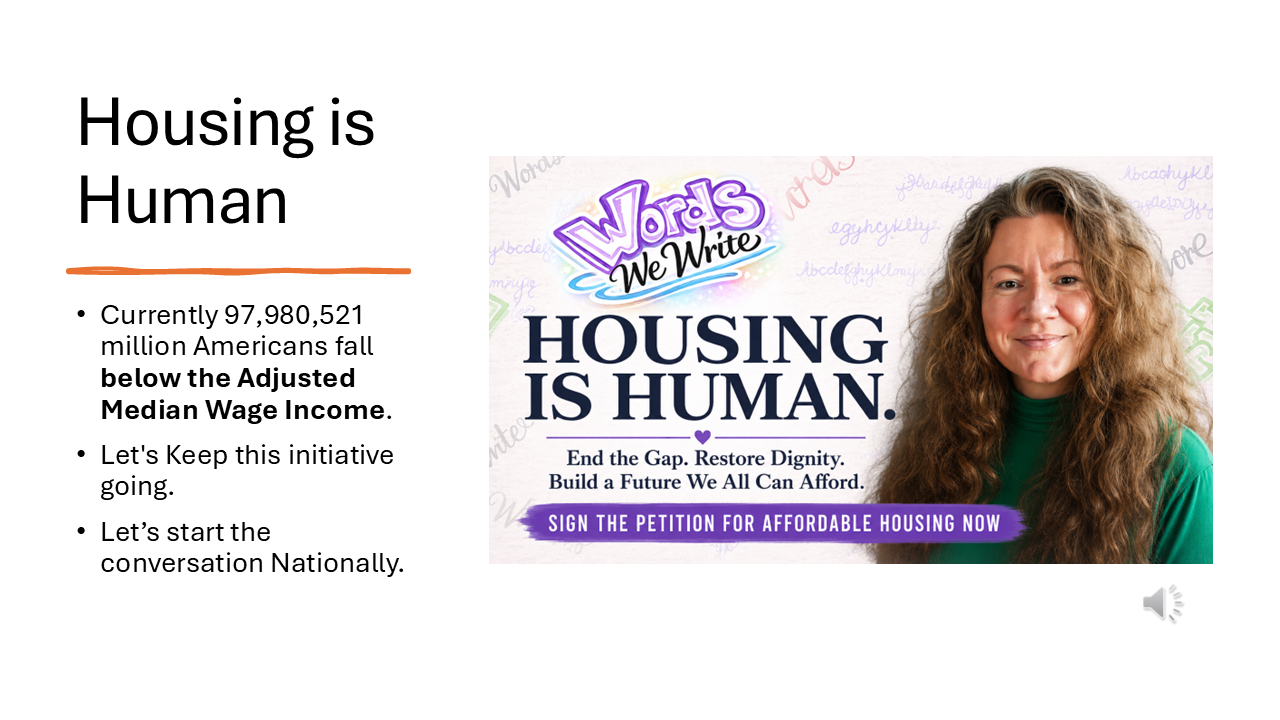
An independent affordability analysis conducted through this initiative found that approximately 97.9 million Americans fall below the adjusted working-class household income thresholds examined within the study, highlighting the growing disconnect between wages, housing costs, and long-term economic sustainability.
Housing costs continue to rise while wages fail to keep pace. Utilities increase. Food prices increase. Insurance increases. Meanwhile, working individuals and families are being told they simply need to “budget better” while trying to survive inside an economy where even full-time employment often no longer guarantees stability.
This issue is deeply personal to me.
Growing up, I experienced homelessness. As an adult, I have had to overcome housing instability more than once. Even today, while pursuing employment opportunities and attempting to rebuild sustainable stability, I have faced a painful reality many people understand all too well:
Sometimes the cost of housing makes opportunity itself inaccessible.
When jobs require relocation, but rent prices exceed what working individuals can realistically afford, people are forced to decline opportunities not because they lack ambition, skill, or work ethic, but because survival itself has become financially out of reach.
And this is not an isolated experience.
Across the country:
- Families are living paycheck to paycheck
- People are choosing between groceries and utilities
- Young adults cannot afford independence
- Seniors are struggling to remain housed
- Working individuals are one emergency away from homelessness
- Vacant and abandoned homes exist while affordable housing remains inaccessible
Across the country, more working individuals and families are quietly reaching a breaking point. Rising housing costs, utilities, and basic living expenses are outpacing wages faster than many households can adapt. What once felt difficult is increasingly becoming unsustainable.
This conversation can no longer wait until more people lose stability before action is taken.
For a full introduction to the “Housing is Human” initiative, supporting affordability analysis, and presentation overview, visit the Words We Write YouTube channel. I will continue uploading additional short-form content and walkthrough videos to help break down the data, affordability analysis, and proposed framework concepts in a more accessible and easy-to-understand format.
The current housing market increasingly reflects what people can be charged, not what working households can sustainably afford.
Many rental properties require tenants to earn three times the monthly rent in order to qualify. Yet wages across many industries do not support those requirements. Even modest apartments have become financially unreachable for people working full-time jobs.
This petition is not about attacking landlords, success, or economic growth.
It is about restoring balance between:
- wages and housing costs
- work and sustainability
- survival and dignity
Part of this initiative also explores the concept of standardized housing affordability frameworks based on realistic working-class earning capacity rather than inflated market conditions alone.
One framework being explored includes defining “standardized housing” as modest residential housing generally consisting of:
- homes or residential rental properties under approximately 2,200 square feet
- located on less than one acre of land
- intended to reflect practical, non-luxury housing for working individuals and families
The purpose of this concept is not to regulate luxury housing markets or eliminate private ownership, but to encourage discussion surrounding baseline affordability standards tied more closely to actual wage realities within each state.
This initiative also examines existing housing qualification practices in which many rental properties require tenants to earn approximately three times the monthly rent in order to qualify for housing. Using publicly available federal wage distribution data, affordability calculations are being explored to compare what working households can realistically qualify for versus what current housing markets increasingly demand.
Additional concepts being explored include affordability-based housing benchmarks and potential subsidy framework discussions intended to help bridge the growing gap between wages, housing costs, and long-term economic sustainability for working individuals and families.
Using publicly available federal data from the U.S. Census Bureau and HUD Fair Market Rent benchmarks, this initiative proposes a framework that examines affordability through the lens of real working-class earning capacity, not distorted income averages that fail to reflect what many Americans are actually living through.
Housing is not a luxury.
Stable housing impacts:
- employment
- mental health
- education
- recovery
- family stability
- long-term economic participation
When housing becomes unattainable, the consequences reach far beyond rent itself.
Using publicly available federal data from the U.S. Census Bureau and HUD Fair Market Rent benchmarks, this initiative also includes an independent affordability analysis examining the growing gap between working-class income realities and housing costs across multiple states using standardized affordability calculations.
As this project develops, additional supporting data, methodology, and state-by-state affordability models will be made publicly accessible through shared resources connected to Words We Write.
For additional reflection on the growing disconnect between wages, inflation, and everyday survival, readers can also explore the Words We Write article, “Cost of Living & Stagnant Salaries.”
PROPOSED SOLUTIONS
This initiative is advocating for the exploration of a National Housing Affordability Framework designed to create greater balance between wages, housing costs, and long-term economic sustainability.
Key areas include:
• Establishing a standardized housing definition focused on non-luxury primary housing used by working individuals and families
• Developing affordability calculations based on adjusted working-class income models rather than distorted statewide averages heavily influenced by high-income outliers
• Encouraging housing affordability standards where basic housing costs remain aligned with realistic earning capacity
• Exploring shared-responsibility stabilization models that protect both tenants from displacement and landlords from unsustainable financial loss
• Increasing transparency and accountability surrounding utility increases and essential living costs
As part of this initiative, independent affordability analysis was conducted using public U.S. Census and HUD data, including:
- a 75% adjusted population affordability model “Adjusted Median Income calculated using wage distribution data excluding top income quartiles to reflect working-class earning realities'
- a 38% working-majority affordability model
See Housing is Human Data aggregated for analysis.
The purpose of this analysis is to better reflect the financial realities facing working Americans across multiple states.
ADDITIONAL PROPOSED SOLUTION: AFFORDIBILITY-BASED HOUSING COST PROTECTION
This initiative also supports exploring affordability-based housing cost protections tied directly to realistic working-class earning capacity within each state.
Under this concept, housing that falls within a defined “standardized housing” category would operate within affordability-based pricing thresholds designed to prevent basic housing costs from becoming disconnected from what working individuals and families can realistically sustain.
Rather than allowing essential housing prices to rise solely based on maximum market extraction, this framework explores whether baseline housing costs should remain reasonably connected to:
- adjusted working-class income data,
- regional wage realities,
- and long-term economic sustainability.
The purpose is not to regulate luxury housing markets or eliminate private ownership rights. The purpose is to encourage discussion surrounding reasonable affordability protections for basic non-luxury housing that directly impacts workforce participation, family stability, and economic survival.
This concept recognizes that while housing may function as an investment asset, it also serves as a basic human necessity essential to maintaining employment, education, health, recovery, and long-term community stability.
This petition is calling on:
- Federal and state legislators
- Housing authorities
- Economic policy leaders
- Utility oversight agencies
- Community stakeholders
to acknowledge the growing disconnect between wages, housing costs, utilities, and basic survival expenses affecting working individuals and families across the United States.
This initiative advocates for:
- Greater housing affordability accountability
- Sustainable wage-to-housing standards
- Increased transparency surrounding utility and cost-of-living increases
- Exploration of affordability-based housing frameworks and subsidy models that better reflect working-class realities
- Policies that prioritize long-term housing stability and human dignity
The goal is not division. The goal is sustainability.
Because when full-time work no longer guarantees stable housing, the issue no longer affects only individuals. It affects communities, economies, families, and the future stability of the nation itself.
This petition is a call for accountability, realistic affordability standards, and policies that recognize a simple truth:
Working people deserve the ability to live, not merely survive.

302
The Issue
For millions of Americans, the cost of living is no longer difficult. It is unsustainable.
An independent affordability analysis conducted through this initiative found that approximately 97.9 million Americans fall below the adjusted working-class household income thresholds examined within the study, highlighting the growing disconnect between wages, housing costs, and long-term economic sustainability.
Housing costs continue to rise while wages fail to keep pace. Utilities increase. Food prices increase. Insurance increases. Meanwhile, working individuals and families are being told they simply need to “budget better” while trying to survive inside an economy where even full-time employment often no longer guarantees stability.
This issue is deeply personal to me.
Growing up, I experienced homelessness. As an adult, I have had to overcome housing instability more than once. Even today, while pursuing employment opportunities and attempting to rebuild sustainable stability, I have faced a painful reality many people understand all too well:
Sometimes the cost of housing makes opportunity itself inaccessible.
When jobs require relocation, but rent prices exceed what working individuals can realistically afford, people are forced to decline opportunities not because they lack ambition, skill, or work ethic, but because survival itself has become financially out of reach.
And this is not an isolated experience.
Across the country:
- Families are living paycheck to paycheck
- People are choosing between groceries and utilities
- Young adults cannot afford independence
- Seniors are struggling to remain housed
- Working individuals are one emergency away from homelessness
- Vacant and abandoned homes exist while affordable housing remains inaccessible
Across the country, more working individuals and families are quietly reaching a breaking point. Rising housing costs, utilities, and basic living expenses are outpacing wages faster than many households can adapt. What once felt difficult is increasingly becoming unsustainable.
This conversation can no longer wait until more people lose stability before action is taken.
For a full introduction to the “Housing is Human” initiative, supporting affordability analysis, and presentation overview, visit the Words We Write YouTube channel. I will continue uploading additional short-form content and walkthrough videos to help break down the data, affordability analysis, and proposed framework concepts in a more accessible and easy-to-understand format.
The current housing market increasingly reflects what people can be charged, not what working households can sustainably afford.
Many rental properties require tenants to earn three times the monthly rent in order to qualify. Yet wages across many industries do not support those requirements. Even modest apartments have become financially unreachable for people working full-time jobs.
This petition is not about attacking landlords, success, or economic growth.
It is about restoring balance between:
- wages and housing costs
- work and sustainability
- survival and dignity
Part of this initiative also explores the concept of standardized housing affordability frameworks based on realistic working-class earning capacity rather than inflated market conditions alone.
One framework being explored includes defining “standardized housing” as modest residential housing generally consisting of:
- homes or residential rental properties under approximately 2,200 square feet
- located on less than one acre of land
- intended to reflect practical, non-luxury housing for working individuals and families
The purpose of this concept is not to regulate luxury housing markets or eliminate private ownership, but to encourage discussion surrounding baseline affordability standards tied more closely to actual wage realities within each state.
This initiative also examines existing housing qualification practices in which many rental properties require tenants to earn approximately three times the monthly rent in order to qualify for housing. Using publicly available federal wage distribution data, affordability calculations are being explored to compare what working households can realistically qualify for versus what current housing markets increasingly demand.
Additional concepts being explored include affordability-based housing benchmarks and potential subsidy framework discussions intended to help bridge the growing gap between wages, housing costs, and long-term economic sustainability for working individuals and families.
Using publicly available federal data from the U.S. Census Bureau and HUD Fair Market Rent benchmarks, this initiative proposes a framework that examines affordability through the lens of real working-class earning capacity, not distorted income averages that fail to reflect what many Americans are actually living through.
Housing is not a luxury.
Stable housing impacts:
- employment
- mental health
- education
- recovery
- family stability
- long-term economic participation
When housing becomes unattainable, the consequences reach far beyond rent itself.
Using publicly available federal data from the U.S. Census Bureau and HUD Fair Market Rent benchmarks, this initiative also includes an independent affordability analysis examining the growing gap between working-class income realities and housing costs across multiple states using standardized affordability calculations.
As this project develops, additional supporting data, methodology, and state-by-state affordability models will be made publicly accessible through shared resources connected to Words We Write.
For additional reflection on the growing disconnect between wages, inflation, and everyday survival, readers can also explore the Words We Write article, “Cost of Living & Stagnant Salaries.”
PROPOSED SOLUTIONS
This initiative is advocating for the exploration of a National Housing Affordability Framework designed to create greater balance between wages, housing costs, and long-term economic sustainability.
Key areas include:
• Establishing a standardized housing definition focused on non-luxury primary housing used by working individuals and families
• Developing affordability calculations based on adjusted working-class income models rather than distorted statewide averages heavily influenced by high-income outliers
• Encouraging housing affordability standards where basic housing costs remain aligned with realistic earning capacity
• Exploring shared-responsibility stabilization models that protect both tenants from displacement and landlords from unsustainable financial loss
• Increasing transparency and accountability surrounding utility increases and essential living costs
As part of this initiative, independent affordability analysis was conducted using public U.S. Census and HUD data, including:
- a 75% adjusted population affordability model “Adjusted Median Income calculated using wage distribution data excluding top income quartiles to reflect working-class earning realities'
- a 38% working-majority affordability model
See Housing is Human Data aggregated for analysis.
The purpose of this analysis is to better reflect the financial realities facing working Americans across multiple states.
ADDITIONAL PROPOSED SOLUTION: AFFORDIBILITY-BASED HOUSING COST PROTECTION
This initiative also supports exploring affordability-based housing cost protections tied directly to realistic working-class earning capacity within each state.
Under this concept, housing that falls within a defined “standardized housing” category would operate within affordability-based pricing thresholds designed to prevent basic housing costs from becoming disconnected from what working individuals and families can realistically sustain.
Rather than allowing essential housing prices to rise solely based on maximum market extraction, this framework explores whether baseline housing costs should remain reasonably connected to:
- adjusted working-class income data,
- regional wage realities,
- and long-term economic sustainability.
The purpose is not to regulate luxury housing markets or eliminate private ownership rights. The purpose is to encourage discussion surrounding reasonable affordability protections for basic non-luxury housing that directly impacts workforce participation, family stability, and economic survival.
This concept recognizes that while housing may function as an investment asset, it also serves as a basic human necessity essential to maintaining employment, education, health, recovery, and long-term community stability.
This petition is calling on:
- Federal and state legislators
- Housing authorities
- Economic policy leaders
- Utility oversight agencies
- Community stakeholders
to acknowledge the growing disconnect between wages, housing costs, utilities, and basic survival expenses affecting working individuals and families across the United States.
This initiative advocates for:
- Greater housing affordability accountability
- Sustainable wage-to-housing standards
- Increased transparency surrounding utility and cost-of-living increases
- Exploration of affordability-based housing frameworks and subsidy models that better reflect working-class realities
- Policies that prioritize long-term housing stability and human dignity
The goal is not division. The goal is sustainability.
Because when full-time work no longer guarantees stable housing, the issue no longer affects only individuals. It affects communities, economies, families, and the future stability of the nation itself.
This petition is a call for accountability, realistic affordability standards, and policies that recognize a simple truth:
Working people deserve the ability to live, not merely survive.


Supporter Voices
Petition Updates
Share this petition
Petition created on May 23, 2026