
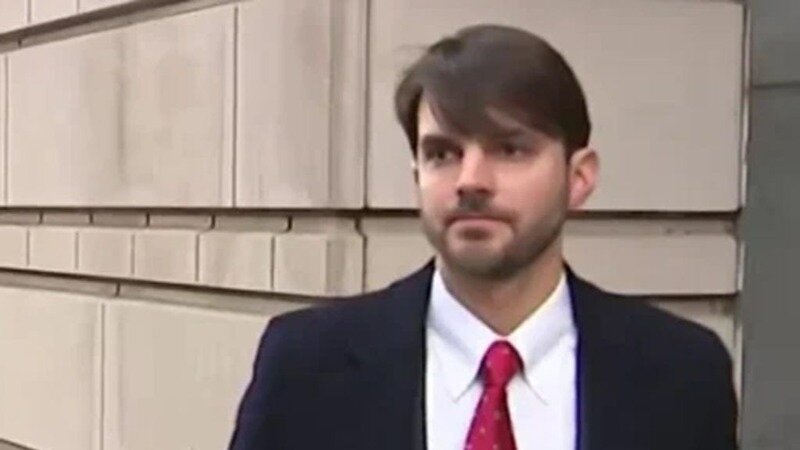
Free and Pardon Charles Littlejohn
The Issue
December 13, 2024
Dear President Biden,
We are tax law professors who are writing to urge you to commute the sentence of
Mr. Charles Littlejohn, who is serving a five-year prison sentence for unauthorized
disclosure of tax information, to the maximum sentence he was supposed to receive
under the federal sentencing guidelines, namely ten months. Mr. Littlejohn worked at
the IRS as a government contractor. Out of a sincere belief in the public`s right to
know, Mr. Littlejohn in 2019 and 2020 leaked tax return information of President
Trump and some of the wealthiest individual taxpayers in the US to the New York
Times and to ProPublica, who published articles based on this information.
A presidential tax return contains highly relevant information to the voting public,
and President Trump broke decades of tradition by refusing to disclose his returns.
When President Nixon`s tax return was leaked in the 1970s, the IRS leaker was not
indicted.
As for the super-rich, information about how little tax they pay is even more
important because it reveals the deep policy flaws of an income tax system that
allows, e.g., Warren Buffett to pay a lower tax rate than his secretary. As economist
Gabriel Zucman wrote recently,
In the 1960s, the 400 richest Americans paid more than half of their income in
taxes. Higher tax rates for the wealthy kept inequality in check and helped fund the
creation of social safety nets like Medicare, Medicaid and food stamps. Today, the
superrich control a greater share of America’s wealth than during the Gilded Age of
Carnegies and Rockefellers. That's partly because taxes on the wealthy have cratered.
In 2018, America's top billionaires paid just 23 percent of their income in taxes.
For the first time in the history of the United States, billionaires had a lower effective
tax rate than working-class Americans.
It is only by examining tax returns that the public can understand why this happens
and what can be done about it. That is why when the income tax only applied to the
rich, Congress enacted tax return information disclosure provisions in the 1860s,
1920s and 1930s, and why in countries with a stronger sense of egalitarianism but
significant inequality like Finland, Norway and Sweden most tax information is
public, despite the concerns about privacy.
Under current law, disclosing tax returns is a crime, and Mr. Littlejohn pled guilty.
Under the sentencing guidelines, his maximum sentence was ten months, but federal
district judge Ana Reyes sentenced him to five years, or six times the maximum
sentence, on the grounds that others must be deterred from doing the same.
But is deterrence necessary in this case? Not really. There is a reason why IRS
workers almost never leak tax information: They know that (like Mr. Littlejohn) they
will likely be caught, because it is easy to discover who accessed the relevant returns,
and that they will lose their jobs and probably go to jail. Ten months in jail is a
sufficient deterrent, and most IRS employees do not value the public`s right to know
over their own personal freedom.
Mr. Littlejohn`s sentence is particularly harsh in comparison with some recent
sentences meted out to blatant tax evaders.
There are many cases that involve massive tax evasion and do not lead to a criminal
indictment. Consider for example the case of Alon Farhy, who transferred more than
$2 million to a sham foreign entity, which then transferred the funds to a bank
account in the name of a Belize-based corporation Mr. Farhy created solely for that
purpose. Mr. Farhy’s scheme violated a variety of tax-related obligations beyond his
duty to correctly report and pay the income tax he owed. The DOJ entered into a non-
prosecution agreement with Mr. Farhy immunizing him from criminal prosecution in
exchange for paying his taxes plus interest and penalties.
Many other cases involving tax evasion do not result in jail time. For example, Raj
Mukhi ran a business that manufactured and sold professional uniforms in many
countries. He was indicted in 2014 for hiding the proceeds in a private bank based in
Zurich. He pleaded guilty to one count of filing a false tax return and one count of
failing to disclose a foreign bank account and was sentenced to three years of
supervised release.
Even if there is a prison sentence, it is usually much shorter than five years. To
mention just some cases from this year, an Oklahoma man who instructed a payroll
company working with his business to falsely characterize over $2.6 million as
reimbursements rather than income was sentenced to 30 months. An Indiana woman
who electronically filed false income tax returns for clients that reported fictitious
businesses and also filed a false tax return for herself that underreported gross
receipts from her business was sentenced to 21 months. A New Jersey man was
sentenced to 29 months for evading taxes and not filing income tax returns while
earning over $2.5 million in wages. All of these cases involve conduct that is much
more culpable and less public spirited than Mr. Littlejohn`s.
There are several reasons why tax evaders should be punished more severely than
leakers, not less severely like in the cases mentioned above.
First, tax evaders cause actual revenue loss to the government, and the severity of the
sentence is linked to the size of the loss. Tax leakers like Mr. Littlejohn do not cause
any revenue loss.
Second, prison sentences for tax evaders have a deterrence value because unlike
leaking tax returns, it is hard for the IRS to discover the conduct. Small businesses are
particularly hard to audit because there is no withholding or information reporting
on their income, and even when there is information reporting like in some of the
above cases, it is not easy for the IRS to detect false W2s and W4s. Prison sentences
where the IRS does discover the conduct may have an effect in persuading other
taxpayers not to do the same.
There is a big difference between leaking tax information and tax evasion in the size
of the universe of potential violations and the number of violators escaping
punishment. The universe of potential violators leaking tax information is
infinitesimal compared to the universe of potential tax evaders. And the number of
potential violators escaping punishment for leaking tax information is close to zero,
whereas the number of evaders escaping punishment is huge.
Third, from a fairness perspective, it is important that the IRS combat tax evasion by
the rich because it bolsters public perception that the system is fair and therefore that
they should pay their taxes. Going after Mr. Littlejohn, on the other hand, creates the
perception that the system protects the interests of the super-rich taxpayers whose
returns he leaked.
Finally, lighter sentences are also common in cases involving massive leaks of private
information. If what we care about is harms to individual privacy interests, the former
Chief Security Officer of Uber was sentenced in 2023 to 3 years of probation for
covering up data breaches that involved the user records of millions. In addition, in
January, three DHS employees were sentenced for stealing personally identifying
information from government databases and disclosing it to software companies
overseas. They were sentenced to shorter terms of imprisonment (4 and 18 months)
or probation (2 years).
For these reasons, we ask that you commute Mr. Littlejohn`s sentence to the
maximum sentence he was supposed to receive under the federal sentencing
guidelines, namely ten months.
Sincerely,
Reuven S. Avi-Yonah
Irwin I. Cohn Professor of Law
The University of Michigan
David Gamage
The Law School Foundation Distinguished Professor of Tax Law & Policy
University of Missouri School of Law
Goldburn P. Maynard Jr.
Assistant Professor
Department of Business Law & Ethics
Indiana University, Kelley School of Business
Alex Zhang
Assistant Professor of Law
Emory University
https://inequality.org/wp-content/uploads/2024/12/Littlejohn-Letter.pdf
https://newstraightedge.substack.com/p/free-and-pardon-charles-littlejohn
The Charles Little John Case resembles the one International Consortium of Journalists have done in the past decade relating to the Panama Papers and questionable offshore accounts related to taxes. The Trump Leaks are based on this one.
https://www.icij.org/investigations/paradise-papers/
https://offshoreleaks.icij.org/
https://www.icij.org/investigations/offshore/
https://www.icij.org/investigations/fincen-files/

12
The Issue
December 13, 2024
Dear President Biden,
We are tax law professors who are writing to urge you to commute the sentence of
Mr. Charles Littlejohn, who is serving a five-year prison sentence for unauthorized
disclosure of tax information, to the maximum sentence he was supposed to receive
under the federal sentencing guidelines, namely ten months. Mr. Littlejohn worked at
the IRS as a government contractor. Out of a sincere belief in the public`s right to
know, Mr. Littlejohn in 2019 and 2020 leaked tax return information of President
Trump and some of the wealthiest individual taxpayers in the US to the New York
Times and to ProPublica, who published articles based on this information.
A presidential tax return contains highly relevant information to the voting public,
and President Trump broke decades of tradition by refusing to disclose his returns.
When President Nixon`s tax return was leaked in the 1970s, the IRS leaker was not
indicted.
As for the super-rich, information about how little tax they pay is even more
important because it reveals the deep policy flaws of an income tax system that
allows, e.g., Warren Buffett to pay a lower tax rate than his secretary. As economist
Gabriel Zucman wrote recently,
In the 1960s, the 400 richest Americans paid more than half of their income in
taxes. Higher tax rates for the wealthy kept inequality in check and helped fund the
creation of social safety nets like Medicare, Medicaid and food stamps. Today, the
superrich control a greater share of America’s wealth than during the Gilded Age of
Carnegies and Rockefellers. That's partly because taxes on the wealthy have cratered.
In 2018, America's top billionaires paid just 23 percent of their income in taxes.
For the first time in the history of the United States, billionaires had a lower effective
tax rate than working-class Americans.
It is only by examining tax returns that the public can understand why this happens
and what can be done about it. That is why when the income tax only applied to the
rich, Congress enacted tax return information disclosure provisions in the 1860s,
1920s and 1930s, and why in countries with a stronger sense of egalitarianism but
significant inequality like Finland, Norway and Sweden most tax information is
public, despite the concerns about privacy.
Under current law, disclosing tax returns is a crime, and Mr. Littlejohn pled guilty.
Under the sentencing guidelines, his maximum sentence was ten months, but federal
district judge Ana Reyes sentenced him to five years, or six times the maximum
sentence, on the grounds that others must be deterred from doing the same.
But is deterrence necessary in this case? Not really. There is a reason why IRS
workers almost never leak tax information: They know that (like Mr. Littlejohn) they
will likely be caught, because it is easy to discover who accessed the relevant returns,
and that they will lose their jobs and probably go to jail. Ten months in jail is a
sufficient deterrent, and most IRS employees do not value the public`s right to know
over their own personal freedom.
Mr. Littlejohn`s sentence is particularly harsh in comparison with some recent
sentences meted out to blatant tax evaders.
There are many cases that involve massive tax evasion and do not lead to a criminal
indictment. Consider for example the case of Alon Farhy, who transferred more than
$2 million to a sham foreign entity, which then transferred the funds to a bank
account in the name of a Belize-based corporation Mr. Farhy created solely for that
purpose. Mr. Farhy’s scheme violated a variety of tax-related obligations beyond his
duty to correctly report and pay the income tax he owed. The DOJ entered into a non-
prosecution agreement with Mr. Farhy immunizing him from criminal prosecution in
exchange for paying his taxes plus interest and penalties.
Many other cases involving tax evasion do not result in jail time. For example, Raj
Mukhi ran a business that manufactured and sold professional uniforms in many
countries. He was indicted in 2014 for hiding the proceeds in a private bank based in
Zurich. He pleaded guilty to one count of filing a false tax return and one count of
failing to disclose a foreign bank account and was sentenced to three years of
supervised release.
Even if there is a prison sentence, it is usually much shorter than five years. To
mention just some cases from this year, an Oklahoma man who instructed a payroll
company working with his business to falsely characterize over $2.6 million as
reimbursements rather than income was sentenced to 30 months. An Indiana woman
who electronically filed false income tax returns for clients that reported fictitious
businesses and also filed a false tax return for herself that underreported gross
receipts from her business was sentenced to 21 months. A New Jersey man was
sentenced to 29 months for evading taxes and not filing income tax returns while
earning over $2.5 million in wages. All of these cases involve conduct that is much
more culpable and less public spirited than Mr. Littlejohn`s.
There are several reasons why tax evaders should be punished more severely than
leakers, not less severely like in the cases mentioned above.
First, tax evaders cause actual revenue loss to the government, and the severity of the
sentence is linked to the size of the loss. Tax leakers like Mr. Littlejohn do not cause
any revenue loss.
Second, prison sentences for tax evaders have a deterrence value because unlike
leaking tax returns, it is hard for the IRS to discover the conduct. Small businesses are
particularly hard to audit because there is no withholding or information reporting
on their income, and even when there is information reporting like in some of the
above cases, it is not easy for the IRS to detect false W2s and W4s. Prison sentences
where the IRS does discover the conduct may have an effect in persuading other
taxpayers not to do the same.
There is a big difference between leaking tax information and tax evasion in the size
of the universe of potential violations and the number of violators escaping
punishment. The universe of potential violators leaking tax information is
infinitesimal compared to the universe of potential tax evaders. And the number of
potential violators escaping punishment for leaking tax information is close to zero,
whereas the number of evaders escaping punishment is huge.
Third, from a fairness perspective, it is important that the IRS combat tax evasion by
the rich because it bolsters public perception that the system is fair and therefore that
they should pay their taxes. Going after Mr. Littlejohn, on the other hand, creates the
perception that the system protects the interests of the super-rich taxpayers whose
returns he leaked.
Finally, lighter sentences are also common in cases involving massive leaks of private
information. If what we care about is harms to individual privacy interests, the former
Chief Security Officer of Uber was sentenced in 2023 to 3 years of probation for
covering up data breaches that involved the user records of millions. In addition, in
January, three DHS employees were sentenced for stealing personally identifying
information from government databases and disclosing it to software companies
overseas. They were sentenced to shorter terms of imprisonment (4 and 18 months)
or probation (2 years).
For these reasons, we ask that you commute Mr. Littlejohn`s sentence to the
maximum sentence he was supposed to receive under the federal sentencing
guidelines, namely ten months.
Sincerely,
Reuven S. Avi-Yonah
Irwin I. Cohn Professor of Law
The University of Michigan
David Gamage
The Law School Foundation Distinguished Professor of Tax Law & Policy
University of Missouri School of Law
Goldburn P. Maynard Jr.
Assistant Professor
Department of Business Law & Ethics
Indiana University, Kelley School of Business
Alex Zhang
Assistant Professor of Law
Emory University
https://inequality.org/wp-content/uploads/2024/12/Littlejohn-Letter.pdf
https://newstraightedge.substack.com/p/free-and-pardon-charles-littlejohn
The Charles Little John Case resembles the one International Consortium of Journalists have done in the past decade relating to the Panama Papers and questionable offshore accounts related to taxes. The Trump Leaks are based on this one.
https://www.icij.org/investigations/paradise-papers/
https://offshoreleaks.icij.org/
https://www.icij.org/investigations/offshore/
https://www.icij.org/investigations/fincen-files/


Supporter Voices
Petition Updates
Share this petition
Petition created on April 8, 2025