Demand Fairness, Consistency & Accountability in the NDEB NDECC Exam
Demand Fairness, Consistency & Accountability in the NDEB NDECC Exam
The Issue
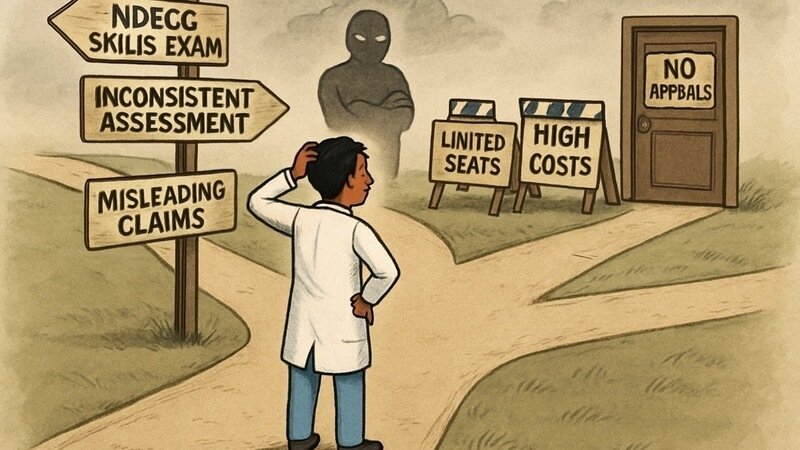
Foreign-trained dentists in Canada face an opaque, inconsistent, and financially draining system under the National Dental Examining Board (NDEB)—especially during the NDECC Skills Exam.
For years, internationally trained dentists in Canada have been facing overwhelming stress, financial hardship, and emotional exhaustion due to the NDEB’s Skills Exam (NDECC). This is not just one person’s story — it’s the shared reality of hundreds of highly qualified professionals whose lives are on hold due to inconsistent and unaccountable evaluation
According to Section 22.4(2) of the Regulated Health Professions Act (RHPA), the Royal College of Dental Surgeons of Ontario (RCDSO) is legally responsible for ensuring that the registration practices — including examinations — are fair, transparent, and impartial. However, what we are experiencing with the NDEB process is the opposite: a system with no transparency, no appeals, no proper feedback, and questionable grading practices.
Skill part:
1-Many candidates pass the most difficult parts of the exam repeatedly, only to be failed on later attempts with no clear explanation. Some have passed the endodontic, provisinal crown, amalgam cavity preparation and etc section multiple times, then suddenly fail the same section again — even though they used the exact same technique. Others pass three or four components, then fail without clarity or justification.
2-There is no appeal process, no transparent scoring breakdown, and the “unlimited attempts” promise is misleading
3- The previous version of this exam (ACS) allowed appeals. Why has this fundamental right been taken away? What other licensing exam in Canada denies candidates the right to appeal a practical exam?
4-The “Minimally Competent” Standard Is Vague, Undefined, and Unforgiving—Even Under Flawed Exam Conditions
The NDEB claims that candidates are only expected to meet a “minimally competent” standard. However, this term is intentionally vague and lacks a clear, standardized definition. There is no objective rubric or measurable benchmark to guide either candidates or assessors. What one examiner sees as minimally competent might be viewed as insufficient by another, especially in a high-stakes exam without an appeal process. This opens the door to arbitrary, inconsistent grading—and unjust failures.
Worse still, the testing environment itself is deeply flawed. Numerous candidates have reported technical problems such as defective manikins, poorly aligned articulators, limited materials, and inconsistent station setups. These issues create unequal testing conditions, increasing stress and reducing the fairness of the exam overall.
Despite this, the NDEB continues to expect candidates to perform with zero room for error—even though there is no clear definition of what “minimally competent” actually means. In the previous version of the skills exam, one fail project were tolerated as long as the overall result met clinical expectations and did not compromise patient safety. In contrast, the current system seems to enforce rigid, unforgiving standards under the guise of “minimal competence,” while providing no transparency or recourse.This contradiction highlights a critical flaw: how can a candidate aim for a standard that isn’t clearly defined, especially when the environment itself is working against them? In its current form, the NDECC allows subjective interpretation and systemic unfairness—which has caused immense psychological and financial harm to candidates across the country.
Many of us have left our home countries, invested thousands of dollars, and dedicated years of our lives to become licensed in Canada — only to be trapped in a cycle of confusion, silence, and failure without recourse.
We are not asking for shortcuts. We are asking for fairness, consistency, and basic transparency. We urge the NDEB to:
• Reinstate a clear and fair appeal process
• Provide transparent and standardized evaluation criteria
• Ensure consistent and accessible exam scheduling
• Candidates who have passed a project more than once over the 5-year period should not be removed from the system if they fail it in their final attempt. Consideration should be given to their consistent performance and prior success in that task.Acknowledge and correct inequities in testing conditions and allow room for human error for candidate, and grant credits for projects that have passed repeatedly
Situational judgement part:
• Introduce a formal reevaluation process for failed stations or competencies upon request.
• Provide specific feedback to candidates on why a station or competency was not successful.
.Increase SJ Exam Access Within Each Cycle
Make “Unlimited Attempts” Achievable in Practice
We respectfully urge the NDEB to:
. Implement reevaluation and feedback for SJ
. Ensure unlimited attempts are feasible through timely seat availability.
Our Demands:
Reinstate a fair, independent appeals process for the Skills Exam.
Publish transparent evaluation standards, including rubrics, calibration protocols, and inter-rater reliability data.
Correct the “unlimited attempts” policy statement to reflect true seat availability and process limitations.
Provide detailed feedback for failed sections, especially when a previously passed component is later failed.
Establish external oversight to ensure accountability and procedural fairness in high-stakes licensing exams.
Why This Matters:
Candidates invest years of their professional life, thousands of dollars, and their mental health into passing licensing exams.
Without consistent evaluation and an appeals mechanism, even small examiner errors can block a qualified candidate from working in Canada.
A fair system benefits not only candidates but also Canadian healthcare by retaining skilled and experienced professionals.
Additional Concerns in skill part
Since the 700 series endodontic teeth were introduced, candidates have been facing serious difficulties due to the lack of access to purchase these teeth from the market. From January to May, this issue has been especially severe, leaving many candidates unable to properly practice. Despite informing the NDEB multiple times, this shortage was never addressed—leading to a sharp increase in failure rates during these exam cycles.
Moreover, many candidates have expressed concerns about the lack of clear and specific evaluation criteria—not just for endodontics but across multiple components of the exam, including crown preparation and cavity designs. The current guidelines are overly broad and vague, making it unclear what exactly is required to pass.
For example, the rubrics do not provide specific numerical values or measurable targets—such as exact millimeters for access or crown prep, or what margin design is expected. This leaves a wide range for subjective interpretation. One examiner might pass a project, while another might fail the same exact work, solely based on their personal judgment.
This inconsistency creates unnecessary confusion, stress, and a sense of injustice. A national licensing exam must be based on objective, standardized, and transparent criteria to ensure equal treatment for all candidates. Without this, the process loses its fairness and credibility.
We respectfully call on the Royal College of Dental Surgeons of Ontario to fulfill their legal duty under RHPA Section 22.4(2) and intervene in the NDEB registration process. Oversight is not optional — it is a legal obligation.
Disclaimer: This petition has been prepared independently and does not represent the official views of the NDEB or any affiliated organization.
Please sign if you believe:
Licensing exams should be transparent and consistent,
“Unlimited attempts” should be truthful,
Candidates deserve the right to ask for a review, and
Those with passed components should not lose credit unfairly.
Sign and share this petition so that the NDEB is held accountable and adopts fairer practices for skilled professionals seeking to serve in Canada.

684
The Issue
Foreign-trained dentists in Canada face an opaque, inconsistent, and financially draining system under the National Dental Examining Board (NDEB)—especially during the NDECC Skills Exam.
For years, internationally trained dentists in Canada have been facing overwhelming stress, financial hardship, and emotional exhaustion due to the NDEB’s Skills Exam (NDECC). This is not just one person’s story — it’s the shared reality of hundreds of highly qualified professionals whose lives are on hold due to inconsistent and unaccountable evaluation
According to Section 22.4(2) of the Regulated Health Professions Act (RHPA), the Royal College of Dental Surgeons of Ontario (RCDSO) is legally responsible for ensuring that the registration practices — including examinations — are fair, transparent, and impartial. However, what we are experiencing with the NDEB process is the opposite: a system with no transparency, no appeals, no proper feedback, and questionable grading practices.
Skill part:
1-Many candidates pass the most difficult parts of the exam repeatedly, only to be failed on later attempts with no clear explanation. Some have passed the endodontic, provisinal crown, amalgam cavity preparation and etc section multiple times, then suddenly fail the same section again — even though they used the exact same technique. Others pass three or four components, then fail without clarity or justification.
2-There is no appeal process, no transparent scoring breakdown, and the “unlimited attempts” promise is misleading
3- The previous version of this exam (ACS) allowed appeals. Why has this fundamental right been taken away? What other licensing exam in Canada denies candidates the right to appeal a practical exam?
4-The “Minimally Competent” Standard Is Vague, Undefined, and Unforgiving—Even Under Flawed Exam Conditions
The NDEB claims that candidates are only expected to meet a “minimally competent” standard. However, this term is intentionally vague and lacks a clear, standardized definition. There is no objective rubric or measurable benchmark to guide either candidates or assessors. What one examiner sees as minimally competent might be viewed as insufficient by another, especially in a high-stakes exam without an appeal process. This opens the door to arbitrary, inconsistent grading—and unjust failures.
Worse still, the testing environment itself is deeply flawed. Numerous candidates have reported technical problems such as defective manikins, poorly aligned articulators, limited materials, and inconsistent station setups. These issues create unequal testing conditions, increasing stress and reducing the fairness of the exam overall.
Despite this, the NDEB continues to expect candidates to perform with zero room for error—even though there is no clear definition of what “minimally competent” actually means. In the previous version of the skills exam, one fail project were tolerated as long as the overall result met clinical expectations and did not compromise patient safety. In contrast, the current system seems to enforce rigid, unforgiving standards under the guise of “minimal competence,” while providing no transparency or recourse.This contradiction highlights a critical flaw: how can a candidate aim for a standard that isn’t clearly defined, especially when the environment itself is working against them? In its current form, the NDECC allows subjective interpretation and systemic unfairness—which has caused immense psychological and financial harm to candidates across the country.
Many of us have left our home countries, invested thousands of dollars, and dedicated years of our lives to become licensed in Canada — only to be trapped in a cycle of confusion, silence, and failure without recourse.
We are not asking for shortcuts. We are asking for fairness, consistency, and basic transparency. We urge the NDEB to:
• Reinstate a clear and fair appeal process
• Provide transparent and standardized evaluation criteria
• Ensure consistent and accessible exam scheduling
• Candidates who have passed a project more than once over the 5-year period should not be removed from the system if they fail it in their final attempt. Consideration should be given to their consistent performance and prior success in that task.Acknowledge and correct inequities in testing conditions and allow room for human error for candidate, and grant credits for projects that have passed repeatedly
Situational judgement part:
• Introduce a formal reevaluation process for failed stations or competencies upon request.
• Provide specific feedback to candidates on why a station or competency was not successful.
.Increase SJ Exam Access Within Each Cycle
Make “Unlimited Attempts” Achievable in Practice
We respectfully urge the NDEB to:
. Implement reevaluation and feedback for SJ
. Ensure unlimited attempts are feasible through timely seat availability.
Our Demands:
Reinstate a fair, independent appeals process for the Skills Exam.
Publish transparent evaluation standards, including rubrics, calibration protocols, and inter-rater reliability data.
Correct the “unlimited attempts” policy statement to reflect true seat availability and process limitations.
Provide detailed feedback for failed sections, especially when a previously passed component is later failed.
Establish external oversight to ensure accountability and procedural fairness in high-stakes licensing exams.
Why This Matters:
Candidates invest years of their professional life, thousands of dollars, and their mental health into passing licensing exams.
Without consistent evaluation and an appeals mechanism, even small examiner errors can block a qualified candidate from working in Canada.
A fair system benefits not only candidates but also Canadian healthcare by retaining skilled and experienced professionals.
Additional Concerns in skill part
Since the 700 series endodontic teeth were introduced, candidates have been facing serious difficulties due to the lack of access to purchase these teeth from the market. From January to May, this issue has been especially severe, leaving many candidates unable to properly practice. Despite informing the NDEB multiple times, this shortage was never addressed—leading to a sharp increase in failure rates during these exam cycles.
Moreover, many candidates have expressed concerns about the lack of clear and specific evaluation criteria—not just for endodontics but across multiple components of the exam, including crown preparation and cavity designs. The current guidelines are overly broad and vague, making it unclear what exactly is required to pass.
For example, the rubrics do not provide specific numerical values or measurable targets—such as exact millimeters for access or crown prep, or what margin design is expected. This leaves a wide range for subjective interpretation. One examiner might pass a project, while another might fail the same exact work, solely based on their personal judgment.
This inconsistency creates unnecessary confusion, stress, and a sense of injustice. A national licensing exam must be based on objective, standardized, and transparent criteria to ensure equal treatment for all candidates. Without this, the process loses its fairness and credibility.
We respectfully call on the Royal College of Dental Surgeons of Ontario to fulfill their legal duty under RHPA Section 22.4(2) and intervene in the NDEB registration process. Oversight is not optional — it is a legal obligation.
Disclaimer: This petition has been prepared independently and does not represent the official views of the NDEB or any affiliated organization.
Please sign if you believe:
Licensing exams should be transparent and consistent,
“Unlimited attempts” should be truthful,
Candidates deserve the right to ask for a review, and
Those with passed components should not lose credit unfairly.
Sign and share this petition so that the NDEB is held accountable and adopts fairer practices for skilled professionals seeking to serve in Canada.
684
The Decision Makers

Supporter Voices
Petition Updates
Share this petition
Petition created on July 24, 2025