
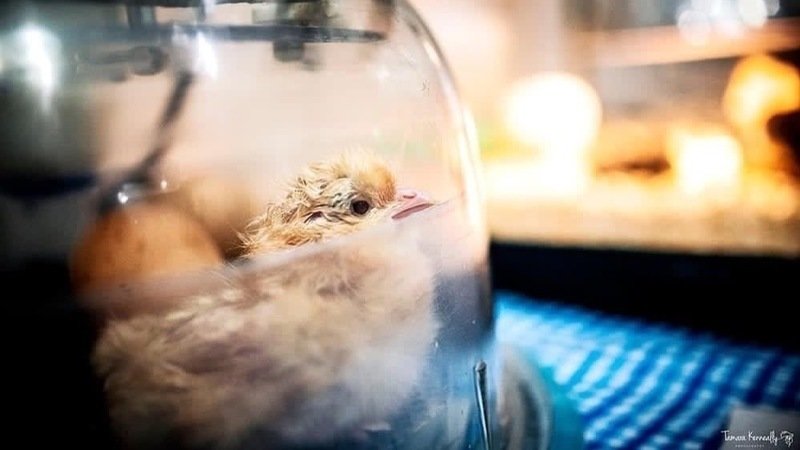
Ban the hatching of chicks and ducks in U.K. schools
The Issue
Each year in the U.K., chicken and duck eggs are removed from their mothers and put into the classrooms of schools and nurseries as part of children’s education on lifecycles. Whilst it is a common classroom demonstration, it is also one which is inherently cruel and unnatural, the very opposite of its intentions. What happens when the class moves onto their next topic? And what does it actually teach children, other than those animals are objects and are disposable?
After being artificially incubated, any successful hatchlings are subject to living in small cages in busy and loud environments away from their mums. Domestic chicks and ducklings are not wild animals and can never be released into their natural habitat once they have been over-handled. Rescue shelters and animal sanctuaries are already under pressure and sadly won’t often have the room for them. The sad reality is that these baby birds will either end up in the slaughterhouse, given away online to people with no experience in keeping them, or moved to egg or poultry farms.
Chickens have more than 30 types of vocalizations, and a mother hen begins to teach these calls to her chicks before they even hatch, who can be heard chirping back to her and to each other from inside their shells. Mother hens also carefully turn the eggs many times a day to promote correct formation of organs. Hatched chicks and ducklings can be left unattended for long periods of time outside of school hours, and even the most attentive teachers may struggle to provide the full necessary care of correct egg rotation. The RSPCA, PETA and the British Hen Welfare Trust have all condemned the practise of hatching in schools.
Other than the obvious animal welfare issues, chicks hatched used in classrooms have been found to harbour E. Coli and four different strains of salmonella, which young children with immature immune systems may be exposed to.
So, what are the humane alternatives? There are many modern and humane alternatives to this outdated practise, including the purchase of 3D egg replicas which show embryo development day by day, watching videos and webcam footage of nests, looking at books and photographs and even visiting the local park to watch the ducklings.
We call on all education establishments to stop hatching projects with immediate effect. There are a wealth of other life cycle resources without the need to exploit and endanger chicks. We ask our Education Secretary The Rt Hon Nadhim Zahawi MP to demand an end to this outdated practise.

1,358
The Issue
Each year in the U.K., chicken and duck eggs are removed from their mothers and put into the classrooms of schools and nurseries as part of children’s education on lifecycles. Whilst it is a common classroom demonstration, it is also one which is inherently cruel and unnatural, the very opposite of its intentions. What happens when the class moves onto their next topic? And what does it actually teach children, other than those animals are objects and are disposable?
After being artificially incubated, any successful hatchlings are subject to living in small cages in busy and loud environments away from their mums. Domestic chicks and ducklings are not wild animals and can never be released into their natural habitat once they have been over-handled. Rescue shelters and animal sanctuaries are already under pressure and sadly won’t often have the room for them. The sad reality is that these baby birds will either end up in the slaughterhouse, given away online to people with no experience in keeping them, or moved to egg or poultry farms.
Chickens have more than 30 types of vocalizations, and a mother hen begins to teach these calls to her chicks before they even hatch, who can be heard chirping back to her and to each other from inside their shells. Mother hens also carefully turn the eggs many times a day to promote correct formation of organs. Hatched chicks and ducklings can be left unattended for long periods of time outside of school hours, and even the most attentive teachers may struggle to provide the full necessary care of correct egg rotation. The RSPCA, PETA and the British Hen Welfare Trust have all condemned the practise of hatching in schools.
Other than the obvious animal welfare issues, chicks hatched used in classrooms have been found to harbour E. Coli and four different strains of salmonella, which young children with immature immune systems may be exposed to.
So, what are the humane alternatives? There are many modern and humane alternatives to this outdated practise, including the purchase of 3D egg replicas which show embryo development day by day, watching videos and webcam footage of nests, looking at books and photographs and even visiting the local park to watch the ducklings.
We call on all education establishments to stop hatching projects with immediate effect. There are a wealth of other life cycle resources without the need to exploit and endanger chicks. We ask our Education Secretary The Rt Hon Nadhim Zahawi MP to demand an end to this outdated practise.
Petition Updates
Share this petition
Petition created on 27 March 2022