Amazon and Google Data Management
Amazon and Google Data Management
The Issue
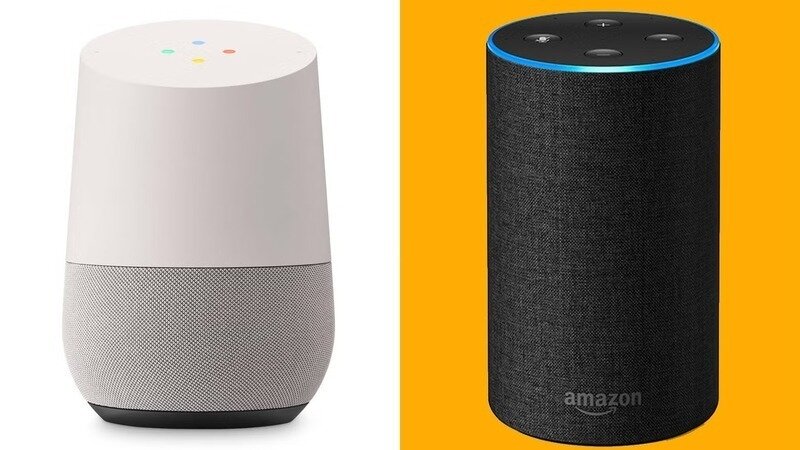
Google Home and Amazon Alexa are suspect to nonconsensual data collection through voice recordings which are later reviewed by humans. The home systems, which allow for no option to opt out of nonessential data collection, record how users interact with the home systems such as, what they say, what they ask it, and which third party skills they interact with. Google and Amazon use this information to personalize user experience similar to how cookies do. By default, the two companies process the data by uploading it to a cloud system which have greater security risks than a local one.
What we hope to achieve:
- Personal data should be stored on the local device by default
- Cloud storage should include a clear, informative summary of what data is stored and how it is being used
- Users should have access to review and delete all stored data
These changes can give users more control over what the companies access and how their personal data is being stored. When data is stored locally, the organization assumes full responsibility over the organization, storage, and security over the stored data.
Conditions within Amazon's data policy:
"we use your Alexa requests to train our speech recognition and natural language understanding systems using machine learning. In more simple terms, we analyse data to teach Alexa to more accurately make decisions or predictions. For example, when you ask if it’s raining outside, Alexa decides that you’re asking about the weather—and when you say, “Alexa, play music”, Alexa predicts what music you might like based on your previous requests."
"Training Alexa relies in part on supervised machine learning, also referred to as “manual” or “human” review. This is an industry-standard practice conducted by trained specialists to help Alexa understand the correct interpretation of a request and provide the appropriate response in the future. "
"Information from your Alexa requests help Alexa adapt to your voice and your preferences so your Alexa experience is more accurate and convenient. Over time, Alexa can adapt to your way of speaking—your cadences, your vocal quirks, and the many words and phrases you like to use."

25
The Issue
Google Home and Amazon Alexa are suspect to nonconsensual data collection through voice recordings which are later reviewed by humans. The home systems, which allow for no option to opt out of nonessential data collection, record how users interact with the home systems such as, what they say, what they ask it, and which third party skills they interact with. Google and Amazon use this information to personalize user experience similar to how cookies do. By default, the two companies process the data by uploading it to a cloud system which have greater security risks than a local one.
What we hope to achieve:
- Personal data should be stored on the local device by default
- Cloud storage should include a clear, informative summary of what data is stored and how it is being used
- Users should have access to review and delete all stored data
These changes can give users more control over what the companies access and how their personal data is being stored. When data is stored locally, the organization assumes full responsibility over the organization, storage, and security over the stored data.
Conditions within Amazon's data policy:
"we use your Alexa requests to train our speech recognition and natural language understanding systems using machine learning. In more simple terms, we analyse data to teach Alexa to more accurately make decisions or predictions. For example, when you ask if it’s raining outside, Alexa decides that you’re asking about the weather—and when you say, “Alexa, play music”, Alexa predicts what music you might like based on your previous requests."
"Training Alexa relies in part on supervised machine learning, also referred to as “manual” or “human” review. This is an industry-standard practice conducted by trained specialists to help Alexa understand the correct interpretation of a request and provide the appropriate response in the future. "
"Information from your Alexa requests help Alexa adapt to your voice and your preferences so your Alexa experience is more accurate and convenient. Over time, Alexa can adapt to your way of speaking—your cadences, your vocal quirks, and the many words and phrases you like to use."
25
The Decision Makers

Petition Updates
Share this petition
Petition created on April 28, 2026