
ZAYN MALIK HAS BEEN CLONED
ZAYN MALIK HAS BEEN CLONED
The issue
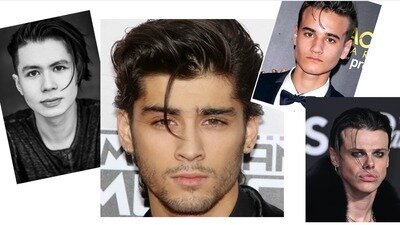
Some conspiracy-style narratives—often shared in online forums and late-night discussions—claim that Zayn Malik is not a single, ordinary human figure, but rather the original template from which multiple identities have been replicated, altered, and released into the world over time. According to this idea, individuals as seemingly unrelated as Norman Rockwell, YUNGBLUD, Will Macdonald, and Mason Temple are not independent people at all, but carefully engineered variations of a single underlying identity—each one adjusted to suit a different era, audience, and cultural purpose. Supporters of this theory often point to unusual patterns: similarities in facial structure that seem to echo across decades, recurring artistic themes that shift form but not emotional tone, or the strange coincidence that creativity appears to cluster around these figures as if it were being distributed from a central source. They might argue that Rockwell’s nostalgic Americana paintings, YUNGBLUD’s chaotic and expressive music, and the on-screen personas of Macdonald and Temple all reflect fragments of the same core personality, stretched and remixed like tracks in a DJ set that never quite ends.
A major part of the theory focuses on photographs—carefully selected, zoomed in, cropped, and compared side-by-side until they seem to reveal something hidden. In one set of images, fans claim that the angle of the jawline in an old portrait of Norman Rockwell aligns almost perfectly with a modern image of Zayn Malik when mirrored and flipped, as if time itself were just a filter. In another, the intensity in YUNGBLUD’s eyes during a performance is compared to a still image of Mason Temple in a dramatic scene, with supporters insisting the expressions are “too identical” to be coincidence. They overlay gridlines across faces, trace cheekbones with digital pens, and circle eyebrow shapes in bright red as though mapping constellations in the night sky. Some even go as far as adjusting lighting, contrast, and colour tones until entirely different images begin to look eerily similar, claiming that shadows reveal “the truth” that normal viewing hides.
These comparisons don’t stop at faces—they expand into posture, hand gestures, and even the way someone tilts their head when caught off guard by a camera. A candid photo of Will Macdonald laughing might be placed next to a paused video frame of Zayn Malik mid-interview, with arrows pointing to the curve of their smiles or the angle of their shoulders. Supporters claim these repeated visual “echoes” act like fingerprints, subtle clues that all these individuals are versions of the same original design. The more random the comparison, the more convincing it seems within the theory—like spotting the same cloud shape in completely different parts of the sky and deciding it must mean something larger is at work.
As the argument grows, the images become increasingly surreal. Old magazine covers are layered over modern concert photos; paintings are blended with screenshots; faces are stretched, rotated, and faded into one another until they form a single composite that looks both familiar and completely strange. In these collages, time collapses—decades blur together, and the boundaries between art, music, and film disappear. A 20th-century painted smile merges with a 21st-century stage glare, creating a hybrid expression that supporters describe as “proof” of continuity. Even unrelated visuals get pulled in: reflections in sunglasses, silhouettes in the background of red carpet photos, or blurred figures in crowd shots are sometimes highlighted as “failed clones” or “background versions,” adding another layer of randomness to the claim.
The theory becomes even more bizarre when everyday imagery is dragged into the mix. Supporters might compare the swirl of foam on a cappuccino to the curve of a hairstyle, or the pattern of cracks on a footpath to the lines of a face in a photograph. They’ll point at the symmetry of a butterfly’s wings, the arrangement of toppings on a pizza, or the way shadows fall across a staircase and insist that these patterns mirror the same hidden blueprint. Screenshots of video frames paused at exactly the “right” millisecond are treated like rare discoveries, as if catching a glitch in a system that was never meant to be seen frame-by-frame. Even things like reflections in puddles, distorted mirrors at amusement parks, or the graininess of old film photos are used as “evidence,” suggesting that the truth is always slightly warped, never directly visible.
From there, the idea spirals outward into pure randomness—linking these visual patterns to things like the repetition of numbers on digital clocks, the identical shapes of different leaves on different trees, or the way a song can feel familiar even the first time you hear it. Supporters might argue that all of these patterns, visual and otherwise, are part of the same system that supposedly produced these cloned identities, as though the entire world were quietly repeating itself in small, almost unnoticeable ways. In this version of the story, nothing is truly separate: every image, every reflection, every accidental similarity becomes another piece of an endlessly expanding puzzle that never quite fits together but somehow still feels connected. BANH - SIGN IT OR UR A POO HEAD

10
The issue
Some conspiracy-style narratives—often shared in online forums and late-night discussions—claim that Zayn Malik is not a single, ordinary human figure, but rather the original template from which multiple identities have been replicated, altered, and released into the world over time. According to this idea, individuals as seemingly unrelated as Norman Rockwell, YUNGBLUD, Will Macdonald, and Mason Temple are not independent people at all, but carefully engineered variations of a single underlying identity—each one adjusted to suit a different era, audience, and cultural purpose. Supporters of this theory often point to unusual patterns: similarities in facial structure that seem to echo across decades, recurring artistic themes that shift form but not emotional tone, or the strange coincidence that creativity appears to cluster around these figures as if it were being distributed from a central source. They might argue that Rockwell’s nostalgic Americana paintings, YUNGBLUD’s chaotic and expressive music, and the on-screen personas of Macdonald and Temple all reflect fragments of the same core personality, stretched and remixed like tracks in a DJ set that never quite ends.
A major part of the theory focuses on photographs—carefully selected, zoomed in, cropped, and compared side-by-side until they seem to reveal something hidden. In one set of images, fans claim that the angle of the jawline in an old portrait of Norman Rockwell aligns almost perfectly with a modern image of Zayn Malik when mirrored and flipped, as if time itself were just a filter. In another, the intensity in YUNGBLUD’s eyes during a performance is compared to a still image of Mason Temple in a dramatic scene, with supporters insisting the expressions are “too identical” to be coincidence. They overlay gridlines across faces, trace cheekbones with digital pens, and circle eyebrow shapes in bright red as though mapping constellations in the night sky. Some even go as far as adjusting lighting, contrast, and colour tones until entirely different images begin to look eerily similar, claiming that shadows reveal “the truth” that normal viewing hides.
These comparisons don’t stop at faces—they expand into posture, hand gestures, and even the way someone tilts their head when caught off guard by a camera. A candid photo of Will Macdonald laughing might be placed next to a paused video frame of Zayn Malik mid-interview, with arrows pointing to the curve of their smiles or the angle of their shoulders. Supporters claim these repeated visual “echoes” act like fingerprints, subtle clues that all these individuals are versions of the same original design. The more random the comparison, the more convincing it seems within the theory—like spotting the same cloud shape in completely different parts of the sky and deciding it must mean something larger is at work.
As the argument grows, the images become increasingly surreal. Old magazine covers are layered over modern concert photos; paintings are blended with screenshots; faces are stretched, rotated, and faded into one another until they form a single composite that looks both familiar and completely strange. In these collages, time collapses—decades blur together, and the boundaries between art, music, and film disappear. A 20th-century painted smile merges with a 21st-century stage glare, creating a hybrid expression that supporters describe as “proof” of continuity. Even unrelated visuals get pulled in: reflections in sunglasses, silhouettes in the background of red carpet photos, or blurred figures in crowd shots are sometimes highlighted as “failed clones” or “background versions,” adding another layer of randomness to the claim.
The theory becomes even more bizarre when everyday imagery is dragged into the mix. Supporters might compare the swirl of foam on a cappuccino to the curve of a hairstyle, or the pattern of cracks on a footpath to the lines of a face in a photograph. They’ll point at the symmetry of a butterfly’s wings, the arrangement of toppings on a pizza, or the way shadows fall across a staircase and insist that these patterns mirror the same hidden blueprint. Screenshots of video frames paused at exactly the “right” millisecond are treated like rare discoveries, as if catching a glitch in a system that was never meant to be seen frame-by-frame. Even things like reflections in puddles, distorted mirrors at amusement parks, or the graininess of old film photos are used as “evidence,” suggesting that the truth is always slightly warped, never directly visible.
From there, the idea spirals outward into pure randomness—linking these visual patterns to things like the repetition of numbers on digital clocks, the identical shapes of different leaves on different trees, or the way a song can feel familiar even the first time you hear it. Supporters might argue that all of these patterns, visual and otherwise, are part of the same system that supposedly produced these cloned identities, as though the entire world were quietly repeating itself in small, almost unnoticeable ways. In this version of the story, nothing is truly separate: every image, every reflection, every accidental similarity becomes another piece of an endlessly expanding puzzle that never quite fits together but somehow still feels connected. BANH - SIGN IT OR UR A POO HEAD
10
Supporter voices
Petition Updates
Share this petition
Petition created on 5 May 2026