

Zafira, Censorship, and the History of Public Art
The Issue
Zafira, Censorship, and the History of Public Art
"Art is meant to disturb the comfortable and comfort the distrubed."
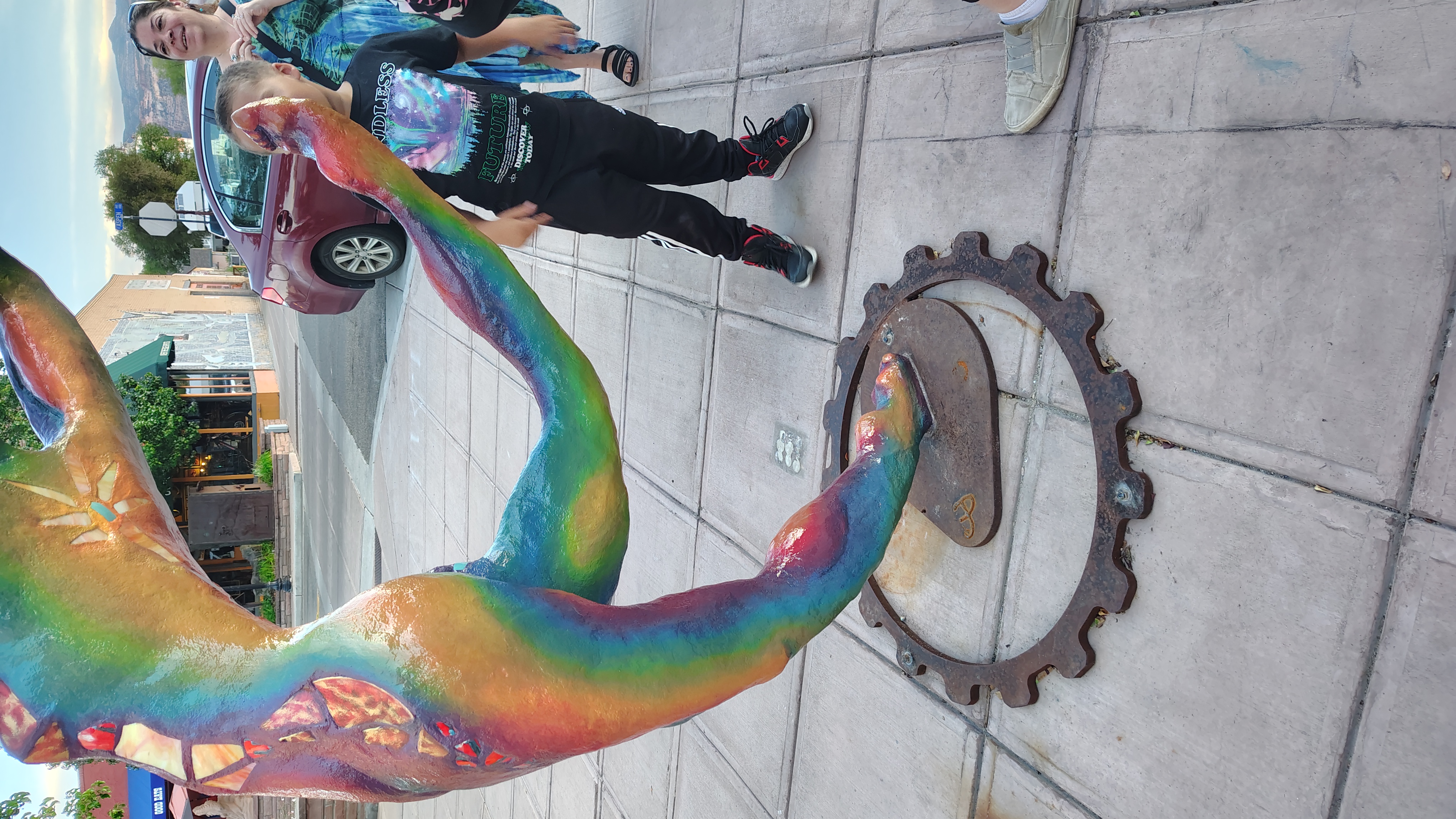
Art in public spaces has always been a reflection of culture, community, and conflict. The controversy surrounding Zafira in Fruita is not an isolated event—it belongs to a long tradition where works of art become battlegrounds between free expression and attempts at censorship.
The artist’s defense of her work shows not only technical detail and intention, but also a deep understanding of art’s role: to uplift, to provoke thought, and to embody freedom of expression. Her description of Zafira as “joyful and uplifting, free and uninhibited” aligns with centuries of artistic movements that challenged societal boundaries. From classical sculptures of the human form to modern public installations, artists have often used the nude figure as a celebration of humanity, not as something shameful.
What makes this situation historically significant is not just the censorship attempt itself, but the way it unfolded: a vocal minority reshaping a community’s artistic decision after the fact. The artist was clear and transparent in her submission—the labia were visible in the photo, and the committee voted knowingly to select her piece. This echoes other moments in art history where works initially embraced were later censored due to social pressures, such as Victorian-era covers placed over nude statues or the 1980s controversies over public funding for provocative artworks in the U.S.
The artist’s reaction is rooted in passion not only for her own voice, but for the wider community of creators. By resisting the “apron solution” imposed on her sculpture, she defends the principle that art should not be retrofitted to appease discomfort. This is a defense of artistic integrity, not just personal pride. Her disappointment reflects a broader truth: when censorship wins, it sends a chilling message to all artists about what is “acceptable,” narrowing the scope of cultural conversation.
Art history teaches us that the minority is not always right. Many works once condemned—Impressionist paintings, Rodin’s sculptures, or even Michelangelo’s Sistine Chapel nudes—are now cornerstones of cultural heritage. Fruita now finds itself at a crossroads: whether to honor its original vote for Zafira as an honest, uncensored expression of artistry, or to shrink from its decision and risk being remembered as the community that shamed its own chosen art.
Zafira is more than a sculpture. She is now part of a larger story about how small communities handle the eternal question: do we embrace art for its freedom, or do we control it for our comfort?

Victory
The Issue
Zafira, Censorship, and the History of Public Art
"Art is meant to disturb the comfortable and comfort the distrubed."
Art in public spaces has always been a reflection of culture, community, and conflict. The controversy surrounding Zafira in Fruita is not an isolated event—it belongs to a long tradition where works of art become battlegrounds between free expression and attempts at censorship.
The artist’s defense of her work shows not only technical detail and intention, but also a deep understanding of art’s role: to uplift, to provoke thought, and to embody freedom of expression. Her description of Zafira as “joyful and uplifting, free and uninhibited” aligns with centuries of artistic movements that challenged societal boundaries. From classical sculptures of the human form to modern public installations, artists have often used the nude figure as a celebration of humanity, not as something shameful.
What makes this situation historically significant is not just the censorship attempt itself, but the way it unfolded: a vocal minority reshaping a community’s artistic decision after the fact. The artist was clear and transparent in her submission—the labia were visible in the photo, and the committee voted knowingly to select her piece. This echoes other moments in art history where works initially embraced were later censored due to social pressures, such as Victorian-era covers placed over nude statues or the 1980s controversies over public funding for provocative artworks in the U.S.
The artist’s reaction is rooted in passion not only for her own voice, but for the wider community of creators. By resisting the “apron solution” imposed on her sculpture, she defends the principle that art should not be retrofitted to appease discomfort. This is a defense of artistic integrity, not just personal pride. Her disappointment reflects a broader truth: when censorship wins, it sends a chilling message to all artists about what is “acceptable,” narrowing the scope of cultural conversation.
Art history teaches us that the minority is not always right. Many works once condemned—Impressionist paintings, Rodin’s sculptures, or even Michelangelo’s Sistine Chapel nudes—are now cornerstones of cultural heritage. Fruita now finds itself at a crossroads: whether to honor its original vote for Zafira as an honest, uncensored expression of artistry, or to shrink from its decision and risk being remembered as the community that shamed its own chosen art.
Zafira is more than a sculpture. She is now part of a larger story about how small communities handle the eternal question: do we embrace art for its freedom, or do we control it for our comfort?
Supporter Voices
Petition Updates
Share this petition
Petition created on September 18, 2025