
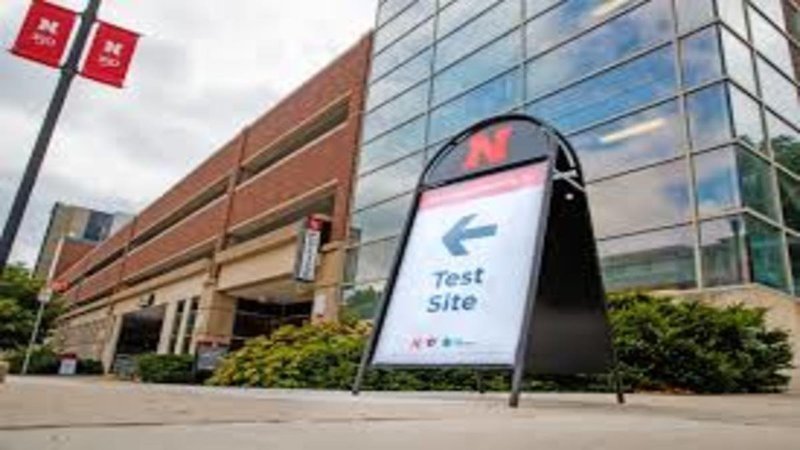
Revoke the New COVID-19 Testing Requirement from Spring Semester at UNL
The Issue
If you are a UNL student, please do not sign the spring 2021 husker commitment.
The past year has been one great standstill. While others act, some people are forced to hold in place. Facing a pandemic while trying to jumpstart society was spurred a lot of creativity and problem-solving. We've seen videos of great examples of adaptation, perseverance, and hope. However, we have also seen lives work destroyed, and overreach of regulation. The new COVID procedure for Spring Semester at UNL is the perfect example of the latter.
The basis of the problem is the university is requiring all students and staff, online or on campus, living on or off, to be tested for Covid every two weeks. This will be kept track with a new phone application (aptly named the SAFER COMMUNITY app) denoting students in color code if they have taken a test or not. If students do not get a test every two weeks, they cannot go to class or enter any building on campus. This means for those living on campus they might not be able to leave their building without being locked out, and those with meal plans unable to get food.
While this seems reasonable at first, there are a few problems with this measure:
1. The Timing.
Our chancellor, the head administrator for the entire university, sent all the students an email stating the new procedure for next semester on December 9th. All students signed up for classes in late October early November. This semester some classes are in person, hybrid, or all online. If the decision was announced when deciding classes, students could have had ample time to decide whether going on campus was worth it or not, and chose classes accordingly. While they still can change classes, the students now wanting to have limited options as almost everyone has chosen their classes for next semester, and any transfers would be difficult. Other arguments have been made that these students should just go online, however, how are art, ceramics and pottery, kinesiology, music, and biology majors, assistants in the rec, and a teacher and student who are student teaching or having a practicum supposed to be remote when they have critical things that can only be done in person? This is only the beginning of the list.
Furthermore, if public safety is the goal, they shouldn't require students and staff to sign the commitment before being able to get tested at the university.
Additionally, this email comes out two days after cutting funding or removing various academic programs. The university is planning to have testing on-site and with 24-hour results, making the operation costly. Meanwhile, programs and majors in our school are being defunded or removed and the university is investing in this when students who are exposed can simply go to a local testing center instead. Canceling this initiative would possibly allow some of the funding to go back to these programs and majors. If the funding cannot be reversed, we simply would like the removal of the testing requirement.
2. Last Semester
Our procedure for Covid last semester was relatively effective. Students were required to wear masks upon entering a building on campus, and desks were six feet apart. Various hand sanitizer stations were placed around the campus and in buildings. The only thing mandatory was the wearing of masks, which if students didn't have, 2 were available for free from the university. Masks are most effective on people with the virus and suppress how many and how far air particles travel from the nose and mouth. They also prevent these particles from directly being intake through one's once or mouth. This directly reduces the chances of contracting or spreading the virus. Classes also were mostly hybrid or online, meaning at max students attended class once a week with a mask and six feet apart from fellow students. Dining halls had to-go options and limited seating with regular sanitation. When students were exposed, they would get tested and quarantine until they received the results and could attend via zoom. Essentially, the virus very rarely was transmitted on campus or in class, and there was no word of a repeating problem of people showing up to class or a dining hall with Covid and infecting the class. Transmission of the virus happened outside of university buildings (excluding dorms) in private meetings between students. Contact tracing was also good at figuring out where people got the virus.
Even with some students not following Covid procedure outside of class, our cases were below the national average for a school our size. Essentially one could be doing everything right like last semester, but unable to go to class because they didn't get a test they probably didn't need to take. Furthermore, not taking a test bars people from the places Covid was very rarely transmitted last semester and does nothing to stop them from transmitting it in the places it was transmitted. The best way to stop students from meeting in large groups, not wearing masks, etc. in private settings is encouragement or persuasion. If the university should invest in anything additional, it should be that.
3. Side Effects
The new biweekly testing might also cause the virus to be spread even more. If someone was to get a negative test, it may be made an excuse to go meet in large gatherings because they are covid free. The large gathering would make it easier for the virus to spread, and that person may get it then. A negative test may also come a day before they contract the virus, and cause the person to believe they only have a cold and spread it to others. On another note, Covid cases are currently on the rise, and testing centers are already stressed. While there will be some on campus, you now need to process 20,000 more tests biweekly, and any extra tests students get due to being exposed or for precaution. This will put even more stress on testing centers with the rise in cases. The only time the biweekly tests will help is in two cases: Someone contracts the virus within the couple of days before they test, and are notified by the biweekly test, or if someone doesn't know they were exposed and are also asymptomatic. If we only test when students are exposed or develop symptoms, as the CDC advises with the rise in cases, this would cover for the first case. The second case is rare, but the fact that they are required to wear a mask and are 6 feet apart and that students have sanitation available will reduce the chances they have of spreading the virus immensely. Talking with people on both sides of the political aisle, all seem to agree that testing biweekly would be ineffective.
Classes this semester are online, hybrid, or in person, which will still reduce the amount of contact in class but not as much as last semester.
4. Overreach on Liberty
Lastly, we shouldn't force people to take a test they don't need in order to access their food, education, and shelter that they already paid for.
By making an application to show if one is tested or not, makes students and staff have to voluntarily divulge medical history and status to the university and other students and staff. This could be a direct violation of Medical privacy law, freedom of movement, the 4th amendment, and other laws.
Moreover, it forces a sequential stipulating contract on classes. When signing up for classes, this was not communicated to students, and thus is adding an extra requirement to something students already agreed to.
Currently, students have to sign a document saying they will take the tests every two weeks, or possibly be expelled among other concequences. So, for a multitude of reasons all depending on the student, they are essentially being strongarmed by nessessity to sign this commitment.
Removing this requirement will also set the prescient that the univeristy cannot add on requirements after we have signed up for classes, housing, and food. Additionally, this will help us protect the student body from possible future situations worse than this.
On the legal side, our partners at the ACRU states legal cases and policy which put the new requirement under question:
“The Fourth Amendment requires government to respect ‘the right of the people to be secure in their persons . . . against unreasonable searches and seizures.’” Chandler v Miller, 520 U.S. 305, 308 (1997). It is irrefutable that such an analysis is proper since capturing bodily fluid from a person has been deemed by the United States Supreme Court to fall within this scope of review (see, e.g., Skinner v. Ry. Labor Executives' Assn., 489 U.S. 602 [1989]), and, in fact, such widespread testing of a student body has been struck down by the Eighth Circuit in Kittle-Aikeley v Strong, 844 F.3d 727 (8th Cir. 2016). Likewise, the tracking of movement, which you intend to do of students by mandating your “passport” app, constitutes a search that falls under the Fourth Amendment. See, e.g., United States v Jones, 565 U.S. 400 (2012). “To be reasonable…a search ordinarily must be based on individualized suspicion of wrongdoing.” Chandler v Miller, 520 U.S. 305, 313 (1997).
Currently, we are looking into resources to help revoke the new measures with a few organizations, but the spread of the initiative and any helpful information is essential for this measure to get off the ground. Any assistance is greatly appreciated.
All in all, the move to have required biweekly testings seems to have good intentions, but it not the best strategy for the university at the time.
Conclusion:
The push for safety is understandable, but if anything should be done, it finding ways to persuade students to not frequently meet privately. Otherwise, the methods from last semester should stand.
Whether you can agree to the reasoning above or not, Ask yourself this question:
Should someone that does everything right--wears a mask, goes out only when they need to, stays 6 feet apart from others, and only goes out when they need to--lose access to food, university housing, resources, their education, and possibly be expelled?
They respected the lives of others and chose to follow the guidelines, had no contact with anyone exposed, yet still would need to be tested.
Unless you can say people like this are clear and intentional threats to our university, then this policy, or at least the punishments should not stand.

Petition Closed
The Issue
If you are a UNL student, please do not sign the spring 2021 husker commitment.
The past year has been one great standstill. While others act, some people are forced to hold in place. Facing a pandemic while trying to jumpstart society was spurred a lot of creativity and problem-solving. We've seen videos of great examples of adaptation, perseverance, and hope. However, we have also seen lives work destroyed, and overreach of regulation. The new COVID procedure for Spring Semester at UNL is the perfect example of the latter.
The basis of the problem is the university is requiring all students and staff, online or on campus, living on or off, to be tested for Covid every two weeks. This will be kept track with a new phone application (aptly named the SAFER COMMUNITY app) denoting students in color code if they have taken a test or not. If students do not get a test every two weeks, they cannot go to class or enter any building on campus. This means for those living on campus they might not be able to leave their building without being locked out, and those with meal plans unable to get food.
While this seems reasonable at first, there are a few problems with this measure:
1. The Timing.
Our chancellor, the head administrator for the entire university, sent all the students an email stating the new procedure for next semester on December 9th. All students signed up for classes in late October early November. This semester some classes are in person, hybrid, or all online. If the decision was announced when deciding classes, students could have had ample time to decide whether going on campus was worth it or not, and chose classes accordingly. While they still can change classes, the students now wanting to have limited options as almost everyone has chosen their classes for next semester, and any transfers would be difficult. Other arguments have been made that these students should just go online, however, how are art, ceramics and pottery, kinesiology, music, and biology majors, assistants in the rec, and a teacher and student who are student teaching or having a practicum supposed to be remote when they have critical things that can only be done in person? This is only the beginning of the list.
Furthermore, if public safety is the goal, they shouldn't require students and staff to sign the commitment before being able to get tested at the university.
Additionally, this email comes out two days after cutting funding or removing various academic programs. The university is planning to have testing on-site and with 24-hour results, making the operation costly. Meanwhile, programs and majors in our school are being defunded or removed and the university is investing in this when students who are exposed can simply go to a local testing center instead. Canceling this initiative would possibly allow some of the funding to go back to these programs and majors. If the funding cannot be reversed, we simply would like the removal of the testing requirement.
2. Last Semester
Our procedure for Covid last semester was relatively effective. Students were required to wear masks upon entering a building on campus, and desks were six feet apart. Various hand sanitizer stations were placed around the campus and in buildings. The only thing mandatory was the wearing of masks, which if students didn't have, 2 were available for free from the university. Masks are most effective on people with the virus and suppress how many and how far air particles travel from the nose and mouth. They also prevent these particles from directly being intake through one's once or mouth. This directly reduces the chances of contracting or spreading the virus. Classes also were mostly hybrid or online, meaning at max students attended class once a week with a mask and six feet apart from fellow students. Dining halls had to-go options and limited seating with regular sanitation. When students were exposed, they would get tested and quarantine until they received the results and could attend via zoom. Essentially, the virus very rarely was transmitted on campus or in class, and there was no word of a repeating problem of people showing up to class or a dining hall with Covid and infecting the class. Transmission of the virus happened outside of university buildings (excluding dorms) in private meetings between students. Contact tracing was also good at figuring out where people got the virus.
Even with some students not following Covid procedure outside of class, our cases were below the national average for a school our size. Essentially one could be doing everything right like last semester, but unable to go to class because they didn't get a test they probably didn't need to take. Furthermore, not taking a test bars people from the places Covid was very rarely transmitted last semester and does nothing to stop them from transmitting it in the places it was transmitted. The best way to stop students from meeting in large groups, not wearing masks, etc. in private settings is encouragement or persuasion. If the university should invest in anything additional, it should be that.
3. Side Effects
The new biweekly testing might also cause the virus to be spread even more. If someone was to get a negative test, it may be made an excuse to go meet in large gatherings because they are covid free. The large gathering would make it easier for the virus to spread, and that person may get it then. A negative test may also come a day before they contract the virus, and cause the person to believe they only have a cold and spread it to others. On another note, Covid cases are currently on the rise, and testing centers are already stressed. While there will be some on campus, you now need to process 20,000 more tests biweekly, and any extra tests students get due to being exposed or for precaution. This will put even more stress on testing centers with the rise in cases. The only time the biweekly tests will help is in two cases: Someone contracts the virus within the couple of days before they test, and are notified by the biweekly test, or if someone doesn't know they were exposed and are also asymptomatic. If we only test when students are exposed or develop symptoms, as the CDC advises with the rise in cases, this would cover for the first case. The second case is rare, but the fact that they are required to wear a mask and are 6 feet apart and that students have sanitation available will reduce the chances they have of spreading the virus immensely. Talking with people on both sides of the political aisle, all seem to agree that testing biweekly would be ineffective.
Classes this semester are online, hybrid, or in person, which will still reduce the amount of contact in class but not as much as last semester.
4. Overreach on Liberty
Lastly, we shouldn't force people to take a test they don't need in order to access their food, education, and shelter that they already paid for.
By making an application to show if one is tested or not, makes students and staff have to voluntarily divulge medical history and status to the university and other students and staff. This could be a direct violation of Medical privacy law, freedom of movement, the 4th amendment, and other laws.
Moreover, it forces a sequential stipulating contract on classes. When signing up for classes, this was not communicated to students, and thus is adding an extra requirement to something students already agreed to.
Currently, students have to sign a document saying they will take the tests every two weeks, or possibly be expelled among other concequences. So, for a multitude of reasons all depending on the student, they are essentially being strongarmed by nessessity to sign this commitment.
Removing this requirement will also set the prescient that the univeristy cannot add on requirements after we have signed up for classes, housing, and food. Additionally, this will help us protect the student body from possible future situations worse than this.
On the legal side, our partners at the ACRU states legal cases and policy which put the new requirement under question:
“The Fourth Amendment requires government to respect ‘the right of the people to be secure in their persons . . . against unreasonable searches and seizures.’” Chandler v Miller, 520 U.S. 305, 308 (1997). It is irrefutable that such an analysis is proper since capturing bodily fluid from a person has been deemed by the United States Supreme Court to fall within this scope of review (see, e.g., Skinner v. Ry. Labor Executives' Assn., 489 U.S. 602 [1989]), and, in fact, such widespread testing of a student body has been struck down by the Eighth Circuit in Kittle-Aikeley v Strong, 844 F.3d 727 (8th Cir. 2016). Likewise, the tracking of movement, which you intend to do of students by mandating your “passport” app, constitutes a search that falls under the Fourth Amendment. See, e.g., United States v Jones, 565 U.S. 400 (2012). “To be reasonable…a search ordinarily must be based on individualized suspicion of wrongdoing.” Chandler v Miller, 520 U.S. 305, 313 (1997).
Currently, we are looking into resources to help revoke the new measures with a few organizations, but the spread of the initiative and any helpful information is essential for this measure to get off the ground. Any assistance is greatly appreciated.
All in all, the move to have required biweekly testings seems to have good intentions, but it not the best strategy for the university at the time.
Conclusion:
The push for safety is understandable, but if anything should be done, it finding ways to persuade students to not frequently meet privately. Otherwise, the methods from last semester should stand.
Whether you can agree to the reasoning above or not, Ask yourself this question:
Should someone that does everything right--wears a mask, goes out only when they need to, stays 6 feet apart from others, and only goes out when they need to--lose access to food, university housing, resources, their education, and possibly be expelled?
They respected the lives of others and chose to follow the guidelines, had no contact with anyone exposed, yet still would need to be tested.
Unless you can say people like this are clear and intentional threats to our university, then this policy, or at least the punishments should not stand.
The Decision Makers

Petition Updates
Share this petition
Petition created on December 13, 2020