

Use Punch’s Popularity to Improve Living Conditions for All Animals at Ichikawa City Zoo
The Issue
Use Punch’s Popularity to Improve Living Conditions for All Animals at Ichikawa City Zoo
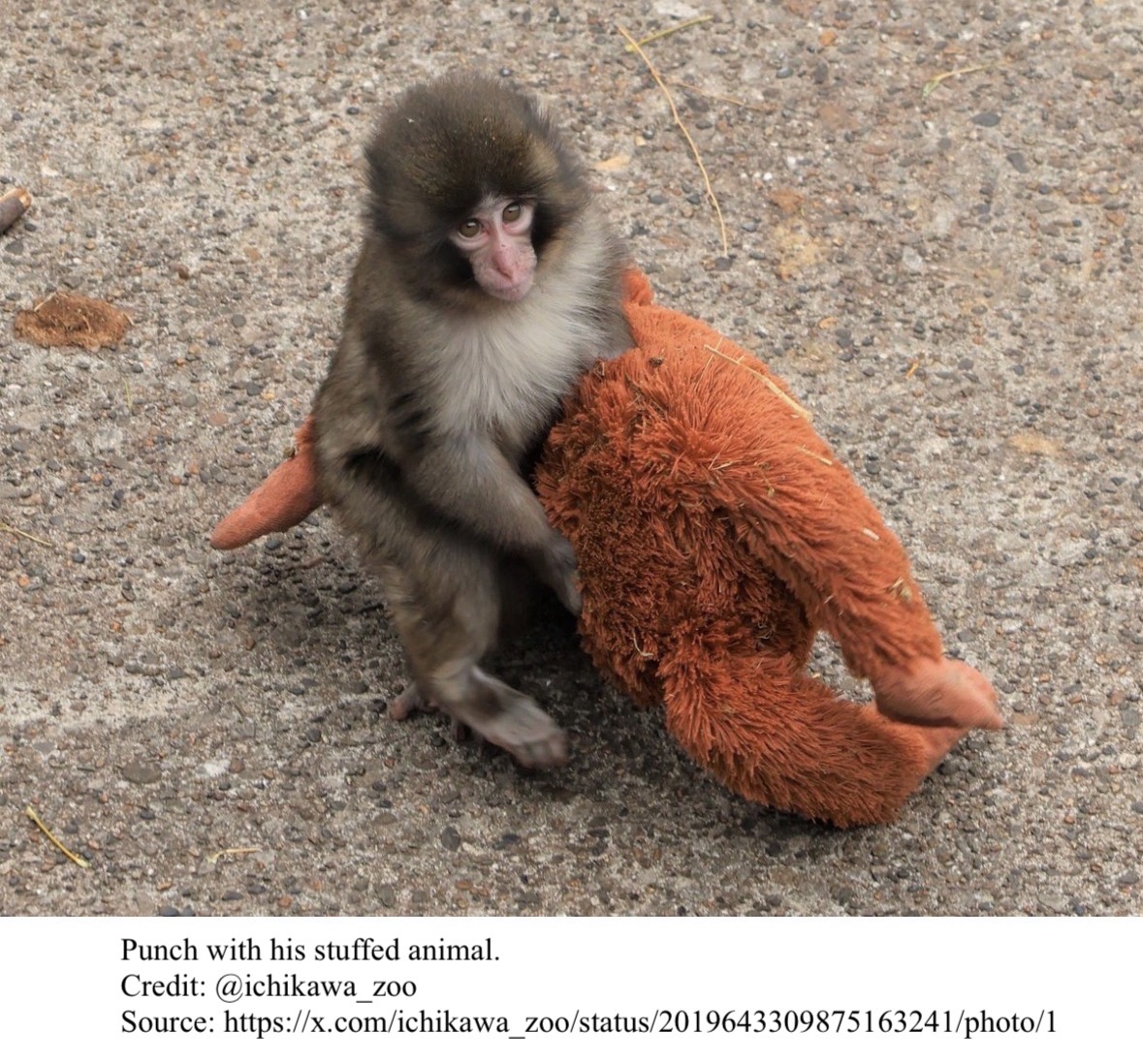
Punch is a young Japanese macaque living at Ichikawa City Zoo in Japan who recently gained widespread public attention online. After being orphaned at a very young age, he has been seen holding and clinging to a stuffed toy for comfort, which has drawn significant emotional response from viewers around the world. His story has increased visibility, visitor interest, and likely revenue for the zoo, along with increased sales of related merchandise.
Many of us do not believe wild animals belong in captivity. Highly intelligent, socially complex species such as primates are evolved to live in dynamic natural environments where they can move freely, make choices, form social bonds, and express their full range of natural behaviors. Confinement in artificial settings inevitably limits these fundamental needs.
However, the animals at Ichikawa City Zoo are already living in human care and cannot return to the wild. Because their lives are fully dependent on the conditions provided to them, there is a responsibility to minimize the harm inherent in captivity and to ensure the highest possible standard of welfare.
This petition is not intended to attack or discredit the staff or caretakers, many of whom work hard under existing constraints. Its purpose is to encourage meaningful, lasting improvements so that the animals already in human care experience conditions that better reflect their physical, social, and psychological needs.
Recent public attention surrounding Punch has brought increased visibility, visitor interest, and likely increased revenue to the zoo. This moment presents an important opportunity to reinvest that attention into meaningful improvements that benefit not only the macaques, but all animals in the zoo’s care.
—-
Alignment with Japanese law and international welfare standards
Our request is consistent with both Japanese animal welfare law and widely accepted global standards.
Japan’s Act on Welfare and Management of Animals requires that animals be handled in a manner that prevents unnecessary suffering and that their care and housing be appropriate to their species and physiological needs. In addition, the Ministry of the Environment’s Standards for the Care and Keeping of Exhibited Animals state that facilities should provide environments that maintain animal health and allow species-appropriate behavior.
These principles align with internationally recognized welfare frameworks, including the Five Freedoms, which state that animals under human care should be:
-Free from hunger and thirst
-Free from discomfort
-Free from pain, injury, or disease
-Free to express normal behavior
-Free from fear and distress
Global guidance from organizations such as the World Association of Zoos and Aquariums (WAZA) and the World Organisation for Animal Health (WOAH) similarly emphasizes environmental enrichment, appropriate social conditions, species-appropriate nutrition, and habitats that support natural behavior.
The improvements requested below reflect these established legal and professional expectations.
—-
Priority: Natural, enriched environments
Japanese macaques, like many other species kept in zoos, are intelligent and active animals that naturally live in complex environments where they climb, forage, explore varied terrain, and manage social relationships through movement and choice.
Best practice environments include:
-Natural ground surfaces such as soil, mulch, grass, and natural rock instead of predominantly hard concrete
-Trees, climbing structures, logs, ropes, and elevated platforms
-Vegetation, shade, and varied terrain
Visual barriers and multiple pathways so animals can regulate social distance and avoid conflict
-Structured daily enrichment programs that encourage exploration, problem-solving, and natural activity
-Multiple feeding locations to reduce crowding and competition
When environments lack complexity, animals face increased risks of stress, inactivity, social tension, and abnormal or barrier-focused behaviors.
We respectfully request transparency regarding any planned habitat upgrades and timelines for both the macaque exhibit and other species housed at the zoo.
---
Secure design that supports natural behavior
Japanese macaques are agile climbers and highly intelligent problem-solvers. Modern habitat design recognizes that secure containment must still allow full use of vertical space and environmental complexity.
Best practice approaches include:
- Naturalistic enclosure designs that support climbing and exploration
- Layouts that position structures safely within secure boundaries
- Containment strategies that prioritize open space, natural features, and behavioral choice rather than restrictive or barren environments
Safety and welfare should be achieved together. Security should never come at the expense of movement, activity, or environmental richness.
---
Social behavior: responsibility lies with environment and management
Japanese macaques live within strict social hierarchies. Behaviors that may appear harsh to human observers are often normal social regulation within macaque society.
If social tension appears excessive or concerning, the responsibility lies with environmental design and group management, not with the animals themselves.
Proper welfare requires:
- Adequate space for avoidance
- Environmental complexity that reduces stress
- Vertical escape routes and visual barriers
- Careful monitoring of group dynamics
---
Nutrition transparency and feeding practices
Japanese macaques are omnivores that naturally spend a large portion of their day foraging. Best practice feeding programs include nutritionally balanced primate diets, varied vegetables and plant materials, and feeding methods that encourage natural foraging throughout the day.
Because the full nutritional program is not publicly available, visitors cannot determine whether dietary needs, feeding frequency, and enrichment standards are being fully met.
We respectfully request public transparency regarding:
- Diet composition
- Feeding frequency and schedule
- Total daily nutritional planning
- Foraging and feeding enrichment practices
Frequent clustering at enclosure doors or intense anticipation of keeper arrival may indicate feeding patterns that could be improved through increased frequency and enrichment-based distribution.
---
Special consideration for Punch, an orphaned infant
Punch is approximately six months old, placing him in the infant stage — a critical developmental period when Japanese macaques normally depend heavily on their mothers for protection, emotional security, and social learning.
Providing a stuffed object for comfort may offer temporary reassurance. However, objects alone cannot replace the social and environmental conditions necessary for healthy infant development.
Orphaned macaque infants require:
- Stable social bonds with tolerant adult females or consistent caregivers
- Gradual and carefully monitored social integration
- Protected refuge areas or elevated retreat spaces
- Environmental complexity that supports play, exploration, and confidence-building
- Space and structure that allow them to seek comfort and avoid conflict
---
Why this matters
Animals in captivity depend entirely on their environment and daily management for their well-being.
Using the increased attention generated by Punch to support institution-wide improvements would:
- Reduce the harm inherent in captivity
- Improve physical and psychological health
- Support the development of a vulnerable orphaned infant
- Improve conditions for all animals at the zoo
- Align the institution with Japanese law and modern international welfare expectations
- Strengthen public trust and accountability
---
Our request
We respectfully urge Ichikawa City Zoo to use this moment of public attention to invest in meaningful, institution-wide improvements to habitat quality, enrichment, nutrition transparency, and overall animal welfare.
While captivity itself has limitations, every possible step should be taken to ensure that animals already living in human care experience environments that allow them to live with dignity, stimulation, and the greatest possible level of well-being.

754
The Issue
Use Punch’s Popularity to Improve Living Conditions for All Animals at Ichikawa City Zoo
Punch is a young Japanese macaque living at Ichikawa City Zoo in Japan who recently gained widespread public attention online. After being orphaned at a very young age, he has been seen holding and clinging to a stuffed toy for comfort, which has drawn significant emotional response from viewers around the world. His story has increased visibility, visitor interest, and likely revenue for the zoo, along with increased sales of related merchandise.
Many of us do not believe wild animals belong in captivity. Highly intelligent, socially complex species such as primates are evolved to live in dynamic natural environments where they can move freely, make choices, form social bonds, and express their full range of natural behaviors. Confinement in artificial settings inevitably limits these fundamental needs.
However, the animals at Ichikawa City Zoo are already living in human care and cannot return to the wild. Because their lives are fully dependent on the conditions provided to them, there is a responsibility to minimize the harm inherent in captivity and to ensure the highest possible standard of welfare.
This petition is not intended to attack or discredit the staff or caretakers, many of whom work hard under existing constraints. Its purpose is to encourage meaningful, lasting improvements so that the animals already in human care experience conditions that better reflect their physical, social, and psychological needs.
Recent public attention surrounding Punch has brought increased visibility, visitor interest, and likely increased revenue to the zoo. This moment presents an important opportunity to reinvest that attention into meaningful improvements that benefit not only the macaques, but all animals in the zoo’s care.
—-
Alignment with Japanese law and international welfare standards
Our request is consistent with both Japanese animal welfare law and widely accepted global standards.
Japan’s Act on Welfare and Management of Animals requires that animals be handled in a manner that prevents unnecessary suffering and that their care and housing be appropriate to their species and physiological needs. In addition, the Ministry of the Environment’s Standards for the Care and Keeping of Exhibited Animals state that facilities should provide environments that maintain animal health and allow species-appropriate behavior.
These principles align with internationally recognized welfare frameworks, including the Five Freedoms, which state that animals under human care should be:
-Free from hunger and thirst
-Free from discomfort
-Free from pain, injury, or disease
-Free to express normal behavior
-Free from fear and distress
Global guidance from organizations such as the World Association of Zoos and Aquariums (WAZA) and the World Organisation for Animal Health (WOAH) similarly emphasizes environmental enrichment, appropriate social conditions, species-appropriate nutrition, and habitats that support natural behavior.
The improvements requested below reflect these established legal and professional expectations.
—-
Priority: Natural, enriched environments
Japanese macaques, like many other species kept in zoos, are intelligent and active animals that naturally live in complex environments where they climb, forage, explore varied terrain, and manage social relationships through movement and choice.
Best practice environments include:
-Natural ground surfaces such as soil, mulch, grass, and natural rock instead of predominantly hard concrete
-Trees, climbing structures, logs, ropes, and elevated platforms
-Vegetation, shade, and varied terrain
Visual barriers and multiple pathways so animals can regulate social distance and avoid conflict
-Structured daily enrichment programs that encourage exploration, problem-solving, and natural activity
-Multiple feeding locations to reduce crowding and competition
When environments lack complexity, animals face increased risks of stress, inactivity, social tension, and abnormal or barrier-focused behaviors.
We respectfully request transparency regarding any planned habitat upgrades and timelines for both the macaque exhibit and other species housed at the zoo.
---
Secure design that supports natural behavior
Japanese macaques are agile climbers and highly intelligent problem-solvers. Modern habitat design recognizes that secure containment must still allow full use of vertical space and environmental complexity.
Best practice approaches include:
- Naturalistic enclosure designs that support climbing and exploration
- Layouts that position structures safely within secure boundaries
- Containment strategies that prioritize open space, natural features, and behavioral choice rather than restrictive or barren environments
Safety and welfare should be achieved together. Security should never come at the expense of movement, activity, or environmental richness.
---
Social behavior: responsibility lies with environment and management
Japanese macaques live within strict social hierarchies. Behaviors that may appear harsh to human observers are often normal social regulation within macaque society.
If social tension appears excessive or concerning, the responsibility lies with environmental design and group management, not with the animals themselves.
Proper welfare requires:
- Adequate space for avoidance
- Environmental complexity that reduces stress
- Vertical escape routes and visual barriers
- Careful monitoring of group dynamics
---
Nutrition transparency and feeding practices
Japanese macaques are omnivores that naturally spend a large portion of their day foraging. Best practice feeding programs include nutritionally balanced primate diets, varied vegetables and plant materials, and feeding methods that encourage natural foraging throughout the day.
Because the full nutritional program is not publicly available, visitors cannot determine whether dietary needs, feeding frequency, and enrichment standards are being fully met.
We respectfully request public transparency regarding:
- Diet composition
- Feeding frequency and schedule
- Total daily nutritional planning
- Foraging and feeding enrichment practices
Frequent clustering at enclosure doors or intense anticipation of keeper arrival may indicate feeding patterns that could be improved through increased frequency and enrichment-based distribution.
---
Special consideration for Punch, an orphaned infant
Punch is approximately six months old, placing him in the infant stage — a critical developmental period when Japanese macaques normally depend heavily on their mothers for protection, emotional security, and social learning.
Providing a stuffed object for comfort may offer temporary reassurance. However, objects alone cannot replace the social and environmental conditions necessary for healthy infant development.
Orphaned macaque infants require:
- Stable social bonds with tolerant adult females or consistent caregivers
- Gradual and carefully monitored social integration
- Protected refuge areas or elevated retreat spaces
- Environmental complexity that supports play, exploration, and confidence-building
- Space and structure that allow them to seek comfort and avoid conflict
---
Why this matters
Animals in captivity depend entirely on their environment and daily management for their well-being.
Using the increased attention generated by Punch to support institution-wide improvements would:
- Reduce the harm inherent in captivity
- Improve physical and psychological health
- Support the development of a vulnerable orphaned infant
- Improve conditions for all animals at the zoo
- Align the institution with Japanese law and modern international welfare expectations
- Strengthen public trust and accountability
---
Our request
We respectfully urge Ichikawa City Zoo to use this moment of public attention to invest in meaningful, institution-wide improvements to habitat quality, enrichment, nutrition transparency, and overall animal welfare.
While captivity itself has limitations, every possible step should be taken to ensure that animals already living in human care experience environments that allow them to live with dignity, stimulation, and the greatest possible level of well-being.
Supporter Voices
Petition Updates
Share this petition
Petition created on February 24, 2026