
Urge GW to Renew Professor Maziar Valamotamed’s Contract for the 26-27 School Year
The Issue
My name is Sophie Mansuri, and I am a recent graduate of The George Washington University. I earned my B.A. in Political Communication with a minor in International Affairs this past spring, and throughout my time at GW, I was also a student in the Persian program under Professor Valamotamed.
I am writing on behalf of myself and my classmates at all levels of Persian because we are profoundly disappointed by the decision not to renew Professor Valamotamed’s contract for the upcoming school year. To my knowledge, Professor Valamotamed’s record as an educator has been nothing short of exemplary over the past eleven years. As such, I struggle to understand what other basis there could be for this decision beyond the altercation that occurred this past April preceding an Elliot School event. I make this decision completely independently after speaking with many of my fellow classmates and Persian students—both current students and alumni alike—who share similar concerns about what this decision means for our community and for the future of Persian at GW.
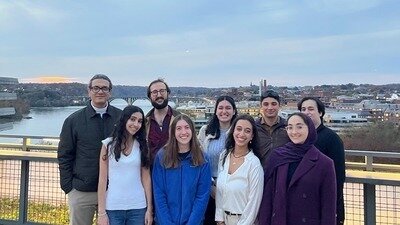
For us, Professor Valamotamed—or simply Ostad, as we say in Persian—was never just a language instructor. He was a mentor, a role model, and one of the few faculty members who made Iranian students like myself feel truly seen on campus.
As an Iranian American, finding spaces where I felt understood was not always easy. During periods of political upheaval affecting Iran and heightened tensions both nationally and on our own campus, Ostad never shied away from difficult conversations. He understood that teaching Persian meant more than teaching grammar and vocabulary—it meant acknowledging the history, culture, and lived experiences of the people who speak the language. His classroom was one of the few places where I never felt that I had to defend my identity. Instead, I felt encouraged to explore it with curiosity, pride, and understanding. I know that for myself and many of my classmates, our Persian class was more than a language course; it became a community.
Many of us in the International Affairs major had already fulfilled the Elliot School’s language requirement, yet continued taking Persian solely because of Professor Valamotamed, the community he fostered, and the lifelong friendships that emerged from his classroom. Some students entered the program incredibly quiet and hesitant to participate. Over time, we watched them become confident, outspoken, and fully themselves. Today, many of those same students are among my closest friends. That transformation did not happen by accident—it happened because Ostad cultivated a classroom where every student felt respected, encouraged, and valued. We returned semester after semester not only because of the desire to learn the language, but for the environment we knew he created and the mentorship he provided. That is not something that can be measured by enrollment statistics alone.
This past March, following the escalation of conflict involving Iran, the university wrote to students:
“As events continue to unfold, you might feel overwhelmed by a variety of emotions related to these conflicts... Please know that our thoughts are with you and your loved ones, and that the GW CARE team is here to provide support in any way we can.”
I appreciated receiving that message. It acknowledged that Iranian students were hurting and assured us that GW stood with us during a frightening and deeply personal moment.
That is why this decision has been so difficult to reconcile, even as an alum.
For eleven years, Professor Valamotamed embodied that same commitment—not through institutional emails, but through daily actions. Long before statements of support were issued, he had already built a classroom where Iranian students felt welcome, where non-Iranian students learned about our language and culture with curiosity rather than stereotypes, and where everyone was treated with patience, dignity, and respect.
I fully recognize that the university has an obligation to take reports of physical altercations seriously. Violence should never be the preferred outcome. However, I am disappointed that such a consequential decision appears to have been made without meaningful consideration of the perspectives of the students who know Professor Valamotamed best, including those who personally witnessed the events surrounding the incident.
The individual involved had, over time, become known within the D.C. community for repeatedly confronting and provoking Iranian faculty and students at university events. Several students witnessed these interactions firsthand. That context does not excuse what occurred, but it is part of understanding the circumstances and should not be ignored when evaluating a professor whose eleven-year record of service has otherwise been exemplary.
Equally concerning is the broader pattern many of us observed during our time at GW. The Persian program repeatedly faced uncertainty, with discussions about reducing or canceling course offerings despite enrollment levels comparable to other language programs. Professor Valamotamed consistently fought to keep the program alive, often despite obstacles beyond his control.
As someone who spent four years at GW, I can honestly say that Professor Valamotamed had a greater direct impact on my university experience than almost any other faculty member. During difficult semesters, his classroom was a place of respite—a place free of judgment or hostility and full of wisdom, compassion, and an unwavering passion for teaching. I know I am far from alone in feeling this way.
Removing someone who has served as a pillar of the Iranian community at GW for more than a decade is not simply a personnel decision. It fundamentally alters a program and a community that countless students have relied upon.
The university told us that its thoughts were with Iranian students. Professor Valamotamed showed us that they could be. That is the difference between words and action, and it is why this decision has been so painful for so many of us.
Thus, I respectfully ask that the university reconsider its decision. At the very least, I ask that the administration genuinely listen to the students whose educational and personal lives have been shaped by Professor Valamotamed. We are the people most directly affected by his absence, and our experiences deserve to be part of this conversation.
Thank you for your time and consideration.

368
The Issue
My name is Sophie Mansuri, and I am a recent graduate of The George Washington University. I earned my B.A. in Political Communication with a minor in International Affairs this past spring, and throughout my time at GW, I was also a student in the Persian program under Professor Valamotamed.
I am writing on behalf of myself and my classmates at all levels of Persian because we are profoundly disappointed by the decision not to renew Professor Valamotamed’s contract for the upcoming school year. To my knowledge, Professor Valamotamed’s record as an educator has been nothing short of exemplary over the past eleven years. As such, I struggle to understand what other basis there could be for this decision beyond the altercation that occurred this past April preceding an Elliot School event. I make this decision completely independently after speaking with many of my fellow classmates and Persian students—both current students and alumni alike—who share similar concerns about what this decision means for our community and for the future of Persian at GW.
For us, Professor Valamotamed—or simply Ostad, as we say in Persian—was never just a language instructor. He was a mentor, a role model, and one of the few faculty members who made Iranian students like myself feel truly seen on campus.
As an Iranian American, finding spaces where I felt understood was not always easy. During periods of political upheaval affecting Iran and heightened tensions both nationally and on our own campus, Ostad never shied away from difficult conversations. He understood that teaching Persian meant more than teaching grammar and vocabulary—it meant acknowledging the history, culture, and lived experiences of the people who speak the language. His classroom was one of the few places where I never felt that I had to defend my identity. Instead, I felt encouraged to explore it with curiosity, pride, and understanding. I know that for myself and many of my classmates, our Persian class was more than a language course; it became a community.
Many of us in the International Affairs major had already fulfilled the Elliot School’s language requirement, yet continued taking Persian solely because of Professor Valamotamed, the community he fostered, and the lifelong friendships that emerged from his classroom. Some students entered the program incredibly quiet and hesitant to participate. Over time, we watched them become confident, outspoken, and fully themselves. Today, many of those same students are among my closest friends. That transformation did not happen by accident—it happened because Ostad cultivated a classroom where every student felt respected, encouraged, and valued. We returned semester after semester not only because of the desire to learn the language, but for the environment we knew he created and the mentorship he provided. That is not something that can be measured by enrollment statistics alone.
This past March, following the escalation of conflict involving Iran, the university wrote to students:
“As events continue to unfold, you might feel overwhelmed by a variety of emotions related to these conflicts... Please know that our thoughts are with you and your loved ones, and that the GW CARE team is here to provide support in any way we can.”
I appreciated receiving that message. It acknowledged that Iranian students were hurting and assured us that GW stood with us during a frightening and deeply personal moment.
That is why this decision has been so difficult to reconcile, even as an alum.
For eleven years, Professor Valamotamed embodied that same commitment—not through institutional emails, but through daily actions. Long before statements of support were issued, he had already built a classroom where Iranian students felt welcome, where non-Iranian students learned about our language and culture with curiosity rather than stereotypes, and where everyone was treated with patience, dignity, and respect.
I fully recognize that the university has an obligation to take reports of physical altercations seriously. Violence should never be the preferred outcome. However, I am disappointed that such a consequential decision appears to have been made without meaningful consideration of the perspectives of the students who know Professor Valamotamed best, including those who personally witnessed the events surrounding the incident.
The individual involved had, over time, become known within the D.C. community for repeatedly confronting and provoking Iranian faculty and students at university events. Several students witnessed these interactions firsthand. That context does not excuse what occurred, but it is part of understanding the circumstances and should not be ignored when evaluating a professor whose eleven-year record of service has otherwise been exemplary.
Equally concerning is the broader pattern many of us observed during our time at GW. The Persian program repeatedly faced uncertainty, with discussions about reducing or canceling course offerings despite enrollment levels comparable to other language programs. Professor Valamotamed consistently fought to keep the program alive, often despite obstacles beyond his control.
As someone who spent four years at GW, I can honestly say that Professor Valamotamed had a greater direct impact on my university experience than almost any other faculty member. During difficult semesters, his classroom was a place of respite—a place free of judgment or hostility and full of wisdom, compassion, and an unwavering passion for teaching. I know I am far from alone in feeling this way.
Removing someone who has served as a pillar of the Iranian community at GW for more than a decade is not simply a personnel decision. It fundamentally alters a program and a community that countless students have relied upon.
The university told us that its thoughts were with Iranian students. Professor Valamotamed showed us that they could be. That is the difference between words and action, and it is why this decision has been so painful for so many of us.
Thus, I respectfully ask that the university reconsider its decision. At the very least, I ask that the administration genuinely listen to the students whose educational and personal lives have been shaped by Professor Valamotamed. We are the people most directly affected by his absence, and our experiences deserve to be part of this conversation.
Thank you for your time and consideration.
Supporter Voices
Petition Updates
Share this petition
Petition created on August 5, 2026