
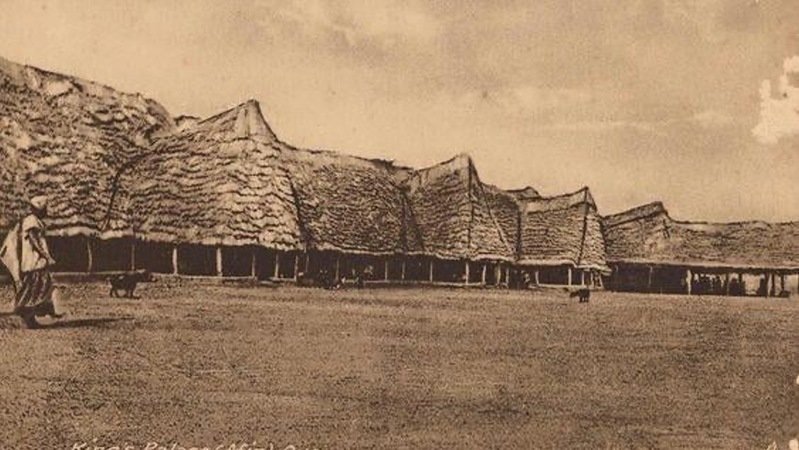
There was a characteristic Yoruba architecture, which provided space for residence, craft making, cooking, food processing, storage, and relaxation all within one comprehensive building (Agboile). It comprised of a ground floor structure with an open, roofless courtyard (Agbo) encircled by chambers (Yara) arranged in quadrilateral shapes. The building housed ‘families’ that were related by blood or tied by kinship. Each chamber in the building accommodated one maternal ‘family’. The building had 2 entrances: a main entrance that was usually in the sight of the chamber of the patriarch and a minor entrance. The minor entrance of our family home at Kudeti, Ibadan led out onto a small holding and to the Ogun shrine, which is still there today.
The Agboile comprised of encircling windowless chambers. The chamber was small in size being designed for sleeping purposes only. The absent windows protected sleepers from the cold of the night. The interior wall was rendered with cooling material such as the leaves-dung combo that my grandmother used. Each chamber had a characteristic, oversized, saddle-shaped roof designed for quick drainage of rainwater to protect the 7/8-foot tall mud wall. Roofing material was varied by available vegetation. Underneath the roof was a ceiling designed to create personal storage space within each chamber.
A patio led into the roofless courtyard from each chamber. The patio was an all-purpose communal; the most intensively used part of the building. It served as kitchen-diner, visitor centre, meeting place, classroom, craft stands such as the housing of the upright loom that my grandmother used, and outdoor sleeping places when the nights were too hot. Children were gathered in the patio at dusk to listen to stories before bedtime. Men gathered in the patio to relax, play Ayo, and imbibe palm wine whilst women gathered in the patio to food-process, child rear and exchange thoughts.
Rainwater discharged from the roof into an impluvium or ‘rainwater collecter’ located in the courtyard. Each chamber had its own impluvium. In addition, the courtyard had an elaborate drainage system that kept it dry during the rainy season. The courtyard was used as a communal garden to grow herbs, peppers as well as fruit trees like orange, pawpaw and agbalumo. It also served as a reserve for freely roaming domestic animals such as dogs, goats, sheep, and chicken. Food stuffs such as yam and cassava were sun-dried in the courtyard.
The drainage system of the courtyard has been dated to as far back as the 4th century. The drainage system was constructed of potsherds, pieces of broken ceramic material. Inappropriately named ‘potsherd pavement’, these drainage systems have been found at several locations in Yorubaland. The pattern and style are the same everywhere with the potsherds close-packed and laid in a herringbone (or palm leaf) pattern. The ubiquity of the drainage system is further evidence that the Yoruba are of a common ancestry.
Unfortunately, any artefacts belonging to old Africa is almost always viewed through the lens of religious or monarchical rituals. The Yoruba potsherd is a very good example. It has been the subject of innumerable debates amongst academics, native and non-native, but these debates have missed the blindingly obvious that the potsherds were a water drainage system; not religious, not monarchical. They were usually arranged in a herringbone pattern (like the skeleton of the fish of that name) with rows of parallel lines in which adjacent rows slope in opposite directions forming a ‘V’ or inverted ‘V’. At the centre was usually located an open-mouthed pot. The herringbone pattern allowed the trenches to catch water and run it off into the open-mouthed pot (impluvium). In other words, the Yoruba potsherd system was comprised of a run of drains, which connected to a spine, which connected to an impluvium. This piece of engineering would have been constructed anywhere that water was wont to collect after it had rained. This unique piece of engineering would have been recognised for what is was, a piece of engineering, if it had been found anywhere else on earth but Africa!
Support the Yoruba: sign, spread, donate, share, retweet http://chng.it/QJp8yJ6hPs More than 8,000 have now signed. Target: 10,000 signatures by the end of December 2022. Signatures cost nothing! And you don’t even have to be Yoruba to sign!