
Ayurveda or Indian medicine is constructed on the five elements of earth, water, fire, air and ether, which combine in the human body to form three life forces or energies or dosha. Vata, composite of air and ether, is the subtle energy associated with movement. Pitta, composite of fire and water, is the body’s metabolic system. Kapha, composite of the earth and water, is the energy that forms the body’s structure. Apparently, everyone inherited a unique mix of the three dosha, but with one predominating. Each dosha controls a different body function. The chances of getting sick and the health issues that develop are linked to the balance of one’s dosha. Ayurveda does not focus on disease but on the concept that all life must be supported by energy in balance. The goal of treatment therefore is to cleanse the body and restore harmony and balance, using a process called panchakarma. The two main guiding principles of Ayurveda are that the mind and the body are inextricably linked, and that nothing has more power to heal than the mind.
Chinese medicine is constructed on the five elements of wood, fire, earth, mineral and water, which combine to form the qi, the life force energy, which flows throughout the body via meridians, or channels of energy flow, with branches connecting to the internal organs. Yin and yang are opposites of a hill that describe the qualities of qi. Yin is female, cold, negative and dark. Yang is male, warm, positive and light. The lower part of the body is yin whilst the upper part and back is yang. The flow of qi is smooth when the body is in harmony and balance. An imbalance disrupts the flow and manifests as pain, dysfunction, injury and disease. The patient regains health and balance naturally if the practitioner correctly identified the pattern of the disorder and applied the appropriate treatment (zheng) to correct the imbalance.
Yoruba medicine of antiquity is as old as, if not older than the Indian and Chinese traditional medicine. It was based on an understanding of the physical nature of disease, which allowed for the direct treatment of the disease itself. The Yoruba traditional medicine was focused on identifying the specific thing that was wrong with the body (arun) and then armed with that knowledge (imọ), finding the specific herbal remedy (agbo) to repair it to restore the body to its previous state of good health (ilera). The Yoruba traditional medicine is identical to the orthodox medicine of today. It was aimed at repairing physically damaged parts. By way of contrast, Indian and Chinese traditional medicine were based on intuitive explanations for disease and the treatment of those explanations rather than the treatment of the disease itself.
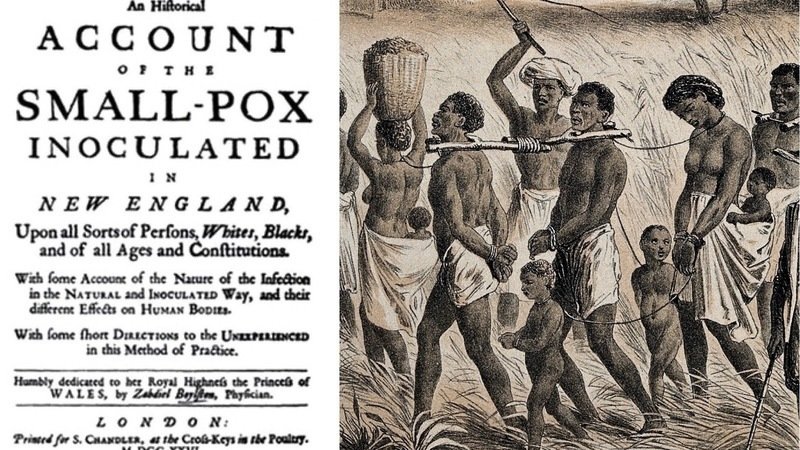
Yoruba medicine of antiquity had nothing to do with cosmology or with religion.It was based entirely on observational science; a science that gave the world the smallpox (sopona) vaccination. Onesimus, a Yoruba slave, mitigated the impact of a smallpox outbreak in Boston (USA) in 1721 when he taught the sopona vaccination technique to the Americans. In 2016, Onesimus was voted one of the ‘Best Bostonians of All Time’. Smallpox vaccination was only one technique from the intradermal therapy armamentarium (igbere) that the ancient Yoruba practised. In the igbere technique, tiny cuts were made with a sharp instrument on the skin and the therapeutic agent was rubbed into the wounds. The ancient Yoruba employed the igbere technique for a variety of ailments, pain relief as well as contraception. Further research is warranted. My daughter in a related research demonstrated that a laser beam could be used to create the tiny igbere skin wounds.
Support the Yoruba: sign, spread, donate, share, retweet http://chng.it/QJp8yJ6hPs More than 8,000 have now signed. Target: 10,000 signatures by the end of December 2022. Signatures cost nothing! And you don’t even have to be Yoruba to sign!