

The Natural Hair Care & Braiding ACT - Support NYS Bill A7924-B
The Issue
NATURAL HAIR CARE & BRAIDING IN NYS
PROTECTING CULTURE. PROMOTING SAFETY. SHAPING THE FUTURE.
Over 30 years ago, New York became the first state to create a stand-alone natural hair care license-separating it from cosmetology to protect public safety, preserve cultural traditions, and professionalize the field. That groundbreaking move laid the foundation for today's thriving textured hair care industry. Now is the time to strengthen-not dismantle-this progress by updating the license to reflect current needs. At a moment when Black women face disproportionate health risks and systemic inequities, New York has an opportunity to lead once again-by reinforcing education, protection, and ownership in an industry rooted in culture, care, and community.
Elevating the License for the Future Bill A7924-B
Introduced by Assemblymember J. Gary Pretlow, this bill modernizes New York’s outdated Natural Hair Styling license—unchanged since 1997—to reflect today's industry, technology, and health needs. This legislation:
Renames & Expands Scope: Updates the license to Natural Hair Care & Braiding and formally defines and expands key textured hair techniques including braiding, locking, twisting, and weaving. The bill identifies the term Cirrology --
a specialized term used to describe the study or classification of hair textures defining the geometric or science of different curl, coil, wave and zig zag patterns and refers to a professional health- centered discipline with the focus of the holistic support of textured hair.
Centers Health & Safety: Regulates tension-based techniques to reduce hair loss and scalp damage, ensuring only trained professionals can perform these services.
Establishes New Pathways: Introduces paid work study apprenticeships, senior specialist status. Removes barriers by updating the application and testing processes with additional dialects for the African Diaspora.
Recognizes Industry Growth: Acknowledges the cultural and economic impact of natural hair care, and strengthens professional standards with modern, culturally informed training.
Protects the Public: Mandates updated state regulations and education requirements tailored specifically to textured hair, preserving health, tradition, and consumer trust
SUPPORT NYS ASSEMBLY AND SENATE BILLS;
Bill A7924 B AM Pretlow Strengthens current NHS license - Apprenticeship
Bill S6652 - Sen Webb Strengthens current NHS license - Apprenticeship
WHY THIS MATTERS NOW
TWO FLOURISHING, INTERCONNECTED INDUSTRIES
Over the past 10-15 years, Natural Hair Care and Braiding have evolved into two thriving, interconnected sectors-driven largely by Black and immigrant women. Natural Hair Care laid the foundation in NYS through practices like twisting, locking, weaving, and braiding.
More recently, braiding has surged in popularity due to innovative techniques and the rise in synthetic and human hair extension use. As both industries grow, it's critical to create clear, supportive licensing structures that reflect their unique needs and protect public safety.
SCALP HEALTH IS PUBLIC HEALTH
Alopecia Crisis: Nearly 50-59% of Black women experience some form of hair loss, especially traction alopecia-often linked to tight or frequent braiding and improper techniques. Hair loss is also the 4th most common reason for dermatology office visits in the Black population (Alexis et al, 2007).
"It is imperative that anyone involved in the care of hair in this population have the proper continuing education on these and other scalp and hair disorders."
- Dr. Osei-Tutu, MD, Board Certified Dermatologist
Specializing in hair restoration, aesthetic, medical, and surgical skincare.
NYS PRIORITIZES PUBLIC HEALTH & SAFETY
Natural Hair Styling, regulated under General Business Law Article 28 alongside cosmetology and other appearance services, permits professionals to offer specialized natural hair services for a fee-ensuring education, accountability, and public trust while reinforcing industry standards and public well-being.
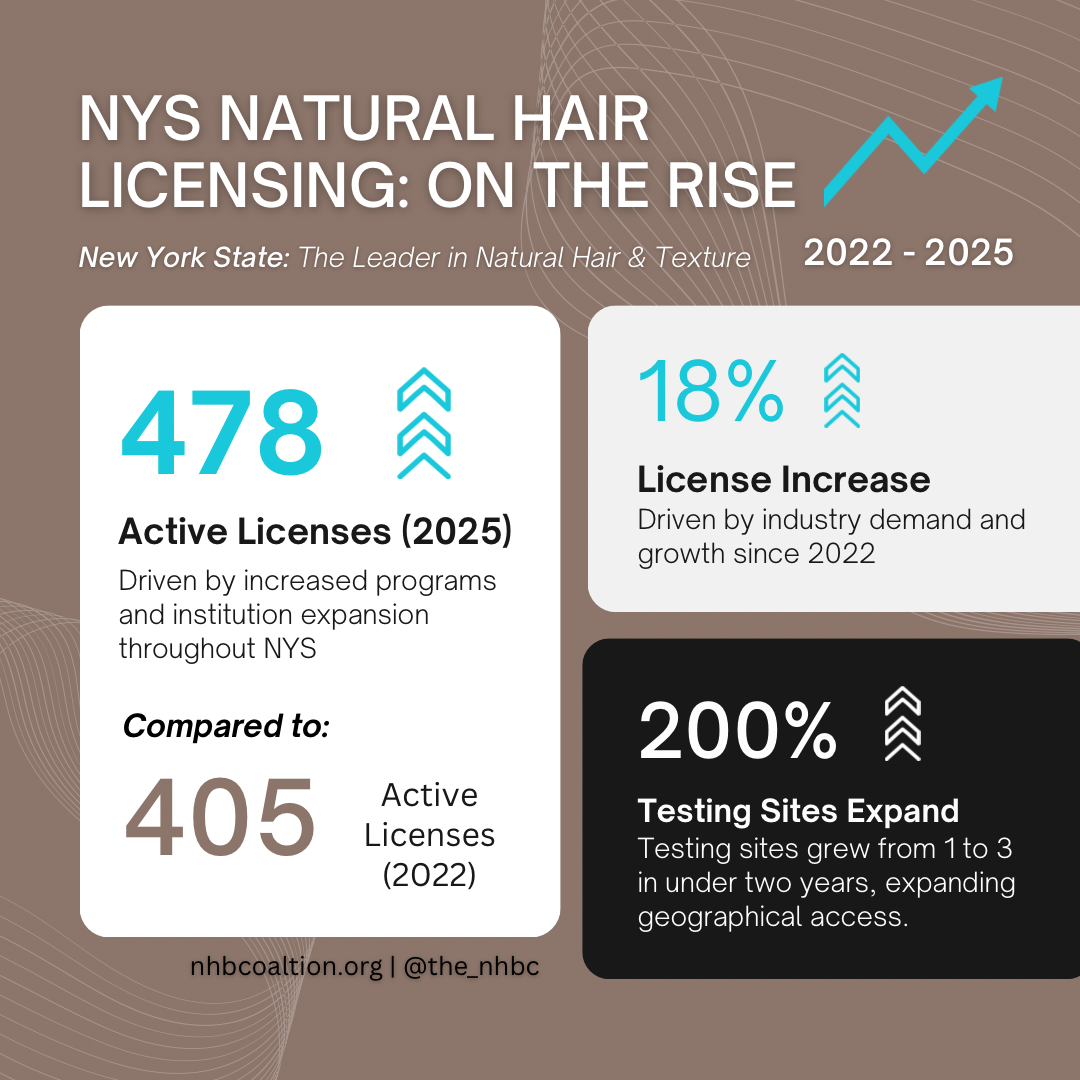
NYS - A LEADER IN EDUCATION & ECONOMIC GROWTH
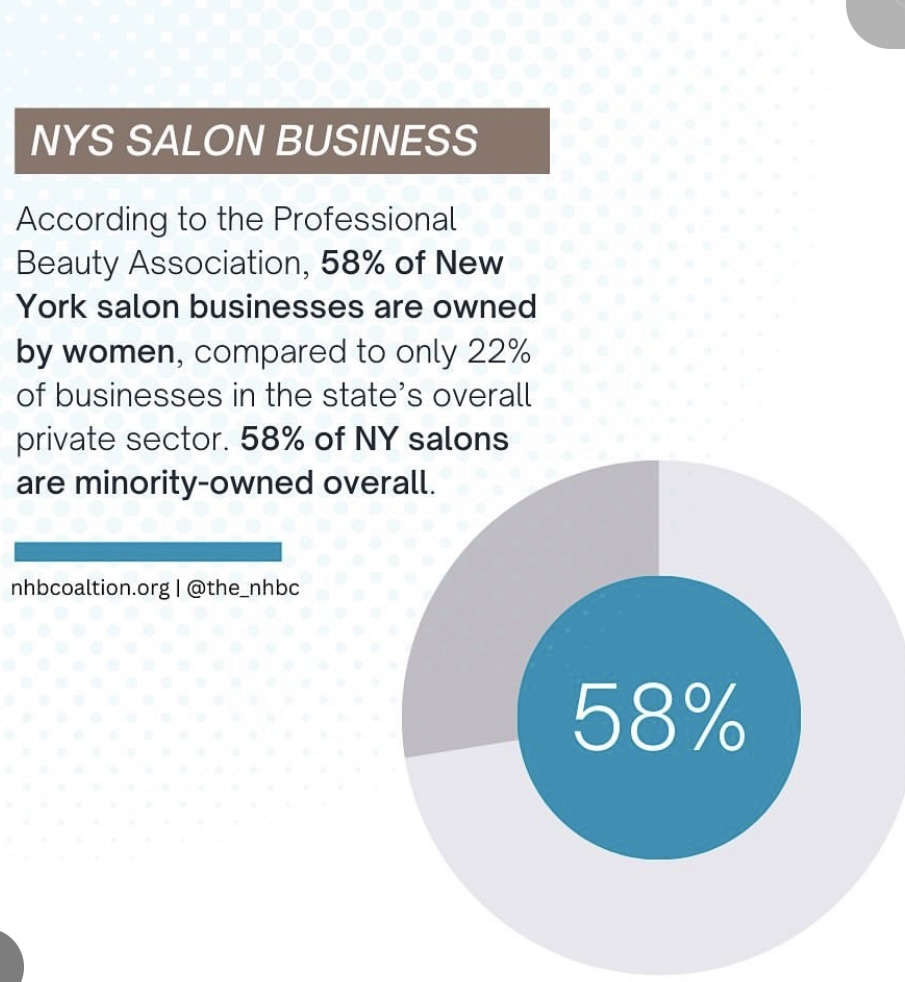
New York State has long been a national leader in advancing education, small business growth, and economic inclusion—especially in the beauty and wellness sectors:
CULTURAL RESPONSIBILITY: A SMART PATH FORWARD
Black women in New York face systemic barriers to safe, high-quality hair care:
- 86% struggle to find trained professionals who understand textured hair, often leading to damaging treatments.
- Toxic products-including synthetic braiding hair with harmful chemicals like lead and benzene-are disproportionately marketed to Black women.
- Cultural practices like braiding and locking are often dismissed as informal work, despite requiring real skill and knowledge. When done improperly, these styles can harm hair and scalp health.
A smart path forward means acknowledging these realities and ensuring that natural hair care is treated with the respect, regulation, and cultural understanding it deserves-through access to proper education, health safeguards, and professional recognition.
Join the movement now! Let your voices be heard. Support the Natural Hair Care & Braiding Act - NYS Bill. A7924 -B
ABOUT THE NATURAL HAIRSTYLE & BRAID COALITION.
NHBC is a tax exempt statewide advocacy organization committed to revolutionizing the $11.8 billion dollar Natural Hair Care Industry by addressing critical gaps in education and training for natural/textured hair. For too long, Black women and individuals with natural/textured hair have endured hair trauma due to a lack of understanding and expertise in natural hair care, resulting in physical and psychological harm. At NHBC, we work to uplift the beauty wellness standard and the cultural significance of natural/textured hair while advocating for inclusivity and professionalism within the industry.

371
The Issue
NATURAL HAIR CARE & BRAIDING IN NYS
PROTECTING CULTURE. PROMOTING SAFETY. SHAPING THE FUTURE.
Over 30 years ago, New York became the first state to create a stand-alone natural hair care license-separating it from cosmetology to protect public safety, preserve cultural traditions, and professionalize the field. That groundbreaking move laid the foundation for today's thriving textured hair care industry. Now is the time to strengthen-not dismantle-this progress by updating the license to reflect current needs. At a moment when Black women face disproportionate health risks and systemic inequities, New York has an opportunity to lead once again-by reinforcing education, protection, and ownership in an industry rooted in culture, care, and community.
Elevating the License for the Future Bill A7924-B
Introduced by Assemblymember J. Gary Pretlow, this bill modernizes New York’s outdated Natural Hair Styling license—unchanged since 1997—to reflect today's industry, technology, and health needs. This legislation:
Renames & Expands Scope: Updates the license to Natural Hair Care & Braiding and formally defines and expands key textured hair techniques including braiding, locking, twisting, and weaving. The bill identifies the term Cirrology --
a specialized term used to describe the study or classification of hair textures defining the geometric or science of different curl, coil, wave and zig zag patterns and refers to a professional health- centered discipline with the focus of the holistic support of textured hair.
Centers Health & Safety: Regulates tension-based techniques to reduce hair loss and scalp damage, ensuring only trained professionals can perform these services.
Establishes New Pathways: Introduces paid work study apprenticeships, senior specialist status. Removes barriers by updating the application and testing processes with additional dialects for the African Diaspora.
Recognizes Industry Growth: Acknowledges the cultural and economic impact of natural hair care, and strengthens professional standards with modern, culturally informed training.
Protects the Public: Mandates updated state regulations and education requirements tailored specifically to textured hair, preserving health, tradition, and consumer trust
SUPPORT NYS ASSEMBLY AND SENATE BILLS;
Bill A7924 B AM Pretlow Strengthens current NHS license - Apprenticeship
Bill S6652 - Sen Webb Strengthens current NHS license - Apprenticeship
WHY THIS MATTERS NOW
TWO FLOURISHING, INTERCONNECTED INDUSTRIES
Over the past 10-15 years, Natural Hair Care and Braiding have evolved into two thriving, interconnected sectors-driven largely by Black and immigrant women. Natural Hair Care laid the foundation in NYS through practices like twisting, locking, weaving, and braiding.
More recently, braiding has surged in popularity due to innovative techniques and the rise in synthetic and human hair extension use. As both industries grow, it's critical to create clear, supportive licensing structures that reflect their unique needs and protect public safety.
SCALP HEALTH IS PUBLIC HEALTH
Alopecia Crisis: Nearly 50-59% of Black women experience some form of hair loss, especially traction alopecia-often linked to tight or frequent braiding and improper techniques. Hair loss is also the 4th most common reason for dermatology office visits in the Black population (Alexis et al, 2007).
"It is imperative that anyone involved in the care of hair in this population have the proper continuing education on these and other scalp and hair disorders."
- Dr. Osei-Tutu, MD, Board Certified Dermatologist
Specializing in hair restoration, aesthetic, medical, and surgical skincare.
NYS PRIORITIZES PUBLIC HEALTH & SAFETY
Natural Hair Styling, regulated under General Business Law Article 28 alongside cosmetology and other appearance services, permits professionals to offer specialized natural hair services for a fee-ensuring education, accountability, and public trust while reinforcing industry standards and public well-being.
NYS - A LEADER IN EDUCATION & ECONOMIC GROWTH
New York State has long been a national leader in advancing education, small business growth, and economic inclusion—especially in the beauty and wellness sectors:
CULTURAL RESPONSIBILITY: A SMART PATH FORWARD
Black women in New York face systemic barriers to safe, high-quality hair care:
- 86% struggle to find trained professionals who understand textured hair, often leading to damaging treatments.
- Toxic products-including synthetic braiding hair with harmful chemicals like lead and benzene-are disproportionately marketed to Black women.
- Cultural practices like braiding and locking are often dismissed as informal work, despite requiring real skill and knowledge. When done improperly, these styles can harm hair and scalp health.
A smart path forward means acknowledging these realities and ensuring that natural hair care is treated with the respect, regulation, and cultural understanding it deserves-through access to proper education, health safeguards, and professional recognition.
Join the movement now! Let your voices be heard. Support the Natural Hair Care & Braiding Act - NYS Bill. A7924 -B
ABOUT THE NATURAL HAIRSTYLE & BRAID COALITION.
NHBC is a tax exempt statewide advocacy organization committed to revolutionizing the $11.8 billion dollar Natural Hair Care Industry by addressing critical gaps in education and training for natural/textured hair. For too long, Black women and individuals with natural/textured hair have endured hair trauma due to a lack of understanding and expertise in natural hair care, resulting in physical and psychological harm. At NHBC, we work to uplift the beauty wellness standard and the cultural significance of natural/textured hair while advocating for inclusivity and professionalism within the industry.
The Decision Makers


Supporter Voices
Petition Updates
Share this petition
Petition created on July 22, 2025