

The Mount Holly TNR Investment: A Humane & Lasting Community Solution
The Issue
A Community Solution: Ending the Cycle of Stray Cat Overpopulation
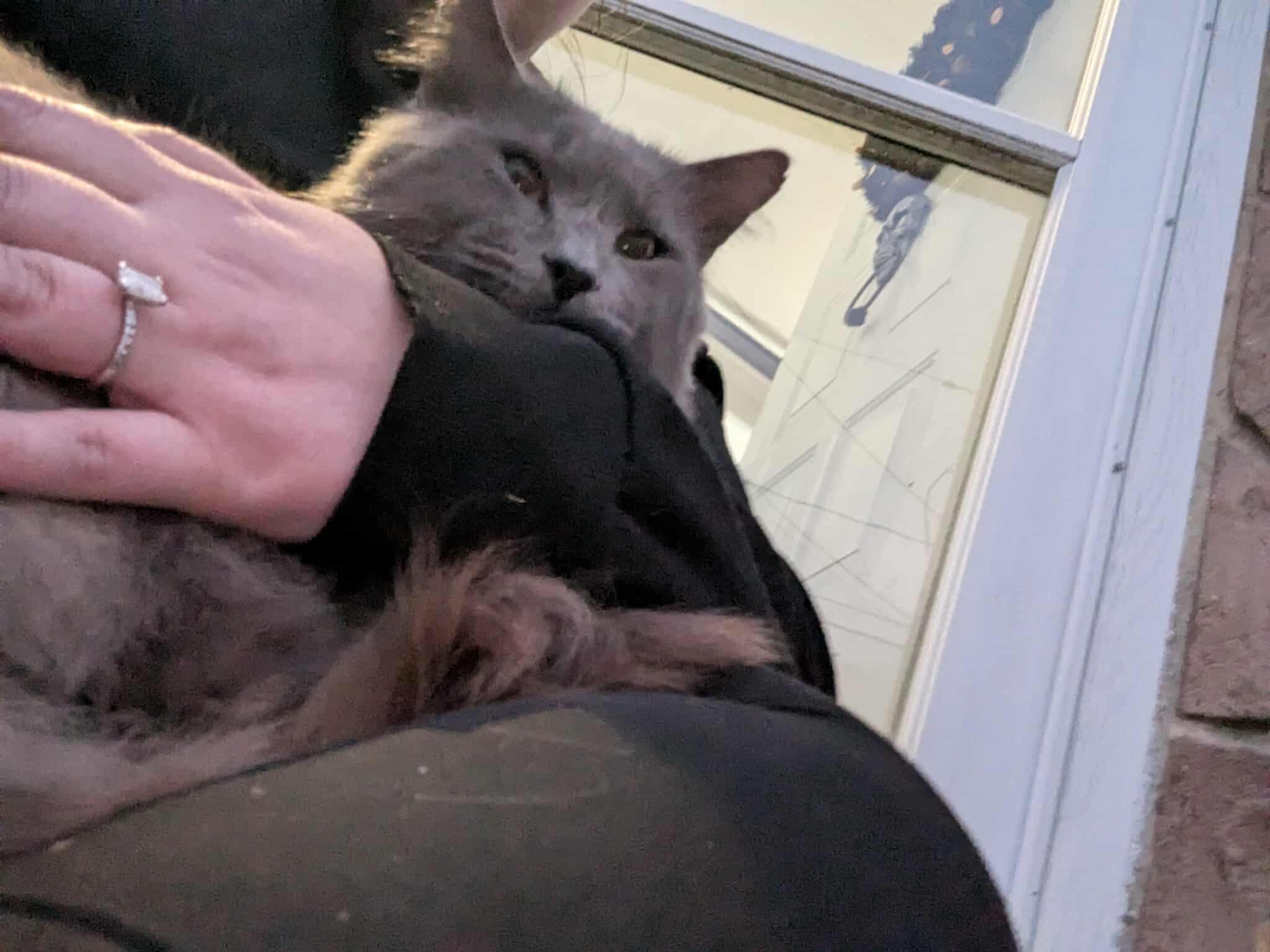
Look at this face. It’s vulnerable, beautiful, and completely reliant on us. Now, imagine a hundred of these faces. That’s the reality of the stray and feral cat population in our community. These are the community cats—lost pets and their unsocialized offspring—and their struggle is rapidly becoming our problem. This is not just an animal welfare issue; it’s a community crisis that touches every neighborhood. Every night, the sound of fighting and mating disrupts our quiet. Every morning, the sight of torn garbage and territorial spraying frustrates homeowners. Worse still, our local animal shelters are overwhelmed, forced to deal with a constant, heartbreaking influx of animals that often cannot be adopted. This cycle costs us millions in taxpayer dollars every single year, yet it never solves the problem.
THE FAILED METHOD vs. THE PROVEN SOLUTION
For decades, we’ve relied on the reactive approach: trap, remove, and often euthanize. But the simple, painful truth is that this method is a failure because of something called the Vacuum Effect. When you remove cats from an area, the food source remains, and new, intact cats from surrounding areas quickly migrate in. The population rebounds, often faster than before, and the community is back where it started. It’s a costly, endless loop.We need a permanent fix. We need to replace the cycle of removal with the stability of Trap-Neuter-Return, or TNR. TNR is the humane, scientific solution that works. We humanely trap the cats, take them to a veterinarian for spaying or neutering, give them vital vaccinations, and then return them to their outdoor home, where they are thriving, healthy neighbors. The signature ear tip shows everyone that this cat is part of the solution.The benefits are immediate and undeniable: no more kittens. The colony stabilizes, and over time, it shrinks naturally. More importantly, the behaviors that cause nuisance complaints—the fighting, the territorial spraying, the loud mating calls—virtually disappear. TNR creates quieter, cleaner, and healthier neighborhoods for both people and animals.
THE BARRIER AND THE NEED FOR FREE CLINICS
If TNR is so effective, why is it still considered a volunteer effort? Because of the cost. Humane trapping, transport, veterinary surgery, and recovery supplies add up, often placing the entire financial burden on a handful of compassionate individuals. We can’t let financial barriers dictate public health outcomes.This is why we must invest in Free TNR Clinics and advocate for dedicated Grant Funding. Free clinics allow us to work at the scale necessary to actually control the population. They empower every volunteer, every neighbor, every community caretaker to step up without fear of financial ruin. We need grants from private foundations, corporate sponsors, and, critically, our local government to fund the surgical supplies, the mobile units, and the dedicated veterinary staff required to spay and neuter hundreds of cats in a single weekend. This is a crucial investment, not a charitable donation. It pays for itself through reduced shelter intake and fewer costly animal control calls.
The Call to Action. We have the proven method. We know the cost. Now, all that is missing is the collective resolve. We owe these animals a compassionate solution, and we owe our community a permanent one. We must demand that our local leaders prioritize grant funding for these services. We must support the organizations that provide free clinics. TNR, fueled by your advocacy and necessary financial support, isn't just a cat solution—it's a community solution that promises a healthier, quieter, and more humane future for everyone. Let’s make this vital change, together.

175
The Issue
A Community Solution: Ending the Cycle of Stray Cat Overpopulation
Look at this face. It’s vulnerable, beautiful, and completely reliant on us. Now, imagine a hundred of these faces. That’s the reality of the stray and feral cat population in our community. These are the community cats—lost pets and their unsocialized offspring—and their struggle is rapidly becoming our problem. This is not just an animal welfare issue; it’s a community crisis that touches every neighborhood. Every night, the sound of fighting and mating disrupts our quiet. Every morning, the sight of torn garbage and territorial spraying frustrates homeowners. Worse still, our local animal shelters are overwhelmed, forced to deal with a constant, heartbreaking influx of animals that often cannot be adopted. This cycle costs us millions in taxpayer dollars every single year, yet it never solves the problem.
THE FAILED METHOD vs. THE PROVEN SOLUTION
For decades, we’ve relied on the reactive approach: trap, remove, and often euthanize. But the simple, painful truth is that this method is a failure because of something called the Vacuum Effect. When you remove cats from an area, the food source remains, and new, intact cats from surrounding areas quickly migrate in. The population rebounds, often faster than before, and the community is back where it started. It’s a costly, endless loop.We need a permanent fix. We need to replace the cycle of removal with the stability of Trap-Neuter-Return, or TNR. TNR is the humane, scientific solution that works. We humanely trap the cats, take them to a veterinarian for spaying or neutering, give them vital vaccinations, and then return them to their outdoor home, where they are thriving, healthy neighbors. The signature ear tip shows everyone that this cat is part of the solution.The benefits are immediate and undeniable: no more kittens. The colony stabilizes, and over time, it shrinks naturally. More importantly, the behaviors that cause nuisance complaints—the fighting, the territorial spraying, the loud mating calls—virtually disappear. TNR creates quieter, cleaner, and healthier neighborhoods for both people and animals.
THE BARRIER AND THE NEED FOR FREE CLINICS
If TNR is so effective, why is it still considered a volunteer effort? Because of the cost. Humane trapping, transport, veterinary surgery, and recovery supplies add up, often placing the entire financial burden on a handful of compassionate individuals. We can’t let financial barriers dictate public health outcomes.This is why we must invest in Free TNR Clinics and advocate for dedicated Grant Funding. Free clinics allow us to work at the scale necessary to actually control the population. They empower every volunteer, every neighbor, every community caretaker to step up without fear of financial ruin. We need grants from private foundations, corporate sponsors, and, critically, our local government to fund the surgical supplies, the mobile units, and the dedicated veterinary staff required to spay and neuter hundreds of cats in a single weekend. This is a crucial investment, not a charitable donation. It pays for itself through reduced shelter intake and fewer costly animal control calls.
The Call to Action. We have the proven method. We know the cost. Now, all that is missing is the collective resolve. We owe these animals a compassionate solution, and we owe our community a permanent one. We must demand that our local leaders prioritize grant funding for these services. We must support the organizations that provide free clinics. TNR, fueled by your advocacy and necessary financial support, isn't just a cat solution—it's a community solution that promises a healthier, quieter, and more humane future for everyone. Let’s make this vital change, together.
The Decision Makers


Supporter Voices
Petition Updates
Share this petition
Petition created on October 29, 2025