The escalating & largely ignored ethnic violence in the Amhara region, Ethiopia!
The escalating & largely ignored ethnic violence in the Amhara region, Ethiopia!
The Issue
URGENT APPEAL
Regarding the escalating and largely ignored ethnic violence by state troops and their allies in the Amhara region, Ethiopia
While international interest is noticeably waning—the media is barely reporting on it, politicians are hesitant, and major human rights organizations are responding cautiously—the African Union is holding its 39th summit from February 10 to 16, 2026. The summit is taking place just a few kilometers away from a region where reports of the most serious violent crimes continue to emerge.
So close to the reports of massacres. So close to burning villages. And yet there are still no clear public statements on the situation in Amhara.
As new reports of serious attacks in the Amhara region emerge, concerns are growing about the Ethiopian government's increasingly aggressive rhetoric toward Eritrea.
Instead of creating transparency about the events in Amhara, the public debate is dominated by foreign policy tensions. National and international critics accuse the prime minister of constructing an external enemy through war rhetoric and propagandistic narratives, while inside the country, extensive military operations are being carried out against its own population and the Amhara people have been in active warfare for more than five years, with sexual violence being used as a weapon, as reported by the BBC, and 80% of schools and health centers in Amhara have been destroyed and continue to be destroyed.
Since 2021, numerous affected sources have reported a dramatic escalation of violence in the Amhara region. Affected communities, civil society organizations, local observers, and independent voices have documented severe abuses, targeted attacks, and large-scale displacements.
On February 3, 2026, Prime Minister Abiy Ahmed stated in a parliamentary speech that the Amhara region in northern Ethiopia had been under the control of the TPLF and its alliance and that the Amhara population and its infrastructure had been massively destroyed. At the same time, it is noted that his government had remained silent for years about the mass attacks on the region, without taking political responsibility or accountability. While official reports dominate, those affected report destroyed infrastructure, massacres, and a civilian population caught between the fronts of the military.
Since 2019, there have been reports of systematic attacks on Amhara communities in regions such as Oromia and Benishangul-Gumuz. Thousands are said to have been killed and millions displaced. Many continue to live in camps or in extremely precarious conditions. Farmers, students, and other civilians report violent displacement, forced recruitment, and detention.
The Amhara region has been in a state of emergency since April 2023, with announced and unannounced curfews, military operations, disruptions to communication and transport routes, etc. The majority of the population and critics accuse the government of using this situation to declare parts of the population (the Amhara people) “enemies” and wage war against them.
There are numerous reports that schools and health facilities in the Amhara region are being used for military purposes, which has serious consequences for civilian services. Over 4.5 million schoolchildren are unable to attend school.
For many of those affected, Amhara is no longer just an administrative region, but a place of constant fear.
Escalation in February 2026 – Reports from the Shewa Zone
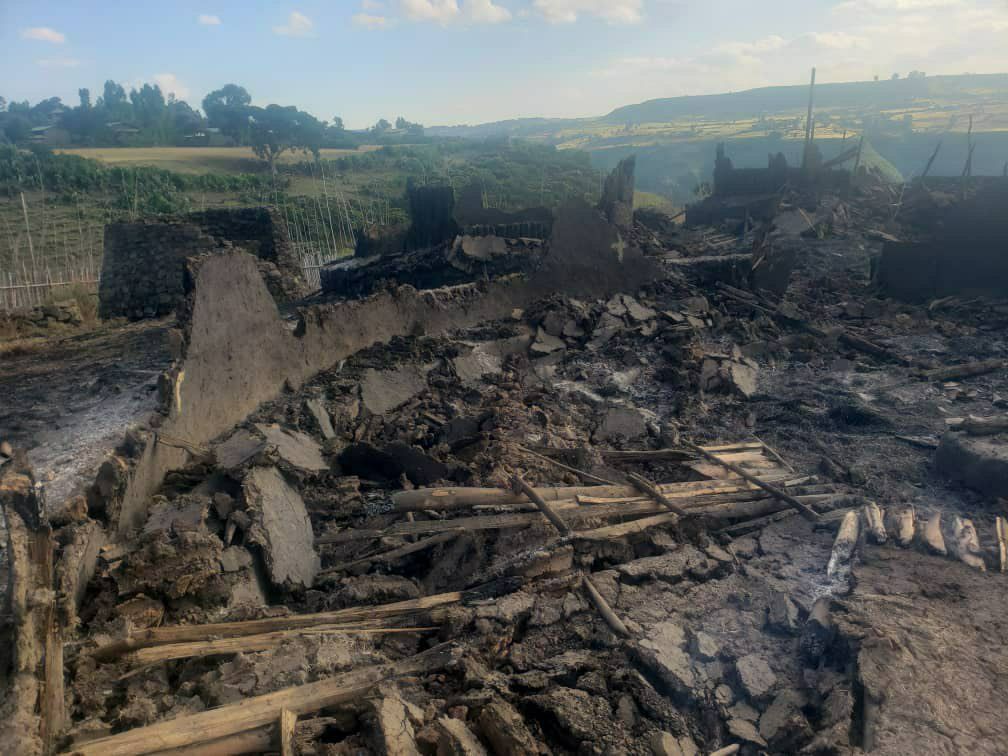
In February 2026, new alarming reports emerged from the Shewa Zone. Video recordings and communications from local sources – including material from the Fano People's Movement – document serious attacks on civilians.
According to the reports, more than 120 people from Amhara were killed by government troops.
There are also reports of the deliberate destruction of homes and civilian infrastructure. Images show burned-down settlements, destroyed livelihoods, and people fleeing.
If these allegations are confirmed, these are not isolated skirmishes, but targeted attacks on the civilian population. This underscores the urgent need for an independent international investigation.
Military mobilization and serious allegations
Despite extensive information blackouts, consistent reports point to a massive mobilization of troops, including regular armed forces, Republican Guard units, and regional special forces.
The allegations include:
indiscriminate shelling of civilian areas with heavy weapons
Air and drone strikes
Extrajudicial executions
Systematic destruction of homes, crops, and livelihoods
Sexual violence against women and girls
Establishment of camps in and near regional borders, indicating large-scale displacement
These reports have been confirmed by local media and constitute serious violations of international humanitarian law.
Information blockade: Darkness as a strategy
Since February 1, 2026, there have been reports of an almost complete interruption of internet, telephone, and telecommunications connections in Amhara.
This isolation prevents independent observation. It makes it difficult to document crimes. It blocks humanitarian aid.
Experience from previous conflicts in northern Ethiopia shows that communication blackouts are often accompanied by serious human rights violations. The Shewa zone in particular is considered to be virtually sealed off – transparency and international observation are almost impossible there.
Where darkness reigns, impunity grows.
Humanitarian situation
Despite the communication blackout, local sources report
Attacks on houses, schools, clinics, and religious institutions
House searches followed by the killing of men and young people
Hidden mass graves
Widespread sexual violence
Shelling or occupation of medical facilities
Blockade of medical supplies
Exclusion of international organizations
The combination of killings, expulsions, and the alleged creation of life-threatening conditions points to one of the most serious human rights crises of our time.
Our demands – Act now
In view of the seriousness of the allegations, we demand:
the immediate cessation of ongoing violence against the Amhara population in the Amhara and Oromia regions and the immediate withdrawal of the ENDF from these areas
a clear and public condemnation of all attacks on civilians
the immediate restoration of all communication channels in Amhara
the deployment of an independent UN investigation team to the Shewa Zone and the entire region
unrestricted humanitarian access for the ICRC, WHO, UNOCHA, and other organizations
the activation of international accountability mechanisms
emergency meetings of the UN Security Council and the African Union Peace and Security Council
Reports speak of drone strikes, heavy artillery, and air strikes in civilian areas of Amhara. At the same time, the population is being rhetorically prepared for a possible conflict with Eritrea.
Many see this not as a coincidence, but as a political calculation: international attention is to be diverted.
The violence within the country is to disappear in the shadow of geopolitical tensions.
While the world focuses on diplomatic headlines, those affected report destroyed homes, killed relatives, and a daily life between a state of emergency, information blockade, and military violence.
An external escalation must not be used to suppress internal responsibility.
The information blockade is not a technical detail—it is a warning signal and genocide.
Silence is not neutrality. Inaction is not diplomacy. Looking away is not a solution.
The international community must not react too late again.
History will record who remained silent—and who took action.

262
The Issue
URGENT APPEAL
Regarding the escalating and largely ignored ethnic violence by state troops and their allies in the Amhara region, Ethiopia
While international interest is noticeably waning—the media is barely reporting on it, politicians are hesitant, and major human rights organizations are responding cautiously—the African Union is holding its 39th summit from February 10 to 16, 2026. The summit is taking place just a few kilometers away from a region where reports of the most serious violent crimes continue to emerge.
So close to the reports of massacres. So close to burning villages. And yet there are still no clear public statements on the situation in Amhara.
As new reports of serious attacks in the Amhara region emerge, concerns are growing about the Ethiopian government's increasingly aggressive rhetoric toward Eritrea.
Instead of creating transparency about the events in Amhara, the public debate is dominated by foreign policy tensions. National and international critics accuse the prime minister of constructing an external enemy through war rhetoric and propagandistic narratives, while inside the country, extensive military operations are being carried out against its own population and the Amhara people have been in active warfare for more than five years, with sexual violence being used as a weapon, as reported by the BBC, and 80% of schools and health centers in Amhara have been destroyed and continue to be destroyed.
Since 2021, numerous affected sources have reported a dramatic escalation of violence in the Amhara region. Affected communities, civil society organizations, local observers, and independent voices have documented severe abuses, targeted attacks, and large-scale displacements.
On February 3, 2026, Prime Minister Abiy Ahmed stated in a parliamentary speech that the Amhara region in northern Ethiopia had been under the control of the TPLF and its alliance and that the Amhara population and its infrastructure had been massively destroyed. At the same time, it is noted that his government had remained silent for years about the mass attacks on the region, without taking political responsibility or accountability. While official reports dominate, those affected report destroyed infrastructure, massacres, and a civilian population caught between the fronts of the military.
Since 2019, there have been reports of systematic attacks on Amhara communities in regions such as Oromia and Benishangul-Gumuz. Thousands are said to have been killed and millions displaced. Many continue to live in camps or in extremely precarious conditions. Farmers, students, and other civilians report violent displacement, forced recruitment, and detention.
The Amhara region has been in a state of emergency since April 2023, with announced and unannounced curfews, military operations, disruptions to communication and transport routes, etc. The majority of the population and critics accuse the government of using this situation to declare parts of the population (the Amhara people) “enemies” and wage war against them.
There are numerous reports that schools and health facilities in the Amhara region are being used for military purposes, which has serious consequences for civilian services. Over 4.5 million schoolchildren are unable to attend school.
For many of those affected, Amhara is no longer just an administrative region, but a place of constant fear.
Escalation in February 2026 – Reports from the Shewa Zone
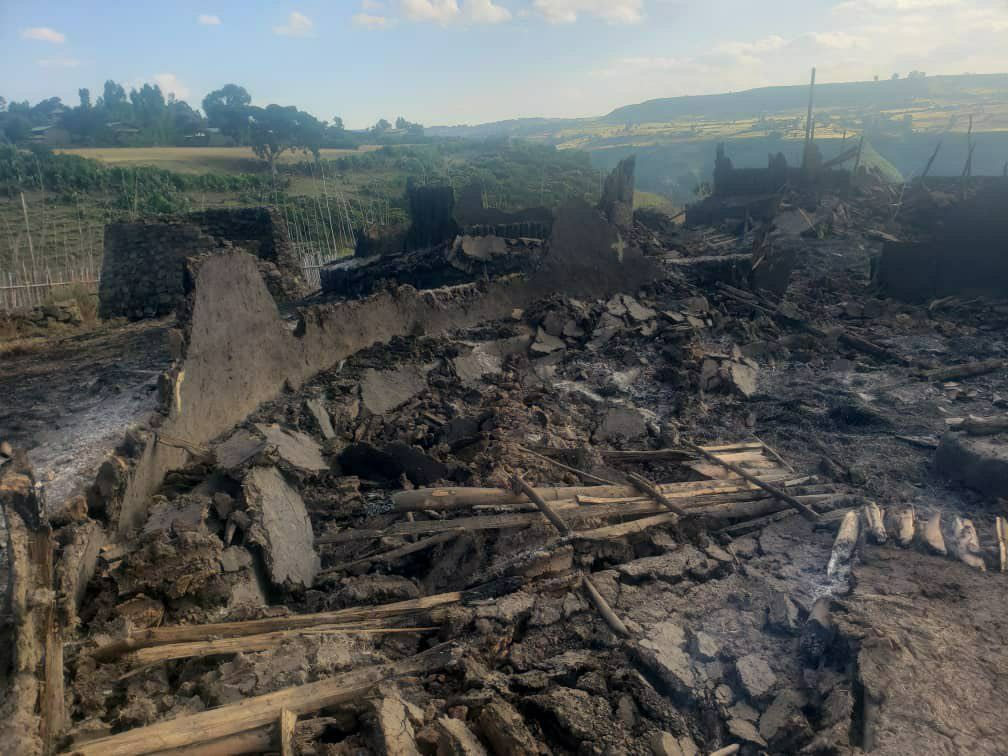
In February 2026, new alarming reports emerged from the Shewa Zone. Video recordings and communications from local sources – including material from the Fano People's Movement – document serious attacks on civilians.
According to the reports, more than 120 people from Amhara were killed by government troops.
There are also reports of the deliberate destruction of homes and civilian infrastructure. Images show burned-down settlements, destroyed livelihoods, and people fleeing.
If these allegations are confirmed, these are not isolated skirmishes, but targeted attacks on the civilian population. This underscores the urgent need for an independent international investigation.
Military mobilization and serious allegations
Despite extensive information blackouts, consistent reports point to a massive mobilization of troops, including regular armed forces, Republican Guard units, and regional special forces.
The allegations include:
indiscriminate shelling of civilian areas with heavy weapons
Air and drone strikes
Extrajudicial executions
Systematic destruction of homes, crops, and livelihoods
Sexual violence against women and girls
Establishment of camps in and near regional borders, indicating large-scale displacement
These reports have been confirmed by local media and constitute serious violations of international humanitarian law.
Information blockade: Darkness as a strategy
Since February 1, 2026, there have been reports of an almost complete interruption of internet, telephone, and telecommunications connections in Amhara.
This isolation prevents independent observation. It makes it difficult to document crimes. It blocks humanitarian aid.
Experience from previous conflicts in northern Ethiopia shows that communication blackouts are often accompanied by serious human rights violations. The Shewa zone in particular is considered to be virtually sealed off – transparency and international observation are almost impossible there.
Where darkness reigns, impunity grows.
Humanitarian situation
Despite the communication blackout, local sources report
Attacks on houses, schools, clinics, and religious institutions
House searches followed by the killing of men and young people
Hidden mass graves
Widespread sexual violence
Shelling or occupation of medical facilities
Blockade of medical supplies
Exclusion of international organizations
The combination of killings, expulsions, and the alleged creation of life-threatening conditions points to one of the most serious human rights crises of our time.
Our demands – Act now
In view of the seriousness of the allegations, we demand:
the immediate cessation of ongoing violence against the Amhara population in the Amhara and Oromia regions and the immediate withdrawal of the ENDF from these areas
a clear and public condemnation of all attacks on civilians
the immediate restoration of all communication channels in Amhara
the deployment of an independent UN investigation team to the Shewa Zone and the entire region
unrestricted humanitarian access for the ICRC, WHO, UNOCHA, and other organizations
the activation of international accountability mechanisms
emergency meetings of the UN Security Council and the African Union Peace and Security Council
Reports speak of drone strikes, heavy artillery, and air strikes in civilian areas of Amhara. At the same time, the population is being rhetorically prepared for a possible conflict with Eritrea.
Many see this not as a coincidence, but as a political calculation: international attention is to be diverted.
The violence within the country is to disappear in the shadow of geopolitical tensions.
While the world focuses on diplomatic headlines, those affected report destroyed homes, killed relatives, and a daily life between a state of emergency, information blockade, and military violence.
An external escalation must not be used to suppress internal responsibility.
The information blockade is not a technical detail—it is a warning signal and genocide.
Silence is not neutrality. Inaction is not diplomacy. Looking away is not a solution.
The international community must not react too late again.
History will record who remained silent—and who took action.
262
Supporter Voices
Petition created on 12 February 2026