

Tell the APVMA: Don't Increase Pesticide Residues on Aussie Berries!
The issue
The insecticide is called isocycloseram. In Europe, it is not approved for use on food.
In the United States, its approval is being challenged in court by the Center for Biological Diversity, the Center for Food Safety, represented by Earthjustice, who argue the risks to children and unborn babies were understated.
In the manufacturer's own rat studies, it was linked to shrunken testes, reduced sperm and liver toxicity. The US EPA's official record lists the testes, epididymides and liver as target organs. Australia's own regulatory assessment found skeletal malformations in foetal rats. In this country, the concentrated product carries a warning that it is suspected of "damaging the unborn child."
Australia was one of the first countries in the world to approve it — in 2021, relying heavily on safety assurances from the company that sells it.
I'm a paediatric nutritionist. I'm not a toxicologist, and I won't pretend to be one. So this petition is not about telling you this chemical will harm you or your child. I don't know that. My concern is that the evidence and regulatory approach are not sufficiently precautionary, and that's exactly the point and a reason to ask questions and slow down.
WHAT'S ACTUALLY BEING PROPOSED
The insecticide is called isocycloseram. The APVMA is proposing to raise the Maximum Residue Limits on berries. That isn't a radical position. It's the standard Europe already uses: in the EU, residue limits are set on the ALARA principle — "as low as reasonably achievable." Not as high as tolerable. As low as achievable.
- Up to 500× more on raspberries and blackberries
- Up to 300× more on blueberries and currants
- Up to 70× more on strawberries and cranberries
The application was submitted by Syngenta, the manufacturer of isocycloseram.
FSANZ verified the dietary exposure assessment behind it. No decision has been made yet. No decision has been made. The APVMA is deciding right now, which means it can still be stopped!
That's exactly why I can't stay SILENT now!
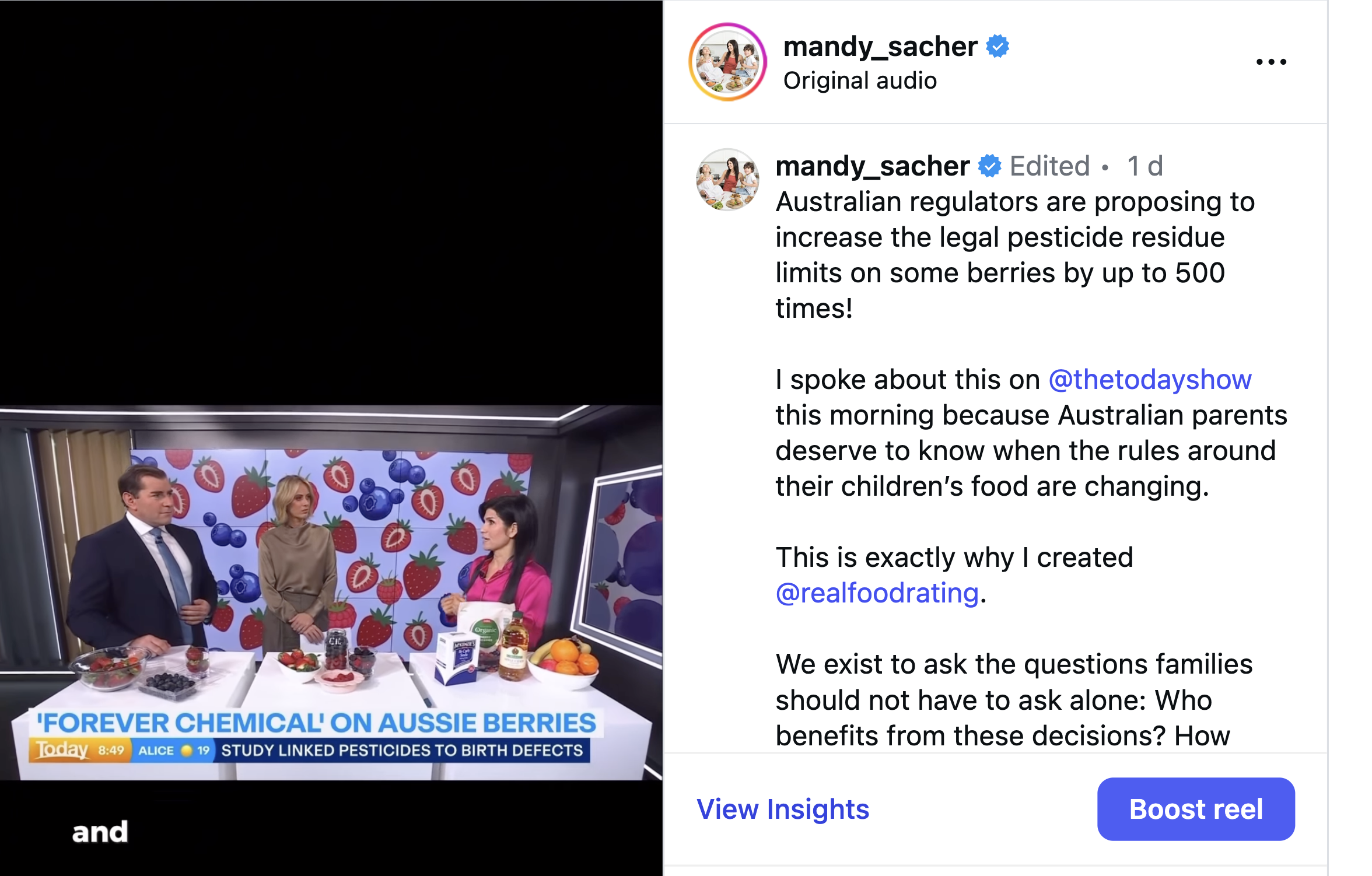
https://www.instagram.com/p/Da2YFQgBZXR/
As a paediatric nutritionist, I don't believe we should simply be asking what level of pesticide is considered legally acceptable. I believe we should be asking a much bigger question. Why aren't we doing everything we can to reduce pesticide exposure on one of the most loved foods our children eat?
WHAT WE ARE ASKING
We are NOT asking for the highest amounts of pesticide that's legally acceptable. We're asking for the lowest exposure practically possible.
We call on the APVMA to reject this proposal, and:
- Require Independent, non-manufacturer data. Long-term and cumulative dietary-exposure studies — not funded by the company that profits from the sale. —
- Assess the breakdown products. Especially TFA, across the whole diet over a lifetime.
- Apply precaution consistently with your own 2025 dimethoate decision.
- Publish the full safety assessment, Consistent with the regulator's own recent decisions, so it can be independently scrutinised.
I'm not against farmers. Growing fruit is hard, and no one sprays for fun. I support integrated pest management that minimises unnecessary pesticide use.
Add your name. When enough of us ask the questions, we become the regulator's watchdog.
THIS IS THE ONE FOOD EVERY CHILD SAYS YES TO
I've spent years watching Australian families navigate the challenge of feeding young children. And one thing has always amazed me. Even the fussiest of eaters rarely say no to berries.
They're one of the first foods babies learn to love, one of the easiest fruits to pack in a lunchbox, and one of the healthiest foods parents can offer their children. That's why this matters.
Of all the foods to loosen the limits on — of everything on the shelf — this is the one we picked. Children eat more food relative to their body weight than adults do. The same punnet of blueberries delivers a higher dose per kilogram of body weight to a two-year-old than to an adult.
And Australian children eat a lot of berries. We get through around 1 kg of blueberries per person per year — among the highest rates in the world. Berry production has more than doubled in a decade, from $567 million in 2013 to $1.3 billion in 2024.
The kids eating the most berries are the smallest people in the house. That's who this decision will impact the most.
AND IT'S NOT JUST ABOUT CHILDREN, IT'S US TOO!
And this isn't only about children. Think about every piece of health advice you've absorbed in the last twenty years. Berries are the elixir. Antioxidants. Polyphenols. Anti-inflammatory. Good for your heart, good for your brain, good for ageing well. Add a handful of blueberries to everything.
And that advice is sound. The science on berries is genuinely good. It's why they're in the smoothie, the overnight oats, the one healthy thing people manage on a busy Tuesday. But sit with what that means. The people eating the most berries are the people trying hardest to look after their health.
Daily. For decades. That's not an occasional snack. The regulators do model someone eating these foods every day for a lifetime , one chemical at a time. What no one has modelled is the combination: many residues, many foods, every day, for decades. People ask me about this constantly, and the honest answer is that we don't know yet.
So this isn't only about lunchboxes. It's about everyone who's been told berries are the one food they should be eating more of — and who has been quietly doing exactly that, every single day, for years.
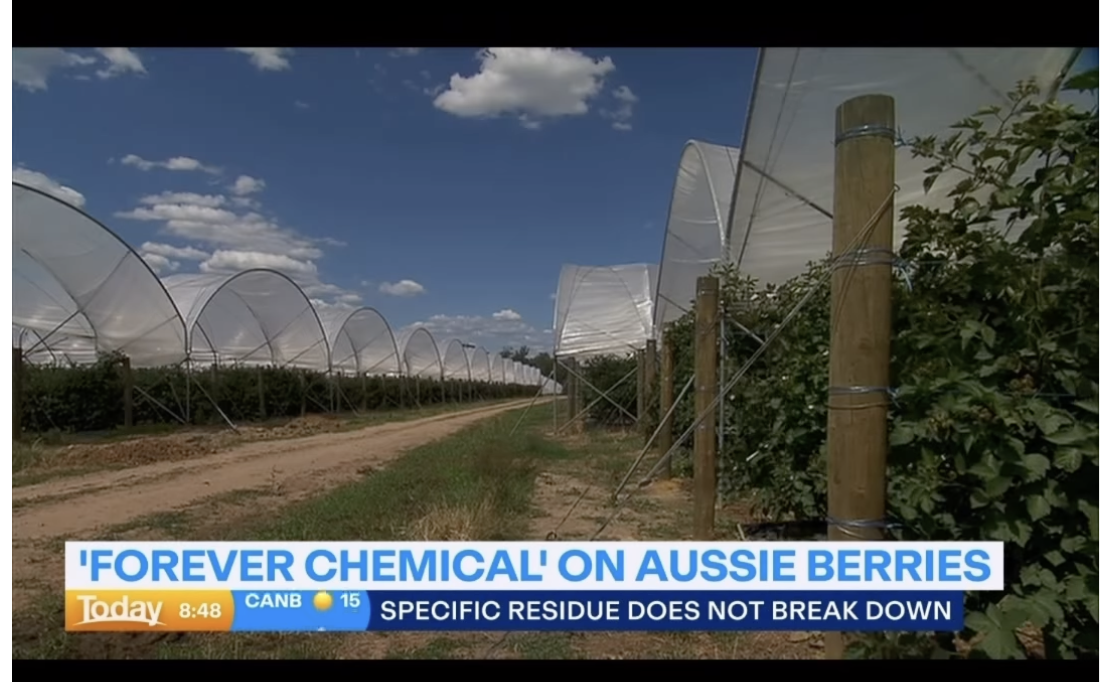
NO! IT DOESN'T WASH OFF, OR GO AWAY
TFA is an extremely persistent environmental contaminant that is increasingly being detected in water, food and the environment. Because isocycloseram is a fluorinated pesticide, questions have been raised about its environmental fate and the need for greater independent scrutiny.
In June 2026, the European Chemicals Agency's Risk Assessment Committee recommended classifying TFA as toxic to reproduction (Category 1B): "may damage the unborn child," "suspected of damaging fertility." It also found it to be very persistent and very mobile — meaning it moves into soil, water and the food chain, and stays there.
Once TFA is in the groundwater, it doesn't leave. This isn't a decision about this season's fruit. It's a decision our grandchildren will still be living inside.
THE REGULATORS ALREADY AGREED WITH ME LAST YEAR
In November 2025, the APVMA moved to restrict a different insecticide, dimethoate, on berries. As a precaution. Why? Because it received new data showing Australians are eating dramatically more berries than when the chemical was last assessed. More berries eaten, more residue consumed. So it acted to reduce exposure.
That was exactly right. It's precisely the thinking I'm asking for.
So in a single year, the same agency has restricted one insecticide on berries as a precaution — and proposed allowing up to 500× more of another one on the same berries. Same fruit. Same children.
And their answer on isocycloseram? That there is "no consumer safety concern."
That is the same sentence they overrode in November.
I'm not accusing anyone of bad faith. I'm asking the obvious question: if rising berry consumption was a reason to reduce exposure last year, why isn't it a reason to think twice this year?
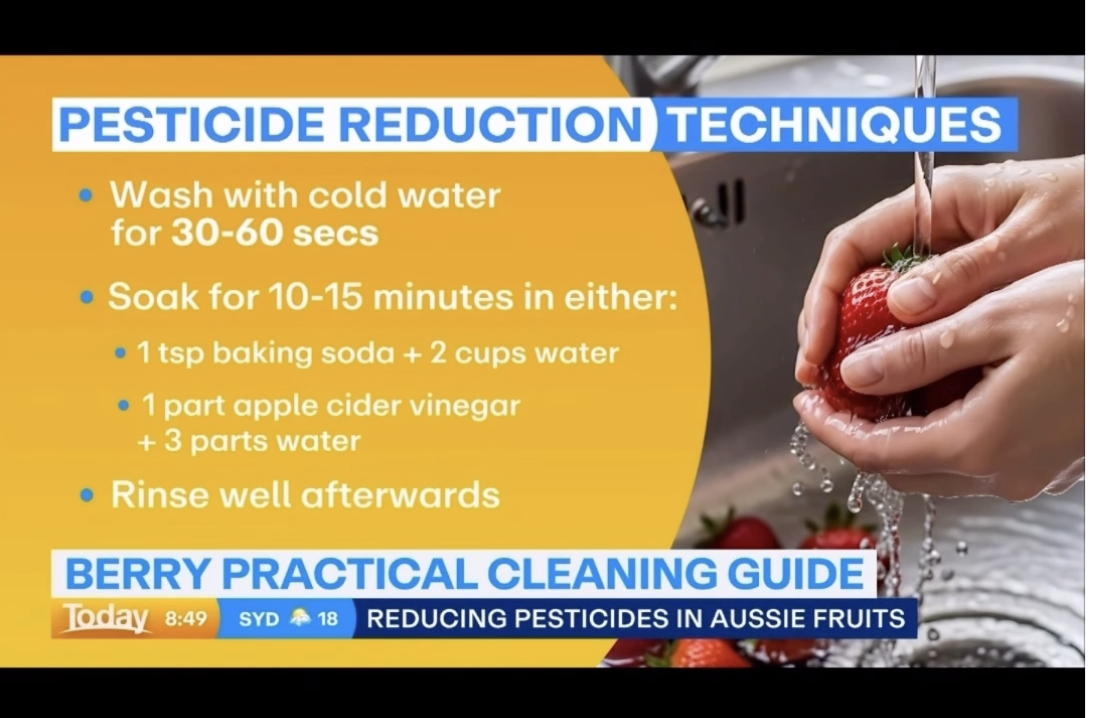
For practical advice and more info on how to reduce pesticides, click here.
AND PLEASE — KEEP FEEDING YOUR KIDS BERRIES
I won't frighten anyone off fruit. Berries are still one of the best foods you can give a child. Fear is not a nutrition strategy. But you cannot wash this decision away, and you cannot shop your way out of it, not on every budget.
The only place this gets fixed is upstream, before it reaches the punnet. That's not a job for parents. That's the job of the regulator.
So here's the question I keep coming back to: Why aren't we doing everything we can to reduce pesticide exposure on one of the most loved foods our children eat?
Add your name here. Let them see how many of us are opposed to this proposal. The decision is being made right now. When enough of us ask the question, we become the regulator's watchdog!
Email Your Senator
If you have another five minutes, please email one or more of your senators. A petition shows public support. A senator can ask questions in Parliament. They can request documents. They can seek greater parliamentary scrutiny. A small number of personalised emails can often have more impact than thousands of petition signatures alone. A template is available here: https://realfoodrating.com/2026/07/22/isocycloseram-berry-residue-limits-take-action-now/
If you can, personalise the opening sentence with why this issue matters to you, as a parent, grandparent, health professional, farmer or consumer.
For up-to-date information, follow @realfoodrating and @mandy_sacher or head to Real Food Rating
Disclaimer & Public Safety Notice:
Non-Profit Campaign: This is a non-profit petition. Please do not donate funds or financial contributions to promote this page; only your signature and social media sharing are requested.

14,009
The issue
The insecticide is called isocycloseram. In Europe, it is not approved for use on food.
In the United States, its approval is being challenged in court by the Center for Biological Diversity, the Center for Food Safety, represented by Earthjustice, who argue the risks to children and unborn babies were understated.
In the manufacturer's own rat studies, it was linked to shrunken testes, reduced sperm and liver toxicity. The US EPA's official record lists the testes, epididymides and liver as target organs. Australia's own regulatory assessment found skeletal malformations in foetal rats. In this country, the concentrated product carries a warning that it is suspected of "damaging the unborn child."
Australia was one of the first countries in the world to approve it — in 2021, relying heavily on safety assurances from the company that sells it.
I'm a paediatric nutritionist. I'm not a toxicologist, and I won't pretend to be one. So this petition is not about telling you this chemical will harm you or your child. I don't know that. My concern is that the evidence and regulatory approach are not sufficiently precautionary, and that's exactly the point and a reason to ask questions and slow down.
WHAT'S ACTUALLY BEING PROPOSED
The insecticide is called isocycloseram. The APVMA is proposing to raise the Maximum Residue Limits on berries. That isn't a radical position. It's the standard Europe already uses: in the EU, residue limits are set on the ALARA principle — "as low as reasonably achievable." Not as high as tolerable. As low as achievable.
- Up to 500× more on raspberries and blackberries
- Up to 300× more on blueberries and currants
- Up to 70× more on strawberries and cranberries
The application was submitted by Syngenta, the manufacturer of isocycloseram.
FSANZ verified the dietary exposure assessment behind it. No decision has been made yet. No decision has been made. The APVMA is deciding right now, which means it can still be stopped!
That's exactly why I can't stay SILENT now!
https://www.instagram.com/p/Da2YFQgBZXR/
As a paediatric nutritionist, I don't believe we should simply be asking what level of pesticide is considered legally acceptable. I believe we should be asking a much bigger question. Why aren't we doing everything we can to reduce pesticide exposure on one of the most loved foods our children eat?
WHAT WE ARE ASKING
We are NOT asking for the highest amounts of pesticide that's legally acceptable. We're asking for the lowest exposure practically possible.
We call on the APVMA to reject this proposal, and:
- Require Independent, non-manufacturer data. Long-term and cumulative dietary-exposure studies — not funded by the company that profits from the sale. —
- Assess the breakdown products. Especially TFA, across the whole diet over a lifetime.
- Apply precaution consistently with your own 2025 dimethoate decision.
- Publish the full safety assessment, Consistent with the regulator's own recent decisions, so it can be independently scrutinised.
I'm not against farmers. Growing fruit is hard, and no one sprays for fun. I support integrated pest management that minimises unnecessary pesticide use.
Add your name. When enough of us ask the questions, we become the regulator's watchdog.
THIS IS THE ONE FOOD EVERY CHILD SAYS YES TO
I've spent years watching Australian families navigate the challenge of feeding young children. And one thing has always amazed me. Even the fussiest of eaters rarely say no to berries.
They're one of the first foods babies learn to love, one of the easiest fruits to pack in a lunchbox, and one of the healthiest foods parents can offer their children. That's why this matters.
Of all the foods to loosen the limits on — of everything on the shelf — this is the one we picked. Children eat more food relative to their body weight than adults do. The same punnet of blueberries delivers a higher dose per kilogram of body weight to a two-year-old than to an adult.
And Australian children eat a lot of berries. We get through around 1 kg of blueberries per person per year — among the highest rates in the world. Berry production has more than doubled in a decade, from $567 million in 2013 to $1.3 billion in 2024.
The kids eating the most berries are the smallest people in the house. That's who this decision will impact the most.
AND IT'S NOT JUST ABOUT CHILDREN, IT'S US TOO!
And this isn't only about children. Think about every piece of health advice you've absorbed in the last twenty years. Berries are the elixir. Antioxidants. Polyphenols. Anti-inflammatory. Good for your heart, good for your brain, good for ageing well. Add a handful of blueberries to everything.
And that advice is sound. The science on berries is genuinely good. It's why they're in the smoothie, the overnight oats, the one healthy thing people manage on a busy Tuesday. But sit with what that means. The people eating the most berries are the people trying hardest to look after their health.
Daily. For decades. That's not an occasional snack. The regulators do model someone eating these foods every day for a lifetime , one chemical at a time. What no one has modelled is the combination: many residues, many foods, every day, for decades. People ask me about this constantly, and the honest answer is that we don't know yet.
So this isn't only about lunchboxes. It's about everyone who's been told berries are the one food they should be eating more of — and who has been quietly doing exactly that, every single day, for years.
NO! IT DOESN'T WASH OFF, OR GO AWAY
TFA is an extremely persistent environmental contaminant that is increasingly being detected in water, food and the environment. Because isocycloseram is a fluorinated pesticide, questions have been raised about its environmental fate and the need for greater independent scrutiny.
In June 2026, the European Chemicals Agency's Risk Assessment Committee recommended classifying TFA as toxic to reproduction (Category 1B): "may damage the unborn child," "suspected of damaging fertility." It also found it to be very persistent and very mobile — meaning it moves into soil, water and the food chain, and stays there.
Once TFA is in the groundwater, it doesn't leave. This isn't a decision about this season's fruit. It's a decision our grandchildren will still be living inside.
THE REGULATORS ALREADY AGREED WITH ME LAST YEAR
In November 2025, the APVMA moved to restrict a different insecticide, dimethoate, on berries. As a precaution. Why? Because it received new data showing Australians are eating dramatically more berries than when the chemical was last assessed. More berries eaten, more residue consumed. So it acted to reduce exposure.
That was exactly right. It's precisely the thinking I'm asking for.
So in a single year, the same agency has restricted one insecticide on berries as a precaution — and proposed allowing up to 500× more of another one on the same berries. Same fruit. Same children.
And their answer on isocycloseram? That there is "no consumer safety concern."
That is the same sentence they overrode in November.
I'm not accusing anyone of bad faith. I'm asking the obvious question: if rising berry consumption was a reason to reduce exposure last year, why isn't it a reason to think twice this year?
For practical advice and more info on how to reduce pesticides, click here.
AND PLEASE — KEEP FEEDING YOUR KIDS BERRIES
I won't frighten anyone off fruit. Berries are still one of the best foods you can give a child. Fear is not a nutrition strategy. But you cannot wash this decision away, and you cannot shop your way out of it, not on every budget.
The only place this gets fixed is upstream, before it reaches the punnet. That's not a job for parents. That's the job of the regulator.
So here's the question I keep coming back to: Why aren't we doing everything we can to reduce pesticide exposure on one of the most loved foods our children eat?
Add your name here. Let them see how many of us are opposed to this proposal. The decision is being made right now. When enough of us ask the question, we become the regulator's watchdog!
Email Your Senator
If you have another five minutes, please email one or more of your senators. A petition shows public support. A senator can ask questions in Parliament. They can request documents. They can seek greater parliamentary scrutiny. A small number of personalised emails can often have more impact than thousands of petition signatures alone. A template is available here: https://realfoodrating.com/2026/07/22/isocycloseram-berry-residue-limits-take-action-now/
If you can, personalise the opening sentence with why this issue matters to you, as a parent, grandparent, health professional, farmer or consumer.
For up-to-date information, follow @realfoodrating and @mandy_sacher or head to Real Food Rating
Disclaimer & Public Safety Notice:
Non-Profit Campaign: This is a non-profit petition. Please do not donate funds or financial contributions to promote this page; only your signature and social media sharing are requested.
The Decision Makers

Supporter voices
Petition Updates
Share this petition
Petition created on 17 July 2026