
Tell Congress and the CFPB: Private student loan regulation and reform now!
The Issue
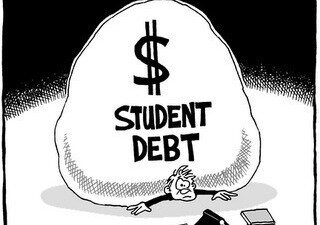
If you're a recent graduate, you may be facing endless phone calls from your student loan lenders demanding payment, and meanwhile, you cannot find a job that pays enough for you to even pay the minimum on your loans. Or any job, in this economy. And if you do find a job taking home only $2,000 per month, there are no regulations in place to stop Sallie Mae and other private student loan lenders from demanding $1,800 from your pay and jacking up your total debt by thousands each year. It doesn't matter even if you prove that you cannot possibly pay.
Income-based repayment plans and regulations on spiraling interest rates are not an option from Sallie Mae and other private lenders, and this needs to change. Private student loans need regulation and reform.
In 2005, according to StudentLoanJustice.org, "Congress removed bankruptcy protections, refinancing rights, statutes of limitations, truth in lending requirements, fair debt collection practice requirements (for state agencies) and even removed state usury laws from applicability to federally guaranteed student loans.
Congress also gave unprecedented powers of collection to the industry, including wage, tax return, Social Security, and Disability income garnishment, suspension of state issued professional licenses, and termination from public employment."
Furthermore, it is impossible to discharge student loan debt in bankruptcy unless you are permanently disabled. Federal loan guarantees also make it so that Sallie Mae and other private lenders profit from defaults - the obvious reason why bankruptcy is not a legal option, and why private lenders are clearly unwilling to help protect borrowers from defaulting.
What should be done to protect borrowers of private student loans?
- Caps on variable interest rates to prevent student loan debt from spiraling out of control. The average private loan has interest rates of 9.5-10%, and can be hiked even higher whenever the lender chooses. There is no reason why the debt that went towards one's education should have the same interest rates and fluctuations as credit cards.
- More options for low-income students to receive assistance with repaying student loans. This involves reinstating bankruptcy protections and refinancing rights, and mandating that private lenders offer income-based repayment options. The best option would be for borrowers to be able to consolidate federal and private loans together, or at least to be able to consolidate private loans via federal consolidation loans.
- Borrowers must be given a chance to consolidate loans given by private lenders regardless of credit score, just as borrowers of federal loans are able to. There are currently no federal consolidation options for holders of private loans. Students with multiple private loans are trapped in a Catch-22 of these loans destroying their credit; meanwhile, they cannot obtain private consolidation loans due to their bad credit. Moreover, most private lenders no longer offer consolidation loans. All of this makes it impossible to reduce monthly payments or cap skyrocketing interest rates.
- Private student loans should have the same regulations and protections as federal loans, period.
- And if for some reason they cannot have the same regulations as federal loans, then they at least ought to have the same regulations that are in place as of August 2011 for the loans that for-profit colleges lend: The estimated annual loan payment of a typical graduate must not exceed 30 percent of his or her discretionary income; or the estimated annual loan payment of a typical graduate does not exceed 12 percent of his or her total earnings. So why can't this apply to private loans used for regular colleges?
Help stop predatory lending practices, and ensure that the current generation of college grads can have a reasonable chance at digging itself out from debt!
We want to pay our debts. We want to save for retirement. We want to join the middle class. Give us a fair chance.

Petition Closed
The Issue
If you're a recent graduate, you may be facing endless phone calls from your student loan lenders demanding payment, and meanwhile, you cannot find a job that pays enough for you to even pay the minimum on your loans. Or any job, in this economy. And if you do find a job taking home only $2,000 per month, there are no regulations in place to stop Sallie Mae and other private student loan lenders from demanding $1,800 from your pay and jacking up your total debt by thousands each year. It doesn't matter even if you prove that you cannot possibly pay.
Income-based repayment plans and regulations on spiraling interest rates are not an option from Sallie Mae and other private lenders, and this needs to change. Private student loans need regulation and reform.
In 2005, according to StudentLoanJustice.org, "Congress removed bankruptcy protections, refinancing rights, statutes of limitations, truth in lending requirements, fair debt collection practice requirements (for state agencies) and even removed state usury laws from applicability to federally guaranteed student loans.
Congress also gave unprecedented powers of collection to the industry, including wage, tax return, Social Security, and Disability income garnishment, suspension of state issued professional licenses, and termination from public employment."
Furthermore, it is impossible to discharge student loan debt in bankruptcy unless you are permanently disabled. Federal loan guarantees also make it so that Sallie Mae and other private lenders profit from defaults - the obvious reason why bankruptcy is not a legal option, and why private lenders are clearly unwilling to help protect borrowers from defaulting.
What should be done to protect borrowers of private student loans?
- Caps on variable interest rates to prevent student loan debt from spiraling out of control. The average private loan has interest rates of 9.5-10%, and can be hiked even higher whenever the lender chooses. There is no reason why the debt that went towards one's education should have the same interest rates and fluctuations as credit cards.
- More options for low-income students to receive assistance with repaying student loans. This involves reinstating bankruptcy protections and refinancing rights, and mandating that private lenders offer income-based repayment options. The best option would be for borrowers to be able to consolidate federal and private loans together, or at least to be able to consolidate private loans via federal consolidation loans.
- Borrowers must be given a chance to consolidate loans given by private lenders regardless of credit score, just as borrowers of federal loans are able to. There are currently no federal consolidation options for holders of private loans. Students with multiple private loans are trapped in a Catch-22 of these loans destroying their credit; meanwhile, they cannot obtain private consolidation loans due to their bad credit. Moreover, most private lenders no longer offer consolidation loans. All of this makes it impossible to reduce monthly payments or cap skyrocketing interest rates.
- Private student loans should have the same regulations and protections as federal loans, period.
- And if for some reason they cannot have the same regulations as federal loans, then they at least ought to have the same regulations that are in place as of August 2011 for the loans that for-profit colleges lend: The estimated annual loan payment of a typical graduate must not exceed 30 percent of his or her discretionary income; or the estimated annual loan payment of a typical graduate does not exceed 12 percent of his or her total earnings. So why can't this apply to private loans used for regular colleges?
Help stop predatory lending practices, and ensure that the current generation of college grads can have a reasonable chance at digging itself out from debt!
We want to pay our debts. We want to save for retirement. We want to join the middle class. Give us a fair chance.
The Decision Makers


Petition Updates
Share this petition
Petition created on August 15, 2011