

Support evidence-based care for trans and gender diverse young people in South Africa
The Issue
Embracing Diversity, Upholding Rights: A South African Position Statement on Evidence-Based Care For Transgender and Gender-Diverse Young People
18 August 2024 | Cape Town, South Africa
Background
Gender diversity is a fundamental aspect of the human experience, and the right to explore and affirm one's gender identity is integral to the individual, relational and social wellbeing of our youth. To honour and affirm the existence and dignity of transgender and gender-diverse young people is to challenge the societal norms that seek to diminish their identities, allowing them not just to survive but to flourish in a world that too often denies their very humanity.
South Africa is a country built on healing from a past which harmed and divided us. We are all called to commit to a future which is rooted in compassion and acts of care and belonging that bring forth the tangible recognition and affirmation of our shared humanity. In this pursuit, transgender and gender-diverse young people are not only fully recognised for their inherent worth but are also honoured as indispensable and cherished members of our society, deserving of the opportunity to reach their fullest potential and contribute to our shared future.
As a nation founded on Ubuntu* and the principles of equality, dignity, and unity, it is our collective responsibility to ensure that every young person in South Africa is afforded the opportunity to live authentically and without fear.
Framing
In keeping with the South African Constitution,* child-focused legislation,* the Patients' Rights Charter* as well as international conventions, treaties and charters*
- which create a frame for rights, dignity and care
Mindful of global and local anti-gender movements
- which create a hostile climate for gender work
And recognising the legacies of colonialism and apartheid
- which erased pre-colonial identities and practices around gender diversity and created profound health inequalities
Resolutions
We call on everyone to stand in solidarity with transgender and gender-diverse young people to:
- Recognise the right of all people to self-determine* their gender, gender identity and gender expression:
- We affirm the inherent right of every individual to determine and express their gender identity freely, without external imposition. This recognition is central to fostering a society where the autonomy and unique identities of transgender and gender-diverse young people are upheld as intrinsic to their personhood.
- Protect safe and affirming spaces for young people and their families to explore and realise this self-determination:
- It is vital to ensure inclusive environments where young people and their families can confidently consider their options to make informed decisions. These spaces must provide the acceptance and support necessary for healthy development and the full actualisation of their authentic selves, free from the barriers of prejudice or exclusion.
- Support, improve and expand access to evidence-based care for transgender and gender-diverse young people and their families across South Africa:
- Equitable access to comprehensive, evidence-based care is essential for the wellbeing of transgender and gender-diverse young people. This encompasses psychological and social support services, as well as medical care when needed, all of which must be developmentally appropriate, culturally sensitive, and accessible to everyone. We must expand these services to reach every young person, irrespective of geographic or socio-economic barriers, by advocating for increased resources and mobilising social and political will.
- Prioritise the voices of transgender and gender-diverse young people in all decisions that impact their lives:
- We underscore the imperative of centring transgender and gender-diverse young people in decision-making processes. Collaboration, support and guidance from families and healthcare professionals are essential in helping young people navigate their gender identity in a way that is safe, informed, and developmentally appropriate. Their insights and lived experiences must be the guiding force in developing policies, practices, and care frameworks that resonate with their needs and aspirations.
This position statement cements our commitment to ensuring that all young people are afforded the rights, respect, and healthcare necessary to live authentically. Grounded in our constitutional values of justice, freedom, and human dignity, we advocate for an inclusive and compassionate approach to evidence-based care for transgender and gender-diverse young people.
We call on all stakeholders, including government bodies, healthcare institutions, and educational systems, to not only stand in solidarity but also to be held accountable for upholding these principles. Concrete actions must be taken to ensure that the societal, legal, and healthcare rights of transgender and gender-diverse young people are fully recognised and realised.
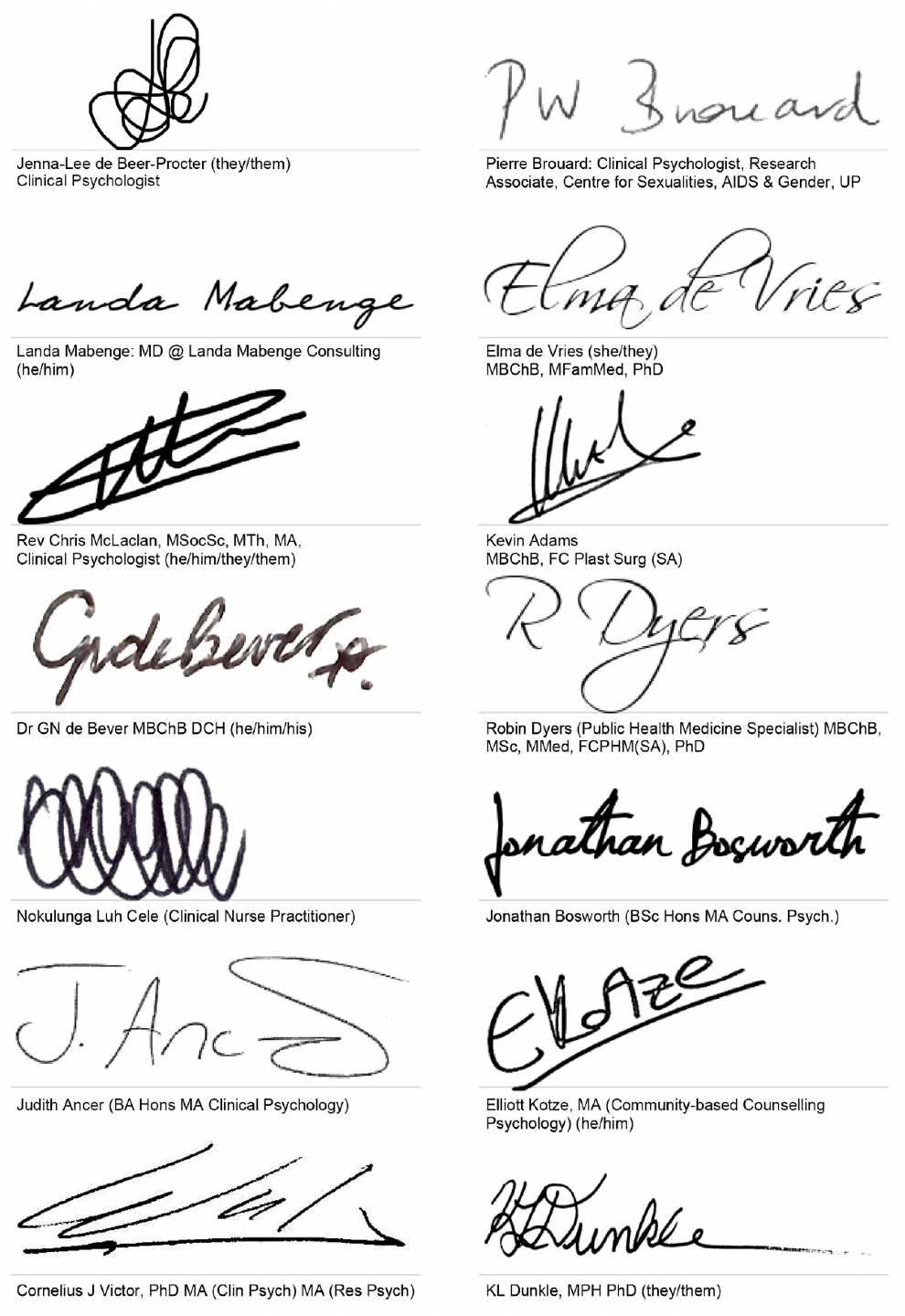
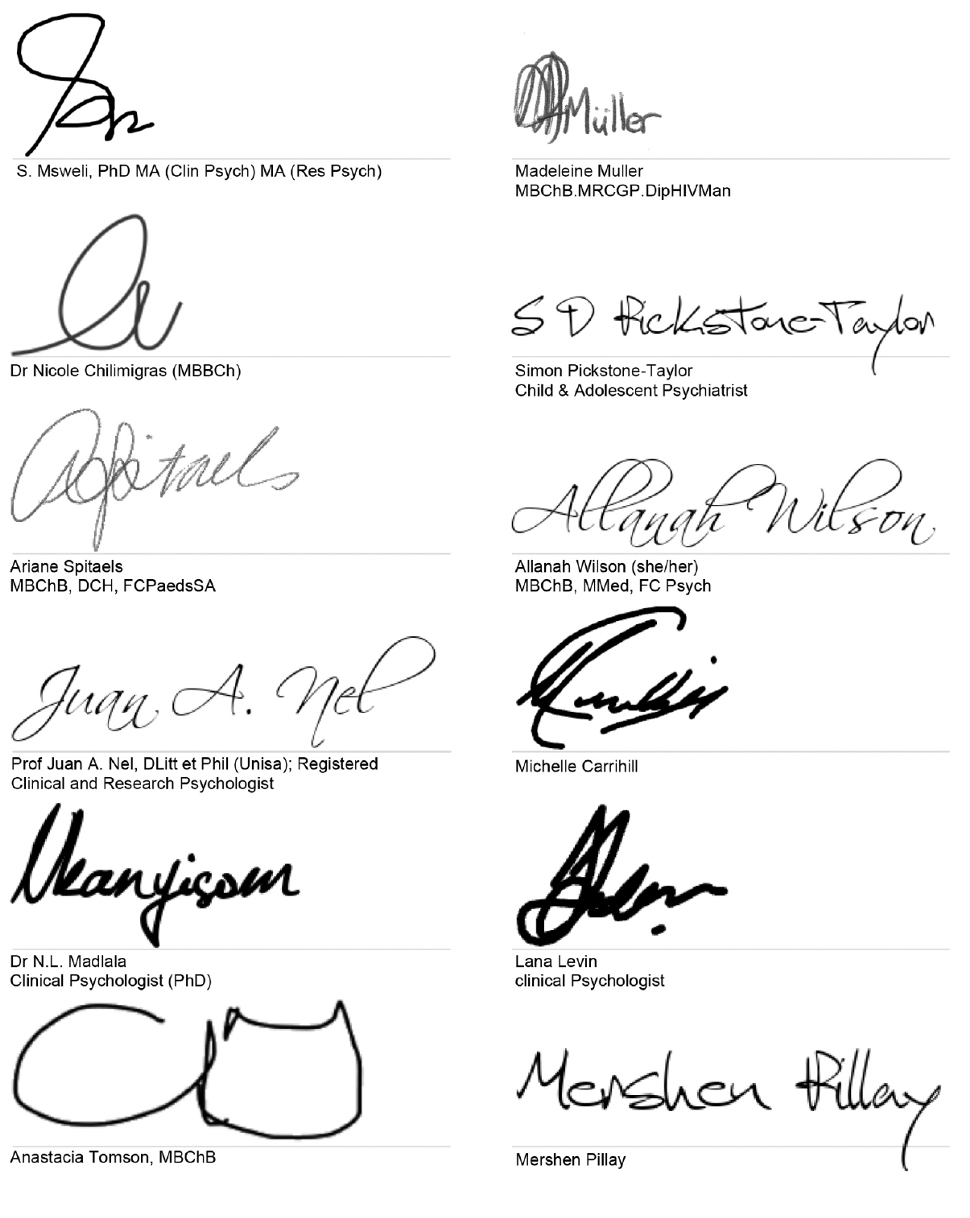
We, the undersigned, thus resolutely support evidence-based care as a vital and ethical imperative.
* Ubuntu is a Southern African philosophy and cultural concept that embodies the idea of shared humanity and interconnectedness. The word "ubuntu" comes from the Nguni Bantu languages of isiZulu and isiXhosa, and it is often translated as "I am because we are" or "a person is a person through other people." At its heart, Ubuntu emphasises the belief that our individual wellbeing is deeply tied to the wellbeing of others. It encourages a sense of community, mutual respect, and responsibility, highlighting that a person’s humanity is affirmed through their relationships and interactions with others. Ubuntu promotes the idea that one’s identity and sense of self are shaped through their connection to and care for others, fostering a culture of compassion, empathy, and social harmony. In a broader sense, Ubuntu serves as a guiding principle for creating a just and equitable society, where the dignity and rights of all individuals are upheld, and collective wellbeing is prioritised over individualism.
* Constitution of the Republic of South Africa, 1996: While not specifically child-focused, the Constitution provides the overarching legal framework for protecting the rights of all individuals, including children. Section 28 specifically protects children's rights, ensuring their wellbeing, protection from harm, and the right to family or parental care.
* Children's Act 38 of 2005: This Act provides a comprehensive framework for the care and protection of children. It emphasises the best interests of the child as the paramount consideration in all matters concerning children, including their right to express their views freely and to have these views taken into account in decisions affecting them.
National Health Act 61 of 2003: This Act includes provisions relevant to children's healthcare, particularly regarding informed consent and the right to access health services.
Promotion of Equality and Prevention of Unfair Discrimination Act 4 of 2000 (PEPUDA): This Act aims to prevent and prohibit unfair discrimination, hate speech, and harassment, and it supports the promotion of equality for all, including children. It can be invoked to protect children from discrimination based on gender identity and expression.
South African Schools Act 84 of 1996: This Act governs the provision of education in South Africa and includes provisions to protect children from discrimination and ensure equal access to education, which can be applied to safeguard the rights of transgender and gender-diverse students.
See also Centre for Child Law for comprehensive information on the rights of children in South Africa
* The Patients' Rights Charter is a document that outlines the rights of patients in South Africa as established by the National Department of Health. It is a crucial part of South Africa's health policy framework and ensures that patients are treated with dignity, respect, and fairness within the healthcare system. Key aspects of the charter include:
- The Right to Access Healthcare: Patients have the right to access healthcare services that include the provision of emergency care, basic health services, and essential medication. This is relevant to transgender and gender-diverse youth, ensuring they have access to necessary, evidence-based healthcare.
- The Right to Informed Consent: Patients have the right to be informed about their health status, the treatment options available, and the risks and benefits associated with those treatments. This right is vital in the context of gender-affirming care, where informed consent is critical.
- The Right to Confidentiality and Privacy: Patients' medical information must be kept confidential unless the patient gives consent for it to be shared. This is particularly important for transgender and gender-diverse youth, who may face stigma or discrimination if their gender identity is disclosed without their consent.
- The Right to a Healthy and Safe Environment: Patients have the right to receive healthcare in a safe and secure environment. For transgender and gender-diverse individuals, this includes an environment free from discrimination, harassment, and prejudice.
- The Right to Participation in Decision-Making: Patients have the right to participate in decisions regarding their health. This includes the right to make decisions about gender-affirming care, ensuring that the care provided aligns with the patient's needs and identity.
- The Right to Complain: Patients have the right to complain about poor service or treatment without fear of retribution. This is essential for transgender and gender-diverse youth who might encounter bias or discrimination within the healthcare system.
* United Nations Convention on the Rights of the Child (UNCRC)
- Relevance: The UNCRC is a comprehensive international treaty that sets out the civil, political, economic, social, health, and cultural rights of children. It emphasises the right of all children to receive care, protection, and support, regardless of their gender identity.
Key Articles:
- Article 3: The best interests of the child should be a primary consideration in all actions concerning children.
- Article 12: Children have the right to express their views freely in all matters affecting them.
- Article 24: The right to the highest attainable standard of health, including access to necessary healthcare services.
Universal Declaration of Human Rights (UDHR)
- Relevance: The UDHR is a foundational human rights document that upholds the dignity and rights of every individual, including the right to health and non-discrimination. It supports the right of transgender and gender-diverse individuals to live free from discrimination.
Key Articles:
- Article 1: All human beings are born free and equal in dignity and rights.
- Article 7: All are equal before the law and are entitled to equal protection against discrimination.
International Covenant on Economic, Social and Cultural Rights (ICESCR)
- Relevance: The ICESCR obligates states to recognise the right of everyone to the enjoyment of the highest attainable standard of physical and mental health. This includes access to healthcare services that are non-discriminatory and respectful of gender identity.
Key Articles:
- Article 12: The right to the highest attainable standard of physical and mental health, which includes the creation of conditions that would assure to all medical service and medical attention in the event of sickness.
- Relevance: A set of principles on the application of international human rights law on sexual orientation and gender identity.
Key Principles:
- Principle 17: The right to the highest attainable standard of health, which includes access to healthcare without discrimination based on sexual orientation or gender identity.
- Principle 18: Protection from medical abuses, ensuring that medical practices respect the dignity and autonomy of individuals.
Convention on the Elimination of All Forms of Discrimination Against Women (CEDAW)
- Relevance: While CEDAW primarily focuses on women's rights, it has been interpreted to include gender identity under its protections against discrimination. It supports the rights of transgender and gender-diverse individuals to access healthcare and live free from discrimination.
Key Articles:
- Article 12: States should eliminate discrimination against women in the field of healthcare to ensure access to healthcare services.
- General Recommendation No. 28: Recognises gender identity as a protected characteristic under the term "gender."
African Charter on Human and Peoples' Rights
- Relevance: A regional human rights instrument that protects human rights and freedoms across the African continent. It underscores the rights to non-discrimination, health, and dignity, which are relevant to transgender and gender-diverse youth.
Key Articles:
- Article 2: The right to non-discrimination, ensuring all individuals enjoy the rights and freedoms in the charter without distinction of any kind.
- Article 16: The right to enjoy the best attainable state of physical and mental health.
Protocol to the African Charter on Human and Peoples' Rights on the Rights of Women in Africa
- Relevance: The Protocol emphasises the rights of women and girls, including access to healthcare and protection from harmful practices. It is increasingly being interpreted to support broader gender rights, including gender identity.
Key Articles:
- Article 14: Health and reproductive rights, which include access to health services without discrimination.
Convention on the Rights of Persons with Disabilities (CRPD)
- Relevance: The CRPD emphasises non-discrimination and equal access to healthcare, which is particularly relevant for transgender and gender-diverse youth who may face multiple forms of discrimination.
Key Articles:
- Article 25: Health – States must provide persons with disabilities with the same range, quality, and standard of free or affordable health care as provided to other persons, including in the area of sexual and reproductive health.
* In this context, self-determination refers to the fundamental human right to authentically embody and experience one’s true identity. It highlights the importance of respecting each individual's understanding of who they are and their right to express that identity without external pressure or influence.
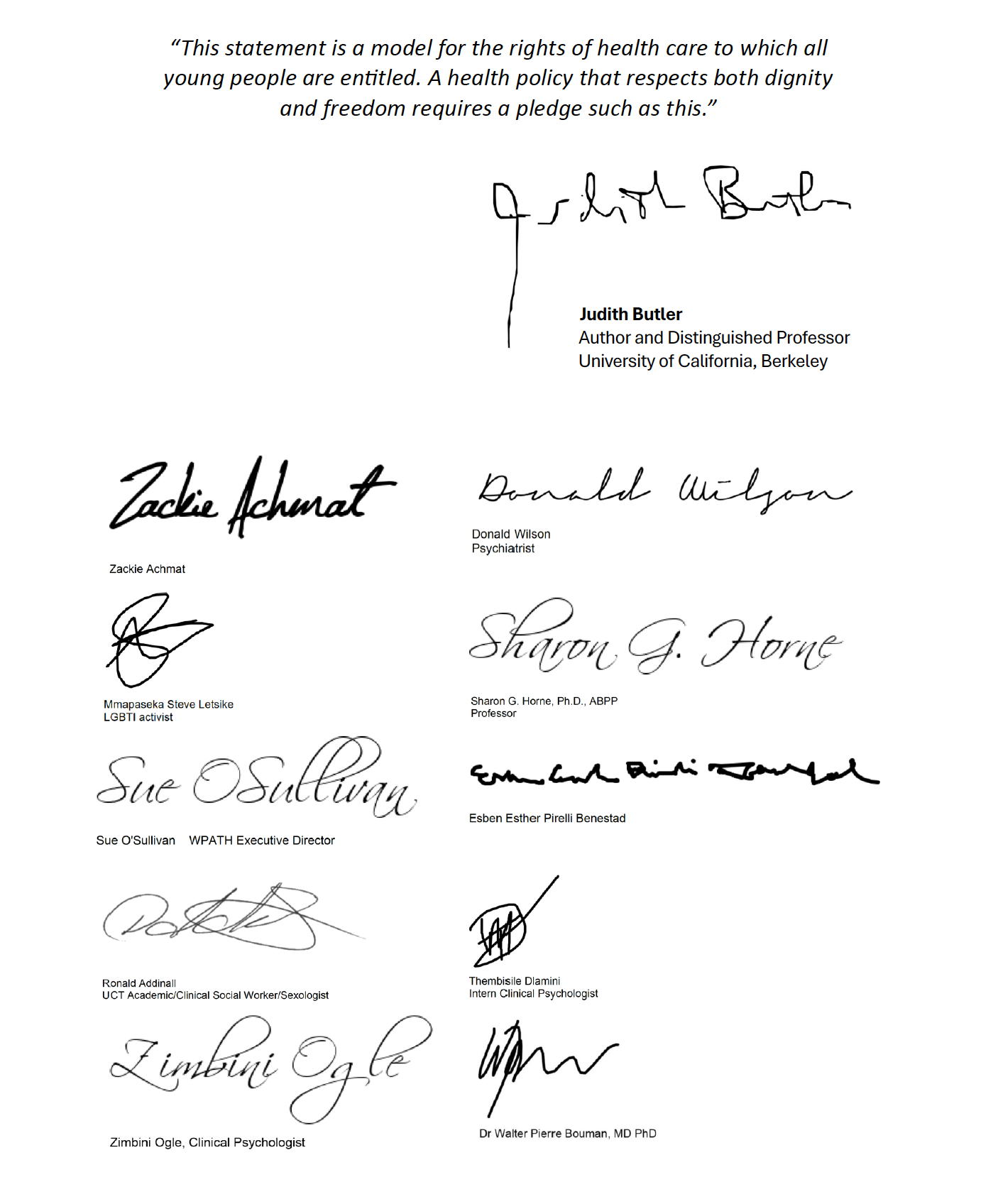
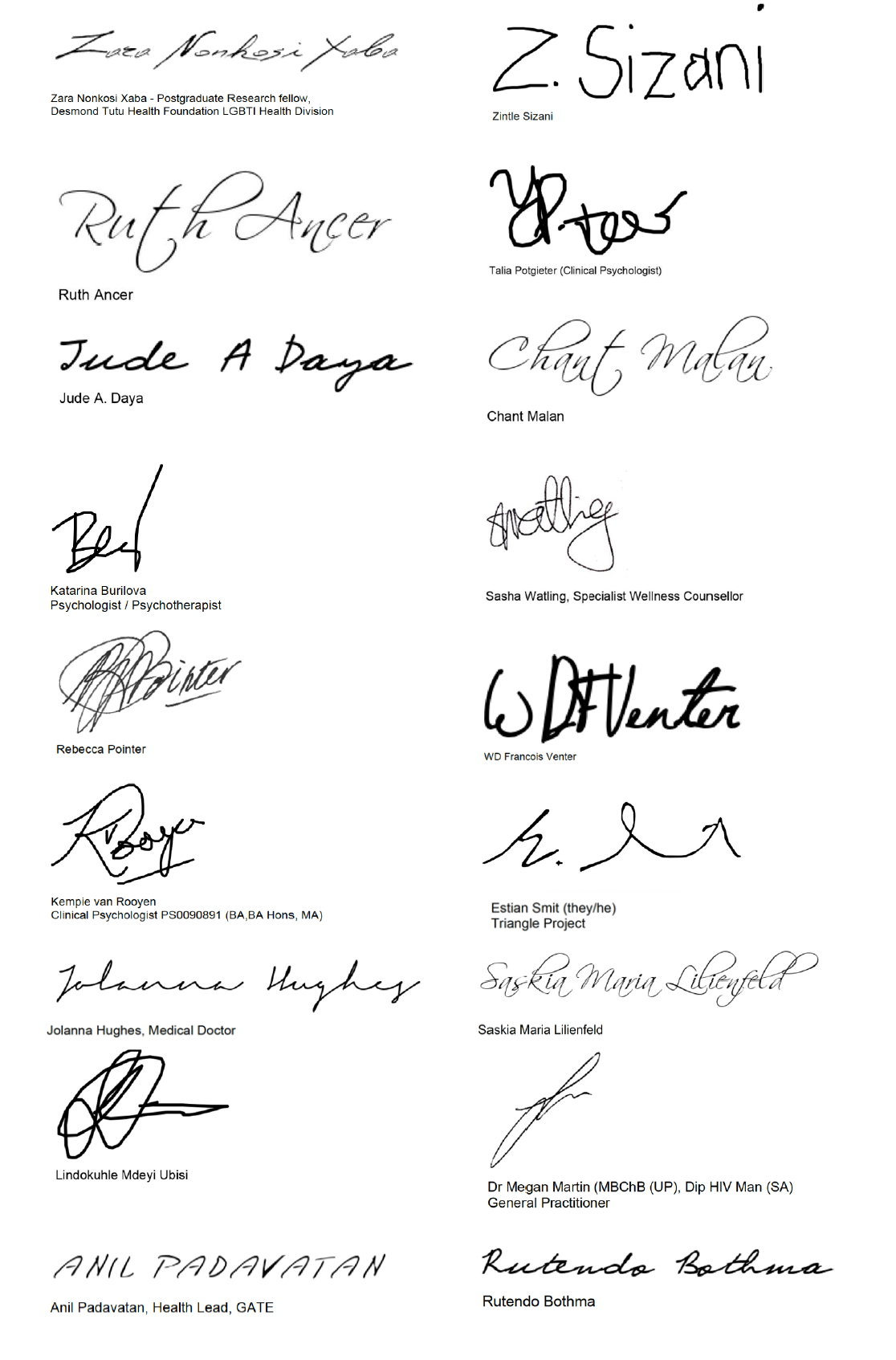
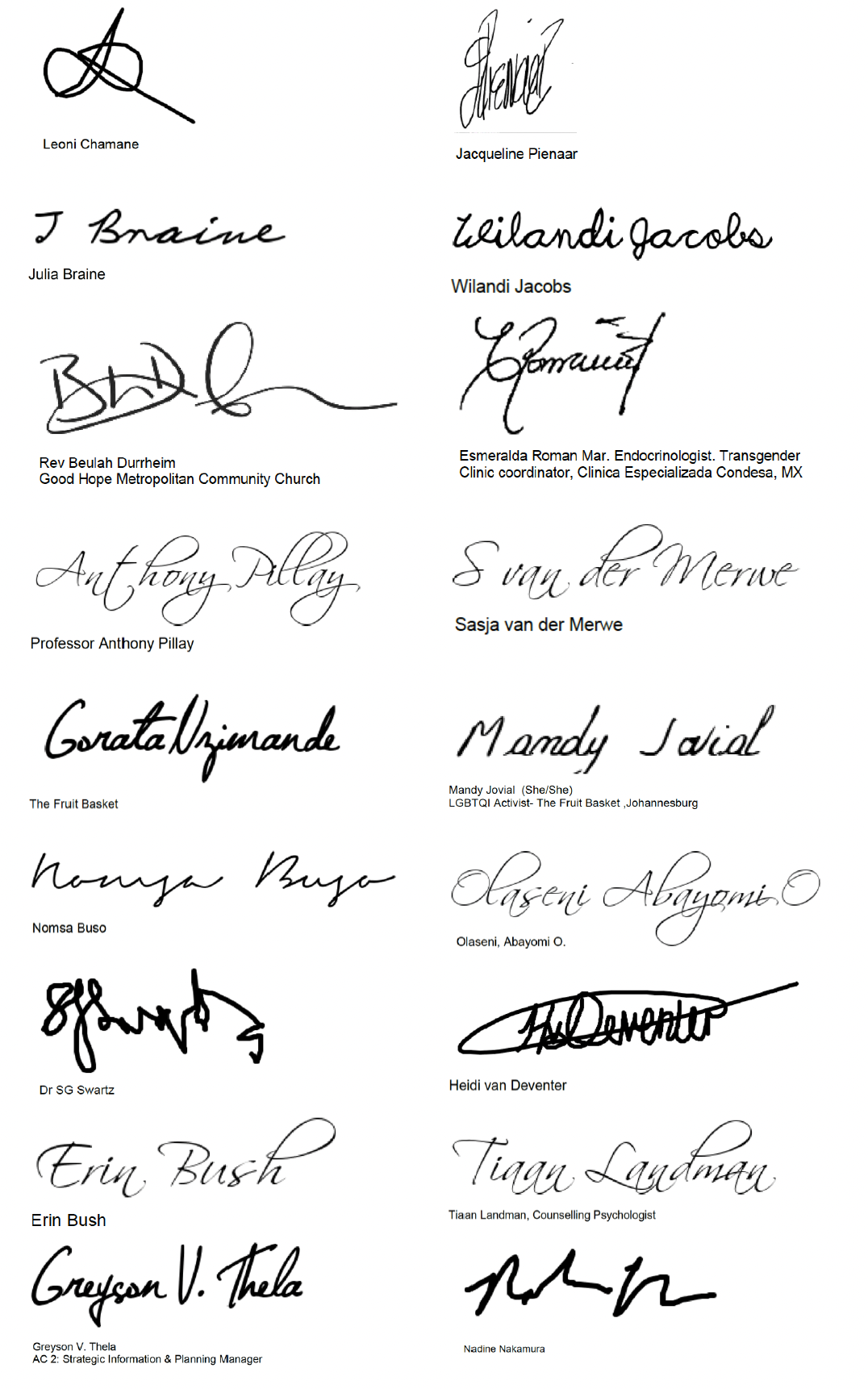
FURTHER ENDORSED BY THE FOLLOWING INDIVIDUALS AND ORGANISATIONS






2,972
The Issue
Embracing Diversity, Upholding Rights: A South African Position Statement on Evidence-Based Care For Transgender and Gender-Diverse Young People
18 August 2024 | Cape Town, South Africa
Background
Gender diversity is a fundamental aspect of the human experience, and the right to explore and affirm one's gender identity is integral to the individual, relational and social wellbeing of our youth. To honour and affirm the existence and dignity of transgender and gender-diverse young people is to challenge the societal norms that seek to diminish their identities, allowing them not just to survive but to flourish in a world that too often denies their very humanity.
South Africa is a country built on healing from a past which harmed and divided us. We are all called to commit to a future which is rooted in compassion and acts of care and belonging that bring forth the tangible recognition and affirmation of our shared humanity. In this pursuit, transgender and gender-diverse young people are not only fully recognised for their inherent worth but are also honoured as indispensable and cherished members of our society, deserving of the opportunity to reach their fullest potential and contribute to our shared future.
As a nation founded on Ubuntu* and the principles of equality, dignity, and unity, it is our collective responsibility to ensure that every young person in South Africa is afforded the opportunity to live authentically and without fear.
Framing
In keeping with the South African Constitution,* child-focused legislation,* the Patients' Rights Charter* as well as international conventions, treaties and charters*
- which create a frame for rights, dignity and care
Mindful of global and local anti-gender movements
- which create a hostile climate for gender work
And recognising the legacies of colonialism and apartheid
- which erased pre-colonial identities and practices around gender diversity and created profound health inequalities
Resolutions
We call on everyone to stand in solidarity with transgender and gender-diverse young people to:
- Recognise the right of all people to self-determine* their gender, gender identity and gender expression:
- We affirm the inherent right of every individual to determine and express their gender identity freely, without external imposition. This recognition is central to fostering a society where the autonomy and unique identities of transgender and gender-diverse young people are upheld as intrinsic to their personhood.
- Protect safe and affirming spaces for young people and their families to explore and realise this self-determination:
- It is vital to ensure inclusive environments where young people and their families can confidently consider their options to make informed decisions. These spaces must provide the acceptance and support necessary for healthy development and the full actualisation of their authentic selves, free from the barriers of prejudice or exclusion.
- Support, improve and expand access to evidence-based care for transgender and gender-diverse young people and their families across South Africa:
- Equitable access to comprehensive, evidence-based care is essential for the wellbeing of transgender and gender-diverse young people. This encompasses psychological and social support services, as well as medical care when needed, all of which must be developmentally appropriate, culturally sensitive, and accessible to everyone. We must expand these services to reach every young person, irrespective of geographic or socio-economic barriers, by advocating for increased resources and mobilising social and political will.
- Prioritise the voices of transgender and gender-diverse young people in all decisions that impact their lives:
- We underscore the imperative of centring transgender and gender-diverse young people in decision-making processes. Collaboration, support and guidance from families and healthcare professionals are essential in helping young people navigate their gender identity in a way that is safe, informed, and developmentally appropriate. Their insights and lived experiences must be the guiding force in developing policies, practices, and care frameworks that resonate with their needs and aspirations.
This position statement cements our commitment to ensuring that all young people are afforded the rights, respect, and healthcare necessary to live authentically. Grounded in our constitutional values of justice, freedom, and human dignity, we advocate for an inclusive and compassionate approach to evidence-based care for transgender and gender-diverse young people.
We call on all stakeholders, including government bodies, healthcare institutions, and educational systems, to not only stand in solidarity but also to be held accountable for upholding these principles. Concrete actions must be taken to ensure that the societal, legal, and healthcare rights of transgender and gender-diverse young people are fully recognised and realised.
We, the undersigned, thus resolutely support evidence-based care as a vital and ethical imperative.
* Ubuntu is a Southern African philosophy and cultural concept that embodies the idea of shared humanity and interconnectedness. The word "ubuntu" comes from the Nguni Bantu languages of isiZulu and isiXhosa, and it is often translated as "I am because we are" or "a person is a person through other people." At its heart, Ubuntu emphasises the belief that our individual wellbeing is deeply tied to the wellbeing of others. It encourages a sense of community, mutual respect, and responsibility, highlighting that a person’s humanity is affirmed through their relationships and interactions with others. Ubuntu promotes the idea that one’s identity and sense of self are shaped through their connection to and care for others, fostering a culture of compassion, empathy, and social harmony. In a broader sense, Ubuntu serves as a guiding principle for creating a just and equitable society, where the dignity and rights of all individuals are upheld, and collective wellbeing is prioritised over individualism.
* Constitution of the Republic of South Africa, 1996: While not specifically child-focused, the Constitution provides the overarching legal framework for protecting the rights of all individuals, including children. Section 28 specifically protects children's rights, ensuring their wellbeing, protection from harm, and the right to family or parental care.
* Children's Act 38 of 2005: This Act provides a comprehensive framework for the care and protection of children. It emphasises the best interests of the child as the paramount consideration in all matters concerning children, including their right to express their views freely and to have these views taken into account in decisions affecting them.
National Health Act 61 of 2003: This Act includes provisions relevant to children's healthcare, particularly regarding informed consent and the right to access health services.
Promotion of Equality and Prevention of Unfair Discrimination Act 4 of 2000 (PEPUDA): This Act aims to prevent and prohibit unfair discrimination, hate speech, and harassment, and it supports the promotion of equality for all, including children. It can be invoked to protect children from discrimination based on gender identity and expression.
South African Schools Act 84 of 1996: This Act governs the provision of education in South Africa and includes provisions to protect children from discrimination and ensure equal access to education, which can be applied to safeguard the rights of transgender and gender-diverse students.
See also Centre for Child Law for comprehensive information on the rights of children in South Africa
* The Patients' Rights Charter is a document that outlines the rights of patients in South Africa as established by the National Department of Health. It is a crucial part of South Africa's health policy framework and ensures that patients are treated with dignity, respect, and fairness within the healthcare system. Key aspects of the charter include:
- The Right to Access Healthcare: Patients have the right to access healthcare services that include the provision of emergency care, basic health services, and essential medication. This is relevant to transgender and gender-diverse youth, ensuring they have access to necessary, evidence-based healthcare.
- The Right to Informed Consent: Patients have the right to be informed about their health status, the treatment options available, and the risks and benefits associated with those treatments. This right is vital in the context of gender-affirming care, where informed consent is critical.
- The Right to Confidentiality and Privacy: Patients' medical information must be kept confidential unless the patient gives consent for it to be shared. This is particularly important for transgender and gender-diverse youth, who may face stigma or discrimination if their gender identity is disclosed without their consent.
- The Right to a Healthy and Safe Environment: Patients have the right to receive healthcare in a safe and secure environment. For transgender and gender-diverse individuals, this includes an environment free from discrimination, harassment, and prejudice.
- The Right to Participation in Decision-Making: Patients have the right to participate in decisions regarding their health. This includes the right to make decisions about gender-affirming care, ensuring that the care provided aligns with the patient's needs and identity.
- The Right to Complain: Patients have the right to complain about poor service or treatment without fear of retribution. This is essential for transgender and gender-diverse youth who might encounter bias or discrimination within the healthcare system.
* United Nations Convention on the Rights of the Child (UNCRC)
- Relevance: The UNCRC is a comprehensive international treaty that sets out the civil, political, economic, social, health, and cultural rights of children. It emphasises the right of all children to receive care, protection, and support, regardless of their gender identity.
Key Articles:
- Article 3: The best interests of the child should be a primary consideration in all actions concerning children.
- Article 12: Children have the right to express their views freely in all matters affecting them.
- Article 24: The right to the highest attainable standard of health, including access to necessary healthcare services.
Universal Declaration of Human Rights (UDHR)
- Relevance: The UDHR is a foundational human rights document that upholds the dignity and rights of every individual, including the right to health and non-discrimination. It supports the right of transgender and gender-diverse individuals to live free from discrimination.
Key Articles:
- Article 1: All human beings are born free and equal in dignity and rights.
- Article 7: All are equal before the law and are entitled to equal protection against discrimination.
International Covenant on Economic, Social and Cultural Rights (ICESCR)
- Relevance: The ICESCR obligates states to recognise the right of everyone to the enjoyment of the highest attainable standard of physical and mental health. This includes access to healthcare services that are non-discriminatory and respectful of gender identity.
Key Articles:
- Article 12: The right to the highest attainable standard of physical and mental health, which includes the creation of conditions that would assure to all medical service and medical attention in the event of sickness.
- Relevance: A set of principles on the application of international human rights law on sexual orientation and gender identity.
Key Principles:
- Principle 17: The right to the highest attainable standard of health, which includes access to healthcare without discrimination based on sexual orientation or gender identity.
- Principle 18: Protection from medical abuses, ensuring that medical practices respect the dignity and autonomy of individuals.
Convention on the Elimination of All Forms of Discrimination Against Women (CEDAW)
- Relevance: While CEDAW primarily focuses on women's rights, it has been interpreted to include gender identity under its protections against discrimination. It supports the rights of transgender and gender-diverse individuals to access healthcare and live free from discrimination.
Key Articles:
- Article 12: States should eliminate discrimination against women in the field of healthcare to ensure access to healthcare services.
- General Recommendation No. 28: Recognises gender identity as a protected characteristic under the term "gender."
African Charter on Human and Peoples' Rights
- Relevance: A regional human rights instrument that protects human rights and freedoms across the African continent. It underscores the rights to non-discrimination, health, and dignity, which are relevant to transgender and gender-diverse youth.
Key Articles:
- Article 2: The right to non-discrimination, ensuring all individuals enjoy the rights and freedoms in the charter without distinction of any kind.
- Article 16: The right to enjoy the best attainable state of physical and mental health.
Protocol to the African Charter on Human and Peoples' Rights on the Rights of Women in Africa
- Relevance: The Protocol emphasises the rights of women and girls, including access to healthcare and protection from harmful practices. It is increasingly being interpreted to support broader gender rights, including gender identity.
Key Articles:
- Article 14: Health and reproductive rights, which include access to health services without discrimination.
Convention on the Rights of Persons with Disabilities (CRPD)
- Relevance: The CRPD emphasises non-discrimination and equal access to healthcare, which is particularly relevant for transgender and gender-diverse youth who may face multiple forms of discrimination.
Key Articles:
- Article 25: Health – States must provide persons with disabilities with the same range, quality, and standard of free or affordable health care as provided to other persons, including in the area of sexual and reproductive health.
* In this context, self-determination refers to the fundamental human right to authentically embody and experience one’s true identity. It highlights the importance of respecting each individual's understanding of who they are and their right to express that identity without external pressure or influence.
FURTHER ENDORSED BY THE FOLLOWING INDIVIDUALS AND ORGANISATIONS
Petition Updates
Share this petition
Petition created on 15 October 2024