⚠️ Blue Green Algae samples exceeded WHO limits for recreational use of Windermere

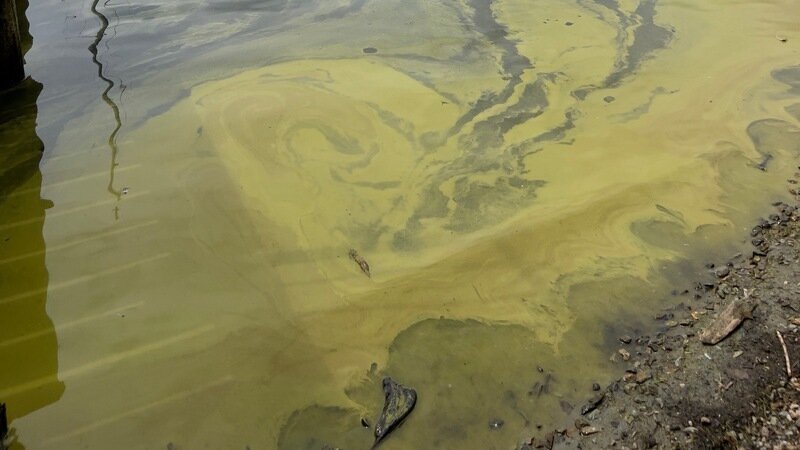
As part of our ongoing scientific monitoring of Windermere, we undertook sampling of a localised but extensive algal bloom that we were alerted to at Waterhead on 25th June 2024.
We felt it was important for us to sample it because:
1. People were actively swimming in the bloom and with the start of the summer holidays, more people will be using Windermere for recreation
2. We deem that the Environment Agency's monitoring of bathing water, algal blooms, and general sampling of Windermere is not fit for purpose.
The samples, independently analysed by internationally recognised and published algologist Dr. Nick Everall, who is also the ex-Principal Biologist at Severn Trent Water and a registered expert witness, demonstrated that cyanobacteria concentrations exceeded the World Health Organisation (WHO) guidance for recreational use of the lake. This is the second time in two years that the campaign has deemed the risk to human health a justifiable reason to undertake independent sampling at Waterhead. On both occasions, the WHO threshold has been surpassed.
https://www.savewindermere.com/news/bga-sample-exceed-limits
Save Windermere is now calling on the new Environment Minister Steve Reed to enforce the installation of permanent signage along the shoreline of the lake at all publicly accessible locations and for regular monitoring by the Agency to be undertaken throughout the summer season across the entire lake, including toxin analysis. Dr Everall undertook toxin analysis of the samples, and in this case, toxins were not being produced at the time of analysis. However, expert consensus is that BGA produces toxins 60-70% of the time when a bloom is present.
You can sign our call for greater protection of Windermere by following the link below
https://www.savewindermere.com/greater-protection
The analysis reaffirms our stance that the Environment Agency’s monitoring, warnings, and actions with regards to BGA on Windermere are woefully inadequate, not fit for purpose and pose a risk to public health.
Save Windermere returned to the same location on 26th June, and the bloom had dissipated and we have not been alerted to one in the area since. Blue-green algal blooms are not present all year round, which emphasises the need for routine monitoring of the lake particularly in the summer season. We are often asked about swimming in Windermere, and our stance is very simple: the likelihood is you will swim in Windermere without any issues at all, but there are times when areas, such as Waterhead on 25th June, are not safe for swimming. The bathing water classifications, despite what United Utilities may suggest, are based on monitoring that is not fit for purpose and do not provide a genuine indication of whether it is safe to enter the water. As an example on 25th May 2022 at one of the bathing water sites on Windermere, the EA took a sample which has an e.coli concentration of 4500 cfu/100ml, which is significantly higher than the concentrations required to achieve even Sufficient bathing water quality (<900 cfu/100ml) under the Bathing Water Directive.