

STOP THE KILLING!
The Issue
Stop the Killing
Humans are the sole predators of some of Africa's most threatened wildlife species.
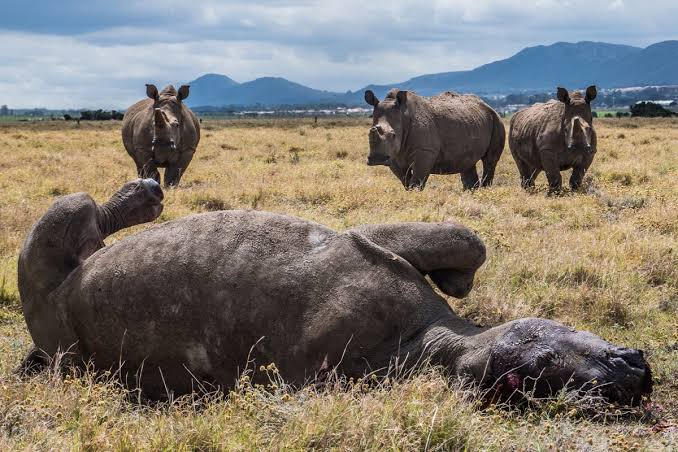
More elephants and rhinos are dying from poaching than from natural causes or conflict with humans. Their body parts are traded illegally as trophies, traditional medicine, or trinkets on a lucrative black market — but these iconic pachyderms are not the only wildlife species to be slaughtered for human gain. Big cats like the lion and cheetah are killed for their bones; the African wild dog and other large carnivores die at the hands of villagers protecting their livestock; great apes, like chimps, in Central and West Africa, are hunted as bushmeat and their babies traded as pets; pangolins are captured for their scales and meat.
Across the continent’s diverse wild lands, management authorities need data-driven solutions to enhance anti-poaching capacity to allow remaining priority populations to recover from previous, and current, crises. Meanwhile, community-level interventions must explore different economic opportunities that secure rather than destroy biodiversity as pressure on natural resources grows with increasing development, infrastructure, and urbanization.
Wildlife habitats must be maintained to reverse population decline.
The rapid decline of Africa's keystone species over the last few decades is devastating not only to national economies that depend on wildlife tourism but also to ecosystems that provide resources to other species and vital services to growing human populations. As wildlife habitats become increasingly fragmented, securing Africa's wild lands gives them a fighting chance to survive.

288
The Issue
Stop the Killing
Humans are the sole predators of some of Africa's most threatened wildlife species.
More elephants and rhinos are dying from poaching than from natural causes or conflict with humans. Their body parts are traded illegally as trophies, traditional medicine, or trinkets on a lucrative black market — but these iconic pachyderms are not the only wildlife species to be slaughtered for human gain. Big cats like the lion and cheetah are killed for their bones; the African wild dog and other large carnivores die at the hands of villagers protecting their livestock; great apes, like chimps, in Central and West Africa, are hunted as bushmeat and their babies traded as pets; pangolins are captured for their scales and meat.
Across the continent’s diverse wild lands, management authorities need data-driven solutions to enhance anti-poaching capacity to allow remaining priority populations to recover from previous, and current, crises. Meanwhile, community-level interventions must explore different economic opportunities that secure rather than destroy biodiversity as pressure on natural resources grows with increasing development, infrastructure, and urbanization.
Wildlife habitats must be maintained to reverse population decline.
The rapid decline of Africa's keystone species over the last few decades is devastating not only to national economies that depend on wildlife tourism but also to ecosystems that provide resources to other species and vital services to growing human populations. As wildlife habitats become increasingly fragmented, securing Africa's wild lands gives them a fighting chance to survive.
Petition Updates
Share this petition
Petition created on November 28, 2022