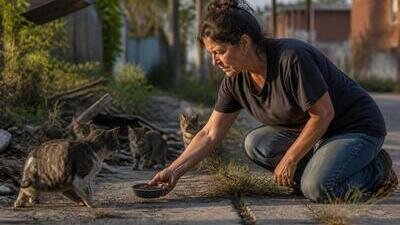

Stop the "Feed Feral Cat" punishment ordinance
Stop the "Feed Feral Cat" punishment ordinance
The Issue
Please only sign if you are register to vote in orangeburg county!
Orangeburg City Council 933 Middleton Street Orangeburg, South Carolina 29115
RE: Request for Reconsideration of Proposed Ordinance Regarding Feeding Feral and Community Cats
Dear Mayor and Members of Orangeburg City Council,
I write today as a concerned citizen and taxpayer asking City Council to reconsider the proposed ordinance that would impose substantial fines and potential jail penalties upon citizens feeding feral and community cats within the City of Orangeburg.
Our community absolutely faces challenges involving stray and community animal populations. Residents understand the concerns surrounding animal overpopulation, shelter burden, nuisance complaints, and public health concerns. Those concerns deserve thoughtful solutions.
However, respectfully, criminalizing compassion without addressing the underlying cause of feral cat population growth risks creating additional problems rather than solving them.
Feral cat population growth occurs primarily through reproduction. Penalizing citizens who provide food does not reduce reproduction rates. Long-term population control requires addressing the source.
Communities across the country increasingly utilize Trap-Neuter-Return (TNR) programs as one strategy to reduce unmanaged cat populations. Trap-Neuter-Return programs humanely trap community cats, sterilize them, vaccinate them, identify them through ear tipping, and return them to their established outdoor territories.
Peer-reviewed research demonstrates measurable outcomes:
• A peer-reviewed California study documented one colony declining from 175 cats to one remaining cat over sixteen years through sustained Trap-Neuter-Return efforts, representing a 99.4% reduction in colony size.
Source: Spehar DD, Wolf PJ. "The Impact of Targeted Trap-Neuter-Return Efforts in the San Francisco Bay Area." Animals. 2020;10(11):2089. National Library of Medicine: https://www.ncbi.nlm.nih.gov/pmc/articles/PMC7698188/
• A University of Central Florida long-term Trap-Neuter-Return program documented sustained reductions in free-roaming cat populations and elimination of kitten births in managed colonies.
Source: Levy JK, Gale DW, Gale LA. "Evaluation of the Effect of a Long-Term Trap-Neuter-Return and Adoption Program on a Free-Roaming Cat Population." Journal of the American Veterinary Medical Association. 2003;222(1):42-46.
• Scientific population modeling published in PLOS ONE found concentrated sterilization efforts can reduce free-roaming cat populations when sufficient numbers are altered.
Source: Miller PS, Boone JD, Briggs JR, et al. "Simulating Free-Roaming Cat Population Management Options in Open Demographic Environments." PLOS ONE. 2014;9(11):e113553.
• Research has also shown sterilization reduces nuisance behaviors commonly associated with unmanaged populations, including fighting and mating-related behaviors.
Source: Finkler H, Gunther I, Terkel J. "Behavioral Differences Between Urban Feeding Groups of Neutered and Sexually Intact Free-Roaming Cats Following a Trap-Neuter-Return Procedure." Journal of the American Veterinary Medical Association. 2011;238(9):1141-1149.
We fully recognize that animal management is complex. Wildlife advocates, veterinarians, shelters, rescue organizations, and municipalities often hold differing opinions regarding the best approaches.
However, punishing residents with fines reportedly reaching $1,000 and potential jail penalties while lacking expanded sterilization resources places responsibility upon citizens without fully addressing the root cause.
Respectfully, we ask Orangeburg City Council to consider practical alternatives:
Partner with local rescue organizations.
Create city-supported or grant-funded spay and neuter clinics targeting community cats.
Pursue state, nonprofit, and national grant funding opportunities for sterilization programs.
Build partnerships with veterinarians and animal welfare organizations.
Expand public education regarding responsible pet ownership and sterilization.
Consider targeted nuisance solutions rather than broad penalties affecting citizens attempting to help.
Cities solve difficult problems through evidence-based policy, community partnerships, and long-term planning.
Orangeburg residents are not asking City Council to ignore the problem.
Residents are asking City Council to address it effectively.
Compassion and accountability can exist together.
We respectfully ask Orangeburg City Council to reconsider this ordinance and pursue solutions supported by research, community collaboration, and responsible long-term planning.
Respectfully,
Concerned Citizen and Taxpayer
City of Orangeburg, South Carolina

44
The Issue
Please only sign if you are register to vote in orangeburg county!
Orangeburg City Council 933 Middleton Street Orangeburg, South Carolina 29115
RE: Request for Reconsideration of Proposed Ordinance Regarding Feeding Feral and Community Cats
Dear Mayor and Members of Orangeburg City Council,
I write today as a concerned citizen and taxpayer asking City Council to reconsider the proposed ordinance that would impose substantial fines and potential jail penalties upon citizens feeding feral and community cats within the City of Orangeburg.
Our community absolutely faces challenges involving stray and community animal populations. Residents understand the concerns surrounding animal overpopulation, shelter burden, nuisance complaints, and public health concerns. Those concerns deserve thoughtful solutions.
However, respectfully, criminalizing compassion without addressing the underlying cause of feral cat population growth risks creating additional problems rather than solving them.
Feral cat population growth occurs primarily through reproduction. Penalizing citizens who provide food does not reduce reproduction rates. Long-term population control requires addressing the source.
Communities across the country increasingly utilize Trap-Neuter-Return (TNR) programs as one strategy to reduce unmanaged cat populations. Trap-Neuter-Return programs humanely trap community cats, sterilize them, vaccinate them, identify them through ear tipping, and return them to their established outdoor territories.
Peer-reviewed research demonstrates measurable outcomes:
• A peer-reviewed California study documented one colony declining from 175 cats to one remaining cat over sixteen years through sustained Trap-Neuter-Return efforts, representing a 99.4% reduction in colony size.
Source: Spehar DD, Wolf PJ. "The Impact of Targeted Trap-Neuter-Return Efforts in the San Francisco Bay Area." Animals. 2020;10(11):2089. National Library of Medicine: https://www.ncbi.nlm.nih.gov/pmc/articles/PMC7698188/
• A University of Central Florida long-term Trap-Neuter-Return program documented sustained reductions in free-roaming cat populations and elimination of kitten births in managed colonies.
Source: Levy JK, Gale DW, Gale LA. "Evaluation of the Effect of a Long-Term Trap-Neuter-Return and Adoption Program on a Free-Roaming Cat Population." Journal of the American Veterinary Medical Association. 2003;222(1):42-46.
• Scientific population modeling published in PLOS ONE found concentrated sterilization efforts can reduce free-roaming cat populations when sufficient numbers are altered.
Source: Miller PS, Boone JD, Briggs JR, et al. "Simulating Free-Roaming Cat Population Management Options in Open Demographic Environments." PLOS ONE. 2014;9(11):e113553.
• Research has also shown sterilization reduces nuisance behaviors commonly associated with unmanaged populations, including fighting and mating-related behaviors.
Source: Finkler H, Gunther I, Terkel J. "Behavioral Differences Between Urban Feeding Groups of Neutered and Sexually Intact Free-Roaming Cats Following a Trap-Neuter-Return Procedure." Journal of the American Veterinary Medical Association. 2011;238(9):1141-1149.
We fully recognize that animal management is complex. Wildlife advocates, veterinarians, shelters, rescue organizations, and municipalities often hold differing opinions regarding the best approaches.
However, punishing residents with fines reportedly reaching $1,000 and potential jail penalties while lacking expanded sterilization resources places responsibility upon citizens without fully addressing the root cause.
Respectfully, we ask Orangeburg City Council to consider practical alternatives:
Partner with local rescue organizations.
Create city-supported or grant-funded spay and neuter clinics targeting community cats.
Pursue state, nonprofit, and national grant funding opportunities for sterilization programs.
Build partnerships with veterinarians and animal welfare organizations.
Expand public education regarding responsible pet ownership and sterilization.
Consider targeted nuisance solutions rather than broad penalties affecting citizens attempting to help.
Cities solve difficult problems through evidence-based policy, community partnerships, and long-term planning.
Orangeburg residents are not asking City Council to ignore the problem.
Residents are asking City Council to address it effectively.
Compassion and accountability can exist together.
We respectfully ask Orangeburg City Council to reconsider this ordinance and pursue solutions supported by research, community collaboration, and responsible long-term planning.
Respectfully,
Concerned Citizen and Taxpayer
City of Orangeburg, South Carolina
44
The Decision Makers


Petition Updates
Share this petition
Petition created on May 25, 2026