
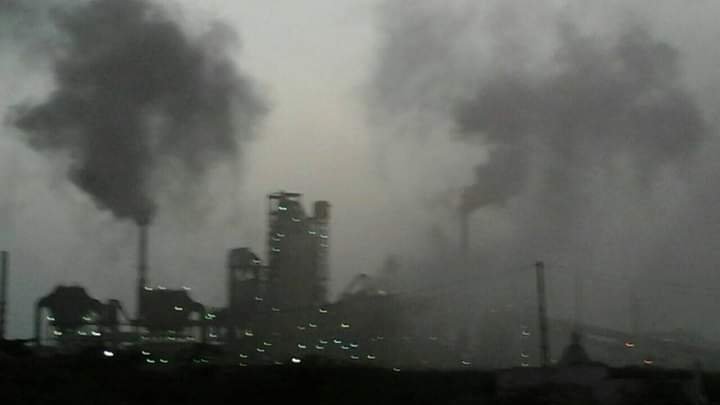
Stop pollution at Okhamandal by Tata chemicals
The Issue
First of all thank you all for giving us your valuable time we thank you on the behalf of people of okhamandal
Iam here today to describe the problem of pollution at okhamandal
we have a list of problems which are faced by people of okhamandal which are created by TATA Chemicals LTD and other industry also
List is as fellow.
Toxic Dumping
Saline wastes:
sir the effluent spill from Tata Chemicals in Mithapur is spread over more than 150 acres of sea in gulf of Kutch Marine National Park. Covers one of
the most bio diverse regions –mangroves , corals, mudskippers, whale sharks---in the coast of India. About 10 km of marine protected area has
Been considerably degraded due to the settlement of solids associated with affluent of the industry. According to the National Institute of Oceanography. The salt pans in the Mithapur area are also named as the cause of the rapid salinity ingress into the ground water. Several villagers have lost their farmlands to accommodate open unlined dumps for Tata’s
Saline effluent.
Mithapur is located on the west coast in Gujarat’s Dwarka sub-division. Its revenue areas
Mark the eastern boundaries of the Gulf of Kutch MNPS62. The Tata Chemicals Limited
(TCL) plant at Mithapur, spread over about 15,000 acres of land, is among the worlds
Largest integrated salt works and inorganic chemicals complex. The main product groups
Are soda ash, chloro-caustic products, marine chemicals, salt and cement.
According to the Department of Scientific and Industrial Research, about 10 cu m per
Tonne of effluent is generated during soda ash manufacturing63. Going by these figures,
the effluents discharged by TCL can be expected to have shot up nearly 30 times, from
330,000 cu m per year in the 1930s to 8,750,000 cu m per year at present. What does the
Effluent contain and where is it dumped?
A June 2008 investigation that examined files pertaining to TCL’s consent application at
The Gujarat Pollution Control Board's head office in Gandhinagar found that the effluents
were being discharged right into the MNPS. According to the investigators, TCL
Managed to secure a permit citing a 1987 stay order from the Gujarat High Court on
grounds that the unit had come up before the Park was notified.64
A. study carried out in 1993 stated that the Mithapur plant produces around 18 mn litres
Per day (mld) of highly alkaline process waste. The wastewater contains about 150 gm/l
of suspended solids and 25 mg/l of ammoniacal nitrogen. This is released through marshy
Lands above the high tide line in the marine sanctuary area. Due to its high density, the
Milky white effluent does not mix well with sea water but instead spreads along intertidal
Areas or settles in heaps along the shore. The white colour of the effluent is due to
high levels of suspended solids: calcium carbonate, calcium sulphate, magnesiumhydroxide and silica. The study found that the raw effluent was toxic. Even at 20 per cent
Concentration, fish did not survive in it for more than 15 minutes65.
Another study, sponsored by TCL, which examined samples of the waters adjoining the
Mithapur plant during two seasons (pre-monsoon and post-monsoon) conceded that the
Effluent discharge was indeed toxic but claimed that “the wastewater released from the
Factory does not reach the Gulf of Kutch in the quantities released.” 66 .
The effluent-carrying pipelines from the Mithapur plants were laid years before the
Declaration of the MNPS. In the present decade, two devastating accidents have taken
Place within a three-year period.
On 2 June 2001, a salt brine pipeline running through the marine national park, from a
TCL factory at Samlasar to its Padli and Mithapur salt works, burst open, spilling
thousands of tonnes of effluent into the PAs. A case was registered against the company
under the WLPA and two engineers of the company placed temporarily under arrest67.
Within three years of the salt brine spill, in October 2003, there was yet another accident.
This time, a TCL slurry pond burst, releasing 300,000 tonnes of calcium chloride into the
PAs. Over 1,500 mangrove plants were killed. Four employees of the plant were arrested
and later released on bail on charges of alleged negligence, and the Gujarat State
Pollution Control Board ordered the closure of the company’s soda ash manufacturing
plant68. However, less than a week later, the company that for 15 years had dodged
responsibility for clean production, was allowed to reopen its plant on the mere promise
that it would clean up the slurry waste and comply with safety measures in future.
Significant tracts of agricultural land near the coasts, covering an estimated 243 ha, are
today the company’s waste disposal sites69 (see Box 2: Toxic Dumping). TCL produce
8,760,000 tonnes of soda ash annually. Going by estimates, it can be calculated that every
year the company generates approximately 4,37,500 cu m of solid waste, which ends up
In surrounding landfills. To understand the implications better, consider this. Every year,
the amount of solid waste generated by TCL’s soda ash production process can fill 30
international-sized football fields up to about the height of a single-storey house.
A December 2007 visit to Mithapur revealed the effluent dumping practices involved in
TCL’s soda ash manufacturing.
Traveling from Dwarka to Mithapur by car, our first stop was the discharge point where liquid
effluents from the soda ash plant flow into the sea. It was difficult to believe that this was
MNPS land. No matter where you looked, the coast was utterly barren and uniformly grey,
ending abruptly in the blue waters of the Gulf of Kutch. Not a blade of grass grew here and
not a living creature was visible. These were the areas declared “biologically dead” following
two devastating toxic spillages from the Mithapur plant in 2001 and 2003 . Amidst the silence
was a single sound – that of liquid effluent gushing in a milky white stream into the sea.
From the discharge point, we travelled inland, to look at how the solid wastes from soda ash
manufacturing were being disposed. Our journey took us through several villages, including
Surajkaradi, Padli and Samlasar, and finally ended at Lalpur. Two workers from the Mithapur
Plant took the risk of being our guides. We were travelling through lands owned by TCL but
the journey was as if through moonscape. For miles, on either side of the road, rose tall grey
slopes - mountains of hardened solid waste. A fine dust hung in the air. Near Lalpur, the car
climbed up one of the slopes. The top of the dump provided a better perspective of what was
happening.
The dumping had started from Surajkaradi in the north and followed a simple strategy. Once a
Plot of land, about half a kilometre wide and equally long, brimmed up with waste, the
adjoining plot was dug up and filled. Over time, the waste matter hardened. Villagers in
surrounding areas confirmed, as did the Official Gazette, that this apparent moonscape once
consisted of fertile agricultural fields. However, toxic dumping in one spot rapidly caused
adjoining plots to become infertile. Farmers in adjoining areas therefore had no option but to
sell their now-useless lands at whatever price the company was willing to give. And so the
process of land acquisition and destruction continued.
This impressionistic account is corroborated by a recent investigative report, which states: “Atthe Tata plant in Mithapur, effluent is taken to huge mud trenches, effluent-settlement ponds,
which cover about 243 ha. The liquid is supposed to go to the sea from here after suspended solids in it settle down. According to the Consent to Operate given to the company in 2004,ponds marked S,T,U, V,W,X were in use, implying 18 ponds—A to R—have already been
filled up with solids.
Livelihood Issues
Sir Villagers in the areas of TCL’s dumping sites claim that salinity ingress has created an
acute water crisis and rendered agricultural lands barren. In 2000, TCL’s Mithapur plant
was reportedly extracting 14 mn litres of water every day from the ground and two sweet
water lakes – Bhimgaja and Mithikhari - in the area87. In all the coastal villages, the crises
in drinking water supply and agriculture are forcing coastal communities to either migrate
to other areas or look for contract work with TCL, the same company that they hold
responsible for their current plight. Women of the village of Lalpur complained that
Noxious gases from the TCL-owned settling ponds, which were now reaching their
Village precincts, forced them to keep their doors and windows shut all the time. Many
reported health problems like skin disorders and ailments of the respiratory and digestive
tracts. According to the women, crops that successfully grew five years ago, even during
water-scarce periods, were now failing. Groundwater, once sweet, was now frequently
undrinkable and had to be either bought or fetched from a distance, adding to their
domestic burden.
Strong Anti-labour policies:
According to highly placed sources within the Tata company, Tata’s have resorted to large-scale deployment of contract labour in a bid to cut costs. In contravention of the Contract Labour and Regulation Act, contract workers are engaged in prohibited activities, including those that can only be performed by trained permanent staff, and works of perennial nature. Workers allege that the company discriminates between its employees and contract workers. At Tata Chemicals in Mithapur, for instance, company employees eat better food in superior ambience than contract workers. Wage differences are also wide although the nature of work performed by contract workers is no different from that of company employees. Contract workers also work longer hours on harder jobs. Lack of skill and work pressure has meant that contract employees meet with more accidents.
Salinity Ingress
Data collected by the Gujarat government's Salinity Ingress Prevention Circle, Rajkot, shows salinity near the salt pans of Tata Chemicals (yellow) have gone up, though there have been periods of decline
Wells (in villages)
TDS in May 1995 (mg/l)
TDS in May 2004 (mg/l)
Well no K-140, Vasai (Okhamandal)
2240
2370
K-144, Mojap (Okhamandal)
5360
6870
K-151, Ghadechi (Okhamandal)
2600
3400
K-156, Padli (Okhamandal)
3220
6620
Padli's storm water drain discharges foul smelling water into the Arabian Sea. Pota says this does not come from tcl's plant. "The factory discharges effluents into the sea," he contends. But another Tata official says effluents are released into the drain when the plant's effluent settlement ponds overflow.
Tcl’s records reveals some irregularities. gpcb renewed its "consent to operate" to the company in May 2008--the company had not received the consent when Down To Earth met its officials on April 21. The last consent had expired on August 12, 2007. So for almost 10 months, the plant operated without permission.
Many farmers were forced to sell their land. sohnibhai Modba in Padli village. Just behind the Tata plant . sold off 6 ha in January to a middleman. "We used to grow bajra on this land. But brine from salt pans and chemical effluents penetrated the soil over the years, so much so last year we practically did not have any yield at all," she rues. "My son will have to work as a labourer in a town because the company does not employ us. But if you come here after six months, you will see my land with tcl," she says. Jaggubhai Passaba of the same village talks of a trend that has intensified in the past 20 years. "People sell land because nothing grows on it. But from the brokers, it goes to the company," he says. tcl's corporate manager H Pota counters "We do not need more land. We have bought only small patches in the past 20 years".
In 2003, the plant was shut for about a week when the pipelines broke and effluents leaked into the national park. The forest department said about 1,500 mangroves were affected. But gpcb exonerated the company with a warning to control pipeline leakage." tcl did get a study conducted by the National Institute of Oceanography but that was a sponsored study, so one can hardly trust its credibility," the forest officer told Down To Earth. The matter is sub-judice, so we cannot comment," says a tcl official. "The entire Gulf of Kutch coast has been converted into a national park, so where does our factory discharge?" asks another.
Water guzzlers:
While walking along the channel that takes effluents to the sea, we noticed it was not sandy like normal beaches. Over the years it had become a hard patch of sediments shovelled out of the channel.
Villagers also complain that tcl has taken control of two tanks built by Baroda's erstwhile Gaekwad rulers Bhimgaja and Meethikhari. "Earlier they used to take up to 19.2 million litres of water every day from wells in Gadhechi, Tupni and Vasai villages--three times the water requirement of entire Okha taluka--but have stopped taking water from Gadhechi and Tupni now," Ker says. "Okha gets its water supply from a dam on the Sani. If Bhimgaja and Meethikhari were not taken up by Tatas, we would not need the river's water," he says.
One by one villagers have lost everything their source of water, their land and consequently their livelihood. Conservation has become a ruse to evict Agarias, but so far as allegations of widespread pollution and environment destruction against big companies is concerned, authorities have chosen not to be strict. Local communities face a dual threat they are dispossessed in the name of conservation and then large companies destroy farms forcing them to migrate.

37
The Issue
First of all thank you all for giving us your valuable time we thank you on the behalf of people of okhamandal
Iam here today to describe the problem of pollution at okhamandal
we have a list of problems which are faced by people of okhamandal which are created by TATA Chemicals LTD and other industry also
List is as fellow.
Toxic Dumping
Saline wastes:
sir the effluent spill from Tata Chemicals in Mithapur is spread over more than 150 acres of sea in gulf of Kutch Marine National Park. Covers one of
the most bio diverse regions –mangroves , corals, mudskippers, whale sharks---in the coast of India. About 10 km of marine protected area has
Been considerably degraded due to the settlement of solids associated with affluent of the industry. According to the National Institute of Oceanography. The salt pans in the Mithapur area are also named as the cause of the rapid salinity ingress into the ground water. Several villagers have lost their farmlands to accommodate open unlined dumps for Tata’s
Saline effluent.
Mithapur is located on the west coast in Gujarat’s Dwarka sub-division. Its revenue areas
Mark the eastern boundaries of the Gulf of Kutch MNPS62. The Tata Chemicals Limited
(TCL) plant at Mithapur, spread over about 15,000 acres of land, is among the worlds
Largest integrated salt works and inorganic chemicals complex. The main product groups
Are soda ash, chloro-caustic products, marine chemicals, salt and cement.
According to the Department of Scientific and Industrial Research, about 10 cu m per
Tonne of effluent is generated during soda ash manufacturing63. Going by these figures,
the effluents discharged by TCL can be expected to have shot up nearly 30 times, from
330,000 cu m per year in the 1930s to 8,750,000 cu m per year at present. What does the
Effluent contain and where is it dumped?
A June 2008 investigation that examined files pertaining to TCL’s consent application at
The Gujarat Pollution Control Board's head office in Gandhinagar found that the effluents
were being discharged right into the MNPS. According to the investigators, TCL
Managed to secure a permit citing a 1987 stay order from the Gujarat High Court on
grounds that the unit had come up before the Park was notified.64
A. study carried out in 1993 stated that the Mithapur plant produces around 18 mn litres
Per day (mld) of highly alkaline process waste. The wastewater contains about 150 gm/l
of suspended solids and 25 mg/l of ammoniacal nitrogen. This is released through marshy
Lands above the high tide line in the marine sanctuary area. Due to its high density, the
Milky white effluent does not mix well with sea water but instead spreads along intertidal
Areas or settles in heaps along the shore. The white colour of the effluent is due to
high levels of suspended solids: calcium carbonate, calcium sulphate, magnesiumhydroxide and silica. The study found that the raw effluent was toxic. Even at 20 per cent
Concentration, fish did not survive in it for more than 15 minutes65.
Another study, sponsored by TCL, which examined samples of the waters adjoining the
Mithapur plant during two seasons (pre-monsoon and post-monsoon) conceded that the
Effluent discharge was indeed toxic but claimed that “the wastewater released from the
Factory does not reach the Gulf of Kutch in the quantities released.” 66 .
The effluent-carrying pipelines from the Mithapur plants were laid years before the
Declaration of the MNPS. In the present decade, two devastating accidents have taken
Place within a three-year period.
On 2 June 2001, a salt brine pipeline running through the marine national park, from a
TCL factory at Samlasar to its Padli and Mithapur salt works, burst open, spilling
thousands of tonnes of effluent into the PAs. A case was registered against the company
under the WLPA and two engineers of the company placed temporarily under arrest67.
Within three years of the salt brine spill, in October 2003, there was yet another accident.
This time, a TCL slurry pond burst, releasing 300,000 tonnes of calcium chloride into the
PAs. Over 1,500 mangrove plants were killed. Four employees of the plant were arrested
and later released on bail on charges of alleged negligence, and the Gujarat State
Pollution Control Board ordered the closure of the company’s soda ash manufacturing
plant68. However, less than a week later, the company that for 15 years had dodged
responsibility for clean production, was allowed to reopen its plant on the mere promise
that it would clean up the slurry waste and comply with safety measures in future.
Significant tracts of agricultural land near the coasts, covering an estimated 243 ha, are
today the company’s waste disposal sites69 (see Box 2: Toxic Dumping). TCL produce
8,760,000 tonnes of soda ash annually. Going by estimates, it can be calculated that every
year the company generates approximately 4,37,500 cu m of solid waste, which ends up
In surrounding landfills. To understand the implications better, consider this. Every year,
the amount of solid waste generated by TCL’s soda ash production process can fill 30
international-sized football fields up to about the height of a single-storey house.
A December 2007 visit to Mithapur revealed the effluent dumping practices involved in
TCL’s soda ash manufacturing.
Traveling from Dwarka to Mithapur by car, our first stop was the discharge point where liquid
effluents from the soda ash plant flow into the sea. It was difficult to believe that this was
MNPS land. No matter where you looked, the coast was utterly barren and uniformly grey,
ending abruptly in the blue waters of the Gulf of Kutch. Not a blade of grass grew here and
not a living creature was visible. These were the areas declared “biologically dead” following
two devastating toxic spillages from the Mithapur plant in 2001 and 2003 . Amidst the silence
was a single sound – that of liquid effluent gushing in a milky white stream into the sea.
From the discharge point, we travelled inland, to look at how the solid wastes from soda ash
manufacturing were being disposed. Our journey took us through several villages, including
Surajkaradi, Padli and Samlasar, and finally ended at Lalpur. Two workers from the Mithapur
Plant took the risk of being our guides. We were travelling through lands owned by TCL but
the journey was as if through moonscape. For miles, on either side of the road, rose tall grey
slopes - mountains of hardened solid waste. A fine dust hung in the air. Near Lalpur, the car
climbed up one of the slopes. The top of the dump provided a better perspective of what was
happening.
The dumping had started from Surajkaradi in the north and followed a simple strategy. Once a
Plot of land, about half a kilometre wide and equally long, brimmed up with waste, the
adjoining plot was dug up and filled. Over time, the waste matter hardened. Villagers in
surrounding areas confirmed, as did the Official Gazette, that this apparent moonscape once
consisted of fertile agricultural fields. However, toxic dumping in one spot rapidly caused
adjoining plots to become infertile. Farmers in adjoining areas therefore had no option but to
sell their now-useless lands at whatever price the company was willing to give. And so the
process of land acquisition and destruction continued.
This impressionistic account is corroborated by a recent investigative report, which states: “Atthe Tata plant in Mithapur, effluent is taken to huge mud trenches, effluent-settlement ponds,
which cover about 243 ha. The liquid is supposed to go to the sea from here after suspended solids in it settle down. According to the Consent to Operate given to the company in 2004,ponds marked S,T,U, V,W,X were in use, implying 18 ponds—A to R—have already been
filled up with solids.
Livelihood Issues
Sir Villagers in the areas of TCL’s dumping sites claim that salinity ingress has created an
acute water crisis and rendered agricultural lands barren. In 2000, TCL’s Mithapur plant
was reportedly extracting 14 mn litres of water every day from the ground and two sweet
water lakes – Bhimgaja and Mithikhari - in the area87. In all the coastal villages, the crises
in drinking water supply and agriculture are forcing coastal communities to either migrate
to other areas or look for contract work with TCL, the same company that they hold
responsible for their current plight. Women of the village of Lalpur complained that
Noxious gases from the TCL-owned settling ponds, which were now reaching their
Village precincts, forced them to keep their doors and windows shut all the time. Many
reported health problems like skin disorders and ailments of the respiratory and digestive
tracts. According to the women, crops that successfully grew five years ago, even during
water-scarce periods, were now failing. Groundwater, once sweet, was now frequently
undrinkable and had to be either bought or fetched from a distance, adding to their
domestic burden.
Strong Anti-labour policies:
According to highly placed sources within the Tata company, Tata’s have resorted to large-scale deployment of contract labour in a bid to cut costs. In contravention of the Contract Labour and Regulation Act, contract workers are engaged in prohibited activities, including those that can only be performed by trained permanent staff, and works of perennial nature. Workers allege that the company discriminates between its employees and contract workers. At Tata Chemicals in Mithapur, for instance, company employees eat better food in superior ambience than contract workers. Wage differences are also wide although the nature of work performed by contract workers is no different from that of company employees. Contract workers also work longer hours on harder jobs. Lack of skill and work pressure has meant that contract employees meet with more accidents.
Salinity Ingress
Data collected by the Gujarat government's Salinity Ingress Prevention Circle, Rajkot, shows salinity near the salt pans of Tata Chemicals (yellow) have gone up, though there have been periods of decline
Wells (in villages)
TDS in May 1995 (mg/l)
TDS in May 2004 (mg/l)
Well no K-140, Vasai (Okhamandal)
2240
2370
K-144, Mojap (Okhamandal)
5360
6870
K-151, Ghadechi (Okhamandal)
2600
3400
K-156, Padli (Okhamandal)
3220
6620
Padli's storm water drain discharges foul smelling water into the Arabian Sea. Pota says this does not come from tcl's plant. "The factory discharges effluents into the sea," he contends. But another Tata official says effluents are released into the drain when the plant's effluent settlement ponds overflow.
Tcl’s records reveals some irregularities. gpcb renewed its "consent to operate" to the company in May 2008--the company had not received the consent when Down To Earth met its officials on April 21. The last consent had expired on August 12, 2007. So for almost 10 months, the plant operated without permission.
Many farmers were forced to sell their land. sohnibhai Modba in Padli village. Just behind the Tata plant . sold off 6 ha in January to a middleman. "We used to grow bajra on this land. But brine from salt pans and chemical effluents penetrated the soil over the years, so much so last year we practically did not have any yield at all," she rues. "My son will have to work as a labourer in a town because the company does not employ us. But if you come here after six months, you will see my land with tcl," she says. Jaggubhai Passaba of the same village talks of a trend that has intensified in the past 20 years. "People sell land because nothing grows on it. But from the brokers, it goes to the company," he says. tcl's corporate manager H Pota counters "We do not need more land. We have bought only small patches in the past 20 years".
In 2003, the plant was shut for about a week when the pipelines broke and effluents leaked into the national park. The forest department said about 1,500 mangroves were affected. But gpcb exonerated the company with a warning to control pipeline leakage." tcl did get a study conducted by the National Institute of Oceanography but that was a sponsored study, so one can hardly trust its credibility," the forest officer told Down To Earth. The matter is sub-judice, so we cannot comment," says a tcl official. "The entire Gulf of Kutch coast has been converted into a national park, so where does our factory discharge?" asks another.
Water guzzlers:
While walking along the channel that takes effluents to the sea, we noticed it was not sandy like normal beaches. Over the years it had become a hard patch of sediments shovelled out of the channel.
Villagers also complain that tcl has taken control of two tanks built by Baroda's erstwhile Gaekwad rulers Bhimgaja and Meethikhari. "Earlier they used to take up to 19.2 million litres of water every day from wells in Gadhechi, Tupni and Vasai villages--three times the water requirement of entire Okha taluka--but have stopped taking water from Gadhechi and Tupni now," Ker says. "Okha gets its water supply from a dam on the Sani. If Bhimgaja and Meethikhari were not taken up by Tatas, we would not need the river's water," he says.
One by one villagers have lost everything their source of water, their land and consequently their livelihood. Conservation has become a ruse to evict Agarias, but so far as allegations of widespread pollution and environment destruction against big companies is concerned, authorities have chosen not to be strict. Local communities face a dual threat they are dispossessed in the name of conservation and then large companies destroy farms forcing them to migrate.
The Decision Makers

Petition Updates
Share this petition
Petition created on 13 August 2020