Stop Glyphosate Spraying on Shutesbury Roads – Protect Our Health and Water!
Stop Glyphosate Spraying on Shutesbury Roads – Protect Our Health and Water!
The Issue
Dear Shutesbury Select Board,
The Problem
Over the past 25 years, we have seen the most profound explosion of chronic disease and infertility in recorded human history. Research suggests that the 4.5 billion pounds of herbicides we spray into our soils, plans, and water systems are part of the reason why.
Glyphosate is the key ingredient in Roundup Weed Killer, but it is also found in other herbicide treatments.
Glyphosate is the most commonly used herbicide globally—it also impairs our bodies’ ability to function properly. Although often referred to as an herbicide, glyphosate is classified as a pesticide that affects both plants and other organisms. Glyphosate has been found to cause injuries to the cellular function of our bodies, including epigenetic, metabolic, neurological, autoimmune disorders as well as cancer.
Bayer, a company that manufactures glyphosate, lost enormous lawsuits to plaintiffs who claimed that glyphosate exposure caused their cancer. They have set aside over $10 billion to settle the ongoing glyphosate litigation. In 2020, $200 million was paid out as damages for glyphosate-related cancer cases. The 9th Circuit Court in California recently overturned the EPA’s “Glyphosate safe for human consumption” position. Still, the federal government and Massachusetts continue to approve its use.
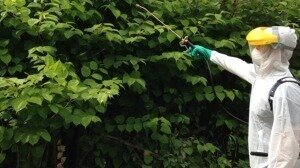
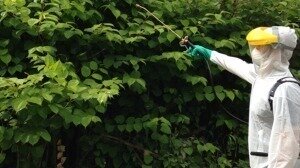
Japanese Knotweed has been identified as a growing invasive species along some of Shutesbury’s roads and rights-of-way. Knotweed is a serious problem, especially when it spreads along riverbanks or crowds out native species. Shutesbury currently has some patches of Knotweed along public roads that deserve attention. Recent discussions between the Select Board, the Shutesbury Highway Department, and an ad hoc Knotweed group recommended that glyphosate spraying be used to eradicate the Knotweed problem.
We believe this approach is short-sighted and ill-advised for the following reasons:
· Knotweed is only showing up in isolated areas in Shutesbury.
· Glyphosate spraying, no matter how limited, is likely to wash into the many wetlands along Shutesbury roads. This is an unacceptable risk in a Town with many wetlands and where all residences rely upon private well water.
· Shutesbury already has groundwater contamination problems in various areas, including PFAS, gasoline, and salt contamination. We see no reason to add to this groundwater burden. Further, we owe a duty to those with contaminated wells to not increase problems.
· There are mechanical, non-glyphosate methods for controlling Knotweed. Less toxic herbicides, such as horticultural vinegar, have been found to work in conjunction with careful cutting and proper disposal of Knotweed debris. With a concerned and committed community such as Shutesbury, teams of trained volunteers might be able to manage the problem effectively without glyphosate.
The Solution
Despite the lobbying efforts and disinformation campaigns of the pesticide industry, which subsidizes misleading research and policy positions, moratoriums on glyphosate use by governmental entities are increasing. In Europe, cities such as Barcelona, Hamburg, and Paris, have banned its use. The Netherlands and Denmark have banned its use in urban areas. A growing number of towns in Massachusetts have also taken action to limit or ban glyphosate use by the Town government, including Chatham, Falmouth, Great Barrington, and a growing number of other towns. While Towns do not have the authority to ban private use of pesticides, any local government can elect to ban or limit their use on Town property.
We, the undersigned concerned citizens, look to the Shutesbury Select Board to act as an environmental leader and set policies that protect the safety of wetlands, groundwater, and public health. We ask that you, the Shutesbury Select Board, take the following immediate actions:
· Institute a 5-year moratorium on using glyphosate and similar toxic herbicides for vegetation control on Town property and road rights-of-way.
· Establish a Town committee to organize, train, and implement an evidence-based Knotweed Management Plan and study this program's effects.
· Establish a waiver policy to the above ban regarding the control of Japanese Knotweed or other invasive species, where non-glyphosate control methods have been used consistently for at least three years but only allow stem injection rather than spraying to reduce glyphosate spread in the environment. This waiver policy, however, should not allow any glyphosate use in any wetland or its buffer zone.
We understand and share the concerns about invasive species, but we do not want to see our Town government rush into solutions that create a cascade of new problems, some of which cannot be fixed. Given the many groundwater contamination problems facing Shutesbury, we believe it is incumbent upon the Town government to lead by example and prevent further toxic contamination when possible.
Submitted with respect for Nature,
Miriam DeFant and MaryJo Johnson

The Issue
Dear Shutesbury Select Board,
The Problem
Over the past 25 years, we have seen the most profound explosion of chronic disease and infertility in recorded human history. Research suggests that the 4.5 billion pounds of herbicides we spray into our soils, plans, and water systems are part of the reason why.
Glyphosate is the key ingredient in Roundup Weed Killer, but it is also found in other herbicide treatments.
Glyphosate is the most commonly used herbicide globally—it also impairs our bodies’ ability to function properly. Although often referred to as an herbicide, glyphosate is classified as a pesticide that affects both plants and other organisms. Glyphosate has been found to cause injuries to the cellular function of our bodies, including epigenetic, metabolic, neurological, autoimmune disorders as well as cancer.
Bayer, a company that manufactures glyphosate, lost enormous lawsuits to plaintiffs who claimed that glyphosate exposure caused their cancer. They have set aside over $10 billion to settle the ongoing glyphosate litigation. In 2020, $200 million was paid out as damages for glyphosate-related cancer cases. The 9th Circuit Court in California recently overturned the EPA’s “Glyphosate safe for human consumption” position. Still, the federal government and Massachusetts continue to approve its use.
Japanese Knotweed has been identified as a growing invasive species along some of Shutesbury’s roads and rights-of-way. Knotweed is a serious problem, especially when it spreads along riverbanks or crowds out native species. Shutesbury currently has some patches of Knotweed along public roads that deserve attention. Recent discussions between the Select Board, the Shutesbury Highway Department, and an ad hoc Knotweed group recommended that glyphosate spraying be used to eradicate the Knotweed problem.
We believe this approach is short-sighted and ill-advised for the following reasons:
· Knotweed is only showing up in isolated areas in Shutesbury.
· Glyphosate spraying, no matter how limited, is likely to wash into the many wetlands along Shutesbury roads. This is an unacceptable risk in a Town with many wetlands and where all residences rely upon private well water.
· Shutesbury already has groundwater contamination problems in various areas, including PFAS, gasoline, and salt contamination. We see no reason to add to this groundwater burden. Further, we owe a duty to those with contaminated wells to not increase problems.
· There are mechanical, non-glyphosate methods for controlling Knotweed. Less toxic herbicides, such as horticultural vinegar, have been found to work in conjunction with careful cutting and proper disposal of Knotweed debris. With a concerned and committed community such as Shutesbury, teams of trained volunteers might be able to manage the problem effectively without glyphosate.
The Solution
Despite the lobbying efforts and disinformation campaigns of the pesticide industry, which subsidizes misleading research and policy positions, moratoriums on glyphosate use by governmental entities are increasing. In Europe, cities such as Barcelona, Hamburg, and Paris, have banned its use. The Netherlands and Denmark have banned its use in urban areas. A growing number of towns in Massachusetts have also taken action to limit or ban glyphosate use by the Town government, including Chatham, Falmouth, Great Barrington, and a growing number of other towns. While Towns do not have the authority to ban private use of pesticides, any local government can elect to ban or limit their use on Town property.
We, the undersigned concerned citizens, look to the Shutesbury Select Board to act as an environmental leader and set policies that protect the safety of wetlands, groundwater, and public health. We ask that you, the Shutesbury Select Board, take the following immediate actions:
· Institute a 5-year moratorium on using glyphosate and similar toxic herbicides for vegetation control on Town property and road rights-of-way.
· Establish a Town committee to organize, train, and implement an evidence-based Knotweed Management Plan and study this program's effects.
· Establish a waiver policy to the above ban regarding the control of Japanese Knotweed or other invasive species, where non-glyphosate control methods have been used consistently for at least three years but only allow stem injection rather than spraying to reduce glyphosate spread in the environment. This waiver policy, however, should not allow any glyphosate use in any wetland or its buffer zone.
We understand and share the concerns about invasive species, but we do not want to see our Town government rush into solutions that create a cascade of new problems, some of which cannot be fixed. Given the many groundwater contamination problems facing Shutesbury, we believe it is incumbent upon the Town government to lead by example and prevent further toxic contamination when possible.
Submitted with respect for Nature,
Miriam DeFant and MaryJo Johnson
Petition Closed
Share this petition
Supporter Voices
Petition Updates
Share this petition
Petition created on August 19, 2024