

STOP a new tunnel net fishery in the Great Barrier Reef World Heritage Area
The issue
[NOTE: the petition is free to sign - any donation goes to the platform, not to us - you can click past the request to donate]
ONLY HAVE A FEW MINUTES? HERE’S WHAT YOU NEED TO KNOW
Did you know that the QLD Government is trialling tunnel nets as new commercial fishing gear on the beaches, bays and foreshores of the Great Barrier Reef World Heritage Area?
Most people have no idea.
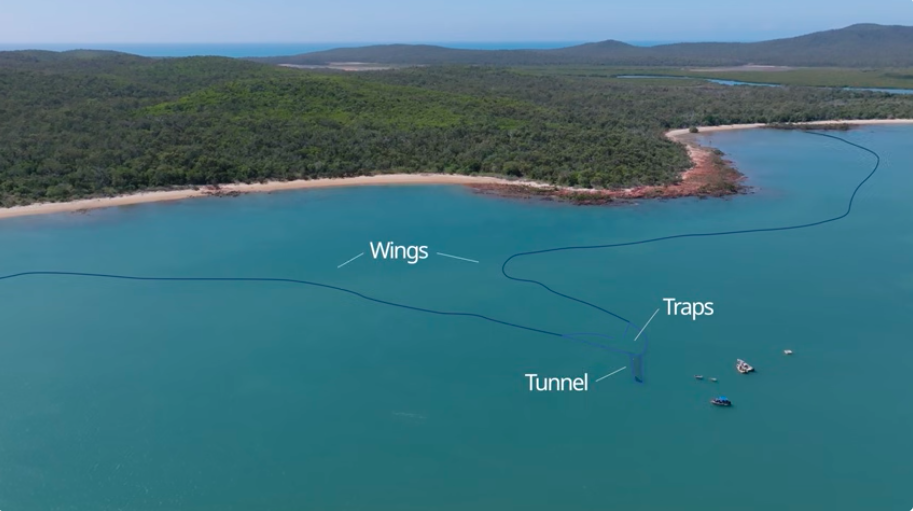
With wings spanning up to 1.6km, these are industrial-scale walls of mesh netting – over 130 buses parked bumper to bumper.
Imagine closing every lane of a major highway during peak-hour and funnelling all traffic into a single dead-end to be processed for market — that’s how tunnel nets operate for fish moving with the tide.
From our iconic sportfish - Giant Trevally, Golden Trevally and Permit - through to bread and butter species, algae-sucking milkfish, and baitfish like the humble biddie. All can be removed, by the thousands, from shallow inshore waters, including fish nursery areas. And sold as cheap seafood, bait or petfood.
Crazy right?
It’s our local fish populations, our marine life like dugongs and turtles, our coastal communities, and our regional economies that depend on tourism that will pay the price.
What future do you want?
Supporting local QLD seafood does not require supporting all ways of sourcing anything with fins. Some things cross a line.
Add your voice to the call to stop a new tunnel net fishery, before it begins.
Aerial photo of a tunnel net deployment from Fisheries QLD's public material. The length of the net spans two bays and a headland.
READ ON TO LEARN MORE…
WHERE?
Watch out Bowen, Airlie Beach, Shute Harbour, Double Bay, other Whitsundays areas, Lucinda, Turkey Beach and Gladstone - tunnel nets have already been trialled in these waters.
But that’s just the start. Additional locations in Central & North Queensland are contemplated.
Trial sites have even included Dugong Protection Areas and Marine Parks, even though tunnel nets have been responsible for a Dugong death in South-East Queensland.
And the inshore coastal flats where tunnel nets are used are typically mangrove fringed fish nursery habitat, making juvenile fish especially vulnerable.
No joke, it’s the truth.
HOW BAD IS IT?
Tunnel nets can catch over 6000 fish, weighing over 2 tonnes, in a single deployment. In just 17 trial shots, they indiscriminately caught over 30,000 fish, spread across 50 + different species.
Every fish, regardless of size or species, is funnelled into a crowded trap.
Everything. All together. All crammed in. The only exception is any tiny fish that manage to pass through the small mesh gaps uninjured.
Iconic sportfish - including Giant Trevally, Golden Trevally, and Permit - comprised almost 30% of the trial catch. Yep, that’s right, 30%.
These fish have enormous value to the recreational fishing sector, and attract tourist anglers who each spend thousands of dollars chasing these fish. But they can fetch as little as $4/kilo wholesale as seafood.
Not to mention the bread and butter species that kids and casual anglers love catching from the beach.
AND IT GETS WORSE...
97% by weight of the trial catch was lower seafood value “by-product” or “by-catch”. Only 3% was the northern “target” species - Barramundi and King Threadfin.
Baitfish that attract predators like Queenfish, Mackerel and Tuna inshore, comprised over 15% of the trial catch.
And most of the fish caught during the trials are not protected by stock assessments, commercial quotas or commercial size limits. Juveniles can be taken.
AND WORSE...
Threatened and endangered species, like dugong, turtles and rays can become trapped in the wing area where they risk harm, and must be manually released.
Despite requests, the QLD Government has not yet released public information about the number and nature of these encounters during the trials.
WHAT WILL THIS LEAD TO?
If tunnel nets are introduced, local fish stocks will rapidly reduce or deplete near the tunnel net sites.
Other marine life, including dugong, turtles and rays, risks being harmed.
And with the capture of juveniles and bait species, the effects are likely to ripple across the broader inshore fishery. Rivers, estuaries and adjacent waters.
WHO PAYS THE PRICE?
Local economies are underpinned by tourism. Local businesses depend on recreational anglers who inject over $1.48 billion annually into regional QLD economies.
Abundant fish stocks and the “world-class” fishery reputation are a driver of destination choice.
It’s the local charter operators, tackle stores, motels, pubs, cafes, restaurants, transport providers and more, who will pay the price of reduced or depleted fish stocks.
And the local families who just want to catch a fish off the shore, or take their boat for a spin.
ALL FOR WHAT?
A new tunnel net fishery that can indiscriminately remove tonnes of low commercial value fish in a single net shot, in juvenile fish habitat, on shared inshore waters, is not how a modern fishery should be managed.
Especially in a World Heritage Area.
Sustainable and affordable alternatives for seafood supply exist. We don’t need to scrape the bottom of the barrel and remove everything with fins from our inshore flats.
WHO ARE THE DECISION MAKERS?
We call on Minister Perrett, the QLD Minister responsible for Fisheries to take tunnel nets off the table as a new commercial fishing gear in the Great Barrier Reef World Heritage Area. The Minister now has enough trial data to see that tunnel nets are the wrong fit.
We call on Minister Watt, the Federal Minister for the Environment to ensure our federal laws are not weakened to allow a new tunnel net fishery to be established within the Great Barrier Reef Marine Park.
THIS IS URGENT
To date, the trials have been “no take”. But a new developmental tunnel net fishery and harvesting of fish could begin as early as 2027.
Time is running out. Now is the time to act.
If you care about the future of our inshore fishery, marine environment and coastal communities, this is the moment. Your voice matters.
WHAT CAN YOU DO?
Sign this petition. Share it with your mates.
Sign it if you live locally. Sign it if you know someone who does. Sign it if you’ve visited. Sign it if you dream of one day exploring our unique corner of the world.
And sign it if you want a better future. For coastal ecosystems and the next generation of anglers — and everyone who lives and depends on these waters.
GOT A FEW MORE MINUTES? HERE’S MORE OF THE STORY
THE COMMERCIAL REALITY - HARVEST EVERY FISH
How can a tunnel net fishery that captures 97% lower value seafood species make money?
The only way is volume.
Make no mistake: everything that can be sold from each tunnel net shot will be harvested, regardless of species.
This isn’t greed. It’s mathematics. The high operating costs, and the low commercial value of the fish, leaves the commercial operators with no other choice. Their hands are tied.
THE PRACTICAL REALITY - ENORMOUS NETS ON A COMMUNITY'S DOORSTEP
The beaches, bays and foreshores are more than just a source of scenic beauty.
They are movement corridors and feeding grounds for fish and megafauna.
They are used by recreational fishers, boaters, crabbers, windsurfers, paddleboarders and kayakers.
They are places where traditional hunting and fishing may occur.
Because tunnel nets must be deployed during daylight hours for a run-out tide cycle, they will block access to both human users and sea creatures.
And an enormous net, with operators harvesting thousands of fish, ain’t a pretty site when you see it from the water, the shore, lookouts and roads.
IT MAKES NO SENSE TO REPLACE ONE HARMFUL NET WITH AN EVEN BIGGER NET
The QLD and Federal Government have committed to phase out gill-net fishing in the Great Barrier Reef World Heritage Area by mid-2027 as part of efforts to protect it.
And Australia has committed to the United Nations that it will keep the Dugong Protection Areas “net free”.
Tunnel nets are nearly 3 x longer than the biggest (600 m) nearshore gill-nets being retired in mid-2027. And they exhibit no capture selectivity of fish at all.
It makes no sense to start a new tunnel net fishery with even bigger inshore nets, that risks new and unnecessary harm.
And it sure doesn’t make economic sense to tunnel net iconic sportfish that are worth millions of dollars to the local recreational and tourism sector, but can fetch prices as low as $4/kg wholesale.
A BETTER WAY FORWARD
Our QLD Fisheries Act requires our fishery to be managed in a way that maximises the potential economic, environmental and cultural benefit to QLD communities.
Tunnel nets will not achieve this. They aren’t the way forward. Better options exist for commercial operators, local communities and seafood consumers.
HOW ELSE CAN YOU HELP?
Right after you’ve signed this petition:
- Head to our website www.inshoreflatsproject.com.au for more info and sign up to our newsletter
- Follow us on social media @theinshoreflatsproject

11,371
The issue
[NOTE: the petition is free to sign - any donation goes to the platform, not to us - you can click past the request to donate]
ONLY HAVE A FEW MINUTES? HERE’S WHAT YOU NEED TO KNOW
Did you know that the QLD Government is trialling tunnel nets as new commercial fishing gear on the beaches, bays and foreshores of the Great Barrier Reef World Heritage Area?
Most people have no idea.
With wings spanning up to 1.6km, these are industrial-scale walls of mesh netting – over 130 buses parked bumper to bumper.
Imagine closing every lane of a major highway during peak-hour and funnelling all traffic into a single dead-end to be processed for market — that’s how tunnel nets operate for fish moving with the tide.
From our iconic sportfish - Giant Trevally, Golden Trevally and Permit - through to bread and butter species, algae-sucking milkfish, and baitfish like the humble biddie. All can be removed, by the thousands, from shallow inshore waters, including fish nursery areas. And sold as cheap seafood, bait or petfood.
Crazy right?
It’s our local fish populations, our marine life like dugongs and turtles, our coastal communities, and our regional economies that depend on tourism that will pay the price.
What future do you want?
Supporting local QLD seafood does not require supporting all ways of sourcing anything with fins. Some things cross a line.
Add your voice to the call to stop a new tunnel net fishery, before it begins.
Aerial photo of a tunnel net deployment from Fisheries QLD's public material. The length of the net spans two bays and a headland.
READ ON TO LEARN MORE…
WHERE?
Watch out Bowen, Airlie Beach, Shute Harbour, Double Bay, other Whitsundays areas, Lucinda, Turkey Beach and Gladstone - tunnel nets have already been trialled in these waters.
But that’s just the start. Additional locations in Central & North Queensland are contemplated.
Trial sites have even included Dugong Protection Areas and Marine Parks, even though tunnel nets have been responsible for a Dugong death in South-East Queensland.
And the inshore coastal flats where tunnel nets are used are typically mangrove fringed fish nursery habitat, making juvenile fish especially vulnerable.
No joke, it’s the truth.
HOW BAD IS IT?
Tunnel nets can catch over 6000 fish, weighing over 2 tonnes, in a single deployment. In just 17 trial shots, they indiscriminately caught over 30,000 fish, spread across 50 + different species.
Every fish, regardless of size or species, is funnelled into a crowded trap.
Everything. All together. All crammed in. The only exception is any tiny fish that manage to pass through the small mesh gaps uninjured.
Iconic sportfish - including Giant Trevally, Golden Trevally, and Permit - comprised almost 30% of the trial catch. Yep, that’s right, 30%.
These fish have enormous value to the recreational fishing sector, and attract tourist anglers who each spend thousands of dollars chasing these fish. But they can fetch as little as $4/kilo wholesale as seafood.
Not to mention the bread and butter species that kids and casual anglers love catching from the beach.
AND IT GETS WORSE...
97% by weight of the trial catch was lower seafood value “by-product” or “by-catch”. Only 3% was the northern “target” species - Barramundi and King Threadfin.
Baitfish that attract predators like Queenfish, Mackerel and Tuna inshore, comprised over 15% of the trial catch.
And most of the fish caught during the trials are not protected by stock assessments, commercial quotas or commercial size limits. Juveniles can be taken.
AND WORSE...
Threatened and endangered species, like dugong, turtles and rays can become trapped in the wing area where they risk harm, and must be manually released.
Despite requests, the QLD Government has not yet released public information about the number and nature of these encounters during the trials.
WHAT WILL THIS LEAD TO?
If tunnel nets are introduced, local fish stocks will rapidly reduce or deplete near the tunnel net sites.
Other marine life, including dugong, turtles and rays, risks being harmed.
And with the capture of juveniles and bait species, the effects are likely to ripple across the broader inshore fishery. Rivers, estuaries and adjacent waters.
WHO PAYS THE PRICE?
Local economies are underpinned by tourism. Local businesses depend on recreational anglers who inject over $1.48 billion annually into regional QLD economies.
Abundant fish stocks and the “world-class” fishery reputation are a driver of destination choice.
It’s the local charter operators, tackle stores, motels, pubs, cafes, restaurants, transport providers and more, who will pay the price of reduced or depleted fish stocks.
And the local families who just want to catch a fish off the shore, or take their boat for a spin.
ALL FOR WHAT?
A new tunnel net fishery that can indiscriminately remove tonnes of low commercial value fish in a single net shot, in juvenile fish habitat, on shared inshore waters, is not how a modern fishery should be managed.
Especially in a World Heritage Area.
Sustainable and affordable alternatives for seafood supply exist. We don’t need to scrape the bottom of the barrel and remove everything with fins from our inshore flats.
WHO ARE THE DECISION MAKERS?
We call on Minister Perrett, the QLD Minister responsible for Fisheries to take tunnel nets off the table as a new commercial fishing gear in the Great Barrier Reef World Heritage Area. The Minister now has enough trial data to see that tunnel nets are the wrong fit.
We call on Minister Watt, the Federal Minister for the Environment to ensure our federal laws are not weakened to allow a new tunnel net fishery to be established within the Great Barrier Reef Marine Park.
THIS IS URGENT
To date, the trials have been “no take”. But a new developmental tunnel net fishery and harvesting of fish could begin as early as 2027.
Time is running out. Now is the time to act.
If you care about the future of our inshore fishery, marine environment and coastal communities, this is the moment. Your voice matters.
WHAT CAN YOU DO?
Sign this petition. Share it with your mates.
Sign it if you live locally. Sign it if you know someone who does. Sign it if you’ve visited. Sign it if you dream of one day exploring our unique corner of the world.
And sign it if you want a better future. For coastal ecosystems and the next generation of anglers — and everyone who lives and depends on these waters.
GOT A FEW MORE MINUTES? HERE’S MORE OF THE STORY
THE COMMERCIAL REALITY - HARVEST EVERY FISH
How can a tunnel net fishery that captures 97% lower value seafood species make money?
The only way is volume.
Make no mistake: everything that can be sold from each tunnel net shot will be harvested, regardless of species.
This isn’t greed. It’s mathematics. The high operating costs, and the low commercial value of the fish, leaves the commercial operators with no other choice. Their hands are tied.
THE PRACTICAL REALITY - ENORMOUS NETS ON A COMMUNITY'S DOORSTEP
The beaches, bays and foreshores are more than just a source of scenic beauty.
They are movement corridors and feeding grounds for fish and megafauna.
They are used by recreational fishers, boaters, crabbers, windsurfers, paddleboarders and kayakers.
They are places where traditional hunting and fishing may occur.
Because tunnel nets must be deployed during daylight hours for a run-out tide cycle, they will block access to both human users and sea creatures.
And an enormous net, with operators harvesting thousands of fish, ain’t a pretty site when you see it from the water, the shore, lookouts and roads.
IT MAKES NO SENSE TO REPLACE ONE HARMFUL NET WITH AN EVEN BIGGER NET
The QLD and Federal Government have committed to phase out gill-net fishing in the Great Barrier Reef World Heritage Area by mid-2027 as part of efforts to protect it.
And Australia has committed to the United Nations that it will keep the Dugong Protection Areas “net free”.
Tunnel nets are nearly 3 x longer than the biggest (600 m) nearshore gill-nets being retired in mid-2027. And they exhibit no capture selectivity of fish at all.
It makes no sense to start a new tunnel net fishery with even bigger inshore nets, that risks new and unnecessary harm.
And it sure doesn’t make economic sense to tunnel net iconic sportfish that are worth millions of dollars to the local recreational and tourism sector, but can fetch prices as low as $4/kg wholesale.
A BETTER WAY FORWARD
Our QLD Fisheries Act requires our fishery to be managed in a way that maximises the potential economic, environmental and cultural benefit to QLD communities.
Tunnel nets will not achieve this. They aren’t the way forward. Better options exist for commercial operators, local communities and seafood consumers.
HOW ELSE CAN YOU HELP?
Right after you’ve signed this petition:
- Head to our website www.inshoreflatsproject.com.au for more info and sign up to our newsletter
- Follow us on social media @theinshoreflatsproject
Supporter voices
Petition Updates
Share this petition
Petition created on 5 May 2026