
Sony, Please Fix the NR (Internal Noise-Reduction) on the a7s3!
Sony, Please Fix the NR (Internal Noise-Reduction) on the a7s3!
The Issue
For years, the a7s2 has been famously used for shooting at very high iso’s (80.000 and up), rightfully earning it’s truly remarkable Low-Light King position..
When it’s ‘long awaited’ successor the Alpha 7 s III was finally presented to the world, it was rightfully praised for its remarkable 4k capabilities, and many improvements over its predecessor…
However, the thing that I (as a Low-light Nature filmer, and Astrovideographer) was looking forward to the most, was how much of an improvement was made in the Low-light department, ..especially the high iso’s…
To my disappointment, (and noticed/talked about by many others) Sony has taken a step backwards with the Alpha 7 s III camera's internal noise reduction, especially in really low-light situations..
(depending on which Picture/gamma Profile you use) the internal noise reduction has become very aggressive…
So much so, It becomes smeary, ‘mushy mushy.. with the noise reduction dancing around in blotches all over the place, instead of a finer subtle Noise reduction.
Or that details are being washed out, details which you can never recover in post…
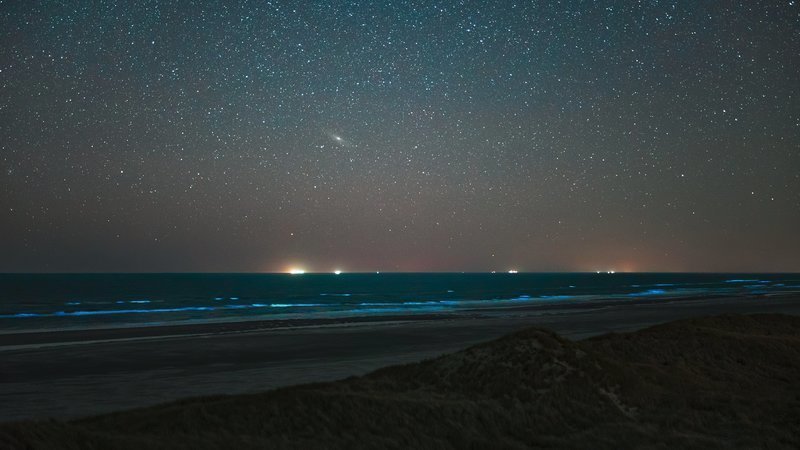
Or,.. when shooting for example the Milky Way or other dark, starry nightscapes, much lesser stars are actually visible… (and even can be seen disappearing when switching between certain iso’s…
Comparing those shots side by side next to the former a7s2, (using the exact same recording settings), the a7s2 shows indeed more noise (but fine easy to remove in post noise) , but it also clearly shows more stars in the sky…
For some reason the Noise reduction in the a7s3 is so aggressive, it removes the smaller stars as them being somehow seen as noise…
All those things, NR dancing blotches, loss of details, and stars being ‘eaten’ makes the a7s3 an unusable camera in these situations, makes me often go back and use its predecessor as it clearly fares better..
--Which is truly a shame as the a7s3 shines in many other areas.
Simply said: I was very say and troubled it was not able to take the ‘low-light’ crown from its predecessor..
The extra Blow came with the release of the FX6.. using the very same sensor and image processors, it showed the true power of what the a7s3’s internal noise reduction is capable of, but somehow is crippled heavily…
Add to that the NR Menu-settings it became all the more an aggravation every time looking to the low-light footage the a7s3 produces and what the FX6 does…
…Yes I know, you can record externally in ProRes RAW through the Atomos Ninja V…
And it resolves the internal Noise reduction problem… but it also introduces other problems which are also not really easy to fix..
For one; recording externally means you’ll have to use more gear, which isn’t very handy in many situations.. 2nd Filming in Nature/Wildlife, it adds another layer of finding extra protection against the elements.. (with open ports and such), but also makes it a hassle not to disturb the wildlife whilst trying to set up your gear in pitch black darkness…
and 3rd .. post process..
It becomes a big Pain… now normally it wouldn’t, but with real low-light footage, you ‘always have to clean up the noise in post, (which was also ‘in part’ a part of the a7s2 footage process),
However now it’s ProRes RAW, and that means you have to process all the footage before you can even begin to put it through a denoiser… this cost time and stress on your edit setup, ..and more money to make your edit setup even ready to process it all…
So when shooting in the ‘dark wildlife field, shooting externally in RAW isn’t so ideal either, …
And so my petition…
Dear Sony, the a7s1 was a low-light revolution…
..the a7s2 stepped it up a notch by making low light shots possible that were previously unreachable…
Then the a7s3 came out..
And even-though it really shines in many areas, ..the main thing, (where its predecessors were most famous for), the famously low-light capabilities,.. the a7s3 has somehow been horribly crippled …
My request is simple:
- Please Sony, fix this!
Fix the internal Noise Reduction through a firmware update by tweaking/fine-tune the NR algorithm and make it as fine looking and detailed as on the FX6 - And secondly (but also highly requested)
Bring that same NR menu options in the a7s3, either the same, or at least an on-off option to turn the internal Noise Reduction On/Off or up and down in strength when needed.
I think it would result in seeing this wonderful camera being used in many, many more shooting situations.. situations where you want to be more compact, better protected against the elements, or where one’s edit process won’t be in the way anymore of producing some amazing low-light footage!
I think it’s a Win for both sides! For the Creative creators and for you seeing many more of your camera’s being used in some amazing future projects .
Thank You!
Raymond Kamstra
https://www.facebook.com/RaymondKPhotoVideography/

21
The Issue
For years, the a7s2 has been famously used for shooting at very high iso’s (80.000 and up), rightfully earning it’s truly remarkable Low-Light King position..
When it’s ‘long awaited’ successor the Alpha 7 s III was finally presented to the world, it was rightfully praised for its remarkable 4k capabilities, and many improvements over its predecessor…
However, the thing that I (as a Low-light Nature filmer, and Astrovideographer) was looking forward to the most, was how much of an improvement was made in the Low-light department, ..especially the high iso’s…
To my disappointment, (and noticed/talked about by many others) Sony has taken a step backwards with the Alpha 7 s III camera's internal noise reduction, especially in really low-light situations..
(depending on which Picture/gamma Profile you use) the internal noise reduction has become very aggressive…
So much so, It becomes smeary, ‘mushy mushy.. with the noise reduction dancing around in blotches all over the place, instead of a finer subtle Noise reduction.
Or that details are being washed out, details which you can never recover in post…
Or,.. when shooting for example the Milky Way or other dark, starry nightscapes, much lesser stars are actually visible… (and even can be seen disappearing when switching between certain iso’s…
Comparing those shots side by side next to the former a7s2, (using the exact same recording settings), the a7s2 shows indeed more noise (but fine easy to remove in post noise) , but it also clearly shows more stars in the sky…
For some reason the Noise reduction in the a7s3 is so aggressive, it removes the smaller stars as them being somehow seen as noise…
All those things, NR dancing blotches, loss of details, and stars being ‘eaten’ makes the a7s3 an unusable camera in these situations, makes me often go back and use its predecessor as it clearly fares better..
--Which is truly a shame as the a7s3 shines in many other areas.
Simply said: I was very say and troubled it was not able to take the ‘low-light’ crown from its predecessor..
The extra Blow came with the release of the FX6.. using the very same sensor and image processors, it showed the true power of what the a7s3’s internal noise reduction is capable of, but somehow is crippled heavily…
Add to that the NR Menu-settings it became all the more an aggravation every time looking to the low-light footage the a7s3 produces and what the FX6 does…
…Yes I know, you can record externally in ProRes RAW through the Atomos Ninja V…
And it resolves the internal Noise reduction problem… but it also introduces other problems which are also not really easy to fix..
For one; recording externally means you’ll have to use more gear, which isn’t very handy in many situations.. 2nd Filming in Nature/Wildlife, it adds another layer of finding extra protection against the elements.. (with open ports and such), but also makes it a hassle not to disturb the wildlife whilst trying to set up your gear in pitch black darkness…
and 3rd .. post process..
It becomes a big Pain… now normally it wouldn’t, but with real low-light footage, you ‘always have to clean up the noise in post, (which was also ‘in part’ a part of the a7s2 footage process),
However now it’s ProRes RAW, and that means you have to process all the footage before you can even begin to put it through a denoiser… this cost time and stress on your edit setup, ..and more money to make your edit setup even ready to process it all…
So when shooting in the ‘dark wildlife field, shooting externally in RAW isn’t so ideal either, …
And so my petition…
Dear Sony, the a7s1 was a low-light revolution…
..the a7s2 stepped it up a notch by making low light shots possible that were previously unreachable…
Then the a7s3 came out..
And even-though it really shines in many areas, ..the main thing, (where its predecessors were most famous for), the famously low-light capabilities,.. the a7s3 has somehow been horribly crippled …
My request is simple:
- Please Sony, fix this!
Fix the internal Noise Reduction through a firmware update by tweaking/fine-tune the NR algorithm and make it as fine looking and detailed as on the FX6 - And secondly (but also highly requested)
Bring that same NR menu options in the a7s3, either the same, or at least an on-off option to turn the internal Noise Reduction On/Off or up and down in strength when needed.
I think it would result in seeing this wonderful camera being used in many, many more shooting situations.. situations where you want to be more compact, better protected against the elements, or where one’s edit process won’t be in the way anymore of producing some amazing low-light footage!
I think it’s a Win for both sides! For the Creative creators and for you seeing many more of your camera’s being used in some amazing future projects .
Thank You!
Raymond Kamstra
https://www.facebook.com/RaymondKPhotoVideography/
21

Petition Updates
Share this petition
Petition created on February 26, 2021