Sign for the Sky: Unite to Protect our Birds
Sign for the Sky: Unite to Protect our Birds
The Issue
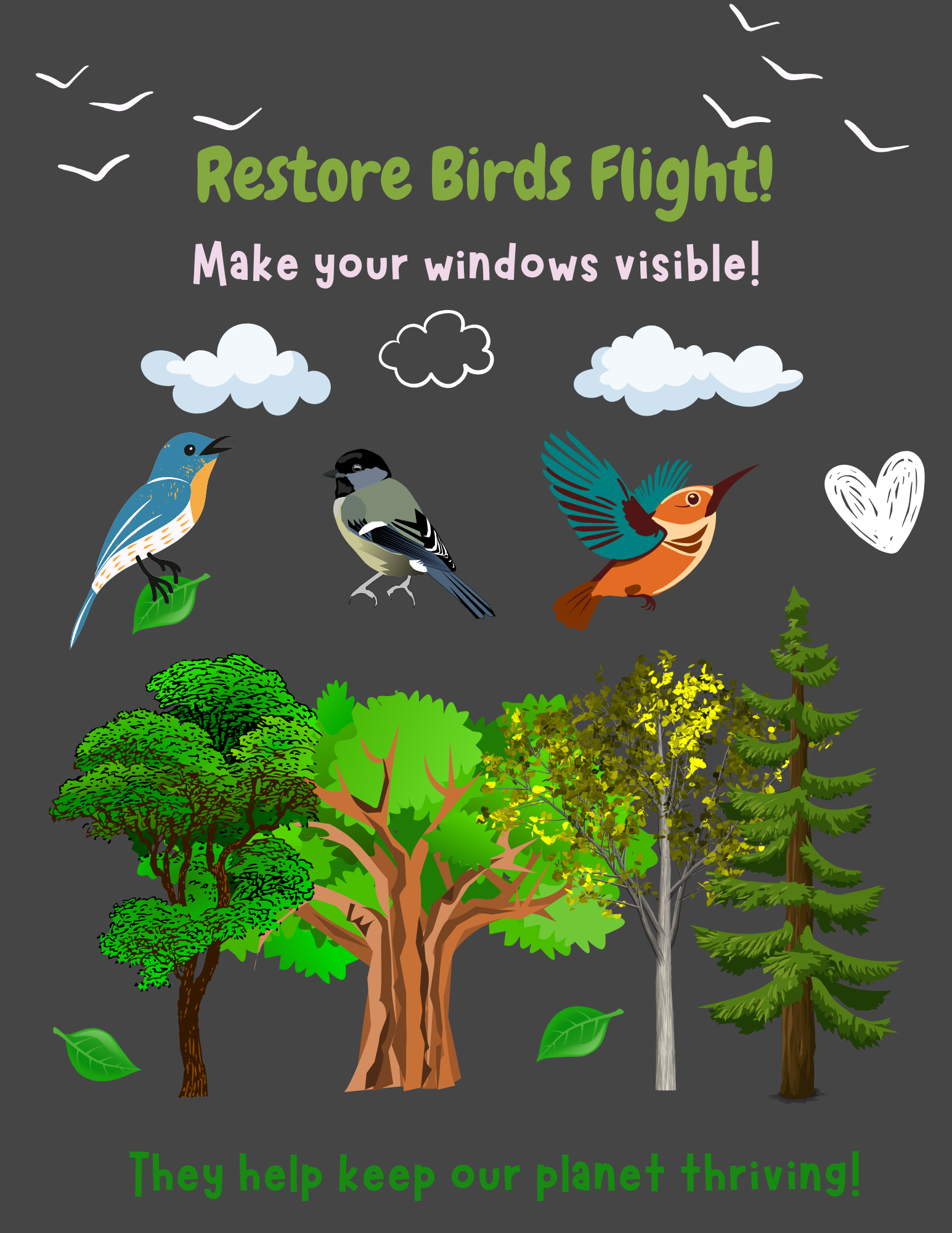
Dead birds are disgusting. Thousands of students attend class in Chapman Hall, where birds have been slamming into the glass windows and dying. As a symbol of nature and freedom, smelling their rotting bodies is a harrowing experience even for the most calloused of us.
Having birds on campus is wonderful. Many people find them beautiful. They eat pests and bugs. Without birds, this small ecosystem can become imbalanced and unexpected consequences for the whole campus, like the plants that would be eaten from bird's prey. If birds continue to die, many of these aspects of campus, which we take for granted, will be at risk. TU's campus contributes to a nationwide ecological issue.
Being forced to walk out of class and see the dead birds on the grass outside of Chapmen is terrible for the school's overall image. It puts a legitimate mental strain on the professors and students of this university to have to see innocent and endangered birds killed because of this inactive administration. This is not even to mention how this looks to prospective students when the image of our beautiful buildings is permanently stained with the image of these twisted heads and bloodied bodies lining the walls.
Environmental humanities professor Dr. Dennis Denisoff relates: "Every year, billions of birds in the U.S. are killed when they fly into the windows of buildings. As a professor in Chapman Hall, I have seen the unnecessary devastation this has caused and the impact it has also had on our students. I support anything we can do to curtail the situation. With many inexpensive, aesthetically effective options now available, there is no reason for us not to do our bit in protecting these members of our environment and enhancing our students' campus learning experience."
Dr. Charles Brown, an ornithology professor at TU, recommends: "If at night, the effective deterrent would be to shut off all lighting within (and outside) the building that attracts birds that then collide with the glass. Nocturnal collisions are common at buildings which emanate a lot of light at night. If the birds are hitting during the day, decals of a hawk silhouette can be purchased and affixed in places on the glass. These decals are sufficient to reduce daytime bird strikes in most cases. However, it is perhaps more likely that birds are striking at all times of day, and then both deterrent strategies should be pursued."
The University prides itself on its reputation and service to the Oklahoma community. This ecological oversight is a detriment to the image and identity of the University.
By signing this petition, you help a group of concerned student leaders positively impact the wider Tulsa community and protect a precious ecological resource for the future. This petition will be sent to University Administration to advocate for bird deterrent technology and change.

149
The Issue
Dead birds are disgusting. Thousands of students attend class in Chapman Hall, where birds have been slamming into the glass windows and dying. As a symbol of nature and freedom, smelling their rotting bodies is a harrowing experience even for the most calloused of us.
Having birds on campus is wonderful. Many people find them beautiful. They eat pests and bugs. Without birds, this small ecosystem can become imbalanced and unexpected consequences for the whole campus, like the plants that would be eaten from bird's prey. If birds continue to die, many of these aspects of campus, which we take for granted, will be at risk. TU's campus contributes to a nationwide ecological issue.
Being forced to walk out of class and see the dead birds on the grass outside of Chapmen is terrible for the school's overall image. It puts a legitimate mental strain on the professors and students of this university to have to see innocent and endangered birds killed because of this inactive administration. This is not even to mention how this looks to prospective students when the image of our beautiful buildings is permanently stained with the image of these twisted heads and bloodied bodies lining the walls.
Environmental humanities professor Dr. Dennis Denisoff relates: "Every year, billions of birds in the U.S. are killed when they fly into the windows of buildings. As a professor in Chapman Hall, I have seen the unnecessary devastation this has caused and the impact it has also had on our students. I support anything we can do to curtail the situation. With many inexpensive, aesthetically effective options now available, there is no reason for us not to do our bit in protecting these members of our environment and enhancing our students' campus learning experience."
Dr. Charles Brown, an ornithology professor at TU, recommends: "If at night, the effective deterrent would be to shut off all lighting within (and outside) the building that attracts birds that then collide with the glass. Nocturnal collisions are common at buildings which emanate a lot of light at night. If the birds are hitting during the day, decals of a hawk silhouette can be purchased and affixed in places on the glass. These decals are sufficient to reduce daytime bird strikes in most cases. However, it is perhaps more likely that birds are striking at all times of day, and then both deterrent strategies should be pursued."
The University prides itself on its reputation and service to the Oklahoma community. This ecological oversight is a detriment to the image and identity of the University.
By signing this petition, you help a group of concerned student leaders positively impact the wider Tulsa community and protect a precious ecological resource for the future. This petition will be sent to University Administration to advocate for bird deterrent technology and change.
Supporter Voices
Petition Updates
Share this petition
Petition created on October 25, 2024