

She’s Paid the Price, Proven Her Worth — This Mother Deserves Mercy
The Issue
PETITION FOR JUSTICE AND MERCY: Bring Sarah Lynn Berry Home ***** WATCH INTERVIEW WITH SARAH DOWN AT THE BOTTOM******
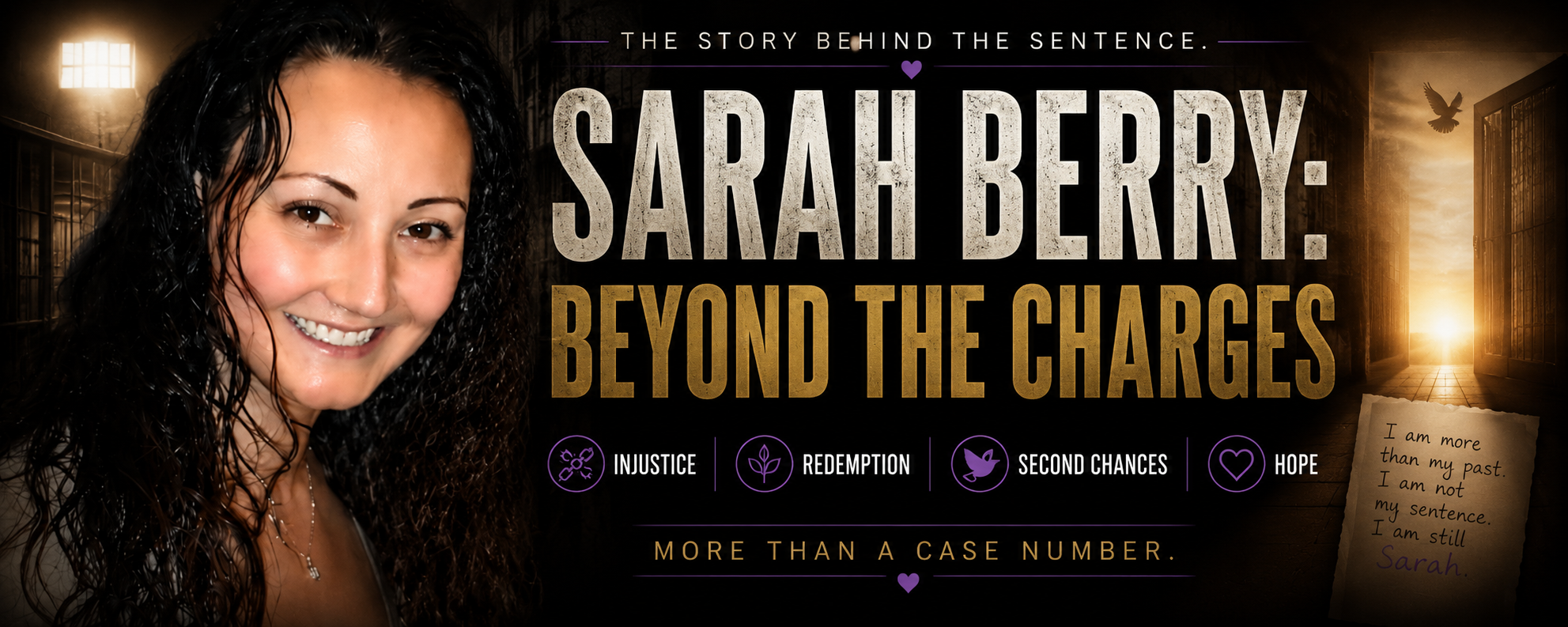
We, the undersigned, urgently call on President Donald J. Trump, the Office of the Pardon Attorney, and Alice Johnson — who told Sarah in prison, “Keep fighting” — to grant executive clemency for Sarah Lynn Berry.
Clemency Number: C322798
Email: Justice4SarahBerry@gmail.com
PETITION FOR EXECUTIVE CLEMENCY AND SENTENCE REDUCTION:
SARAH LYNN BERRY DESERVES MERCY, FAIRNESS, AND A SECOND CHANCE
To the President of the United States, Members of Congress, the Office of the Pardon Attorney, and the American People:
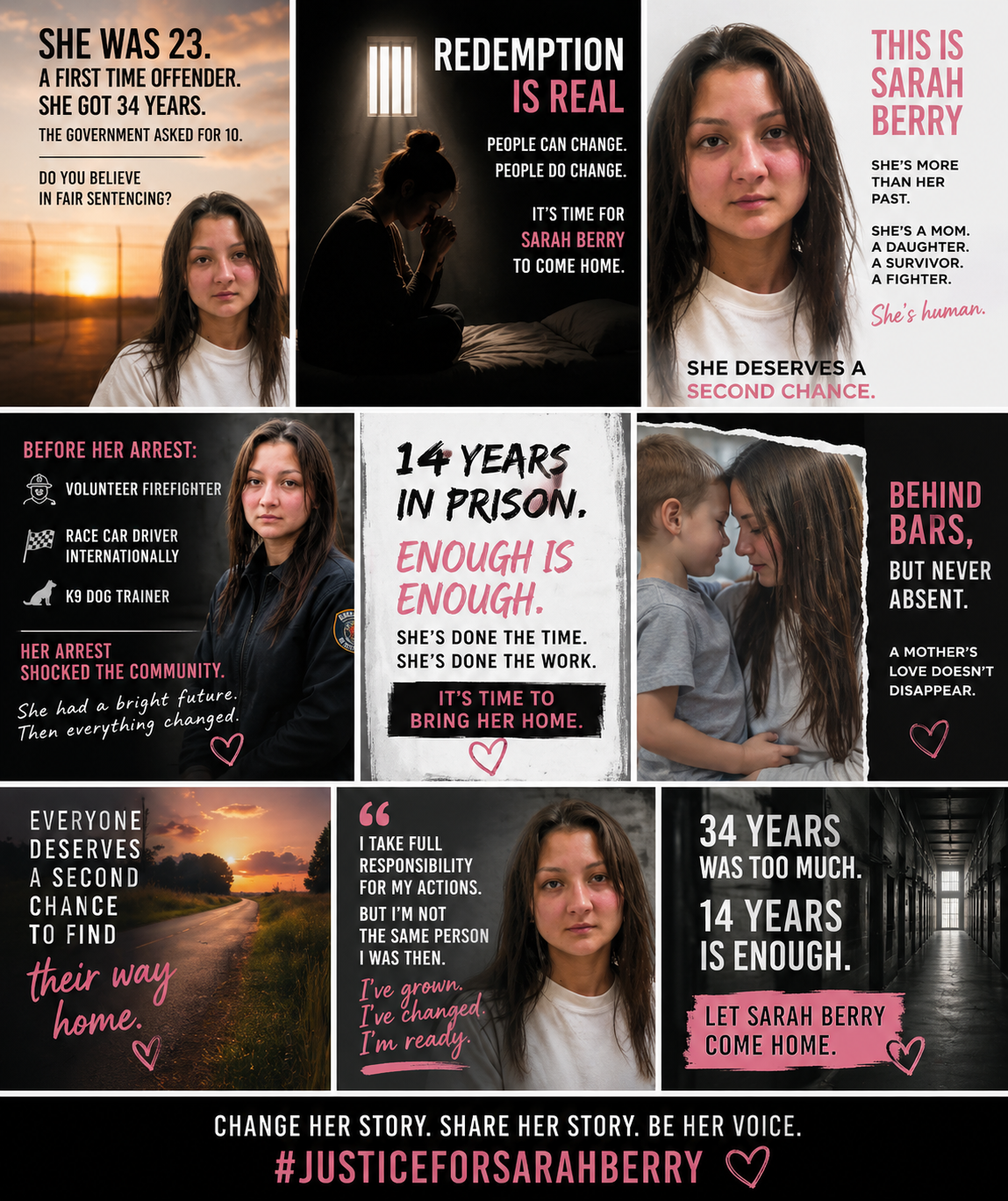
At just 23 years old, Sarah Lynn Berry young mother first time offender — faced the full power of the federal government. Today, after more than 14 years behind bars, she continues serving a devastating 34-year federal sentence (412 months) for her limited role in a series of 2012 armed robberies that ended in tragedy.
Sarah does not ask you to erase the past, minimize the harm caused, or ignore the pain suffered by victims. She has never claimed innocence. But as someone who believes in criminal justice she believes she deserves fair relief especially when the law calls for it . From the moment of her arrest, she accepted full responsibility for her actions as the getaway driver. She has lived with deep remorse every single day. She will forever live with those consequences and losses and that alone changes a person . Not only did she get a prison sentence someone lost their life ,she lost her children, freedom, career that in itself is a lifetime prison sentence .
The full truth matters. Justice is not served by charging documents or plea summaries alone. It requires context, proportionality, recognition of evolving law, and acknowledgment of profound human transformation. Sarah’s story is about a young woman trapped in domestic abuse, failed by the system when she sought help, pressured into a plea, sentenced under now-outdated legal theories, and then denied relief despite extraordinary rehabilitation.
This petition asks you to see Sarah not just as a defendant on paper, but as a mother, daughter, survivor, and redeemed woman who has earned the opportunity to come home and offer the community her skills , service and to help others. She wants to help the poor community with dental service and also work on prison reform and help young women trapped in domestic violence situations.
Who Sarah Was:
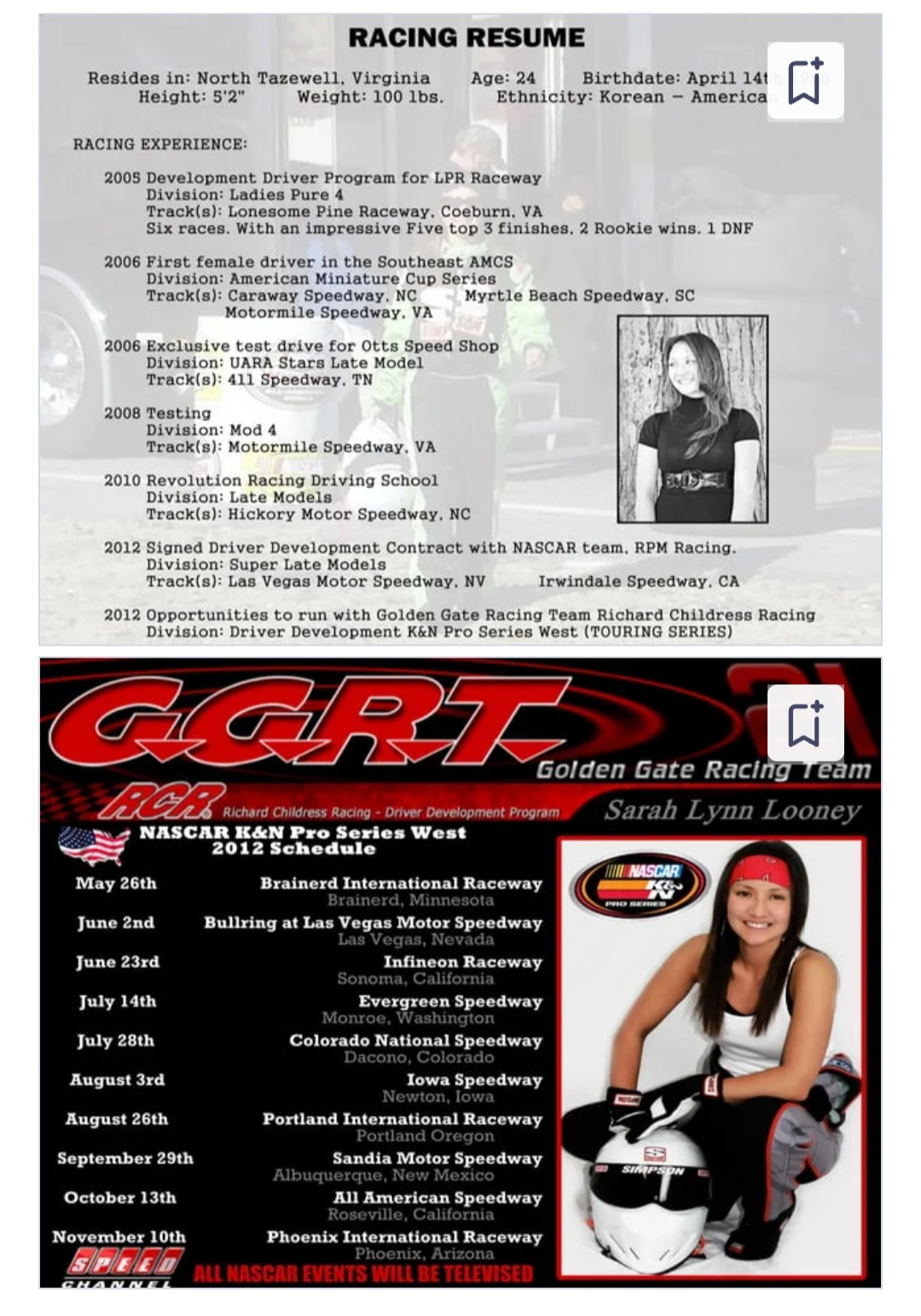
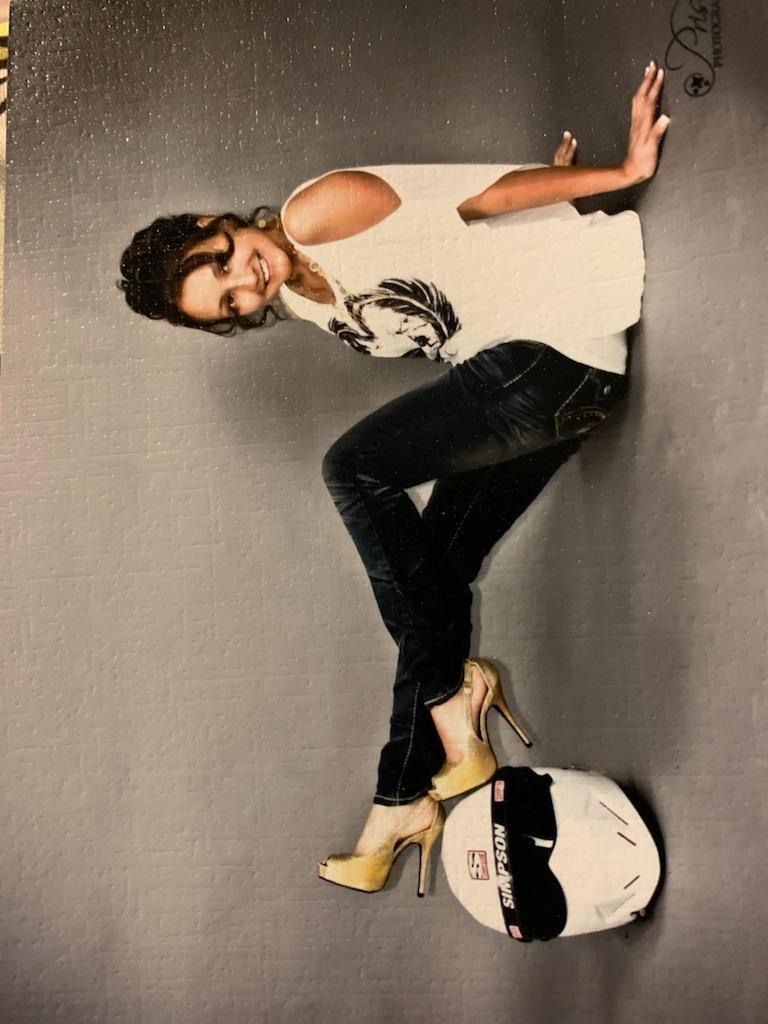
Sarah grew up in a hardworking, patriotic family. She volunteered as a firefighter, raced short-track stock cars, helped her father train K9s, and was described by those who knew her as loyal, athletic, compassionate, and deeply devoted to her young children. Her future held promise.
Tragically, she entered a controlling, abusive relationship with an older convicted felon, Joshua Berry hoping he had changed his life and would provide stability and happiness in her and their children's lives but that was never the case . Fear, intimidation, emotional manipulation, and escalating danger defined her daily life. This is not offered as an excuse — Sarah has never hidden from accountability — but as essential context for how a scared 23-year-old first-time offender was drawn into crimes she should never have been part of. Her defense attorney highlighted this domestic violence at sentencing but it was ignored by the judge.
She Sought Help — But No One Listened
Before the robberies began, Sarah’s father gave her a firearm for protection amid the abuse. Sarah proactively approached law enforcement seeking guidance and intervention regarding the gun and the dangerous situation with her husband. According to her account, she was told it was “marital property” and that nothing could be done since they were married and no crimes had been committed. No protection order. No meaningful follow-up. No recognition of the red flags. Sarah had filed domestic violence charges before but was pressured and threatened to drop them by his family.
Had authorities intervened effectively, this tragedy might have been prevented entirely. She stands accountable as a survivor who made wrong choices under pressure and duress but today she is not that same person who entered prison over 14 years ago . But this failure to protect a young mother in crisis is part of the full story that courts and the public must consider. Even with all this considered sarah doesn't look at herself or live as a victim . She lives as a survivor. Sarah has been the only parent in their kids lives to raise their children from prison and to fully transform her life for over 14 years .
The Crimes: Limited Role, Full Acceptance of Responsibility
In 2012, Sarah became entangled in robberies involving her husband Joshua Berry and co-defendant Emmanuel Foster. She drove the getaway car and remained outside. She never entered any building. She never brandished or used a weapon during the crimes. (Note: The firearm used was taken by her husband; Sarah did not supply it.) She never wanted to be apart of this as she had a very successful and meaningful future ahead of her. Sarah's friends and family were SHOCKED when this happened as she was never violent , stole anything or lived a life of crime. One robbery in Mount Airy, North Carolina, tragically resulted in the death of store owner Donald Claude Arnder.
Sarah has never denied her involvement as the driver or the gravity of these events. She accepted responsibility immediately and cooperated extensively with investigators — providing vital assistance that helped prosecutors. This substantial cooperation is documented in sentencing transcripts and was the primary reason federal prosecutors filed a motion for a significant sentence reduction, recommending far less time.
Yet the judge imposed 412 months — an upward variance — despite acknowledging key mitigating factors: Sarah’s lack of criminal history, her young age, her status as a mother, the documented domestic violence, letters of support from family and community, her early acceptance of responsibility ( addressed the victims family in court with deep sorrow , regret and remorse) and her comparative lesser role versus her co-defendants. The judge’s decision overlooked these elements in favor of a harsher outcome. Usually it is the government that slams the hammer down but in this case the judge shocked the prosecution when he denied their motion for a reduction and gave her OVER the guidelines. To make note her judge is 86 years old and still on the bench .
Troubling Sentencing Disparities at State and Federal Levels
Federal sentences reflected roles to some degree: Sarah received 34 years, while her co-defendants received significantly longer terms (Joshua ~61 years, Foster ~62 years). But at the state level in West Virginia, the disparities are stark and difficult to reconcile:
Sarah — the youngest and only female, first-time offender, least culpable (getaway driver only) — faced her charges promptly, willingly and received a consecutive 35-year state sentence.
Her ex-husband Joshua, a prior felon who was on probation at the time of these crimes, had his West Virginia state charges eventually dropped recently .
The shooter in the federal case , Emmanuel Foster, received only 20 years in state court recently. They chose to play the system and wait and prolong it so that the state would eventually not pursue.
Sarah bore one of the harshest combined burdens despite her role and accountability. These outcomes raise profound questions about proportionality and equal justice.
The Pressure of Federal Plea Deals: Survival, Not Full Story
Sarah was a frightened 23-year-old first-time offender confronting death penalty possibilities and potential consequences for her father regarding the protection firearm. Under overwhelming pressure — “take the plea or risk the death penalty ” — she accepted a deal with very misleading information. She was asked to sign a plea deal through a fax . Where is the oversight of how these cases are handled and the laws that should be followed?
Plea bargaining in federal court often compresses complex human realities into sterile factual summaries. The abuse, fear, coercion, and dynamics of an abusive relationship rarely receive full airing. Sarah does not claim victimhood to evade blame. She insists on accountability and truth. Her lawyer emphasized the domestic violence and her cooperation at sentencing. The full story — beyond the charges on paper — deserves to be heard. Sarah herself still has faith in the justice system even though it is flawed. Anyone who has faced a federal case knows that it is most of the time not fair , stacked charges , threats and broken promises to reach that plea deal. Lawyers in this country are hardly held accountable when they do not offer fair and just representation. Her lawyer admitted to " not even thinking about the johnson case , he was worried about the death penalty " and encouraged her to waive her rights to that pending supreme court case . Why would a court ask a defendant to waive their rights to a pending supreme court case that could change the entire legal framework of her case ? Sarah has always said she deserved time but the time must match the role of the crime and all mitigating factors considered.
Landmark Supreme Court Decisions That Changed the Legal Landscape
Since Sarah’s 2016 sentencing, the Supreme Court has issued transformative rulings that directly impact her case:
Johnson v. United States (2015) invalidated the vague “residual clause” used in violent crime definitions.
United States v. Davis (2019) struck down §924(c) convictions predicated on conspiracy offenses as unconstitutionally vague.
United States v. Taylor (2022) clarified that attempted Hobbs Act robbery does not qualify as a “crime of violence.”
Companion cases such as United States v. Simms, Barrett v. United States, and Lora v. United States (2023) further refined firearm enhancements (§924), predicate offenses, and §924(j) structures and how they are not required to run consecutively yet her's are.
Courts have acknowledged that portions of Sarah’s sentencing framework — particularly certain §924(c) applications tied to conspiracy — would not hold under current law. One conviction was explicitly recognized as invalid post-Davis but the judge told her in his response to her 2255 that she would not get relief because she can't prove she is innocent of dismissed charges . Relief has been denied on multiple attempts to correct her sentence. This creates a profound injustice: Sarah serves time under legal theories the highest court later deemed flawed. Americans understand fairness demands review when the rules change.
Ongoing Harm from a Flawed Judgment and Commitment Order
Sarah’s Judgment and Commitment Order contains clerical errors that continue inflicting punishment. It lists a dismissed §924(c) charge as if it were a conviction. It mischaracterizes other counts ( completed robbery vs conspiracy and attempted) . The sentencing judge has refused multiple requests to correct these inaccuracies under Rule 36 or grant any form of relief.
As a result, the Bureau of Prisons treats the flawed document as binding. Sarah is denied First Step Act earned time credits, remains at higher security levels, and faces barriers to camp placement and rehabilitative programs she has already excelled in. Only the court can fix its own paperwork — yet it has not. This bureaucratic trap undermines the very principles of justice.
Extraordinary Rehabilitation: She Has Done Everything the BOP has to offer and more .....
Over 14+ years, Sarah has transformed completely through discipline, education, service, and faith. She has completed more than 140 rehabilitative programs including:
Paralegal Degree
Culinary Arts Degree (graduated valedictorian)
Dental Assistant Apprenticeship Certification
RDAP completion ( and then helped run the program for years) , FIT programming, GED tutoring
Hospice and palliative care companion (comforting dying inmates)
Suicide watch companion
Service dog training
Commissary inventory and financial management roles
Institutional murals, mentorship, barista and cooking for staff, and wellness programs
Correctional staff describe her record as exceptional and unprecedented. She has been trusted with significant responsibilities in an environment where trust is rare. She is classified as minimum security with the lowest possible recidivism risk. She poses no threat to public safety.
If “corrections” means anything, it must include release for those who have genuinely corrected their path. Sarah has exceeded every expectation. Denying this reality turns prisons into warehouses rather than places of redemption.
A Mother and Family in Crisis: Second Chances Must Mean Something
Sarah’s children were 1 and 3 when she entered prison. They are now 16 and 18 and being away from their mother with both parents in prison has been devastating to them. Her disabled veteran father’s health is failing. Her mother’s eyesight is deteriorating and they need their daughter's help . Sarah has missed nearly every milestone — birthdays, graduations, holidays — yet she has worked tirelessly to remain a mother from prison.
She is eligible for parole on her state sentence but cannot receive a hearing until transferred to West Virginia custody. A federal reduction or clemency would enable this process and allow her to support her aging parents while rebuilding with her children.
Second chances are not for the easy cases alone. They are the heart of American justice and the “corrections” system. The full story — abuse, failed intervention, cooperation, lesser role, changed law, ignored mitigators, and 14 years of proven change — must outweigh a static snapshot from 2012. Sarah is not the same person. She has earned the chance to prove her redemption contributes to society rather than being defined forever by her worst decisions at 23.
A Call for Compassionate Justice
Sarah Lynn Berry cannot undo the past. But she has spent more than 14 years proving she is far more than that past. She is a devoted mother, a trusted mentor, a hospice companion, a service dog trainer, a paralegal, a valedictorian, and a woman who chose growth over bitterness, rehabilitation over trouble and everything the prison system comes with .
We respectfully urge the President to grant executive clemency (Clemency Reference: C322798), Congress to support meaningful review, and the courts to correct the Judgment and Commitment Order.
WE NEED YOUR HELP..... THE AMERICAN PEOPLE
Redemption must be real. Rehabilitation must lead somewhere. America is stronger when we recognize transformed lives and extend mercy where it is earned.
Please sign, share, and contact your representatives and the White House. Sarah has earned her chance to come home.
We the People ask our leaders to choose justice tempered with compassion.
👉 SIGN THE PETITION. SHARE HER STORY. HELP BRING SARAH HOME. ****** WATCH THE INTERVIEW WITH SARAH BELOW AND PLEASE SHARE
CALL CONGRESS DEMAND THEY PUSH FOR CLEMENCY
#JusticeForSarah
#BringSarahHome
#SecondChancesMatter
#ClemencyNow
* If you know Sarah and can get in touch with me please do by email
FIRST TIME SPEAKING OUT.... NERVOUS, VULNERABLE AND EMOTIONAL, HEAR IT FROM HER... MORE TO COME - PICTURES BELOW VIDEOS




768
The Issue
PETITION FOR JUSTICE AND MERCY: Bring Sarah Lynn Berry Home ***** WATCH INTERVIEW WITH SARAH DOWN AT THE BOTTOM******
We, the undersigned, urgently call on President Donald J. Trump, the Office of the Pardon Attorney, and Alice Johnson — who told Sarah in prison, “Keep fighting” — to grant executive clemency for Sarah Lynn Berry.
Clemency Number: C322798
Email: Justice4SarahBerry@gmail.com
PETITION FOR EXECUTIVE CLEMENCY AND SENTENCE REDUCTION:
SARAH LYNN BERRY DESERVES MERCY, FAIRNESS, AND A SECOND CHANCE
To the President of the United States, Members of Congress, the Office of the Pardon Attorney, and the American People:
At just 23 years old, Sarah Lynn Berry young mother first time offender — faced the full power of the federal government. Today, after more than 14 years behind bars, she continues serving a devastating 34-year federal sentence (412 months) for her limited role in a series of 2012 armed robberies that ended in tragedy.
Sarah does not ask you to erase the past, minimize the harm caused, or ignore the pain suffered by victims. She has never claimed innocence. But as someone who believes in criminal justice she believes she deserves fair relief especially when the law calls for it . From the moment of her arrest, she accepted full responsibility for her actions as the getaway driver. She has lived with deep remorse every single day. She will forever live with those consequences and losses and that alone changes a person . Not only did she get a prison sentence someone lost their life ,she lost her children, freedom, career that in itself is a lifetime prison sentence .
The full truth matters. Justice is not served by charging documents or plea summaries alone. It requires context, proportionality, recognition of evolving law, and acknowledgment of profound human transformation. Sarah’s story is about a young woman trapped in domestic abuse, failed by the system when she sought help, pressured into a plea, sentenced under now-outdated legal theories, and then denied relief despite extraordinary rehabilitation.
This petition asks you to see Sarah not just as a defendant on paper, but as a mother, daughter, survivor, and redeemed woman who has earned the opportunity to come home and offer the community her skills , service and to help others. She wants to help the poor community with dental service and also work on prison reform and help young women trapped in domestic violence situations.
Who Sarah Was:
Sarah grew up in a hardworking, patriotic family. She volunteered as a firefighter, raced short-track stock cars, helped her father train K9s, and was described by those who knew her as loyal, athletic, compassionate, and deeply devoted to her young children. Her future held promise.
Tragically, she entered a controlling, abusive relationship with an older convicted felon, Joshua Berry hoping he had changed his life and would provide stability and happiness in her and their children's lives but that was never the case . Fear, intimidation, emotional manipulation, and escalating danger defined her daily life. This is not offered as an excuse — Sarah has never hidden from accountability — but as essential context for how a scared 23-year-old first-time offender was drawn into crimes she should never have been part of. Her defense attorney highlighted this domestic violence at sentencing but it was ignored by the judge.
She Sought Help — But No One Listened
Before the robberies began, Sarah’s father gave her a firearm for protection amid the abuse. Sarah proactively approached law enforcement seeking guidance and intervention regarding the gun and the dangerous situation with her husband. According to her account, she was told it was “marital property” and that nothing could be done since they were married and no crimes had been committed. No protection order. No meaningful follow-up. No recognition of the red flags. Sarah had filed domestic violence charges before but was pressured and threatened to drop them by his family.
Had authorities intervened effectively, this tragedy might have been prevented entirely. She stands accountable as a survivor who made wrong choices under pressure and duress but today she is not that same person who entered prison over 14 years ago . But this failure to protect a young mother in crisis is part of the full story that courts and the public must consider. Even with all this considered sarah doesn't look at herself or live as a victim . She lives as a survivor. Sarah has been the only parent in their kids lives to raise their children from prison and to fully transform her life for over 14 years .
The Crimes: Limited Role, Full Acceptance of Responsibility
In 2012, Sarah became entangled in robberies involving her husband Joshua Berry and co-defendant Emmanuel Foster. She drove the getaway car and remained outside. She never entered any building. She never brandished or used a weapon during the crimes. (Note: The firearm used was taken by her husband; Sarah did not supply it.) She never wanted to be apart of this as she had a very successful and meaningful future ahead of her. Sarah's friends and family were SHOCKED when this happened as she was never violent , stole anything or lived a life of crime. One robbery in Mount Airy, North Carolina, tragically resulted in the death of store owner Donald Claude Arnder.
Sarah has never denied her involvement as the driver or the gravity of these events. She accepted responsibility immediately and cooperated extensively with investigators — providing vital assistance that helped prosecutors. This substantial cooperation is documented in sentencing transcripts and was the primary reason federal prosecutors filed a motion for a significant sentence reduction, recommending far less time.
Yet the judge imposed 412 months — an upward variance — despite acknowledging key mitigating factors: Sarah’s lack of criminal history, her young age, her status as a mother, the documented domestic violence, letters of support from family and community, her early acceptance of responsibility ( addressed the victims family in court with deep sorrow , regret and remorse) and her comparative lesser role versus her co-defendants. The judge’s decision overlooked these elements in favor of a harsher outcome. Usually it is the government that slams the hammer down but in this case the judge shocked the prosecution when he denied their motion for a reduction and gave her OVER the guidelines. To make note her judge is 86 years old and still on the bench .
Troubling Sentencing Disparities at State and Federal Levels
Federal sentences reflected roles to some degree: Sarah received 34 years, while her co-defendants received significantly longer terms (Joshua ~61 years, Foster ~62 years). But at the state level in West Virginia, the disparities are stark and difficult to reconcile:
Sarah — the youngest and only female, first-time offender, least culpable (getaway driver only) — faced her charges promptly, willingly and received a consecutive 35-year state sentence.
Her ex-husband Joshua, a prior felon who was on probation at the time of these crimes, had his West Virginia state charges eventually dropped recently .
The shooter in the federal case , Emmanuel Foster, received only 20 years in state court recently. They chose to play the system and wait and prolong it so that the state would eventually not pursue.
Sarah bore one of the harshest combined burdens despite her role and accountability. These outcomes raise profound questions about proportionality and equal justice.
The Pressure of Federal Plea Deals: Survival, Not Full Story
Sarah was a frightened 23-year-old first-time offender confronting death penalty possibilities and potential consequences for her father regarding the protection firearm. Under overwhelming pressure — “take the plea or risk the death penalty ” — she accepted a deal with very misleading information. She was asked to sign a plea deal through a fax . Where is the oversight of how these cases are handled and the laws that should be followed?
Plea bargaining in federal court often compresses complex human realities into sterile factual summaries. The abuse, fear, coercion, and dynamics of an abusive relationship rarely receive full airing. Sarah does not claim victimhood to evade blame. She insists on accountability and truth. Her lawyer emphasized the domestic violence and her cooperation at sentencing. The full story — beyond the charges on paper — deserves to be heard. Sarah herself still has faith in the justice system even though it is flawed. Anyone who has faced a federal case knows that it is most of the time not fair , stacked charges , threats and broken promises to reach that plea deal. Lawyers in this country are hardly held accountable when they do not offer fair and just representation. Her lawyer admitted to " not even thinking about the johnson case , he was worried about the death penalty " and encouraged her to waive her rights to that pending supreme court case . Why would a court ask a defendant to waive their rights to a pending supreme court case that could change the entire legal framework of her case ? Sarah has always said she deserved time but the time must match the role of the crime and all mitigating factors considered.
Landmark Supreme Court Decisions That Changed the Legal Landscape
Since Sarah’s 2016 sentencing, the Supreme Court has issued transformative rulings that directly impact her case:
Johnson v. United States (2015) invalidated the vague “residual clause” used in violent crime definitions.
United States v. Davis (2019) struck down §924(c) convictions predicated on conspiracy offenses as unconstitutionally vague.
United States v. Taylor (2022) clarified that attempted Hobbs Act robbery does not qualify as a “crime of violence.”
Companion cases such as United States v. Simms, Barrett v. United States, and Lora v. United States (2023) further refined firearm enhancements (§924), predicate offenses, and §924(j) structures and how they are not required to run consecutively yet her's are.
Courts have acknowledged that portions of Sarah’s sentencing framework — particularly certain §924(c) applications tied to conspiracy — would not hold under current law. One conviction was explicitly recognized as invalid post-Davis but the judge told her in his response to her 2255 that she would not get relief because she can't prove she is innocent of dismissed charges . Relief has been denied on multiple attempts to correct her sentence. This creates a profound injustice: Sarah serves time under legal theories the highest court later deemed flawed. Americans understand fairness demands review when the rules change.
Ongoing Harm from a Flawed Judgment and Commitment Order
Sarah’s Judgment and Commitment Order contains clerical errors that continue inflicting punishment. It lists a dismissed §924(c) charge as if it were a conviction. It mischaracterizes other counts ( completed robbery vs conspiracy and attempted) . The sentencing judge has refused multiple requests to correct these inaccuracies under Rule 36 or grant any form of relief.
As a result, the Bureau of Prisons treats the flawed document as binding. Sarah is denied First Step Act earned time credits, remains at higher security levels, and faces barriers to camp placement and rehabilitative programs she has already excelled in. Only the court can fix its own paperwork — yet it has not. This bureaucratic trap undermines the very principles of justice.
Extraordinary Rehabilitation: She Has Done Everything the BOP has to offer and more .....
Over 14+ years, Sarah has transformed completely through discipline, education, service, and faith. She has completed more than 140 rehabilitative programs including:
Paralegal Degree
Culinary Arts Degree (graduated valedictorian)
Dental Assistant Apprenticeship Certification
RDAP completion ( and then helped run the program for years) , FIT programming, GED tutoring
Hospice and palliative care companion (comforting dying inmates)
Suicide watch companion
Service dog training
Commissary inventory and financial management roles
Institutional murals, mentorship, barista and cooking for staff, and wellness programs
Correctional staff describe her record as exceptional and unprecedented. She has been trusted with significant responsibilities in an environment where trust is rare. She is classified as minimum security with the lowest possible recidivism risk. She poses no threat to public safety.
If “corrections” means anything, it must include release for those who have genuinely corrected their path. Sarah has exceeded every expectation. Denying this reality turns prisons into warehouses rather than places of redemption.
A Mother and Family in Crisis: Second Chances Must Mean Something
Sarah’s children were 1 and 3 when she entered prison. They are now 16 and 18 and being away from their mother with both parents in prison has been devastating to them. Her disabled veteran father’s health is failing. Her mother’s eyesight is deteriorating and they need their daughter's help . Sarah has missed nearly every milestone — birthdays, graduations, holidays — yet she has worked tirelessly to remain a mother from prison.
She is eligible for parole on her state sentence but cannot receive a hearing until transferred to West Virginia custody. A federal reduction or clemency would enable this process and allow her to support her aging parents while rebuilding with her children.
Second chances are not for the easy cases alone. They are the heart of American justice and the “corrections” system. The full story — abuse, failed intervention, cooperation, lesser role, changed law, ignored mitigators, and 14 years of proven change — must outweigh a static snapshot from 2012. Sarah is not the same person. She has earned the chance to prove her redemption contributes to society rather than being defined forever by her worst decisions at 23.
A Call for Compassionate Justice
Sarah Lynn Berry cannot undo the past. But she has spent more than 14 years proving she is far more than that past. She is a devoted mother, a trusted mentor, a hospice companion, a service dog trainer, a paralegal, a valedictorian, and a woman who chose growth over bitterness, rehabilitation over trouble and everything the prison system comes with .
We respectfully urge the President to grant executive clemency (Clemency Reference: C322798), Congress to support meaningful review, and the courts to correct the Judgment and Commitment Order.
WE NEED YOUR HELP..... THE AMERICAN PEOPLE
Redemption must be real. Rehabilitation must lead somewhere. America is stronger when we recognize transformed lives and extend mercy where it is earned.
Please sign, share, and contact your representatives and the White House. Sarah has earned her chance to come home.
We the People ask our leaders to choose justice tempered with compassion.
👉 SIGN THE PETITION. SHARE HER STORY. HELP BRING SARAH HOME. ****** WATCH THE INTERVIEW WITH SARAH BELOW AND PLEASE SHARE
CALL CONGRESS DEMAND THEY PUSH FOR CLEMENCY
#JusticeForSarah
#BringSarahHome
#SecondChancesMatter
#ClemencyNow
* If you know Sarah and can get in touch with me please do by email
FIRST TIME SPEAKING OUT.... NERVOUS, VULNERABLE AND EMOTIONAL, HEAR IT FROM HER... MORE TO COME - PICTURES BELOW VIDEOS
The Decision Makers

Supporter Voices
Petition Updates
Share this petition
Petition created on July 31, 2025