
Save the Vaquitas- The Cutest Animal Alive Is Facing Imminent Extinction!
The Issue
SAVE THE VAQUITA – THE WORLD’S MOST ENDANGERED MARINE MAMMAL AND THE CUTEST ANIMAL ALIVE!
Dear friends,
We need your help to save one of the most endangered animals on the planet— the vaquita. The vaquita is a small, shy porpoise that lives only in the northern part of the Sea of Cortez, off the coast of Baja California, Mexico. Tragically, there are only around 10 vaquitas left, and they are on the brink of extinction.
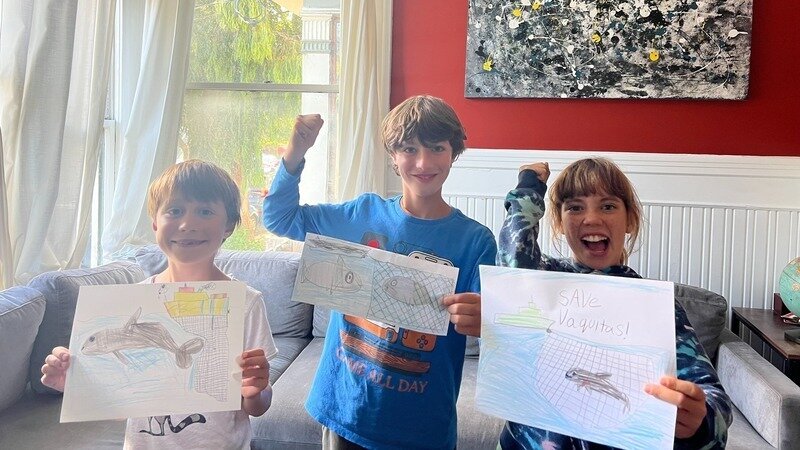
We are a group of students—a 3rd grader and two 4th graders—who were heartbroken to learn about the threats facing the vaquita. We couldn’t believe that such an adorable animal (just look at it!) is about to disappear forever - so we decided to take action. That’s why we are writing this petition and asking for your support.
What is threatening the vaquita?
Illegal fishing
The biggest threat to vaquitas is illegal fishing. Fishermen are using gillnets, large fishing nets that hang like walls in the water. Although these nets are set to catch large fish, vaquitas often get tangled in them by accident. Vaquitas need to swim to the surface to breathe, but when they get stuck in the gillnets, they can’t break free and drown.
One of the main reasons these gill nets are used is to catch a fish called the totoaba (a type of bass), which is endemic to the Gulf of California and is also endangered due to overfishing. The totoaba’s swim bladder is extremely valuable in China, where it is believed (without scientific proof) to have special medicinal powers. Despite Mexico making totoaba fishing illegal and China making totaoba importation illegal, totoaba continue to be fished and vaquitas continue to be caught and drowned in gillnets aimed to catch the totoaba.
Pollution is also threatening the vaquitas
The Sea of Cortez, where vaquitas live, is also becoming more polluted. Plastic, chemicals and waste from farms and factories are being dumped into the sea, contaminating the water. This pollution affects the fish vaquitas eat, damages their habitat, and weakens their health. Living in shallow waters close to the shore makes the vaquita especially vulnerable to this pollution.
Why should we care?
The vaquita is one of the rarest animals in the world. If we don’t act now, they will be gone forever. Imagine the ocean without them! Vaquitas are a symbol of the rich diversity of life on our planet, and their disappearance would be a tragic loss for all of us.
By saving the vaquita, we are also protecting the health of the ocean and other species in its food web and ecosystem.
To find out more:
https://eia-international.org/report/on-borrowed-time/
https://porpoise.org/knowledge-base/why-is-the-vaquita-endangered/
https://www.mmc.gov/priority-topics/species-of-concern/vaquita/
https://www.fisheries.noaa.gov/species/vaquita
How can YOU help?
We need your voice! Please sign this petition. We aim to get at least 1,000 signatures to show the governments of Mexico and China that people all over the world care about saving the vaquitas. We are asking Alicia Bárcena, when she assumes office as Mexico’s new Secretary of Environment and Natural Resources and Huang Runqui, Minister of Ecology and Environment of China to increase enforcement against illegal fishing of totoaba and their illegal importation respectively.
We are asking the Mexican government to enforce its laws against totoaba fishing in the Sea of Cortez and protect the vaquita's habitat. This is urgent because while vaquita numbers are rapidly decreasing, Mexico has decreased its enforcement against totoaba fishing since 2023.
We are asking the Chinese government to enforce its ban of totoaba importation and attendant domestic trade. This is necessary to address the demand side of the illegal totoaba trade.
Working together, we can stop the illegal fishing that is pushing the vaquita toward extinction and reduce pollution in their home. The vaquita may be small, but the impact of saving it will be huge!
Let’s act now, before it’s too late!
Thank you!
Luca, Madeleine and Marco

1,230
The Issue
SAVE THE VAQUITA – THE WORLD’S MOST ENDANGERED MARINE MAMMAL AND THE CUTEST ANIMAL ALIVE!
Dear friends,
We need your help to save one of the most endangered animals on the planet— the vaquita. The vaquita is a small, shy porpoise that lives only in the northern part of the Sea of Cortez, off the coast of Baja California, Mexico. Tragically, there are only around 10 vaquitas left, and they are on the brink of extinction.
We are a group of students—a 3rd grader and two 4th graders—who were heartbroken to learn about the threats facing the vaquita. We couldn’t believe that such an adorable animal (just look at it!) is about to disappear forever - so we decided to take action. That’s why we are writing this petition and asking for your support.
What is threatening the vaquita?
Illegal fishing
The biggest threat to vaquitas is illegal fishing. Fishermen are using gillnets, large fishing nets that hang like walls in the water. Although these nets are set to catch large fish, vaquitas often get tangled in them by accident. Vaquitas need to swim to the surface to breathe, but when they get stuck in the gillnets, they can’t break free and drown.
One of the main reasons these gill nets are used is to catch a fish called the totoaba (a type of bass), which is endemic to the Gulf of California and is also endangered due to overfishing. The totoaba’s swim bladder is extremely valuable in China, where it is believed (without scientific proof) to have special medicinal powers. Despite Mexico making totoaba fishing illegal and China making totaoba importation illegal, totoaba continue to be fished and vaquitas continue to be caught and drowned in gillnets aimed to catch the totoaba.
Pollution is also threatening the vaquitas
The Sea of Cortez, where vaquitas live, is also becoming more polluted. Plastic, chemicals and waste from farms and factories are being dumped into the sea, contaminating the water. This pollution affects the fish vaquitas eat, damages their habitat, and weakens their health. Living in shallow waters close to the shore makes the vaquita especially vulnerable to this pollution.
Why should we care?
The vaquita is one of the rarest animals in the world. If we don’t act now, they will be gone forever. Imagine the ocean without them! Vaquitas are a symbol of the rich diversity of life on our planet, and their disappearance would be a tragic loss for all of us.
By saving the vaquita, we are also protecting the health of the ocean and other species in its food web and ecosystem.
To find out more:
https://eia-international.org/report/on-borrowed-time/
https://porpoise.org/knowledge-base/why-is-the-vaquita-endangered/
https://www.mmc.gov/priority-topics/species-of-concern/vaquita/
https://www.fisheries.noaa.gov/species/vaquita
How can YOU help?
We need your voice! Please sign this petition. We aim to get at least 1,000 signatures to show the governments of Mexico and China that people all over the world care about saving the vaquitas. We are asking Alicia Bárcena, when she assumes office as Mexico’s new Secretary of Environment and Natural Resources and Huang Runqui, Minister of Ecology and Environment of China to increase enforcement against illegal fishing of totoaba and their illegal importation respectively.
We are asking the Mexican government to enforce its laws against totoaba fishing in the Sea of Cortez and protect the vaquita's habitat. This is urgent because while vaquita numbers are rapidly decreasing, Mexico has decreased its enforcement against totoaba fishing since 2023.
We are asking the Chinese government to enforce its ban of totoaba importation and attendant domestic trade. This is necessary to address the demand side of the illegal totoaba trade.
Working together, we can stop the illegal fishing that is pushing the vaquita toward extinction and reduce pollution in their home. The vaquita may be small, but the impact of saving it will be huge!
Let’s act now, before it’s too late!
Thank you!
Luca, Madeleine and Marco
Supporter Voices
Petition Updates
Share this petition
Petition created on September 15, 2024