
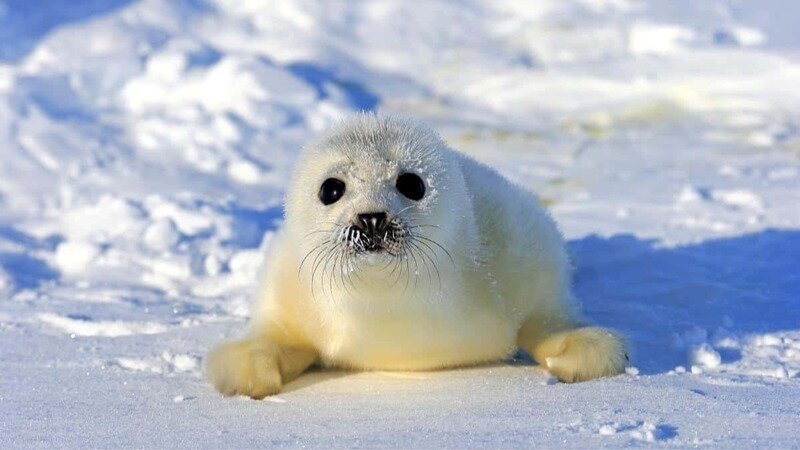
Save the Harp Seals: At Risk of Extinction
The Issue
Harp seals, a keystone species in the Arctic ecosystem, are facing unnerving threats that are pushing this currently threatened species closer and closer to endangerment. The survival of these beautiful animals is currently at risk due to both harmful human activities and environmental changes.
Harp seal populations are decreasing more rapidly now than ever before as a result of a few factors.
- Climate change is causing a significant decrease in sea ice. As man-made pollution (i.e., radioactive waste pollution, chemical pollution, metal pollution, fertilizer pollution, and plastic pollution), increases, oceans become acidified, resulting in rising temperatures, the change of currents on a global scale, and the melting of glaciers. Seals depend on thick, large floes of sea ice to give birth to and raise their young. The melting of this ice is creating an insufficient or broken-up habitat, causing many seal pups to drown.
- Sealing results in the death of many juvenile and adult seals. Roughly 40,000 seal pups are slaughtered each year in Canada. This is because of Canada's Harp Seal Hunt. In the spring, when the ice conditions permit and the seal pups start shedding their fuzzy white coats, hundreds to thousands of Canadian fishermen begin hunting and brutally killing (or torturing) the innocent seals. Their excuse for doing this is that the seals depend on and eat the fish that they catch and profit from.
Harpseals.org is a current research project that is taking initiative to put a stop to the Harp seal hunt in Canada. Founder Ian Robichaud, Chairperson Diana Marmorstein, Ph.D., Robert Watson, and Karin Braunsberger, Ph.D., are on the board of directors responsible for this project. They are using grassroots activism to inform the public and raise awareness about the slaughter of harp seals, in hopes of bringing about change. With more people concerned about the same cause, laws and policies can be passed to possibly protect these mistreated animals.
Harp seals take on both predatory and prey roles in the ecosystems they occupy. They live in Arctic regions in North America, such as Canada and Greenland. This area is characterized by extremely cold temperatures, ice-covered bodies of water, and little to no vegetation. Seals regulate fish and invertebrate populations by feeding on such organisms. Additionally, they support and feed organisms further down the food chain, like polar bears and Arctic foxes, which prey on seals. Harp seals are a main factor in maintaining ecological stability in Arctic ecosystems. The loss of harp seals would completely disrupt the balance of the ecosystem, harming all other organisms within it as well.
Although it may not seem like you can do much to help, everyone can make a difference. There are many ways that you can contribute to the cause of helping to save the harp seals:
- Supporting conservation organizations.
- By volunteering with or donating to groups such as Harpseals.org or National Oceanic and Atmospheric Administration (NOAA) Fisheries, you can directly contribute to the conservation efforts being orchestrated.
- Reducing your carbon footprint.
- Man-made pollution is a main cause of climate change, melting the Arctic environment. By decreasing the use of fossil fuels and instead using more renewable energy sources, fewer greenhouse gases are being emitted into the atmosphere. Carpooling, using public transportation, and walking or biking as ways of getting around, as well as the conservation of energy, are ways to do this. Additionally, picking up trash and not littering can also help reduce the amount of pollution contributing to global warming.
- Raising awareness.
- Spreading the word about the poaching of harp seals on social media, within your community, school, etc. can help make others aware of the issues occurring. They, too, can take part in creating more awareness and helping bring about change.
- Reaching out to the government.
- Contacting representatives from your local government is a more direct and quicker way of achieving change. By suggesting ways to implement stronger environmental protection laws and policies, you can make a direct impact on the fate of the ecosystem.
- Boycotting.
- Participating in boycotts of Canadian seafood and tourism can ensure that those participating in the poaching of seals are not compensated for their actions.
By signing and sharing this petition, you will be helping to further spread awareness about the issues that harp seals face. This will help show that the public cares about these issues, demanding better protection for harp seals and their habitat.
Every signature counts! Please do your part and contribute to the preservation of these magnificent animals.
To further learn about this cause, as well as help, donate, or volunteer, visit "https://www.harpseals.org/help/index.php," which contains resources and links to do all of the above through their organization.

444
The Issue
Harp seals, a keystone species in the Arctic ecosystem, are facing unnerving threats that are pushing this currently threatened species closer and closer to endangerment. The survival of these beautiful animals is currently at risk due to both harmful human activities and environmental changes.
Harp seal populations are decreasing more rapidly now than ever before as a result of a few factors.
- Climate change is causing a significant decrease in sea ice. As man-made pollution (i.e., radioactive waste pollution, chemical pollution, metal pollution, fertilizer pollution, and plastic pollution), increases, oceans become acidified, resulting in rising temperatures, the change of currents on a global scale, and the melting of glaciers. Seals depend on thick, large floes of sea ice to give birth to and raise their young. The melting of this ice is creating an insufficient or broken-up habitat, causing many seal pups to drown.
- Sealing results in the death of many juvenile and adult seals. Roughly 40,000 seal pups are slaughtered each year in Canada. This is because of Canada's Harp Seal Hunt. In the spring, when the ice conditions permit and the seal pups start shedding their fuzzy white coats, hundreds to thousands of Canadian fishermen begin hunting and brutally killing (or torturing) the innocent seals. Their excuse for doing this is that the seals depend on and eat the fish that they catch and profit from.
Harpseals.org is a current research project that is taking initiative to put a stop to the Harp seal hunt in Canada. Founder Ian Robichaud, Chairperson Diana Marmorstein, Ph.D., Robert Watson, and Karin Braunsberger, Ph.D., are on the board of directors responsible for this project. They are using grassroots activism to inform the public and raise awareness about the slaughter of harp seals, in hopes of bringing about change. With more people concerned about the same cause, laws and policies can be passed to possibly protect these mistreated animals.
Harp seals take on both predatory and prey roles in the ecosystems they occupy. They live in Arctic regions in North America, such as Canada and Greenland. This area is characterized by extremely cold temperatures, ice-covered bodies of water, and little to no vegetation. Seals regulate fish and invertebrate populations by feeding on such organisms. Additionally, they support and feed organisms further down the food chain, like polar bears and Arctic foxes, which prey on seals. Harp seals are a main factor in maintaining ecological stability in Arctic ecosystems. The loss of harp seals would completely disrupt the balance of the ecosystem, harming all other organisms within it as well.
Although it may not seem like you can do much to help, everyone can make a difference. There are many ways that you can contribute to the cause of helping to save the harp seals:
- Supporting conservation organizations.
- By volunteering with or donating to groups such as Harpseals.org or National Oceanic and Atmospheric Administration (NOAA) Fisheries, you can directly contribute to the conservation efforts being orchestrated.
- Reducing your carbon footprint.
- Man-made pollution is a main cause of climate change, melting the Arctic environment. By decreasing the use of fossil fuels and instead using more renewable energy sources, fewer greenhouse gases are being emitted into the atmosphere. Carpooling, using public transportation, and walking or biking as ways of getting around, as well as the conservation of energy, are ways to do this. Additionally, picking up trash and not littering can also help reduce the amount of pollution contributing to global warming.
- Raising awareness.
- Spreading the word about the poaching of harp seals on social media, within your community, school, etc. can help make others aware of the issues occurring. They, too, can take part in creating more awareness and helping bring about change.
- Reaching out to the government.
- Contacting representatives from your local government is a more direct and quicker way of achieving change. By suggesting ways to implement stronger environmental protection laws and policies, you can make a direct impact on the fate of the ecosystem.
- Boycotting.
- Participating in boycotts of Canadian seafood and tourism can ensure that those participating in the poaching of seals are not compensated for their actions.
By signing and sharing this petition, you will be helping to further spread awareness about the issues that harp seals face. This will help show that the public cares about these issues, demanding better protection for harp seals and their habitat.
Every signature counts! Please do your part and contribute to the preservation of these magnificent animals.
To further learn about this cause, as well as help, donate, or volunteer, visit "https://www.harpseals.org/help/index.php," which contains resources and links to do all of the above through their organization.
Petition Updates
Share this petition
Petition created on May 20, 2024