

Save The Downtown Grand Rapids Post Office
The Issue
My name is Ben King, and I’m a local architectural historian with a focus on Michigan’s contributions to the Modernist movement. I was disheartened to hear that there has been discussion about demolishing the downtown post office, as it is an incredibly unique structure and a significant part of Grand Rapid’s architectural history. I can certainly understand the need to redevelop this part of the riverfront, but I urge the city to consider a solution that would allow for the redevelopment of this property while preserving its rich architectural history. Outlined below are some of the details of the building that make it worthy of preservation.
The downtown post office is an artifact from a period of significant downtown development and change, when city leaders were seriously rethinking what the city should look like and how it should flow. It is one of the dwindling number of buildings remaining designed by Grand Rapids’ own Daverman Associates, who rose to become one of Michigan’s most-renowned architecture firms during its height, completing international work as far off as Saudi Arabia and Jamaica. Although Calder Plaza still represents a nice collection of Daverman work, with the demolition of the Grand Rapids Press Building and a number of other Midcentury buildings downtown, I am very concerned that the Daverman structures aren’t recognized for what they are, and will all slowly be removed or renovated beyond recognition without respecting their original design intent.
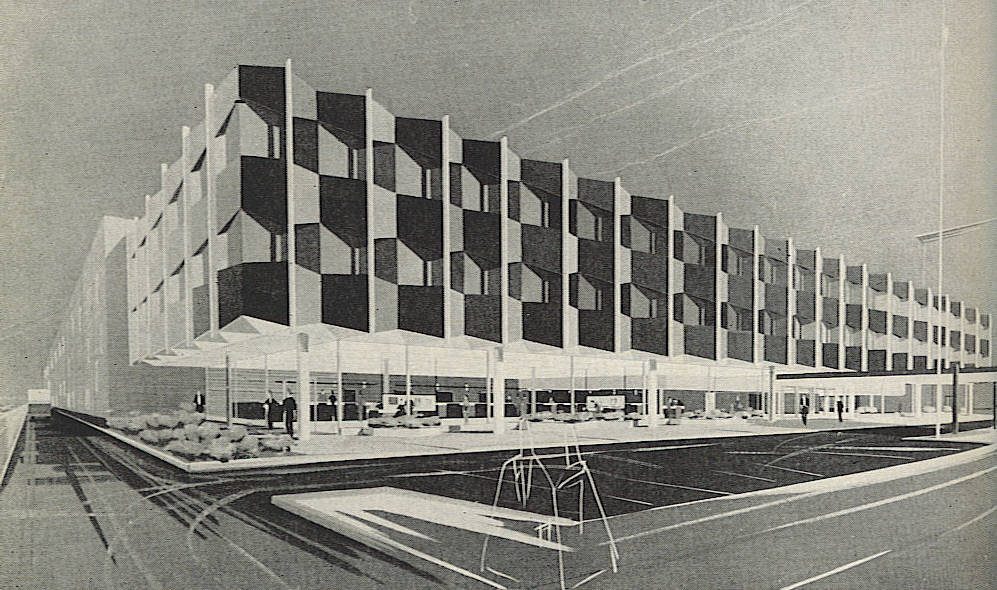
Original architectural rendering by Daverman Associates, 1961.
The post office’s “sawtooth” facade speaks to a bygone era when architecture was all about creating pleasing visual rhythm and beauty through geometry and form over ornament and decor. It also exemplifies significant developments in building technology for the time: the use of aluminum framed panel systems. Although this aluminum panel system is seen on many Midcentury Modern buildings, it is increasingly rare to find intact examples like this that have dimension and aren’t just linear flat curtain walls. On top of this, the repetition of angular and hexagonal forms and the pyramidical coffered ceilings that extend outward from the interior lobby into the cantilevered exterior are clear influences from the work of Detroit’s Minoru Yamasaki, significant midcentury architect and mastermind behind the twin towers.
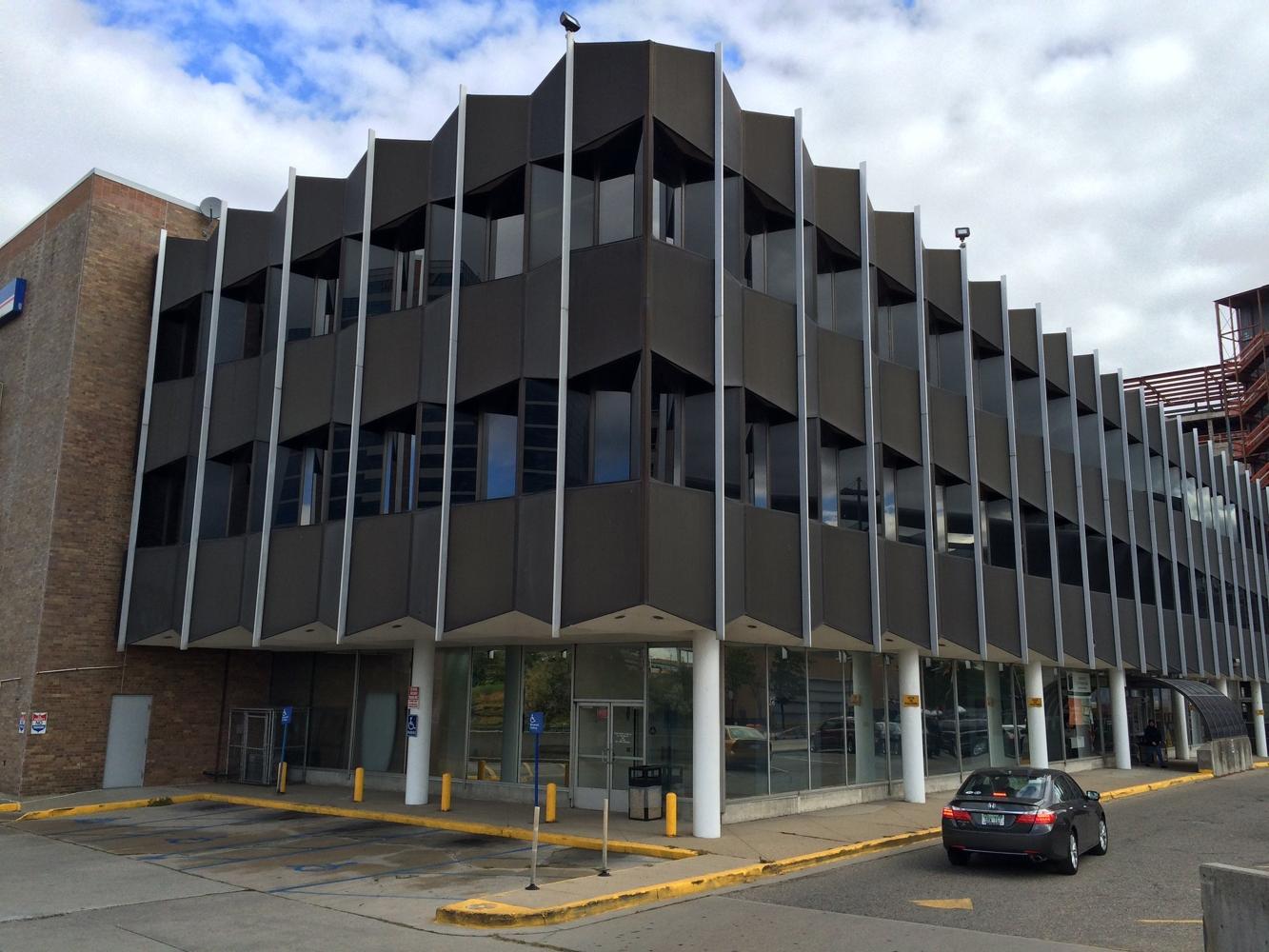
The repetition of hexagonal and angular forms (pictured above) bears resemblance to Yamasaki’s frequent use of similar geometry, like at the campus of Wayne Statue University (below).
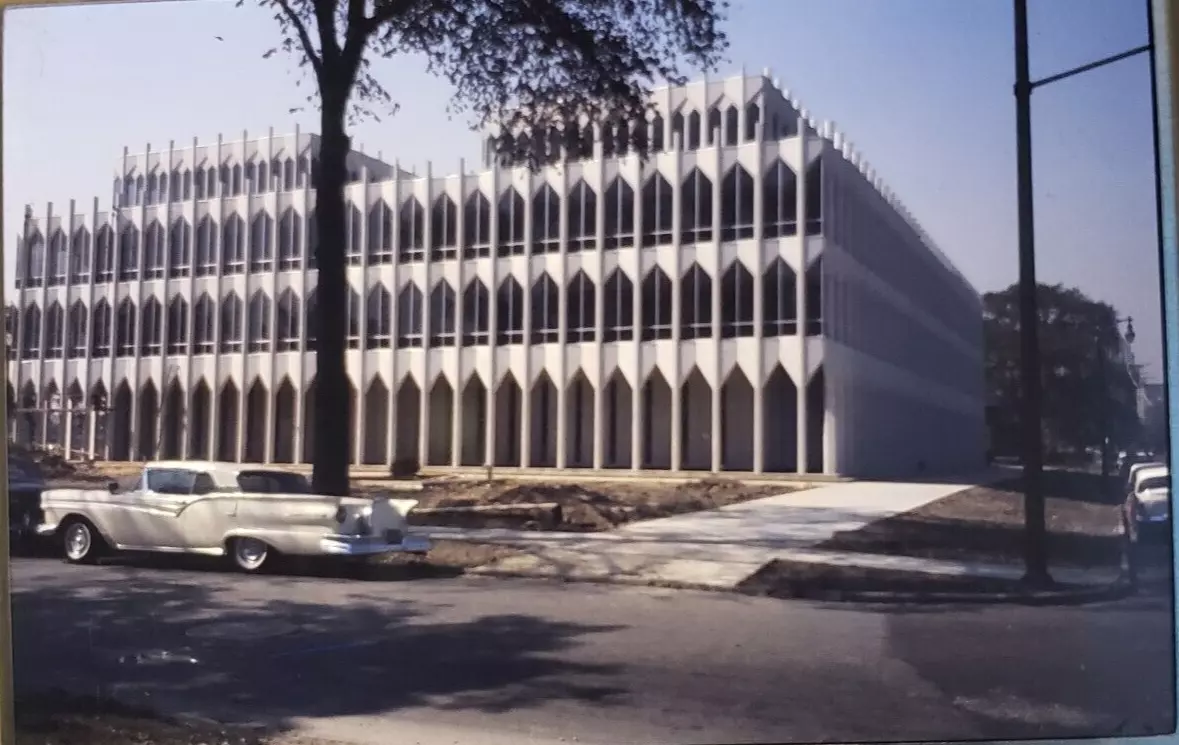
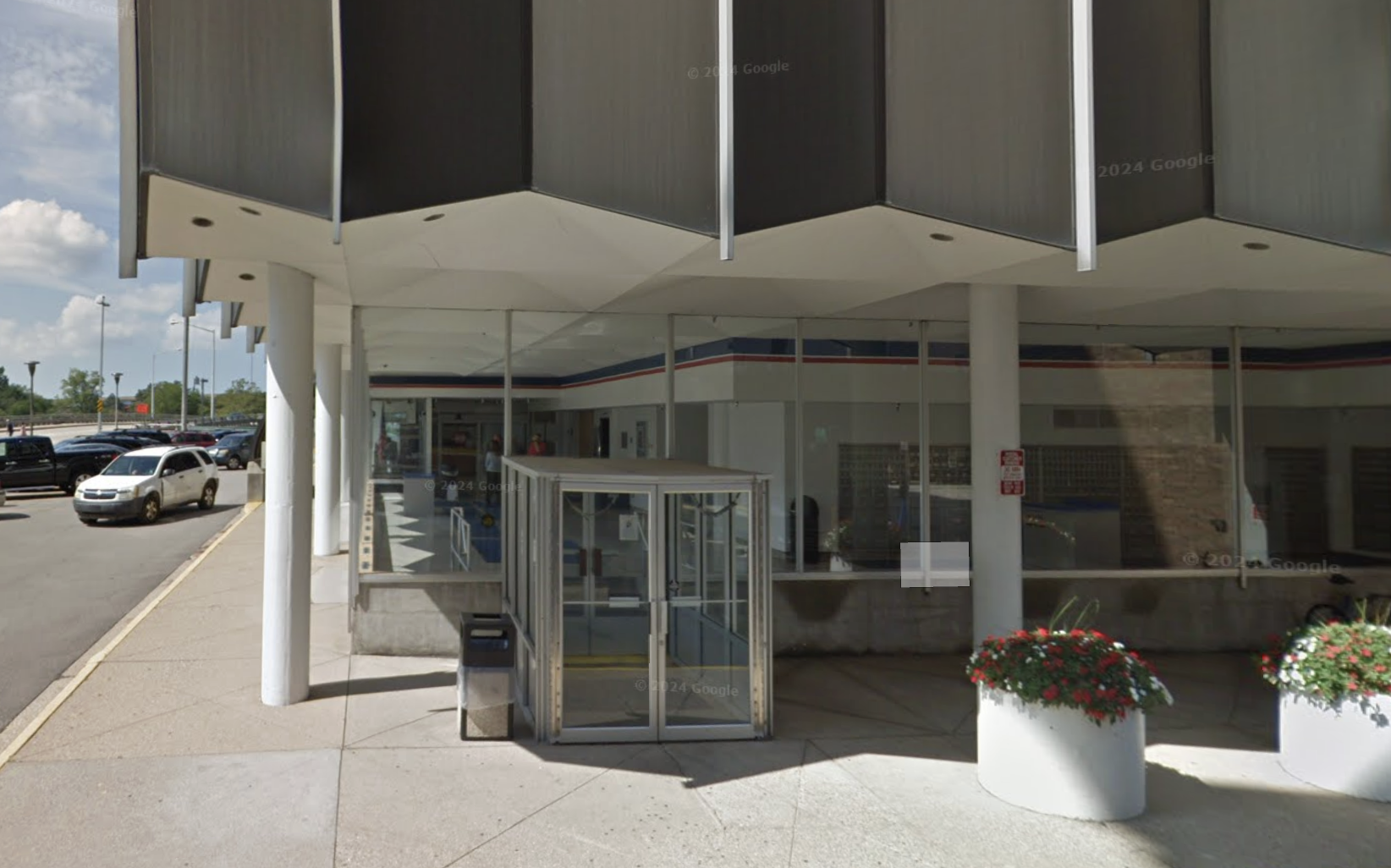
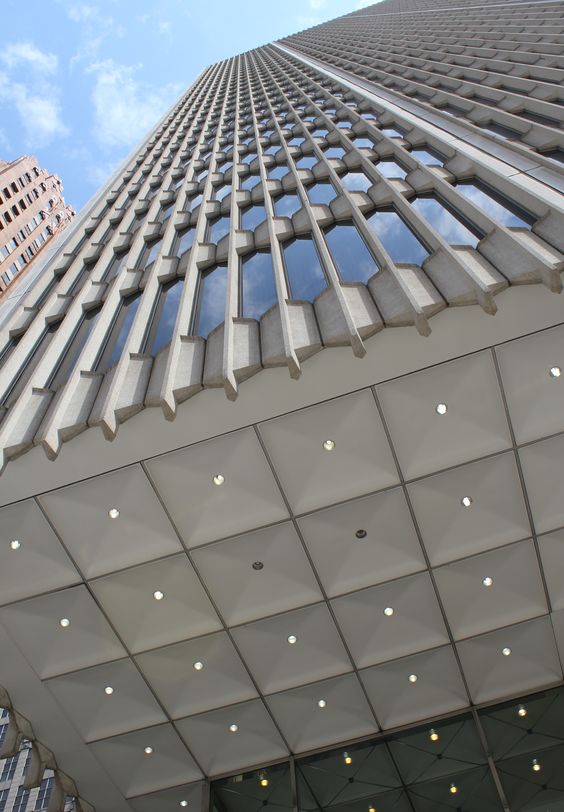
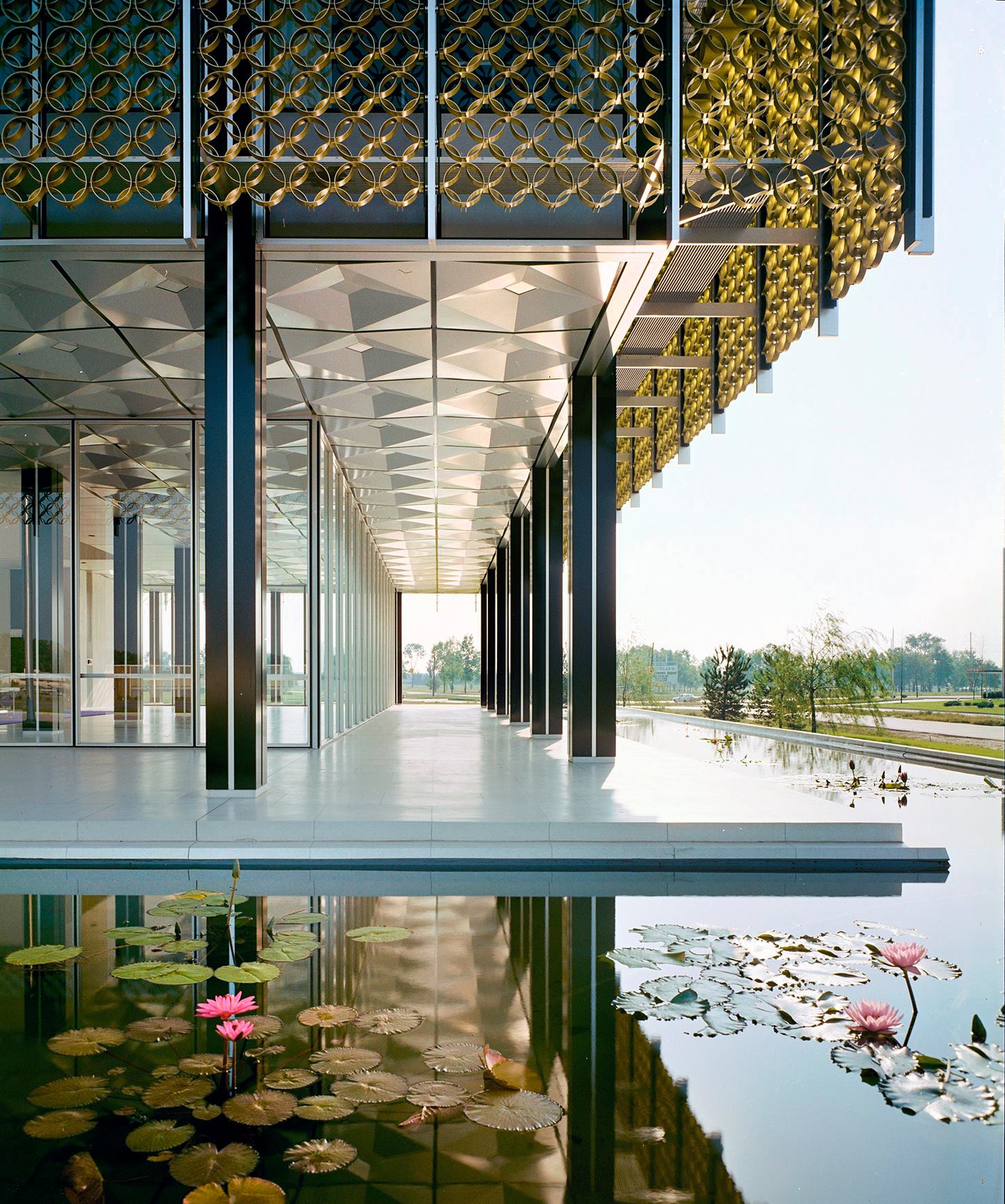
Another detail borrowed from Yamasaki is the use of coffered ceilings that extend from the interior through the glass to the exterior (pictured above). Examples include Yamasaki's Michigan Consolidated Gas building and the Reynolds Metals Headquarters (pictured below, respectively).
I propose that at least the aluminum and glass front portion of the building be preserved and incorporated into the new development. This would still leave the majority of the property open for demolition and new buildings, while maintaining the most significant and interesting portion of the post office.
Although I recognize that Midcentury Modern commercial buildings aren’t everyone’s cup of tea, I do firmly believe if this site is completely demolished, in time it will be looked back on as a mistake and the loss of a significant cultural artifact that helps illustrate Grand Rapid’s rich architectural history and diversity.
The collected signatures are from individuals in the local design community and concerned citizens who support this measure to preserve at least the front section of the post office. Thank you for you time and consideration, and I hope this is the beginning of many conversations on how to rehabilitate this Grand Rapids icon.

76
The Issue
My name is Ben King, and I’m a local architectural historian with a focus on Michigan’s contributions to the Modernist movement. I was disheartened to hear that there has been discussion about demolishing the downtown post office, as it is an incredibly unique structure and a significant part of Grand Rapid’s architectural history. I can certainly understand the need to redevelop this part of the riverfront, but I urge the city to consider a solution that would allow for the redevelopment of this property while preserving its rich architectural history. Outlined below are some of the details of the building that make it worthy of preservation.
The downtown post office is an artifact from a period of significant downtown development and change, when city leaders were seriously rethinking what the city should look like and how it should flow. It is one of the dwindling number of buildings remaining designed by Grand Rapids’ own Daverman Associates, who rose to become one of Michigan’s most-renowned architecture firms during its height, completing international work as far off as Saudi Arabia and Jamaica. Although Calder Plaza still represents a nice collection of Daverman work, with the demolition of the Grand Rapids Press Building and a number of other Midcentury buildings downtown, I am very concerned that the Daverman structures aren’t recognized for what they are, and will all slowly be removed or renovated beyond recognition without respecting their original design intent.
Original architectural rendering by Daverman Associates, 1961.
The post office’s “sawtooth” facade speaks to a bygone era when architecture was all about creating pleasing visual rhythm and beauty through geometry and form over ornament and decor. It also exemplifies significant developments in building technology for the time: the use of aluminum framed panel systems. Although this aluminum panel system is seen on many Midcentury Modern buildings, it is increasingly rare to find intact examples like this that have dimension and aren’t just linear flat curtain walls. On top of this, the repetition of angular and hexagonal forms and the pyramidical coffered ceilings that extend outward from the interior lobby into the cantilevered exterior are clear influences from the work of Detroit’s Minoru Yamasaki, significant midcentury architect and mastermind behind the twin towers.
The repetition of hexagonal and angular forms (pictured above) bears resemblance to Yamasaki’s frequent use of similar geometry, like at the campus of Wayne Statue University (below).
Another detail borrowed from Yamasaki is the use of coffered ceilings that extend from the interior through the glass to the exterior (pictured above). Examples include Yamasaki's Michigan Consolidated Gas building and the Reynolds Metals Headquarters (pictured below, respectively).
I propose that at least the aluminum and glass front portion of the building be preserved and incorporated into the new development. This would still leave the majority of the property open for demolition and new buildings, while maintaining the most significant and interesting portion of the post office.
Although I recognize that Midcentury Modern commercial buildings aren’t everyone’s cup of tea, I do firmly believe if this site is completely demolished, in time it will be looked back on as a mistake and the loss of a significant cultural artifact that helps illustrate Grand Rapid’s rich architectural history and diversity.
The collected signatures are from individuals in the local design community and concerned citizens who support this measure to preserve at least the front section of the post office. Thank you for you time and consideration, and I hope this is the beginning of many conversations on how to rehabilitate this Grand Rapids icon.
Petition Updates
Share this petition
Petition created on June 19, 2024