

Save Laramie's Depot Park Cottonwood Trees
The Issue
Don't pave paradise to put up a parking lot
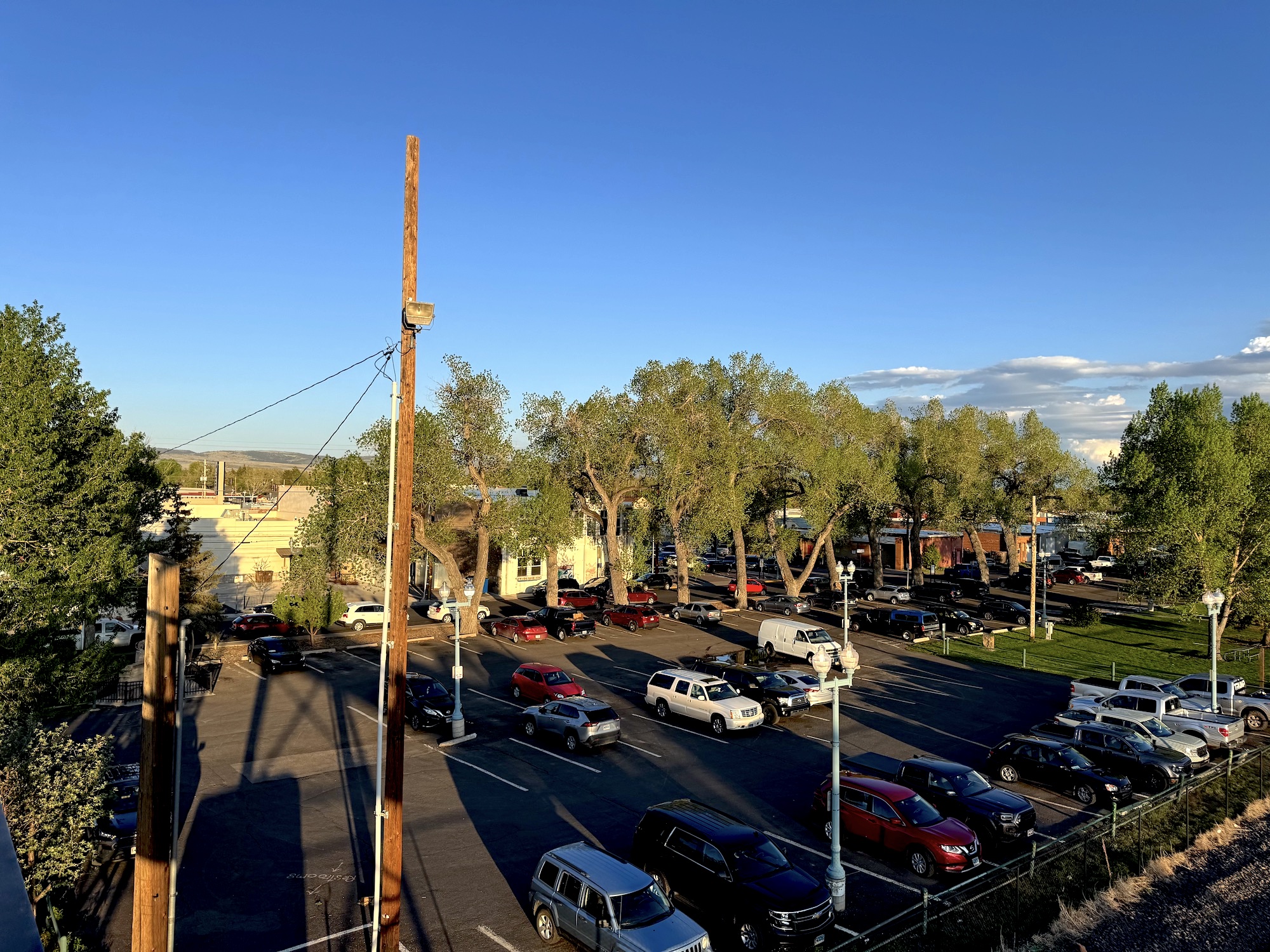
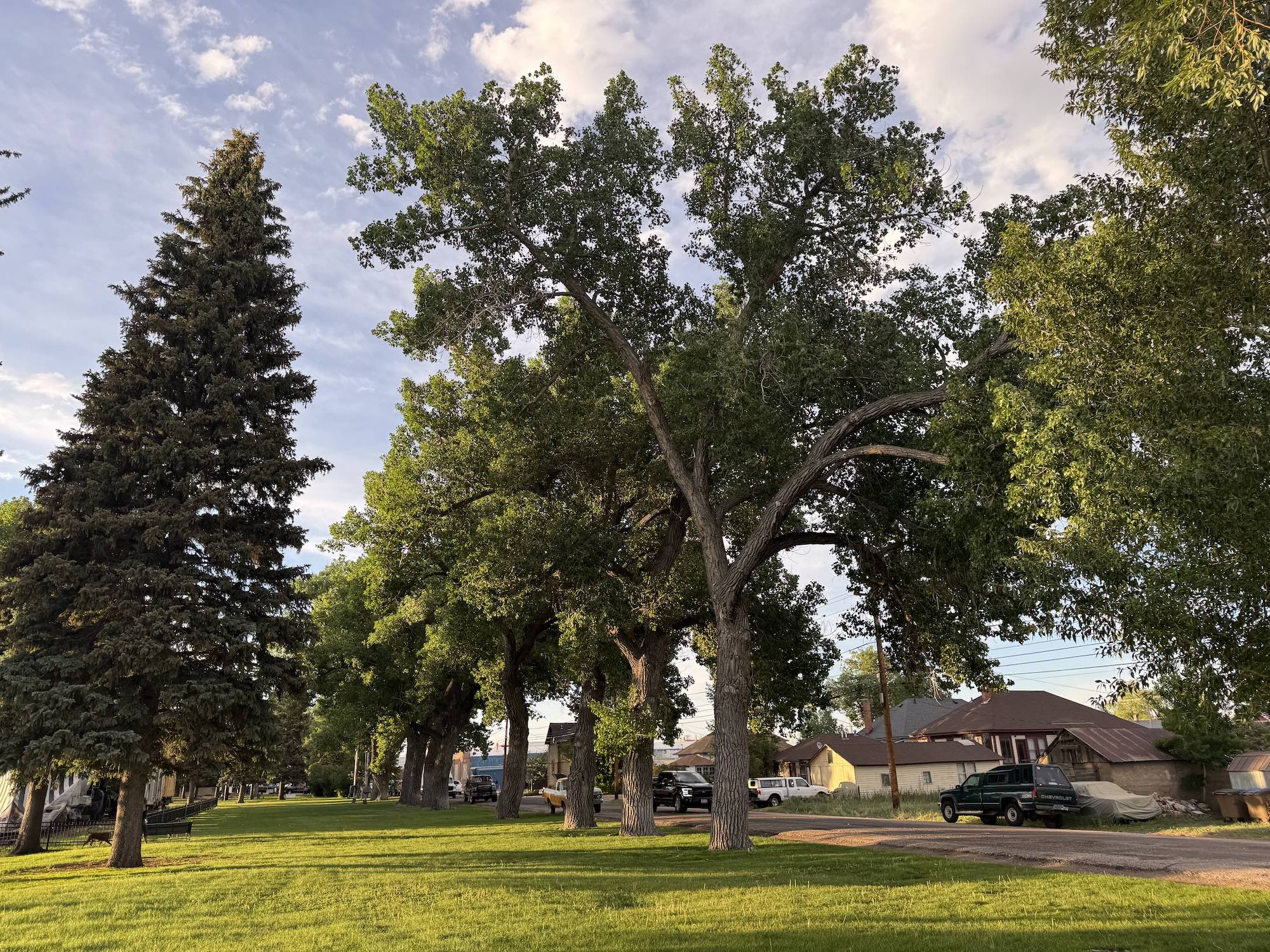
The current plans to redevelop Laramie's Depot Park and 1st Street for ADA accessibility and diagonal parking require the destruction of 23 cottonwood trees that are a century old.
These trees stretch for four blocks along the west side of 1st street from Garfield St. to Park Ave. With careful planning, ADA accessibility can be achieved without losing the cottonwoods. We urge that any changes to parking or the streetscape also safeguard these trees.
By signing this petition to save the cottonwoods, you are supporting a redevelopment approach that respects our community's history and its natural values, and embraces sustainable progress along with economic decelopment.
Stand with us in urging the city of Laramie to find a creative solution that keeps the cottonwood trees intact while moving forward with necessary urban improvements. Let's protect the character and history of Depot Park for future generations. Please sign this petition to show your support.
Designing a better park while keeping what works
While we wholeheartedly support efforts to improve ADA accessibility and address downtown parking needs, these goals do not need to come at the cost of these majestic cottonwoods.
The city is on the right track to make Depot Park more accessible and useful to people, but the creation of new parking spaces has been given too much weight in the current draft plans. If enacted as written, they would severely detract from the character of Depot Park.
National parking consultants have many other solutions to stimulate parking turnover in front of businesses — and promote more pedestrian and bike-friendly solutions. The city must do more to implement the kinds of ideas proven around the country and the world, instead of just creating ever more parking spots and marring important open space assets in the process.
The last century of American history and urban planning has shown that what makes a city and its businesses attractive, healthy and economically thriving is not how much parking they offer, or how quickly a large number of cars can drive through. Our neighborhood and downtown are vibrant because they are optimized for human interaction and place-based pedestrian experiences. We need trees for this.
Why these trees matter
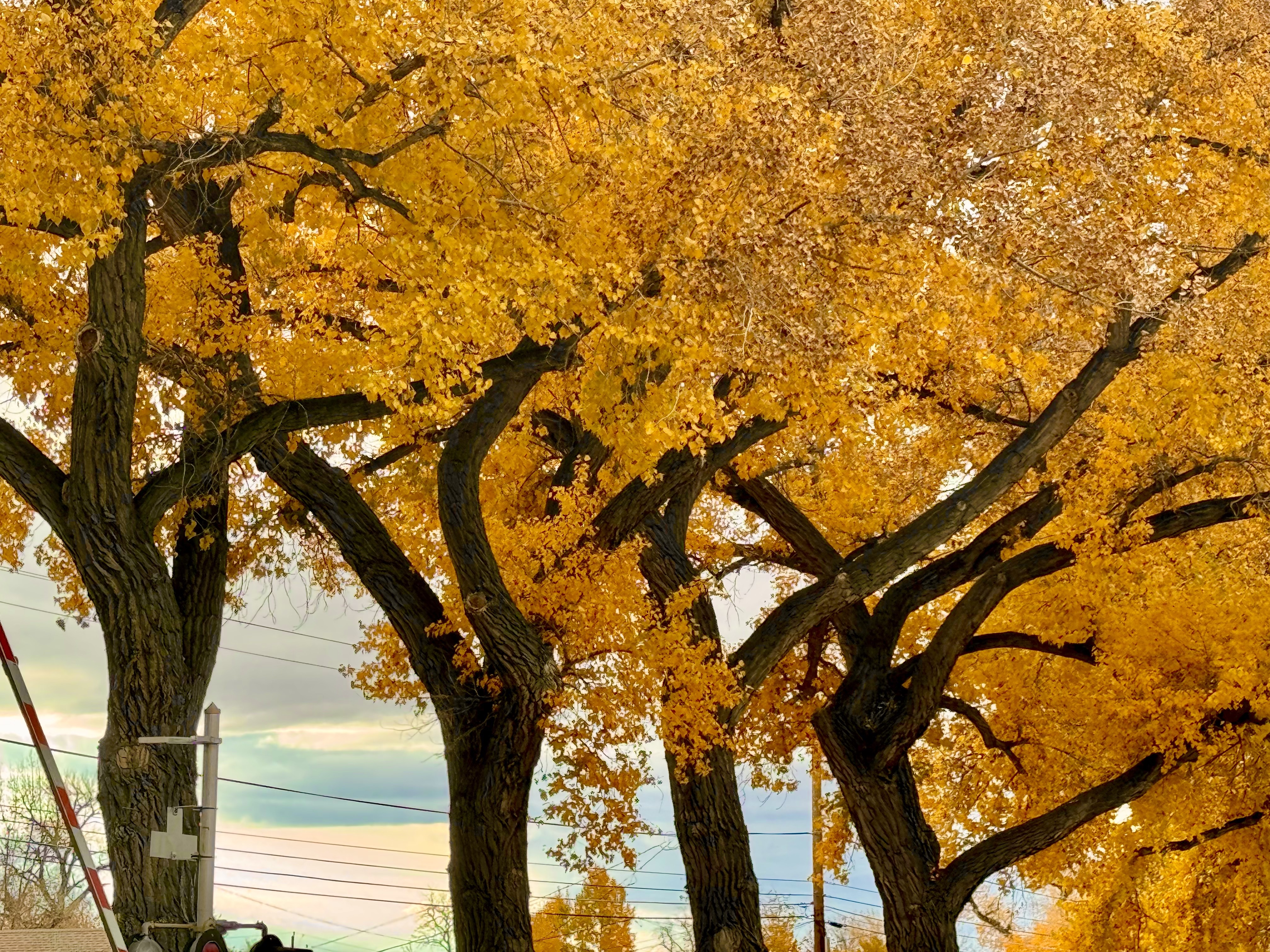
As residents and visitors to the Depot Park neighborhood in Laramie, Wyoming, we highly value these historic trees that line 1st Street. These particular trees are a crucial part of what makes this neighborhood livable for residents, and attractive to pedestrians and visitors.
These cottonwoods, planted as far back as the 1920s, are more than just greenery:
- They are a valued part of our community's natural beauty. The trees are a powerful and necessary offset to the industrial impact of the railroad.
- The trees provide a buffer that filters wind, noise, dust, and pollution along the rail yard.
- They are a public health asset for neighborhood residents that range from toddlers to octogenarians, helping us breathe and sleep more easily, all of which protects against heart disease, asthma, and cancer.
- They contribute to the historic and cultural landscape of our beloved Depot Park.
- Neighborhood residents delight in this green space beneath these cottonwoods in an otherwise industrial area heavily impacted by auto and train traffic. This contrast is part of Depot Park's appeal.
- The trees contribute to economic activity by providing a shady space for customers to park, the only sizable tree-covered area in downtown. Customers with oversized vehicles like campers routinely park under these trees and head straight downtown to eat, drink, shop, and experience our award-winning downtown.
These trees are part of what attracts people to come downtown and spend money in locally owned businesses that are the pride of Laramie.
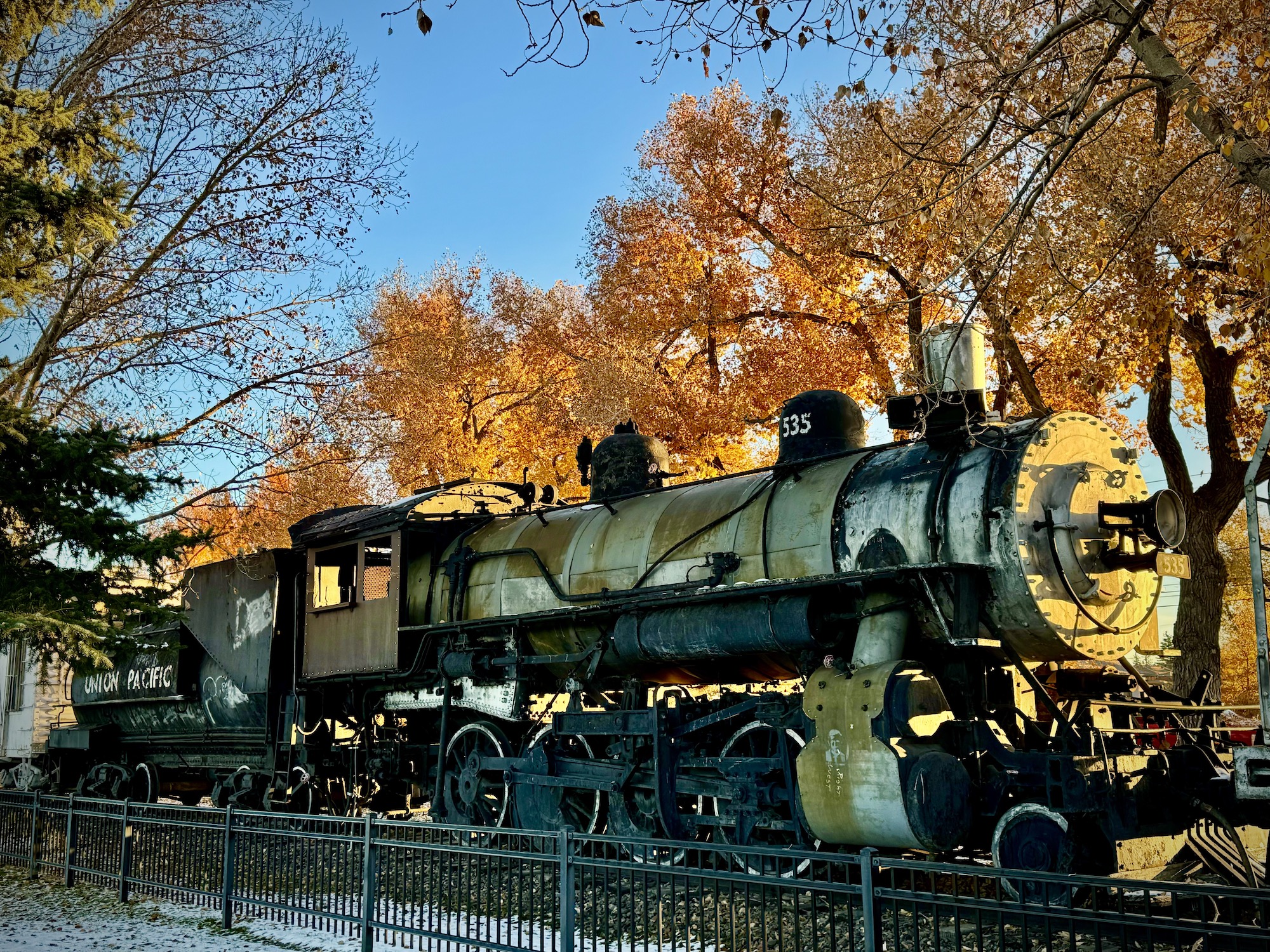
Many residents and business owners take daily walks in the park, looking at the snow train and depot, and enjoying the sunlight and breeze moving in this 32,000 square-foot canopy of cottonwood leaves. The value of these trees can't be fully appreciated from your car. You have to get out and spend time in the park to fully experience them with your senses.
Removing these trees would not only disrupt the neighborhood's economic base and scenic beauty, but also expose residents to even more environmental and quality of life impacts from the rail yard. The rail yard is a source of noise, dust, creosote fumes, and diesel exhaust which contains benzene, a carcinogen that causes leukemia and many other health issues. It's crucial to consider these long-term impacts and the message cutting down these trees sends about our values and priorities.
Trading a natural asset for parking
It is an unacceptable tradeoff to cut down these trees for the convenience of adding a few more parking spaces that may have only a minimal effect of reducing the parking congestion downtown (more on that below).
The potential convenience to motorists for a few hours on perhaps just a few evenings a year is outweighed by the cost of sacrificing these trees.
They are a century-old natural and economic asset that is far more valuable than added parking spaces to the people who live in this neighborhood and use the park 365 days a year.
Residents want a creative option for saving the trees
There must be a way to compromise, but the current plans don't allow for that.
Conversations with city staff and consultants at hosted listening sessions have not yielded any options for a plan to ensure the conservation of these majestic trees.
We have not received a satisfactory answer to our requests to for a plan that would achieve ADA and parking improvements while saving these trees.
The city of Laramie has an opportunity to demonstrate a commitment to sustainable, economically smart, and historically-respectful development. We urge the city staff, consultants, engineers, and council to incorporate the preservation of the cottonwood trees into any redevelopment plans for the Depot Park area.
There are alternative solutions to tree removal, such as:
- abandoning first street and reverting it to the alley it once was, or turning the existing street into a parking lot which could have different width requirements than an official street
- turning a portion or all of first street along the park into an entirely pedestrian zone or a plaza
- promoting pedestrian and bicycle parking that would reduce congestion, potentially eliminating the need for dozens of car parking spaces,
- enforcing parking time limits,
- designing parking layouts that protect and enhance the trees,
- only using diagonal parking on the north 1/3rd of the park, saving the best trees near the depot and the south end of the park
- reducing or eliminating parallel parking on the east side of the street so that diagonal parking on the west side doesn't interfere with the trees,
- or using advanced construction techniques that can integrate with existing natural landscapes.
- Storm drainage redesigns can use the park itself to manage runoff, instead of overwhelming sewers even further.
Additionally, 1st street's current parallel parking on the west side is needed for motorists pulling RVs or large campers. We regularly see them pull alongside Depot Park in the evening and spend their money downtown. There needs to be some accommodation for these visitors that can't be served by diagonal parking.
Proposed parking solutions lack evidence
The city staff has provided insufficient data to prove that adding diagonal parking in this periphery location would actually decrease parking congestion in the core of downtown, which is five or six blocks away from the south end of Depot Park. It's a theory without evidence.
Speaking from experience, typical downtown parking behavior is to circle the downtown core or nearby lots to find an open spot, not to drive four blocks south and walk ~1,300 feet and four to six minutes back north to your destination.
Further, current levels of parking make it unclear that these diagonal spaces are needed on 1st street. The north depot parking lot is seldom more than 80 percent full on a normal weekday outside of special events or Friday and Saturday evenings.
First Street residents are already parking in front of their homes, and the long-term parking is mostly used by nearby auto shops to store cars for free.
Old things deserve to be taken care of
These 1st Street cottonwoods are not just trees; they are part of our community's identity and history. They were planted shortly after the Depot was built in 1924, as a sign of Laramie's prosperity and commitment to beautification. They were the welcome sign for rail travelers arriving from across the treeless plains, showing that people care about Laramie.
The trees continue to serve a welcoming role for all visitors to Depot Park and the pedestrian bridge over the rail yard.
As locals know, only hearty trees can survive on these plains, and these cottonwoods are not unlike our town's resilient residents. Old things, especially old living things, deserve to be taken care of, not torn out.
Replacement trees would be inferior
These cottonwood trees are not at the end of their life. The species has been documented to live up to 300 years, and there are likely nearby trees that are decades older than the Depot Park trees. A state arborist has told us that the trees are actually pretty healthy, especially the ones in south depot park, and the northern trees had survived the previous parking lot expansion remarkably well. Replacing the trees should happen one by one and as needed, not as a single clearcut.
Replacement trees would take many decades of growth to provide even 20-30% of the area of 32,000 square foot shade canopy under these current trees, something that must be considered as summer gets warmer and windstorms get more extreme. A hotter depot park with more paving is not a place where people will want to spend as much time.
We also know that the city's new choice of tree species are much narrower and lacking the character, structure and height of these historic cottonwoods that provide a true shade canopy. While practical, the new tree species make Laramie feel like a suburban area or shopping center on the Front Range, instead of a historic Wyoming railroad town.
Thank you for considering
Though we strongly disagree with aspects of the draft plan, we appreciate the opportunity to weigh in on the vision for Depot Park, and all the work that the staff has done to create a plan.
Our input comes from caring deeply about our sense of place and role as citizens in this community, and having a connection with this particular public space over many years.
Now that we have offered this sincere input, we hope that the city will alter the plans to incorporate the most practical suggestions, and save these 23 historic trees instead of trading them for a few dozen parking spaces.

672
The Issue
Don't pave paradise to put up a parking lot
The current plans to redevelop Laramie's Depot Park and 1st Street for ADA accessibility and diagonal parking require the destruction of 23 cottonwood trees that are a century old.
These trees stretch for four blocks along the west side of 1st street from Garfield St. to Park Ave. With careful planning, ADA accessibility can be achieved without losing the cottonwoods. We urge that any changes to parking or the streetscape also safeguard these trees.
By signing this petition to save the cottonwoods, you are supporting a redevelopment approach that respects our community's history and its natural values, and embraces sustainable progress along with economic decelopment.
Stand with us in urging the city of Laramie to find a creative solution that keeps the cottonwood trees intact while moving forward with necessary urban improvements. Let's protect the character and history of Depot Park for future generations. Please sign this petition to show your support.
Designing a better park while keeping what works
While we wholeheartedly support efforts to improve ADA accessibility and address downtown parking needs, these goals do not need to come at the cost of these majestic cottonwoods.
The city is on the right track to make Depot Park more accessible and useful to people, but the creation of new parking spaces has been given too much weight in the current draft plans. If enacted as written, they would severely detract from the character of Depot Park.
National parking consultants have many other solutions to stimulate parking turnover in front of businesses — and promote more pedestrian and bike-friendly solutions. The city must do more to implement the kinds of ideas proven around the country and the world, instead of just creating ever more parking spots and marring important open space assets in the process.
The last century of American history and urban planning has shown that what makes a city and its businesses attractive, healthy and economically thriving is not how much parking they offer, or how quickly a large number of cars can drive through. Our neighborhood and downtown are vibrant because they are optimized for human interaction and place-based pedestrian experiences. We need trees for this.
Why these trees matter
As residents and visitors to the Depot Park neighborhood in Laramie, Wyoming, we highly value these historic trees that line 1st Street. These particular trees are a crucial part of what makes this neighborhood livable for residents, and attractive to pedestrians and visitors.
These cottonwoods, planted as far back as the 1920s, are more than just greenery:
- They are a valued part of our community's natural beauty. The trees are a powerful and necessary offset to the industrial impact of the railroad.
- The trees provide a buffer that filters wind, noise, dust, and pollution along the rail yard.
- They are a public health asset for neighborhood residents that range from toddlers to octogenarians, helping us breathe and sleep more easily, all of which protects against heart disease, asthma, and cancer.
- They contribute to the historic and cultural landscape of our beloved Depot Park.
- Neighborhood residents delight in this green space beneath these cottonwoods in an otherwise industrial area heavily impacted by auto and train traffic. This contrast is part of Depot Park's appeal.
- The trees contribute to economic activity by providing a shady space for customers to park, the only sizable tree-covered area in downtown. Customers with oversized vehicles like campers routinely park under these trees and head straight downtown to eat, drink, shop, and experience our award-winning downtown.
These trees are part of what attracts people to come downtown and spend money in locally owned businesses that are the pride of Laramie.
Many residents and business owners take daily walks in the park, looking at the snow train and depot, and enjoying the sunlight and breeze moving in this 32,000 square-foot canopy of cottonwood leaves. The value of these trees can't be fully appreciated from your car. You have to get out and spend time in the park to fully experience them with your senses.
Removing these trees would not only disrupt the neighborhood's economic base and scenic beauty, but also expose residents to even more environmental and quality of life impacts from the rail yard. The rail yard is a source of noise, dust, creosote fumes, and diesel exhaust which contains benzene, a carcinogen that causes leukemia and many other health issues. It's crucial to consider these long-term impacts and the message cutting down these trees sends about our values and priorities.
Trading a natural asset for parking
It is an unacceptable tradeoff to cut down these trees for the convenience of adding a few more parking spaces that may have only a minimal effect of reducing the parking congestion downtown (more on that below).
The potential convenience to motorists for a few hours on perhaps just a few evenings a year is outweighed by the cost of sacrificing these trees.
They are a century-old natural and economic asset that is far more valuable than added parking spaces to the people who live in this neighborhood and use the park 365 days a year.
Residents want a creative option for saving the trees
There must be a way to compromise, but the current plans don't allow for that.
Conversations with city staff and consultants at hosted listening sessions have not yielded any options for a plan to ensure the conservation of these majestic trees.
We have not received a satisfactory answer to our requests to for a plan that would achieve ADA and parking improvements while saving these trees.
The city of Laramie has an opportunity to demonstrate a commitment to sustainable, economically smart, and historically-respectful development. We urge the city staff, consultants, engineers, and council to incorporate the preservation of the cottonwood trees into any redevelopment plans for the Depot Park area.
There are alternative solutions to tree removal, such as:
- abandoning first street and reverting it to the alley it once was, or turning the existing street into a parking lot which could have different width requirements than an official street
- turning a portion or all of first street along the park into an entirely pedestrian zone or a plaza
- promoting pedestrian and bicycle parking that would reduce congestion, potentially eliminating the need for dozens of car parking spaces,
- enforcing parking time limits,
- designing parking layouts that protect and enhance the trees,
- only using diagonal parking on the north 1/3rd of the park, saving the best trees near the depot and the south end of the park
- reducing or eliminating parallel parking on the east side of the street so that diagonal parking on the west side doesn't interfere with the trees,
- or using advanced construction techniques that can integrate with existing natural landscapes.
- Storm drainage redesigns can use the park itself to manage runoff, instead of overwhelming sewers even further.
Additionally, 1st street's current parallel parking on the west side is needed for motorists pulling RVs or large campers. We regularly see them pull alongside Depot Park in the evening and spend their money downtown. There needs to be some accommodation for these visitors that can't be served by diagonal parking.
Proposed parking solutions lack evidence
The city staff has provided insufficient data to prove that adding diagonal parking in this periphery location would actually decrease parking congestion in the core of downtown, which is five or six blocks away from the south end of Depot Park. It's a theory without evidence.
Speaking from experience, typical downtown parking behavior is to circle the downtown core or nearby lots to find an open spot, not to drive four blocks south and walk ~1,300 feet and four to six minutes back north to your destination.
Further, current levels of parking make it unclear that these diagonal spaces are needed on 1st street. The north depot parking lot is seldom more than 80 percent full on a normal weekday outside of special events or Friday and Saturday evenings.
First Street residents are already parking in front of their homes, and the long-term parking is mostly used by nearby auto shops to store cars for free.
Old things deserve to be taken care of
These 1st Street cottonwoods are not just trees; they are part of our community's identity and history. They were planted shortly after the Depot was built in 1924, as a sign of Laramie's prosperity and commitment to beautification. They were the welcome sign for rail travelers arriving from across the treeless plains, showing that people care about Laramie.
The trees continue to serve a welcoming role for all visitors to Depot Park and the pedestrian bridge over the rail yard.
As locals know, only hearty trees can survive on these plains, and these cottonwoods are not unlike our town's resilient residents. Old things, especially old living things, deserve to be taken care of, not torn out.
Replacement trees would be inferior
These cottonwood trees are not at the end of their life. The species has been documented to live up to 300 years, and there are likely nearby trees that are decades older than the Depot Park trees. A state arborist has told us that the trees are actually pretty healthy, especially the ones in south depot park, and the northern trees had survived the previous parking lot expansion remarkably well. Replacing the trees should happen one by one and as needed, not as a single clearcut.
Replacement trees would take many decades of growth to provide even 20-30% of the area of 32,000 square foot shade canopy under these current trees, something that must be considered as summer gets warmer and windstorms get more extreme. A hotter depot park with more paving is not a place where people will want to spend as much time.
We also know that the city's new choice of tree species are much narrower and lacking the character, structure and height of these historic cottonwoods that provide a true shade canopy. While practical, the new tree species make Laramie feel like a suburban area or shopping center on the Front Range, instead of a historic Wyoming railroad town.
Thank you for considering
Though we strongly disagree with aspects of the draft plan, we appreciate the opportunity to weigh in on the vision for Depot Park, and all the work that the staff has done to create a plan.
Our input comes from caring deeply about our sense of place and role as citizens in this community, and having a connection with this particular public space over many years.
Now that we have offered this sincere input, we hope that the city will alter the plans to incorporate the most practical suggestions, and save these 23 historic trees instead of trading them for a few dozen parking spaces.
The Decision Makers

Supporter Voices
Petition Updates
Share this petition
Petition created on June 24, 2025