
SAVE HOLLONGAPAR GIBBON SANCTUARY
The Issue
THE CRISIS OF HOLLONGAPAR GIBBON SANCTUARY:
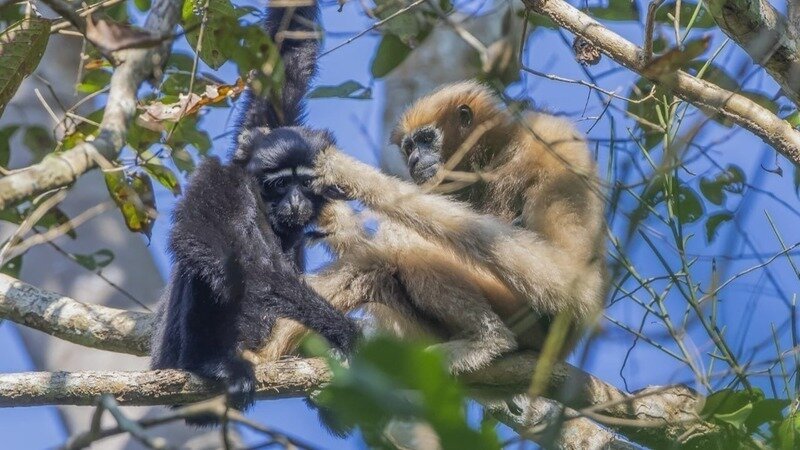
Hollongapar Gibbon Sanctuary goes often unnoticed while reckoning the world’s most densely populated biodiversity. It is the only sanctuary in India which is named after a primate. The total area covered by it is 20.98 Sq kms with the highest density of primate biomass in India, and one of the highest in the world. It is precisely located in Mariani, Jorhat, Assam. Even though the flagship species of the forest is the Hoolock Gibbon, its significance also lies in providing habitat for six other rare primates:
Capped Langur ( Tupimuria)
Stump Tailed Macaque ( Xenduri Bandor)
Northern Pig Tailed Macaque (Gahori-nejia Bandor)
Assamese Macaque (Ahomia Bandor)
Rhesus Macaque ( Molua Bandor)
Bengal Slow Loris ( Lajuki Bandor)
It is not only a habitat for these primates, but also an abode swarming with biological variedness. The commonly spotted fauna are: Asiatic Elephants, Common Leopard, Leopard Cats, Jungle Cats, Common Palm Civets, Barking Deers, Sambar Deers, Malayan or Black Giant Squirrels, Chinese Pangolins and Himalayan or Sikkim Large Clawed Shrews. Besides, it also flourishes as a bastion of 219 species of birds, more than 200 species of butterflies and several kinds of reptiles, amphibians and arachnids.
THE ELECTRIFIED LINES:
Most of the forest reserves have borne the headlines in the newspapers for falling prey to encroachments and timber smuggling. But the crisis of Hollongapar Gibbon Sanctuary has been caused by a different kind of human intervention. The railway line was always a major point of contention for decades. Every now and then pictures of dead elephants, on the tracks, keep on circulating in social media and in local news handles. The existence of the railway line has affected the ecosystem of the entire forest area. Worst of all, the decision to electrify these lines has invited even more threats to the peaceful existence of all the species. The electrification with 25000 Volts will disrupt the existence of the already declining Hoolock Gibbon. This ape procreates like human beings. They do not reproduce in their own families and they require crossing the railway line in order to mate. But once the electrification starts it will become a major hindrance to their reproductive process. It eventually will lead to the extinction of this endangered species. The un-electrified line is already infamous for frequently affecting the elephant corridor, killing different species of snakes and disrupting the habitat of butterflies. Concisely, it is already disrupting the peaceful existence of the entire ecosystem. But once the lines are electrified, the lives of most of the species will be on the verge of extinction.
THE ARTIFICIAL CANOPY AND THE EXPANSION OF THE LINE:
Since the work of electrification is already completed, an artificial canopy has slyly been planted on the railway lines to facilitate the movement of the Hoolock Gibbons. This amplified the curiosity of the people who were already concerned about the preservation of the widely studied, only ape in the country. On reaching the field it was witnessed that the canopy is made of metal and very close to the posts through which electricity will pass. There is only one canopy installed. The apes have to be trained enough to skillfully cross the line with proper attention to the timings of the trains. To quote a journalist who has recently been to the sanctuary with us to document the scenerio, ‘They forgot to provide the traffic signals for the apes’. It is evident that the installation of the canopy was allowed just to compensate for the damage caused. According to a report from the Wildlife Institute of India, the preservation and inhabitation of the arboreal Hoolock Gibbon is already at stake because of the present un-electrified line, the expansion and electrification will deteriorate the situation.

282
The Issue
THE CRISIS OF HOLLONGAPAR GIBBON SANCTUARY:
Hollongapar Gibbon Sanctuary goes often unnoticed while reckoning the world’s most densely populated biodiversity. It is the only sanctuary in India which is named after a primate. The total area covered by it is 20.98 Sq kms with the highest density of primate biomass in India, and one of the highest in the world. It is precisely located in Mariani, Jorhat, Assam. Even though the flagship species of the forest is the Hoolock Gibbon, its significance also lies in providing habitat for six other rare primates:
Capped Langur ( Tupimuria)
Stump Tailed Macaque ( Xenduri Bandor)
Northern Pig Tailed Macaque (Gahori-nejia Bandor)
Assamese Macaque (Ahomia Bandor)
Rhesus Macaque ( Molua Bandor)
Bengal Slow Loris ( Lajuki Bandor)
It is not only a habitat for these primates, but also an abode swarming with biological variedness. The commonly spotted fauna are: Asiatic Elephants, Common Leopard, Leopard Cats, Jungle Cats, Common Palm Civets, Barking Deers, Sambar Deers, Malayan or Black Giant Squirrels, Chinese Pangolins and Himalayan or Sikkim Large Clawed Shrews. Besides, it also flourishes as a bastion of 219 species of birds, more than 200 species of butterflies and several kinds of reptiles, amphibians and arachnids.
THE ELECTRIFIED LINES:
Most of the forest reserves have borne the headlines in the newspapers for falling prey to encroachments and timber smuggling. But the crisis of Hollongapar Gibbon Sanctuary has been caused by a different kind of human intervention. The railway line was always a major point of contention for decades. Every now and then pictures of dead elephants, on the tracks, keep on circulating in social media and in local news handles. The existence of the railway line has affected the ecosystem of the entire forest area. Worst of all, the decision to electrify these lines has invited even more threats to the peaceful existence of all the species. The electrification with 25000 Volts will disrupt the existence of the already declining Hoolock Gibbon. This ape procreates like human beings. They do not reproduce in their own families and they require crossing the railway line in order to mate. But once the electrification starts it will become a major hindrance to their reproductive process. It eventually will lead to the extinction of this endangered species. The un-electrified line is already infamous for frequently affecting the elephant corridor, killing different species of snakes and disrupting the habitat of butterflies. Concisely, it is already disrupting the peaceful existence of the entire ecosystem. But once the lines are electrified, the lives of most of the species will be on the verge of extinction.
THE ARTIFICIAL CANOPY AND THE EXPANSION OF THE LINE:
Since the work of electrification is already completed, an artificial canopy has slyly been planted on the railway lines to facilitate the movement of the Hoolock Gibbons. This amplified the curiosity of the people who were already concerned about the preservation of the widely studied, only ape in the country. On reaching the field it was witnessed that the canopy is made of metal and very close to the posts through which electricity will pass. There is only one canopy installed. The apes have to be trained enough to skillfully cross the line with proper attention to the timings of the trains. To quote a journalist who has recently been to the sanctuary with us to document the scenerio, ‘They forgot to provide the traffic signals for the apes’. It is evident that the installation of the canopy was allowed just to compensate for the damage caused. According to a report from the Wildlife Institute of India, the preservation and inhabitation of the arboreal Hoolock Gibbon is already at stake because of the present un-electrified line, the expansion and electrification will deteriorate the situation.
Petition Updates
Share this petition
Petition created on 20 September 2024